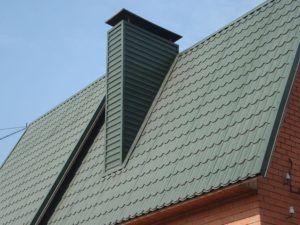
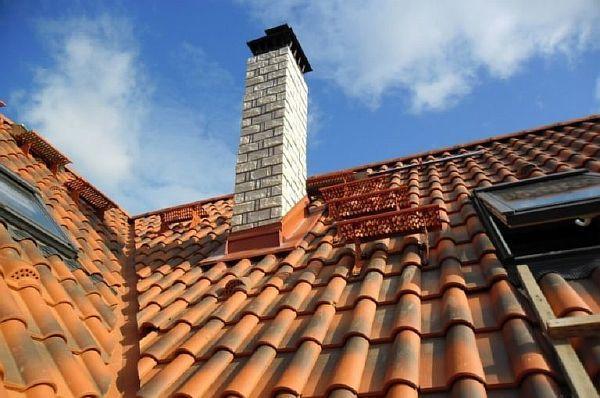
Covering a chimney with metal profiles or other materials is necessary not only to improve the roof's appearance, but is also the final step in protecting the structure from the negative impacts of the environment: wind, snow, hail - all of which can cause the heating system to malfunction.
Furthermore, when selecting a chimney, it's important to consider the temperature of the medium being transported, as many materials deteriorate quite quickly at high temperatures. Therefore, it's important to select the appropriate lining material for the chimney based on the structural features and architectural design of the building.
The best way to heat a private home is to install an independent heating system. This will not only save you significant money but also allow you to choose the most suitable stove for your home based on your budget and personal preferences.
Any heating system (except electric, which is quite common due to its high operating costs) requires exhaust fumes to be removed through a pipe. The key is to choose the right shape, cross-sectional area, and lining material.
Metal profile as the best material for chimney finishing
Metal profile (or corrugated sheet) is the most common material for chimney lining (especially if the roof is covered with metal tiles), as it has the following characteristics:
- Ease of installation and repair work.
- Durability.
- Resistance to sudden temperature changes (while the metal profile does not crack or deform).
- Light weight (the use of metal profiles for finishing is possible on any type of roof).
- Resistance to low temperatures.
- Fire resistance (the profiled sheet does not burn or melt).
- Environmental safety (the production of metal profiles is carried out without the use of harmful or environmentally toxic substances).
- Durability (the material is virtually unaffected by physical impact, unlike, for example, plaster, which quickly deteriorates during hail).
- Durability.
- Large selection of colors.
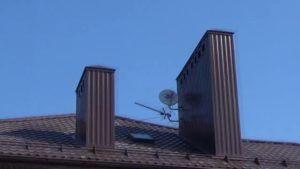 The metal profile is galvanized steel sheet, the outer layer of which is made of a special polymer paint, which additionally protects the sheet from adverse environmental conditions.
Currently, there is a huge selection of metal profiles with several different properties, which allows you to choose the optimal option for any operating conditions:
- The support-type profiled sheet is characterized by increased strength, therefore it is used for lining pipes, the reliability of which is a determining parameter.
- Aluminum sheets are highly resistant to moisture, making them the most durable cladding material.
- The combined metal profile can be used for both cladding and other construction work, since, depending on the specific model, it combines the advantages of the first two types to varying degrees.
- Painted metal profile sheets fit perfectly into any architectural design.
The most important thing when choosing corrugated sheets for chimney lining is to determine the required reliability and durability of the material, as this is what determines its final cost.
After purchasing the sheets, it is necessary to ensure their proper storage (otherwise, the metal profile will begin to lose its useful properties even before installation), adhering to the following rules:
- Sheets can only be stored in a dry, ventilated area.
- The sheets must be stacked on special pallets one above the other in a strictly horizontal position.
- When storing outdoors, the sheets must be covered with thick plastic film.
If the cladding material has been stored for a long time, it is necessary to check each sheet for defects before proceeding with installation.
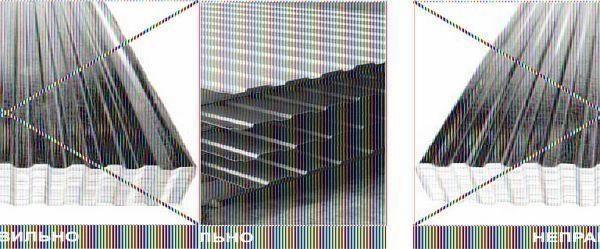
Stages of chimney finishing with metal profiles
Watch the video: Metal Profile Sheathing Part 1
To cover a chimney with tin, you need to prepare the following tools:
- A tool for cutting sheets. A circular saw or jigsaw is ideal, but for smaller jobs, a hacksaw or metal shears will suffice. Using an angle grinder is not recommended, as contact with the sheet metal heats up the surface, which can cause deformation.
- Level for maximum installation accuracy.
- Self-tapping screws and a screwdriver for fastening sheets.
The installation of the cladding itself is carried out according to the plan below:
- A metal or wooden frame is manufactured and installed, onto which the sheathing will be attached.
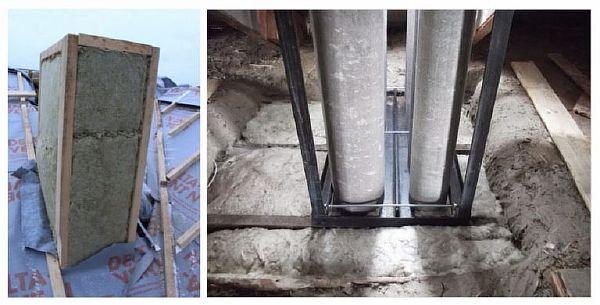
- Cutting of metal profiles.
- Laying sheets.
There are two methods for laying sheets: butt-to-butt and overlapping. The latter is preferred, as it ensures maximum structural reliability and prevents moisture penetration.
- Fastening sheets with self-tapping screws.
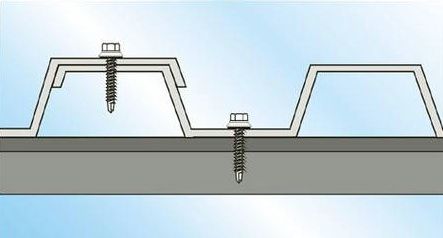
- Sealing of joints.
- Installation of special corners at the joints for aesthetic appeal.
Watch the video: Metal Profile Sheathing Part 2
The main thing in editing – the bottom row must be laid as evenly as possible (at the junction with the roof), since the tightness and reliability of the structure largely depend on it.
Finishing the chimney with brick
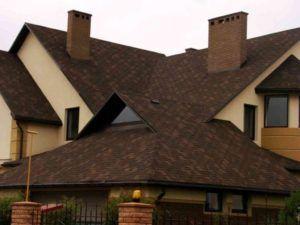 What should you use to line a chimney on a brick roof? The answer is obvious: brick. There are several types of facing bricks that are ideal for lining: ceramic, sand-lime, clinker, and so on. They differ significantly only in their appearance, but all have the same basic advantages:
- Durability and reliability.
The brick is capable of withstanding both static mechanical impact and strong impact loads.
- If installation work is carried out correctly, facing bricks do not require special care or constant cleaning.
- Resistance to prolonged exposure to moisture.
Brick does not absorb water and does not deteriorate when exposed to it for a long time.
- Fire resistance.
- Resistance to low temperatures.
- Wear resistance.
The properties of brick do not change over time.
By lining your chimney with brick, you'll ensure reliable protection for the chimney and an attractive building for 30-50 years. After this period, the structure will gradually begin to deteriorate.
Plastering the chimney on the roof and attic
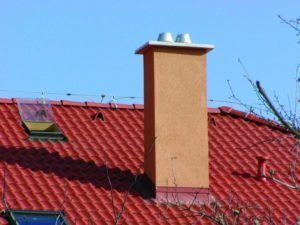 Plastering chimneys is quite common worldwide. It can be done using either standard mortar used for leveling surfaces or decorative plaster. The latter option is more appealing, as it allows for a unique design thanks to the plaster's special composition (for example, some types contain aggregate).
Features of plaster:
- Ease of use (plaster does not require any coating).
- Resistance to long-term exposure to water (the plaster will not crack or wash off throughout its entire service life, even if the house is built in an area with a high average annual rainfall).
- Resistance to high temperatures (the plaster does not burn or deteriorate, making it ideal for finishing the chimney of a fireplace or stove).
- Short lifespan (high-quality plaster will last no more than 5 years, after which it will begin to peel and gradually deteriorate; re-plastering can only be done after removing the old material and treating the surface).
Before applying plaster to the chimney frame, the most important thing is to thoroughly prepare the surface (leveling and priming), otherwise the plaster will begin to rapidly deteriorate, and the pipe will lose its visual appeal.
Finishing the chimney with plasterboard
Chimney lining with plasterboard is only used indoors, as this material is very sensitive to moisture. While plasterboard itself is not visually appealing, it makes an excellent base for other finishing materials (such as ceramic tiles or plaster).
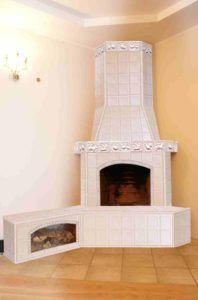 If you decide to install a plasterboard box to hide a chimney, you need to choose a material with a maximum heat resistance rating (most types are not resistant to high temperatures).
The process of installing a plasterboard box is quite simple and can be done by yourself:
- Preparing the layout and cleaning the installation site.
- Installation of a metal frame.
The supporting structure elements are attached to the wall using self-tapping screws. The frame installation method ensures maximum frame reliability and system durability.
- Cutting plasterboard.
- Fastening the sheets to the frame using self-tapping screws.
- Plastering the surface.
- Finishing.
The most important thing is to use a level during installation, since the reliability of the structure depends on its verticality and evenness.
Porcelain tiles for chimney lining
The tiles are suitable for both decorative and existing chimneys. Thanks to their variety of shapes and sizes, they fit perfectly into virtually any architectural style, as they can imitate a variety of surfaces. The front side of the tiles can be glossy or matte, textured or smooth.
The tile manufacturing process consists of the following stages:
- Selection of several types of clay to ensure maximum density of the finished product.
- Crushing all ingredients.
- Mixing components: clay, quartz sand, feldspar.
- Drying tiles at a temperature of 600°C.
- Final formation of the product.
- Re-drying the tiles to remove residual moisture.
- Firing (carried out in 2 stages).
- Quality control of tiles.
If all stages are carried out responsibly, the resulting product has the following characteristics:
- Moisture resistance (the tiles do not deteriorate even when exposed to water for a long time).
- Resistance to chemicals (the tile surface can be cleaned with any cleaning agents).
- Resistance to high temperatures (especially important for a chimney pipe).
- Frost resistance.
- Durability.
The only significant drawback of the tiles is their heavy weight, which must be taken into account when planning installation work.
Watch the video
Norms and rules
Chimney installation and lining must be carried out in strict compliance with current regulations and standards. The primary document is SNiP 41-01-2003 "Heating, Ventilation, and Air Conditioning," which details all requirements for chimney lining:
- All heated surfaces must be insulated from flammable structural elements (e.g., roofing). The fire resistance of the insulating material must be 20°C higher than the expected temperature of the hot surface.
- The material used to cover the chimney of a fireplace or stove must be resistant to rust.
- If brick is used to line the pipe, the thickness of the masonry must be at least 120 mm.
- The design must include protective canopies (or umbrellas), the main thing is that they do not reduce the draft from the pipe.
- The distance from the pipe to the flammable roof must be at least 130 mm (important to take into account when cladding).
Watch the video
Strict compliance with all requirements guarantees the reliability and durability of the structure.
I'm replacing a simple gable roof on my house myself. I'll admit, the biggest challenge I'm seeing is the chimney flashing where it meets the roof. Yes, I agree with the author that it's best to use metal profiles for this. I chose 25x25mm steel angles for the frame. I found the information on the website very timely—everything is laid out clearly. I'll bookmark it.