 Comfort and warmth in an apartment or house are essential during cold autumn and winter days. This allows for proper relaxation, well-being, and high-quality work.
Today, there are many different heating methods, but they require the use of gas or electricity, which is only possible when living in a civilized environment.
But the majority of our country's population dreams of creating heating without pipes and boilers, without the use of gas.
The most common types of heating
Today, there are a large number of heating units that allow you to effectively and efficiently heat any room.
Most of them operate using the energy from the combustion of any type of fuel, accumulating it into thermal energy. This helps fill rooms with high-quality warm air.
While central heating is most common in multi-story buildings, autonomous systems are increasingly being used in private homes, which are beneficial both in terms of energy savings and financial costs.
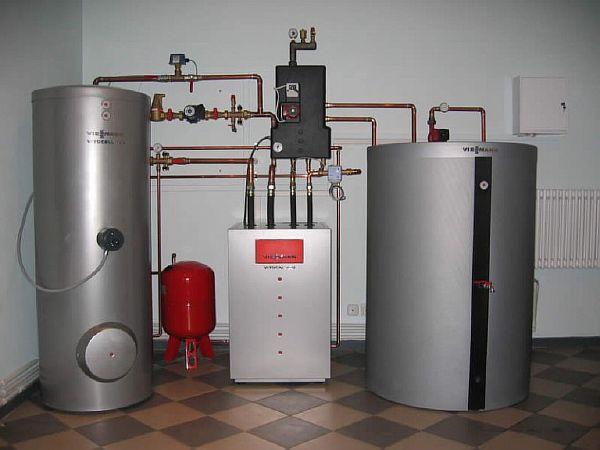
The most commonly used heating materials are:
- steam from the central system;
- gas or electric autonomous type;
- a stove that uses any type of fuel;
- fireplace.
You can independently vary your heating choice, starting from a large system with radiators and pipes to heating without pipes, radiators and boilers, consisting of just a single device.
Fuel price and its characteristics
For space heating, the design itself is not important, whether it's the largest main line or a minimalist installation that allows heating without boilers, radiators, and pipes. The fuel types used will vary: gaseous, solid, or liquid.
It is worth noting that the choice of traditional fuel materials will not always be cost-effective and user-friendly.
- Electricity is the easiest to use, but it is also the most expensive method.
- In terms of gas consumption, it's much cheaper, but it's important to remember that gas supplied from the mains and liquefied gas in cylinders are fundamentally different. Mains gas uses methane, while cylinders are filled with a propane-butane mixture, which is five times more expensive.
- Using diesel fuel isn't exactly cheap either. Furthermore, this fuel produces an unpleasant odor when burned, so it's not suitable for everyone, even though its characteristics make it a good substitute for centrally supplied fuels.
- Coal-fired stove heating can heat a room without pipes, radiators, or boilers, and is three times cheaper than diesel fuel.
- Peat is also an ideal solution for stove heating, but pressed peat briquettes cost one and a half times more than coal and are not an economically viable choice.
- The cheapest fuel choice for a stove system is wood. While it's inexpensive, keep in mind that wood burns out quickly (faster than coal), and it's not always possible to maintain a fire. Therefore, it's recommended to start with wood first, then add coal. This combined heating method is inexpensive and very effective.
- Another effective method (ideal for boilers with automatic fuel loading and on-demand supply) is pellets. These are compressed granules made from wood waste.
Video: DIY autonomous heating. Step-by-step video instructions.
Without using gas and electricity
Today, there are several alternative heating options that don't require electricity or gas. This type of heating, using pipes and no radiators, will save you money. Heating system options include:
- Stoves and fireplaces. They heat the room using the energy of burning wood or coal. If you decide to go with this option, you'll need to build a stove or purchase a ready-made system that only needs to be properly installed. This way, the family gets an environmentally friendly and economical heating method, and if the stove is equipped with a grill, it's perfectly capable of cooking.
- an autonomous heating system powered by a personal electricity source, which can be obtained in two ways:
- Using sunlight. This will require investing in specialized solar collectors that can convert solar energy into heat and thus act as a heater. Naturally, you'll have to invest in the equipment, but this will be a one-time expense, while the electricity supply will be continuous;
- Using the power and energy of the wind. This requires building a special apparatus consisting of a wind turbine, a generator, and a battery. If you can't assemble it yourself, you can purchase a ready-made device that converts wind power into electricity.
All of these methods operate effectively without pipes, radiators, or boilers, and are ideal for heating a small, one-story country house in an area far from a gas line.
Video: Heating without gas or wood. New!
Without pipes and boilers
A stand-alone heating system often has a boiler connected to pipes and radiators, allowing for heating of several rooms simultaneously. However, a properly selected heating system without pipes and radiators, powered by a single heat source, can be just as effective. Most often, this is:
- a stove made of brick or metal, which is an ideal option for providing heat to one room or two adjacent rooms;
- a fireplace that was used in ancient times to heat castles;
- electric heater, reflector or oil-based;
- air conditioners, etc.
Remember that for a country house built according to the old "five-wall" principle, a single stove located in the center of the house is sufficient for high-quality heating. Even today, such structures are heated without pipes, radiators, or boilers.
Heating without fuel
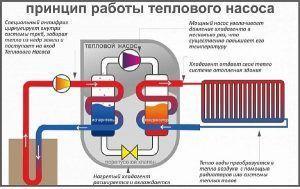
Scientists have already invented a way to heat a room without using any fuel. This can be achieved using a device called a heat pump.
It consists of pipes filled with freon, as well as a throttle, compressor, and heat-exchange chamber. The device operates similarly to a refrigerator and is based on simple physical principles.
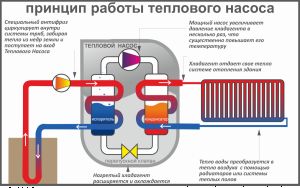
The pipes are located deep underground or in a lake at a decent depth so that the ambient temperature does not rise above 8 0C even on the hottest day.
Already at 3 0C, freon boils and rises through them into the compressor, where it is compressed and thus heated to 80 0C.
The resulting heat is transferred to the heating system, passing through the heat exchanger. The freon then enters the throttling chamber, where its temperature drops and the pressure normalizes, converting the freon into a liquid state.
In this form, it is sent back into the underground pipeline, repeating the cycle in a circle.
Warmth without heating
Even without a heating system, without pipes, radiators and boilers, it is possible to warm up the room.
Personally, I look at this method with a smile, but such an option does exist in nature, so we will describe it in the article (this is especially true for psychological warming).
There are several methods that can be used both individually and in combination. These include:
- Maximize the insulation of your home. To retain heat particles released from cooking, occupants' breathing, and so on, it's sufficient to insulate the walls, add warm flooring, and heavy curtains to block cold air and prevent heat from escaping. Even if the heating system is working properly, such measures will help conserve energy and avoid consuming more heat than necessary.
- Insulate your home wardrobe. Wear a warm sweater and slippers. While watching TV, wrap yourself in a warm blanket or use a warm throw, a hot water bottle, and warm drinks (tea, milk).
- Psychological warming. Change the room's design and color scheme to a warmer one (peach, yellow), adding knitted decorative elements and wooden accessories. Use scented candles and photographs of warm countries in the interior. This way, the effect is twofold: on the eyes and the sense of touch. This can trick the body into feeling warmth.
In any case, you can find a way and a suitable method to warm your home. Heating without pipes or boilers can be an effective solution to this problem, even in severe frosts. Using the methods described above, you can warm your home even in the most challenging situations.