Water hardness is the amount of soluble and insoluble salts, primarily calcium and magnesium, present in natural water. The higher the concentration, the higher the hardness. Excess salts can cause scale buildup in water supply systems, quickly damaging appliances, plumbing fixtures, and hydraulic equipment.
To accurately determine water hardness (the amount of dissolved hardness salts, the concentration of iron, sulfur, magnesium, calcium, etc.), laboratory tests (for example, at a sanitary and epidemiological station) are performed using chemical analysis or specialized equipment. At home, water hardness is determined using test strips or testers.
Ordinary water consists not only of hydrogen and oxygen atoms; it also contains a large number of various impurities. The presence of these impurities determines the water's hardness, and the units of measurement (°Ж—degrees of hardness) indicate how much this value exceeds acceptable limits.
 Water hardness needs to be determined not only by engineers installing utility lines but also by ordinary people in everyday life. If we use an electric kettle or a washing machine with a heating function, everything can malfunction if the hardness is too high. You're unlikely to even be able to dissolve soap properly in such water.
This article will cover in detail how to determine the hardness level of tap water, as well as methods for combating high levels of impurities.
Hard and soft water – what’s the difference?
The amount of salt in water is affected by the presence of dissolved calcium and magnesium. The presence of iron hydrate, which is often present in excess in artesian waters, can also significantly increase this level.
When such impurities are present in small quantities, it is called "soft." This indicator is usually divided into three categories:
- Soft.
- Average.
- Tough.
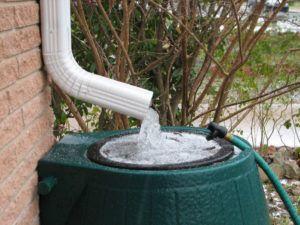 SoftI am rainwater or distilled water. This water is practically free of mineral impurities.
In most cases, it can also be obtained as a result of prolonged boiling or the addition of special chemical reagents.
Average — is most often found in water supply systems, as well as in spring and artesian water.
Tough This category includes seawater, ocean water, and water flowing from rock layers rich in mineral deposits. It can contain large amounts of dissolved salts. In percentage terms, salinity can reach up to 33% of the total volume.
Let's look at the different types of rigidity
This indicator is usually divided into the following categories.
- Constant - is an unchanging indicator that depends on the content of sulfates and chlorides.
- Temporary hardness is caused by the presence of calcium and magnesium bicarbonates. This type of hardness is named for its ability to be almost completely neutralized by boiling.
- Total rigidity is obtained by adding the constant and temporary indicators.
In order to accurately determine this indicator, it is necessary to know what units of measurement can be used to do this.
Units of measurement of hardness
To accurately calculate water hardness, it is necessary to determine the concentration of calcium and magnesium cations. Currently, this indicator is measured in the following units:
- Mol/m3 (mol per cubic meter) – used in Russia until 2014.
- °Ж (degrees of hardness) – this unit of measurement has been used in Russia since 2014.
- dH (German degree) is a unit of measurement used in European countries.
- fo (French degree) - also used in European countries.
- ppm CaCO3 (US degrees) is a unit of measurement used in the North American states.
It should be noted that in our country, the expression for total hardness in mol/m3 only began to be used in 1952. Before that time, calculations were made in degrees, which were equal to the modern German degree.
Since 2014, Russia has adopted an international standard for calculating water hardness, expressed in degrees (°J). One degree J equals 1/2 millimoles per liter of liquid, making it easy to calculate the concentration of a substance in a liquid.
Causes of water hardness
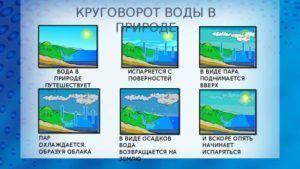 During the natural water cycle, liquid turns into vapor and rises into the upper atmosphere. After condensation, it falls as precipitation and does not contain any impurities that affect water hardness. However, as it passes through the earth's crust, the liquid dissolves various rocks containing potassium and magnesium. As it absorbs these elements, water increases its hardness. In the sea, water is always hard due to the high concentration of sodium chloride.
If it is necessary to reduce the concentration of potassium and magnesium ions, various methods can be used to reduce the amount of salt impurities.
Methods for eliminating stiffness
To combat excessive salt content, the following methods are used:
- Boiling completely removes temporary hardness. This process is accompanied by a large amount of sediment settling on the bottom and walls of the boiling tank.

- Chemically, you can reduce the amount of salts using slaked lime. Adding soda to the lime can also eliminate permanent hardness.
- Freezing is a simple method for dealing with persistent hardness. To soften water, simply freeze it to a state where it's no more than 10% water and 90% ice. The unfrozen liquid is then drained, and the solid water is melted and used.
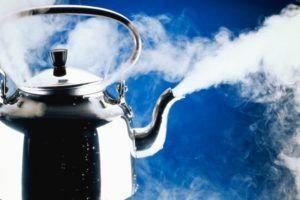
- Distillation - all salts are non-volatile substances, so it is enough to first convert the water into steam by heating and then condense it.
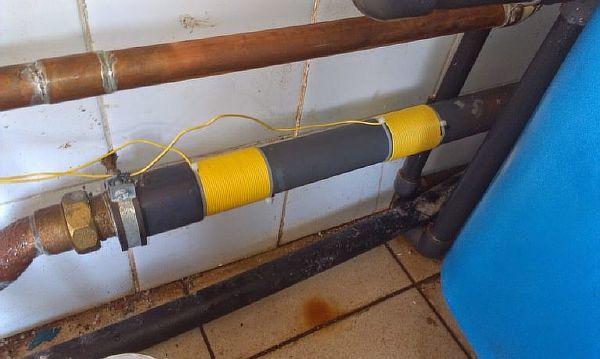
- Electromagnetic softening uses an electromagnetic field to soften liquids. This method of reducing salts in water is most commonly used in boiler systems.
- Cation exchange is a highly effective method for removing excess salts from water. Purification occurs by passing water through a layer of cation exchange resin.
Any of the proposed water softening methods can cope with high levels of this indicator, but chemical methods are usually not used to remove salts from drinking water.
How does hardness affect water quality?
The hardness of drinking water primarily affects its taste. The taste threshold of calcium ions in drinking water is 2-6 mg-eq/L. The taste threshold for magnesium ions is significantly lower, so the most pleasant-tasting drinking water is considered to be that with a taste threshold of 1.6 to 3 mg-eq/L.
In some cases, water with a hardness of up to 10 mg-eq/l can be used for drinking, but its long-term use can negatively affect human health. Water that is too hard is not recommended for use in liquid heating devices.Electric kettles, water heaters, washing machines, and dishwashers all have heating elements, which quickly become coated with deposits, making the heating process less efficient.
Long-term use of an electric heater with a significant layer of scale leads to overheating and failure. Fortunately, descaling can be accomplished by dissolving two packets of citric acid in 1 liter of water and thoroughly boiling the kettle or any other water heater. Afterwards, thoroughly rinse the appliance and continue using it as intended.
Effects on human health
Long-term consumption of hard water can cause serious abnormalities in the human body, primarily affecting the functioning of the following organs:
- Gastrointestinal tract (GIT) When the salts found in hard water combine with animal fats, fatty acid salts form, which coat the walls of the stomach and intestines, preventing normal fermentation and significantly slowing peristalsis. As a result, harmful substances and toxins accumulate in the body, leading to dysbiosis.
- Joint function When certain types of salts enter the human body, they form inorganic substances that eventually displace synovial fluid from the joints. This displacement results in crystals encrusting the joints, causing severe pain when moving. Long-term consumption of hard water can lead to arthritis and polyarthritis.
- Cardiovascular system — with a significant increase in the hardness of drinking water, heart function deteriorates, even to the point of severe arrhythmia.
- Skin condition Hard water leads to premature skin aging. The negative effects are observed both when drinking the liquid and when washing dishes. When dishwashing liquid comes into contact with hard water, a film forms, which, when it settles on the skin, has a long-term negative impact on the upper layers of the epidermis.
- Formation of kidney stones This statement is a myth, debunked thanks to scientific research. The process of stone formation is not dependent on the quality of drinking water. Kidney stones are formed primarily due to a lack of calcium in the body. A deficiency of this element results in its leaching from the bones and deposition in the urinary system.
All of the above-mentioned ailments and conditions can be avoided by using multi-stage water filtration. While these devices are inexpensive, treating various conditions can be quite costly.
Methods for determining water hardness
To avoid the negative health effects of hard water and extend the life of heating appliances, it's necessary to determine the approximate amount of potassium and magnesium salts dissolved in the liquid. This can be difficult to determine by taste alone, as changes can only be detected this way if a certain level is exceeded.
To determine high levels of potassium, magnesium, and sodium salts at home, you can use the following methods:
- Try to dissolve the soap in water; if foam does not form, the water is very hard and should not be used.
- If a large amount of scale forms in a kettle or other appliance within a short period of time, then the water has definitely exceeded the safe limits for this value.
- Using indicator strips, you can more accurately determine the amount of salts in a liquid, but this method requires a small investment. To conduct the test, simply dip the indicator strip in the water for a few seconds, and after a minute, compare its color with the chart provided in the instructions.
Conclusion
It's crucial to know the water hardness level used for drinking, heating, and other water heating appliances. Using precise units of measurement for home calculations isn't always necessary.
In the chemical industry and other high-tech industries, on the contrary, it will be necessary to know the amount of salts dissolved in water down to the milligram, so any units of measurement for this indicator proposed in this article can be used to determine and, if necessary, reduce the amount of salts in water.