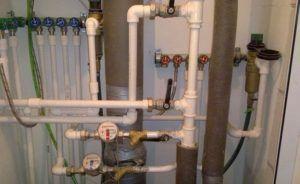
 As we know, humans are 80% water. Therefore, it is a staple in modern society for a wide variety of purposes. The primary means of delivering liquid to the point of consumption are water pipelines, the core element of which are pipes made of various materials.
While water pipes are currently made of metal, plastic water pipes are becoming increasingly popular. They are much more technologically advanced, durable, and don't clog up the interior walls with deposits.
Today's building materials market is saturated with pipes made from various plastics.
- PVC water mains
- PVC marking and properties
- PVC pipe strength indicators
- Polypropylene
- Labeling, advantages and disadvantages
- Water supply made of polyethylene pipes
- Cross-linked polyethylene
- Marking
- Metal-polymers
- Pros and cons
- Marking of metal-plastic pipes
- Features of the application of metal-polymer pipes
- Prices and sizes of different types of pipes
- PVC
- Polypropylene
- Polyethylene
- Cross-linked polyethylene (PEX)
- Low-density polyethylene (LDPE)
- Metal-plastic
- We make a water supply system from plastic pipes
- Conclusion
PVC water mains
Polyvinyl chloride is used for production, using extrusion. PVC plastic pipe has the following characteristics:
- service life – up to 50 years;
- density – 1.41 g/m33;
- ability to burn – non-flammable;
- elongation upon heating – no more than 5%;
- the value of relative elongation at break is no more than 0.2%.
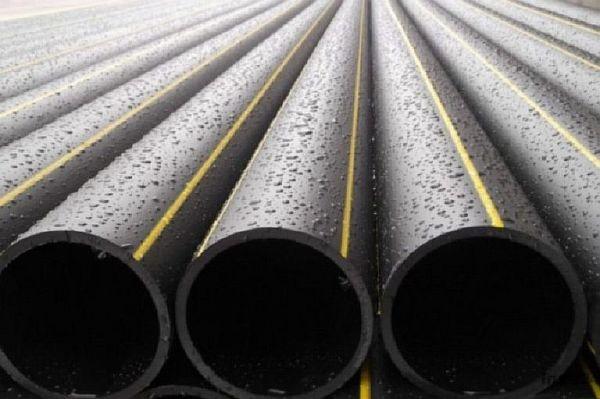
PVC pressure water pipes are equipped with a socket at one end for easy installation. A rubber sealing ring is installed in the socket. No additional fixtures or equipment are required during assembly, allowing for DIY installation.
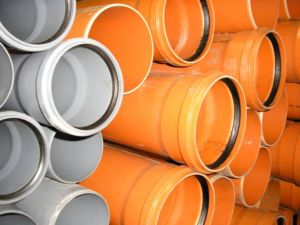 The plastic material is not subject to rot or corrosion, making the water supplied through this system safe to use. The surface in contact with the liquid is smooth and always remains clean, as it does not deposit any organic or inorganic substances, significantly increasing its service life.
Their properties meet all sanitary requirements for transporting drinking water. Furthermore, their availability of additional fittings for a wide range of applications allows for the creation of plastic piping networks of any complexity.
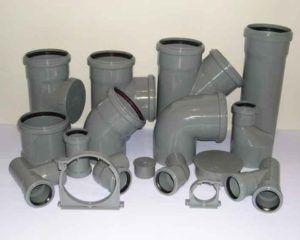 Polyvinyl chloride pipes are resistant to harsh ultraviolet radiation, which allows for the installation of open sections of external networks without additional insulation.
Disadvantages include low heat resistance, which limits their use to temperatures no higher than 65 degrees Celsius. This prevents their use in hot water systems. However, when used in temperatures as low as -10 degrees Celsius, the water supply system must be thoroughly insulated.
PVC marking and properties
The outer surface is marked with the following information:
- Material type: PVC.
- A type of socket connection.
- Size by outer Ø and wall thickness.
- Intended use.
- Regulatory documentation (GOST or TU).
- Manufacturer's name and logo.
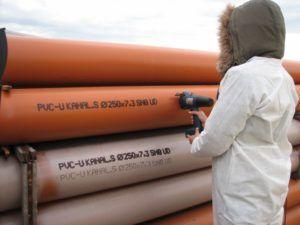 In addition, the color scheme is important:
- Gray or corrugated black pipes are used for laying internal networks in non-pressure or pressure form.
- Yellow or orange colors are used for external water supply or sewerage networks.
- White or blue colors of PVC pipes indicate their priority for use in casing water intake wells.
- Corrugated pipes have a light gray or white interior. Their primary application is deep-seated pipelines, as these plastic products are characterized by increased radial strength.
 PVC pipe strength indicators
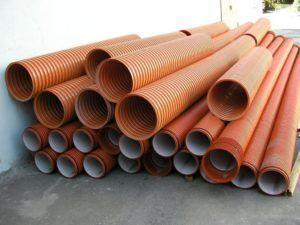
Based on strength characteristics, PVC pipes are divided into three categories:
- light series, designated as "L";
- middle series – “N”;
- heavy – “S”.
Belonging to the above-mentioned category prescribes the possibility of use for highways with different laying depths.
Spiral-reinforced PVC pipes are manufactured by applying a base to a spiral-shaped frame. This design allows them to be used in pipeline sections subject to vibration, such as in the network adjacent to a pump, where the pipe acts as a shock absorber.
Production is regulated by GOST 51613-2000, and the size range is specified in GOST 18599-2001.
Plastic pipe sizes are specified by GOST 28117-89 and range from 5 to 630 mm in diameter with wall thicknesses from 1 to 83 mm. In addition to their use in plumbing systems, they are used for electrical wiring, transporting aggressive media, and as a structural base for the manufacture of various products.
We would like to point out that PVC plastic pipe is not suitable for hot water supply, it can be taken for cold liquids only and when used at temperatures below 10 degrees, it must be insulated.
Polypropylene
Currently, many types of polypropylene plastic pipes are used, differing in many factors, including technical characteristics, purpose, color and quality.
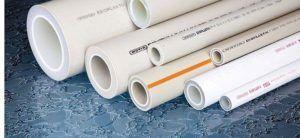
Labeling, advantages and disadvantages
Polypropylene pipes vary in their performance properties and are designated with the "PN" designation. There are several types:
- PN 10They are designed for systems with pressures up to 10 atmospheres. The maximum permissible circulating fluid temperature is 45 degrees Celsius. Designed with thin walls, they are not particularly strong. Therefore, their primary application is cold water pipelines with pressure limitations.
- PN 16As the markings indicate, they can withstand pressures up to 16 atmospheres. The permissible liquid temperature is +60 degrees Celsius. Therefore, it can be concluded that they are also only suitable for cold water supply systems. It should be noted that polypropylene is susceptible to thermal deformation, which completely disqualifies them from the list of materials for hot water supply and heating systems.
- PN 20They easily withstand pressures of up to 20 atmospheres at temperatures of +95 degrees Celsius. These characteristics make them suitable for heating and hot water supply, but with certain limitations. Their high capacity for thermal deformation means that at temperatures close to the limiting values, individual sections may sag and bend.
- PN 25Their technical characteristics allow them to be used for heating without significant limitations. The manufacturing technology for polypropylene pipes of this design involves the use of a reinforcing insert, which enhances performance. Nylon fibers and aluminum foil inserts are used for this purpose. In addition to providing greater strength, the reinforcement reduces susceptibility to deformation. This explains the widespread use of polypropylene pipes in high-pressure heating and hot water supply systems.
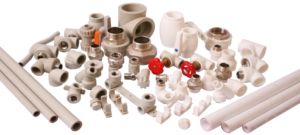 For successful installation, various additional elements are used.
Experts highlight a number of parameters that distinguish them:
- The lifespan of polypropylene is approximately 50 years. Manufacturers claim that the service life of plastic water pipes in cold water supply systems can be extended to 100 years.
- The pipes are not prone to limescale formation on the inner surface and are also resistant to the effects of biological substances.
- Carriers made from this material have noise-absorbing properties. Therefore, they are used in the construction of pressurized water pipes, where the passage of liquid is often accompanied by noise.
- Having low thermal conductivity, polypropylene pipes are not covered with condensation.
- Easy installation. Assembly is accomplished using welding. Just familiarizing yourself with this procedure is enough to master this simple process.
- Polypropylene pipes do not require additional maintenance during operation.
However, like any product, polypropylene has some disadvantages. For a complete picture, we suggest reviewing them as well:
- High linear expansion. Therefore, polypropylene systems must be constructed with expansion joints.
- Low thermal stability. Additional insulation is required for heating.
- Low deformation during operation does not allow them to be used in the installation of complex communications without additional parts - fittings.
- Polypropylene is not UV-resistant. Its use in open outdoor applications is not recommended.
- The presence of certain shortcomings in operational properties is compensated by the low cost.
Depending on the system's design, plastic pipes can be 20 or 25 mm in diameter for distribution. For the riser, 40 or 50 mm diameter pipes are recommended. Larger diameter pipes are used for intra-house and main distribution systems in the basement of a multi-story building.
Watch the video
In addition to external text markings indicating size, type, and manufacturer, color coding is also used. Polypropylene pipes are colored as follows:
- white – used together with grey ones for indoor and apartment plumbing and heating systems;
- black ones are used for gravity sewers that operate without pressure;
- Green polypropylene pipes are so cost-effective and durable that many gardeners simply don't consider other options.
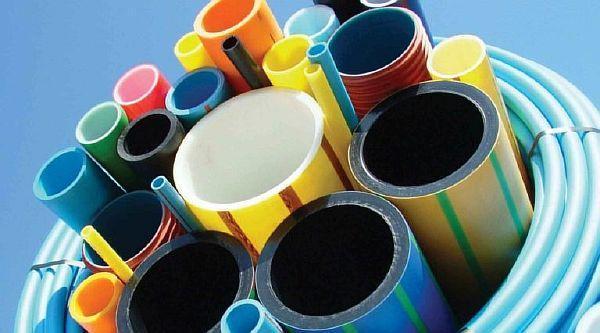
A characteristic feature of white pipes is their poor thermal stability at low temperatures. Even at zero degrees, the material begins to crystallize and lose flexibility.
Water supply made of polyethylene pipes
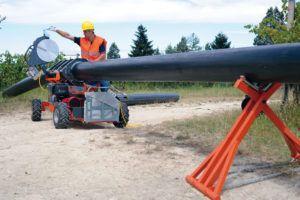 It is ethylene gas polymerized under high pressure. The process occurs in the presence of catalysts. It is noteworthy that the mechanical properties of polyethylene are inversely related to pressure during production. The higher the pressure in the vessel, the lower the properties of the final product.
High-density polyethylene plastic pipes are not used for main pipelines. They can be used in pressure pipelines, but with increased wall thickness, which increases the cost. HDPE pipes, on the other hand, are successfully used in main pipelines for both liquids and gas.
Cross-linked polyethylene
As the chamber pressure increases further, the molecules, which form long chains, begin to cross-link with each other. This leads to the formation of a spatial network-like structure, which significantly improves mechanical properties.
The resulting material can withstand temperatures up to 95 degrees, making it suitable for hot water supply. HDPE plastic pipes, however, are only resistant to temperatures up to 45 degrees, making them suitable only for transporting cold liquids.
To further enhance mechanical properties, reinforced pipes are produced. Fiberglass threads are used as the reinforcing layer. These pipes are suitable for transporting liquefied gas under high pressure or are used in critical applications.
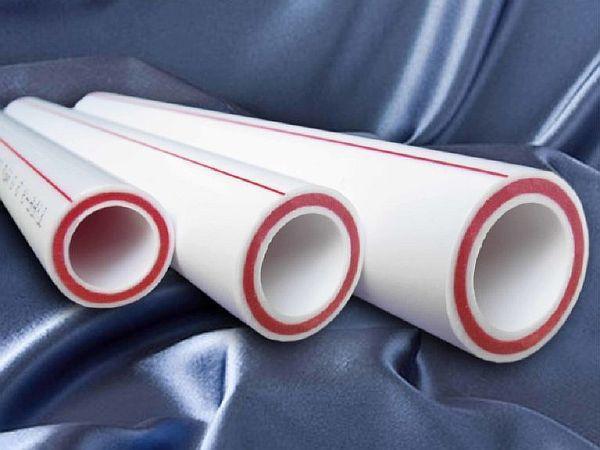 The main regulatory document used in the production of polyethylene pipes is GOST 18599-2002.
Marking
The marking is applied to the outer surface and includes the following information:
- grade of polyethylene;
- the value of the dimensional ratio (the ratio of Ø (diameter) to the wall thickness – sdr);
- indication of nominal Ø (diam.);
- wall thickness;
- intended for drinking or technical liquids;
- designation of the technical document used in production (GOST or TU).
Metal-polymers
As polymer production improves, traditional metal pipes are increasingly being replaced by polymer-based materials. One obvious and successful competitor for plumbing installations is composite construction, consisting of five layers.
The inner working layer is made of cross-linked polyethylene, typically PEX, a highly durable material. An adhesive layer is applied to it, securing the aluminum reinforcing layer. This reinforcing layer is made using aluminum tape with a thickness of 0.2–0.5 mm.
During the spiral winding process, the joints are laser-welded. This creates a strong aluminum tube. A second adhesive layer is applied to it.
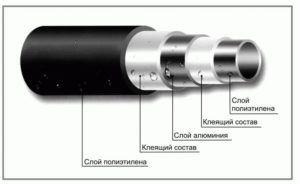 The outer surface is also made of cross-linked polyethylene of the same grade. The automated manufacturing technology used allows for the production of these products in coils up to 600 meters long. A centimeter scale is applied to the outer surface, facilitating dispensing for both the seller and the buyer.
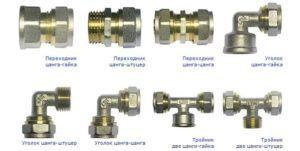
Manufacturers also produce specialized tools for cutting and installing them. They have also developed a full line of fittings that can be used to create networks of any complexity. Various adapters are also available for connecting to pipes made of other materials.
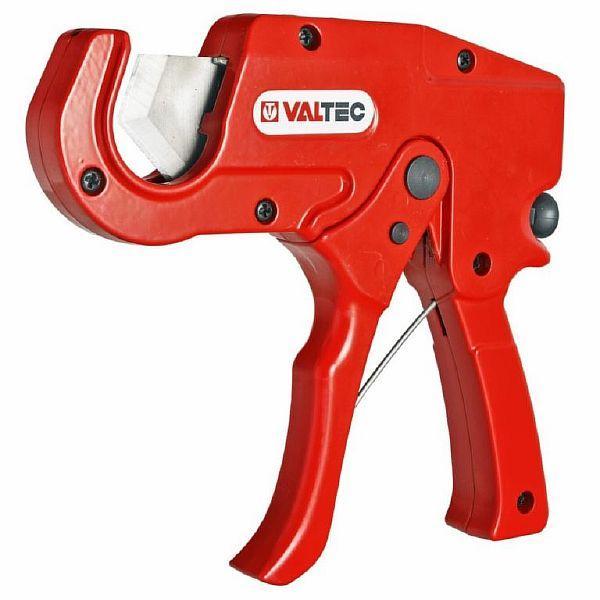
Plastic pipes and their components are practically ideal for installing water supply systems in private housing.
 Pros and cons

The advantages of metal-plastic include the following qualities:
- The ability to retain shape after deforming effects, which significantly simplifies installation.
- Capable of withstanding loads of up to 10 bar at temperatures up to 95 degrees Celsius, these plastic pipes are ideal for hot water mains.
- Suitable for supplying drinking water.
- Completely impermeable to any gases.
- Resistance to the formation of biological or limescale deposits on the internal walls.
- High-quality internal surfaces ensure fluid flow with minimal hydraulic loss. This allows the use of pipes with smaller bore diameters.
- Reduced thermal conductivity, preventing the formation of condensation on the outer surface of the pipe.
- Elasticity prevents damage to the system from hydraulic shocks.
- Long service life if installation rules are followed.
- Fast and easy installation due to the use of a wide range of fittings.
All the positive qualities of metal-plastic pipes are achieved through the successful combination of two components: aluminum and cross-linked polyethylene. The relative affordability of the finished product allows for the use of high-quality equipment for its production.
However, there is no good without bad, there are also some negative properties:
- A high coefficient of thermal linear expansion and low resistance to temperature changes reduce the service life of heating and water supply lines.
- In hot water supply systems, the use of U-shaped compensators is necessary.
- The need to arrange sliding fasteners during installation, ensuring linear displacement.
- Using a special tool to make press connections.
In Russia, only products from well-known brands are certified, and the seller is required to provide all certificates for the following items:
- confirmation of compliance with the State Standard;
- hygiene certificate;
- certificate confirming fire safety.
In addition to the above, plastic piping materials for heating and hot water supply must be certified as compliant with oxygen barrier requirements. Penetration of this gas into the coolant leads to premature failure of the heating system due to accelerated corrosion.
The absence of any of these documents may indicate that the product does not meet the requirements imposed on it, as well as counterfeiting.
Watch the video
Marking of metal-plastic pipes
Marking of metal-plastic products is carried out to the same extent as for other plastic pipes, including the application of a dimensional scale on the coils.
During production, compliance with several regulatory documents is mandatory, the main one of which is GOST 18599-2002.
The basic diameters of plastic pipes for water supply inside an apartment or private house are 20 or 25 millimeters, and for a riser – 40-50 mm.
Features of the application of metal-polymer pipes
Any products made from this material find their application in the following areas:
- High-pressure polyethylene pipes are most often used in gravity sewer and drainage systems. Connections are made with a socket and collar.
- The second typical application is protecting power grids from moisture and mechanical damage. Connections are made by butt welding or heat-shrinkable sleeves.
- These products are installed in the ground below the frost line. There is no need for trays, as the flexible pipe easily withstands ground movements.
- Cross-linked polyethylene pipes can be used for hydronic underfloor heating. A sliding sleeve ensures tight connections, allowing for the use of pipes other than solid ones.
Prices and sizes of different types of pipes
Now let's look at the price categories and optimal sizes of various types of rolled pipe materials.
PVC
Manufacturers offer a choice of finished products with external thicknesses ranging from 1.4 cm to 1 m. Lengths range from 0.56 to 6 m.
The cost depends on the parameters and area of application. Based on average prices, the minimum option costs around 100 rubles, while pipes measuring 10-15 cm and 300 cm in length will cost 500 rubles. The most expensive 6-meter pipes cost twice as much per unit.
Polypropylene
Standard outside diameters range from 20 mm to 12.5 cm. Wall thicknesses range from 2.3 mm to 20.8 mm. You can purchase 1 meter or 100-meter coils.
A linear meter of 20mm-wide pipe can cost 40 rubles. A reinforced version costs 15-30 rubles more. A reinforced version with a thickness of 25mm and a length of 4 meters will cost 10 times more.
Polyethylene
According to GOST, the external diameter can range from 0.1 to 120 cm. Wall thickness ranges from 0.2 to 6 cm. Coil lengths reach 1000 meters.
The cost per linear meter, depending on the diameter, varies from 20 to 350 rubles per linear meter.
Cross-linked polyethylene (PEX)
The outside diameter ranges from 1.6 to 3.2 cm. Wall thickness ranges from 2.2 to 4.4 mm. Sold in coils of 100 m.
The cost of a 100-meter-long, 16-mm-wide oxygen-layer pipe is approximately 6,500 rubles. A similar product with a 20-mm diameter costs 11,000 rubles.
Low-density polyethylene (LDPE)
The outside diameter ranges from 10 to 160 mm. The minimum wall thickness is 2 mm. Lengths are available in pre-cut lengths from 3 to 12 m, or in coils from 100 to 500 m.
A 20 mm diameter pipe will cost approximately 22 rubles per linear meter. If we consider the 4 cm diameter option for cold water supply, a 100 meter coil will cost 6,500 rubles.
Metal-plastic
The finished product's outer diameter ranges from 1.6 to 5 cm. Wall thickness varies between 2 and 4 mm. It is sold in coils of 20 to 200 m.
The price per linear meter is 1.6 cm from 21 rubles, 2 cm from 55 rubles.
We make a water supply system from plastic pipes
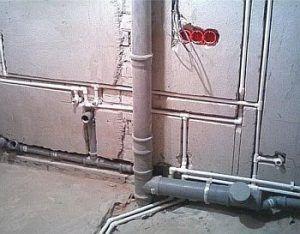
You can install the system yourself. You'll need a special tool called a soldering iron. A soldering iron is expensive for one-time use, so you can rent one. To understand how the components are connected, it's recommended to practice on inexpensive fittings.
Step 1The exact locations of the cold and hot water consumers are determined. The necessary markings for the future water supply lines are applied to the walls. The length of the flexible supply line is also taken into account. It must be easily connected to the pipes.
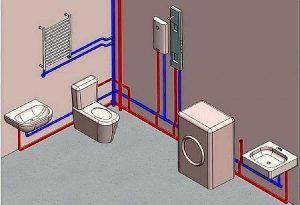 Step 2Determining the installation method. A series or tee connection (Fig. a) will save on materials, but more than two devices may be supplied with water with insufficient pressure when multiple points are opened simultaneously.
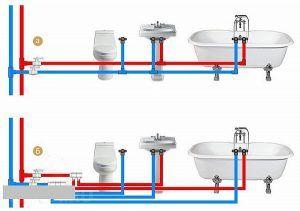
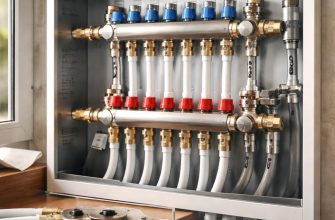
A parallel water supply system (see Fig. b) is more expensive due to the larger length of pipes and the need for a manifold. However, the pressure is uniform throughout the entire line, and it's not necessary to shut off all appliances during repairs.
 Step 3Meter assembly. It is recommended to entrust this task to a specialist. Step 4. Install clips at an average spacing of 1.5 m. Horizontally positioned pipes will be secured to these clips. If concealed wiring is planned, grooves are created. Keep in mind that installation is carried out along walls or floors, so connections are most often straight or at a 90-degree angle. It is recommended to install the cold water supply above the hot water supply.
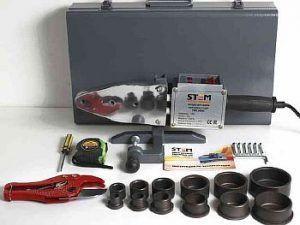 Step 5Assemble the cold and hot water supply lines. You'll need a soldering iron, a pipe cutter, a tape measure, a pencil or marker, and a level.
At this stage, several actions occur:
- Pipe fittings are cut to a depth of 1.5 cm, allowing for a 1.5 cm extension into the connecting fitting. The depth can be checked by inserting the pipe without heating. The cut angle must be strictly perpendicular to the base of the pipe.
- The ends are cleaned of burrs and degreased.
- The depth of the pipe insertion into the fitting is marked.
- The soldering iron is equipped with nozzles of the appropriate diameter.
- The tool heats up to 260 degrees Celsius.
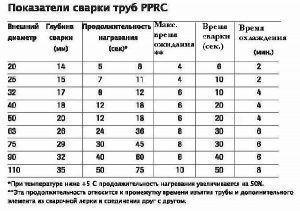
- The elements are pushed onto the soldering iron sleeve to the specified limit. Fittings that do not meet the specified parameters are immediately rejected, as a solid connection will not be ensured. Heating of compatible parts must be carried out simultaneously. Melting, holding, and cooling times may vary depending on the diameter of the plastic pipe and the weld depth. The table below provides the necessary information.
- During the connection process, using light force, rotation of the elements around their axis is prohibited. This ensures that the connecting elements are immediately locked at the correct angle. Adjustments are permitted only during the first few seconds.
Step 6Threaded fittings. They are installed where appliances and flexible hoses are connected.
Step 7Meters are taken into account separately. All connections are recommended to be made using flax, paste, or sealing tape.
Step 8Check the plumbing. The first test should be performed no earlier than an hour after assembly. It's best to start with the fact that gaps in the joints are less dangerous.
Step 9Eliminate all faults and errors in plumbing installation. This involves disconnecting or completely replacing components between adjacent fittings or connections. Alternatively, you can cut out a section and add a couple more connecting elements. The latter option is more cost-effective, but carries greater risks. Therefore, it is recommended to opt for a complete replacement.
Step 10Connecting all equipment.
Step 11Call a service representative to read the meters and install seals. After this, you can begin full operation.
Conclusion
The choice of plastic piping materials to use depends on the specific operating conditions and the type of water supply system (cold, hot, heating, or sewer). Each type requires specialized products that meet the relevant requirements.
Watch the video
Special attention should be paid to plastic pipes for hot water; polypropylene products with PN 20 and PN 25 markings are ideal, while for cold water, polypropylene PN 10 and PN 16 are ideal.
And the durability of a properly installed plastic pipeline is ensured by the material itself. Good luck!