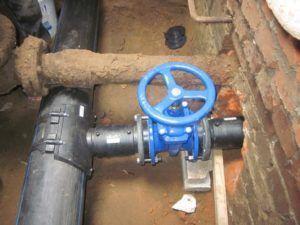
 Water supply valve A shutoff valve is a component of shutoff valves designed to completely shut off the flow of a working fluid in a pipe. The main moving part is the gate, located perpendicular to the flow axis.
The design of this device allows it to be used not only to stop water, but also to shut off the flow of compressed air, liquid hydrocarbons, and so on.
In addition, some types of these devices (for example, shut-off valves) have become widely used in the oil industry.
Shut-off valves can be installed not only on metal but also on plastic pipes. The main thing is to ensure a secure connection between the system components.
Operating principle
Regardless of the type, all devices for shutting off a water pipe consist of the following parts:
- Case with lid.
The body contains a cavity housing the shutoff elements. In most cases, the body is made of cast iron or steel, and connections to other components of the engineering system are made using flanges or welding. The main advantage of the first method – the ability to quickly and easily replace an element in the event of a breakdown. Welding is the most reliable connection method, which is why it is most often used in water supply systems.
- Shut-off unit.
The shutoff valve assembly consists of a guide and a bolt. The guide is often part of the body, ensuring maximum reliability and precision of all movements. All components are made of high-quality steel, and the bolt is additionally coated with a special coating to prevent corrosion.
- Control element.
The control unit consists of a screw stem (valve), a flywheel, and a threaded bushing, which converts torque into linear movement of the valve. The unit is mounted at the top of the device, with all its components housed within its own metal housing. Connection to the main body is via flanges.
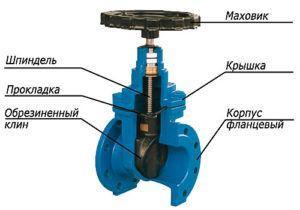 In addition, the design includes a gate valve yoke unit, which ensures that the stem-nut connection is located outside the main body. This protects the connection from the negative effects of the transported environment (e.g., high temperatures).
The operation of a pipeline gate valve occurs according to the following principle:
- The operator or electric drive sets the flywheel in motion.
- The rod is driven by a threaded connection.
- The rod moves the shutter (this process is controlled by the guide).
- The valve closes the body, preventing the movement of liquid in the pipeline.
To open the shutter, you need to turn the flywheel in the opposite direction.
Important! This device should not be used to regulate the flow of liquid. Prolonged exposure to water will cause the metal components to wear down over time, making them ineffective for completely shutting off the system. For partial shutoff of the pipeline, use a special control valve.
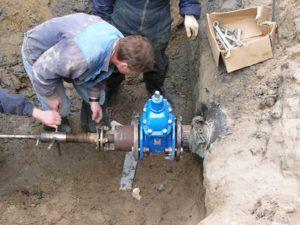
In most cases, severely worn water shutoff valves cannot be repaired; replacement is the only reliable solution. Therefore, be careful to ensure proper use.
Advantages of water valves
The gate valve is the most popular type of shutoff valve worldwide, its main advantage being its low cost. Furthermore, the gate valve offers the following advantages:
- Simplicity of design.
This device doesn't contain complex components, so the risk of failure is minimal. Furthermore, if any part wears out or becomes damaged, it can be replaced quickly, which is important for water supplies that are used 24/7.
- Small size.
The length of this device does not exceed a few centimeters, so they are the optimal option for installation in a limited space (for example, in a well).
- Wide range of applications.
Water supply shut-off devices can be used on pipelines made of any material and used for any purpose.
- Versatility.
After installing the water shut-off device, the direction of fluid flow can be changed; there is no need to turn the element over.
- Low hydraulic resistance.
There is no need for a water supply system when designing take into account hydraulic resistanceThe pressure created by the plumbing fittings to stop the flow of fluid in the pipe is practically zero. It's important to ensure that the valve opens fully. Otherwise, not only can significant hydraulic resistance be created (which can affect the functionality of the water supply system), but it can also cause rapid wear of the shutoff element.
- Possibility of installation on pipelines carrying high-temperature liquids.
The maximum temperature of the transported medium is 565 °C.
- Large selection of sizes.
Water shut-off devices are produced with diameters from 40 to 2000 millimetres, so they can be used in absolutely all systems.
- Tightness.
This element (unlike other types of shut-off valves) allows for maximum tightness.
- High reliability.
This device is capable of holding liquid with a working pressure of up to 25 Atmospheres.
Types and classification of water supply valves
Depending on the method of shutting off the pipe, shutoff valves are classified as either rising or non-rising stem valves. In the former, the rotational motion is transferred to the reciprocating motion, allowing the stem to extend and shut off the pipe. In the latter, shutoff occurs solely through rotation.
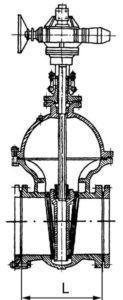
Depending on the type of material used, a distinction is made between steel and cast iron devices. The former are less expensive and can be connected to the pipe using couplings or flanges, while the latter only require a flange connection.
The special design of the wedge gate valve with a non-rising spindle allows for minimal dimensions (both in length and width).
The primary classification of valves is by the type of shutoff element. Currently, the following types of water supply valves exist:
- wedge;
- parallel;
- hose;
- gate valves.
Wedge gate valves: features
The main advantage of a wedge-type shutoff device for shutting off liquid flow in a water pipe is the slightly inclined seats. This allows the sliding element to take the form of a rigid, double-disc, or flexible wedge. In any case, when closed, the wedge fits tightly between the seats, ensuring a completely sealed system. The type of shutoff element is selected depending on the application.
A rigid wedge provides maximum reliability, but is highly susceptible to adverse environmental conditions. It can jam due to rust or be damaged by extreme temperature changes.
A wedge consisting of two discs does not require maximum precision in manufacture (unlike a rigid element), while still providing adequate sealing. The main disadvantage of this element is its more complex design, which affects the cost of the finished product.
The elastic wedge combines the advantages of the first two types: simplicity of design and ensuring tightness in case of inaccuracy in the selection of the device.
Parallel gate valves: design
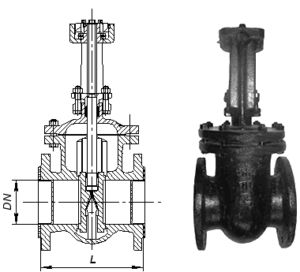 Unlike a wedge-type device, parallel water supply shutoff devices have seat surfaces arranged parallel to each other. This system is somewhat less reliable, but it is sufficient for most applications.
The main advantage of a parallel fixture (in comparison with a wedge fixture) is the simplicity of its design (parts located in parallel are much easier to manufacture, which means the likelihood of error and mistakes is minimal).
Parallel water supply fittings can have either a retractable or non-retractable stem. The former is more durable, as the threaded connection does not come into contact with the fluid being handled, while the latter is more compact.
The diameter of the through hole and the length of the device can vary, so you can always choose the optimal option for your system.
Ludlow valve
The Ludlow gate valve is a parallel, double-disc, wedge-type valve that has been in widespread use worldwide for over 150 years. The name comes from the company that first marketed it—Ludlow Valve Manufacturing Company.
These devices are made exclusively from cast iron and are characterized by extreme durability (over 100 years). In our country, production has been established since the 1980s in St. Petersburg.
Hose valves
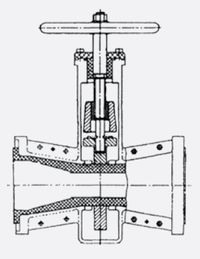 The design of a hose-type water valve is fundamentally different from other types of shutoff valves. The valve's design eliminates seats and a gate; flow is shut off by squeezing an elastic hose located within the valve body.
The main advantage of this system is that it eliminates contact between steel parts and the fluid being handled, which positively impacts the durability of the device. When selecting hose fittings, the key is to choose the correct rubber grade. The choice depends on the application; these fittings are most often used on pipes handling aggressive and viscous liquids.
Gate valves
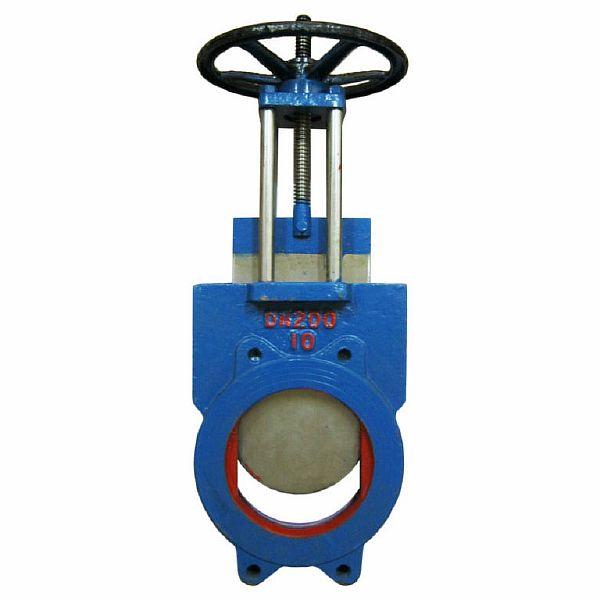
The design of a gate valve is virtually identical to a parallel valve. The only difference is the use of a single gate valve instead of two seats to shut off the pipe. This type of valve is the least reliable of all the valves available, and is therefore only used in systems that do not require absolute tightness (e.g., sewer systems and other systems with large amounts of impurities).