Sanitary treatment of human waste products is a pressing issue, driven by the world's growing population and the amount of food consumed. While this problem is solved in urban areas by installing wastewater treatment facilities, private homes inevitably require the installation of their own waste treatment systems, where bacteria in sewers, septic tanks, and cesspools play a crucial role in waste treatment.
Waste products from life activities act as a nutrient mass for bacteria that needs to be processed.

In this article, we'll examine in detail all aspects of bacteria for septic tanks and cesspools—specifically, the different types available, the advantages of this waste treatment method, how to use them most effectively, the causes of their death, how to create your own bacteria, and more.
- What are bacteria for pits and septic tanks?
- Types of bacteria
- Anaerobic compounds
- Aerobic class compositions
- Separation by purpose
- Separation by release form
- Advantages of wastewater treatment with biopreparations
- Conditions for the effective use of bacteria
- Causes of bacterial death
- TOP 5 popular products, what to consider when choosing
- How to make bacteria for a septic tank and cesspool yourself
What are bacteria for pits and septic tanks?
In natural conditions, waste biomass decomposes under the influence of natural microorganisms and bacteria, but this is a very slow process. Wastewater bacteria accelerate this process by more actively processing fecal matter.
Previously, bleach was widely used instead. But it only masks the unpleasant odor with its pungent, harmful odor, while simultaneously destroying the beneficial microorganisms that recycle the contents of pits and septic tanks.
Bioactive products are concentrated bacteria for cesspools and toilets. These bacteria are dormant and activated by adding water or mixing the ingredients. The biomass also contains enzymes that actively break down fecal matter.
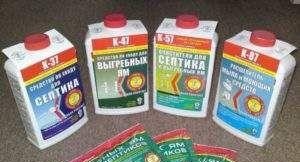
These compounds begin to work shortly after application. Activated during their life cycle, they break down fecal matter into simpler components that are virtually harmless to humans. Bacterial compounds for toilets and cesspools do not contain any substances harmful to humans.
Types of bacteria
The use of bacteria-based cleaning agents is an excellent alternative to decontaminating private structures when treating sewer wastewater using chemical and physical methods. Live bacteria for cesspools are available commercially and are used in powder form or as solutions.
They are activated over several hours by adding water or shaking. This breaks down complex organic compounds into simpler ones and cleans the walls of the sewer pipes of fatty deposits, preventing clogs.
Video
Therefore, it is better to add bacterial agents to the toilet or kitchen sink.
It should be remembered that most of the remedies work at positive temperatures for their habitat, and should be from +3 to +30 degreesHowever, at lower temperatures they do not die, but they enter a state of contention and successfully survive unfavorable circumstances.
The entire family of bioactive agents is divided into two main groups: anaerobic and aerobic. These groups are differentiated by two key characteristics: anaerobic agents work without the presence of oxygen, while aerobic agents do so, acting as an activator of the biomass decomposition process.
Anaerobic compounds
Preparations with such bacteria accelerate the process of decay, resulting in the formation of a solid sediment and its components settling to the bottom of the tank, where its final decomposition occurs. Waste in the liquid fraction decomposes in the same manner, settling to the bottom.
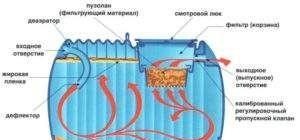
As a result of such processes, a dense sludge residue is formed at the bottom of the tank, which It is necessary to periodically remove it by pumping it out with special machines – sludge pumps.
Anaerobic bacteria for septic tanks not only promote the decomposition of solid components in wastewater, but also significantly eliminate unpleasant odors.
Aerobic class compositions
Aerobic bacteria in septic tanks operate with the help of oxygen. This characteristic necessitates the forced injection of atomized air directly into the septic tank using a low-power compressor.
They are also used in filtration fields or in the second tank of a local treatment system, in which active aeration occurs.
Air treatment of wastewater liquefies the biomass and results in limited sludge formation, which significantly increases the period between septic tank cleaning operations.
Separation by purpose
Biological substances can be used for various purposes, so when purchasing a product at the market or in a store, you need to carefully read the instructions for their use.
Based on this criterion, four types of products for septic tanks and sewer systems can be distinguished:
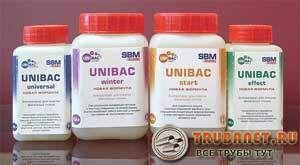
 Starter cultures are designed to activate the wastewater treatment process after a prolonged interruption in the sewer system's operation, such as after a long break in the use of a summer cottage bathroom during the winter. In such circumstances, starter cultures should be added as early as possible, as it will take up to three weeks for active biomass to form.
- Universal – they are used, following the recommendations on the packaging, to clean any structures of wastewater treatment plants.
- Reinforced ones are used for cleaning sewer networks that are in a very neglected state.
- Specialty cleaners are used in specific conditions to solve specific problems. For example, when sewer lines are heavily clogged with grease deposits. They are not used regularly, but only as needed.
Separation by release form
Biopreparations are produced in three main types:
- The preparations are dry, produced in powder form. To activate them, they are diluted with water in a strictly defined ratio. Generally, the procedure is simple: dilute with water, let it sit for the time indicated on the bio-composition packaging, and then pour it down the drain.
- Liquid substances produced in high concentrations are complex bioactivators consisting of anaerobic bacteria. The main advantage of these products is their high activity, allowing one liter of the product to effectively treat up to two tons of wastewater.
- Live bacteria tablets for septic tanks are the most convenient to use. According to the manufacturer's instructions, they simply need to be added to the drain to activate. However, to speed up the process of active ingredient activation, it's best to crush the tablets.
As can be seen from the data provided, biological products for cleaning sewage and wastewater in a local treatment system are very diverse in both their purpose and mode of action.
Video
Therefore, choosing bacteria isn't easy. But it's important to know that the effectiveness of purification depends on the right choice.
Advantages of wastewater treatment with biopreparations
 Septic tank wastewater treatment can be accomplished using various methods, but the best results are achieved using bacteria. The advantages include:
- The purification system using biopreparations is year-round.
- Affordable cost of funds and no additional equipment.
- High efficiency of wastewater treatment, reaching 98%.
- The operation of the septic tank does not require additional energy costs.
- Easy to use.
- No harmful impact on the environment.
In bioseptic tanks, mechanical sedimentation occurs in the first section of the system, followed by treatment using anaerobic and aerobic agents. This removes nitrogen from the wastewater, which improves bacterial growth.
During the purification process, contaminated water goes through the following iterations:
- A biological filter in which they are treated with ammonium ions from activated sludge, resulting in their disinfection.
- In the settling tank, where the recirculation of sediment masses takes place, nitrogen, which is harmless to the atmosphere, is also released.
- In the settling tank, aeration of the wastewater occurs, which results in additional processing of the water by aerobic organisms, which increases the degree of purification to 98-99%.
Water treatment using this technology allows for the production of sufficiently clean water that can be discharged onto the ground or into a nearby body of water.
Watch the video
[sociallocker]
In addition to the above, water can be additionally treated with chlorine cartridges and also exposed to ultraviolet radiation.
Conditions for the effective use of bacteria
When adding biobacteria to cesspools, it's important to understand that we're dealing with living organisms. While it's not necessary to interact with them, it is essential to create favorable conditions for their proper functioning.
Therefore, it's important to select a material that matches the actual conditions in a cesspool or septic tank. To do this, certain rules must be followed:
- The storage tank being treated with biological substances must have a sufficiently calorific environment for them. Introducing biobacteria into a clean environment makes no sense, as it lacks food for them. The septic tank or cesspool chamber should contain at least a small amount of wastewater containing solid sediment.
- Pits or septic tanks must be used regularly to ensure that the contents are constantly replenished, otherwise the living bacteria will starve, become weakened, and may die.
- Dishwashing detergents and toilet bowl cleaners should be chlorine-free, as most living things cannot withstand its effects and die. It is also harmful to humans. If you want to ensure the purity of your wastewater, you can use a chlorine cartridge, installing it just before discharging the treated water into the ground or a body of water.
- Live bacteria for sewage behave in the same way in the presence of antibiotics, which destroy the bacterial environment.
- Biobacteria for septic tanks must be prepared before use. Simply adding powder or dropping tablets into the toilet bowl is not enough. The contents of the package must be mixed with the prepared liquid before use. Pour the water into a clean container and let it sit for at least 24 hours to remove any excess chemicals. To effectively activate the biomass, dilute half a liter of kefir in this mixture and let it steep for several hours. After this preparation, the mixture will begin working quickly and effectively. After adding the product, it is advisable not to use the biotoilet for 3-4 hours, so it is best to do this late in the evening or in the morning before leaving for work.
- The active composition must break down organic matter into its elemental components: carbon dioxide, water, and solid sediment. Different compositions are often used for treating cesspools and septic tanks. For example, for outdoor toilets, dry products or tablets are more often used, with packaging indicating suitability for these conditions.
Watch the video
After treatment with biobacteria, human waste becomes harmless. After processing, it can be discharged directly into the soil. Septic tanks use a variety of bacteria that are resistant to the chemicals often found in various cleaning products.
Causes of bacterial death
Like all living things, bacteria used to clean cesspools or septic tanks are prone to death. This can occur for various reasons:
- Natural – associated with exceeding the temperature range for life. As mentioned above, the maximum temperature is 30 degrees Celsius. If this temperature is exceeded, bacteria die. If the temperature falls below 3 degrees Celsius, their activity slows down and they enter a dormant state.
- The second cause of bacterial death is "starvation." In the absence of a nutrient medium for a prolonged period, their existence ceases.
- A group of factors that influence the lifespan of bacteria is the presence of toxic substances in the wastewater, which include:
- substances containing chlorine;
- potassium permanganate;
- most household chemicals;
- some medications;
- antibacterial agents.
It is impossible to guarantee that the listed substances will not end up in the sewer system, so the bacterial colony in septic tanks should be replenished with fresh individuals from time to time.
Watch the video
[sociallocker]
The conditions under which bacteria thrive are also important. It's known that anaerobic bacteria can only thrive in an aquatic environment. If there's no water layer above the wastewater, add water to cover it by 2-3 centimeters.
TOP 5 popular products, what to consider when choosing
When choosing a wastewater treatment product, you need to consider a number of factors:
- the concentration of the composition, some products need to be added regularly;
- the amount of the preparation depends on the volume of the septic tank; the data is always indicated on its packaging;
- the type of bacteria included in the product, because they must decompose not only feces, but also cellulose and organic fibers;
When selecting bacterial materials for a septic tank or pit, you need to consider not so much the cost, but the actual conditions of their use.
When purchasing biological products, you should pay attention to the following samples:
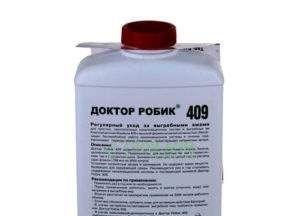
- Dr. Robik's powerful bacterial mixture dissolves not only feces but also cellulose and other organic matter. The average shelf life of one batch of Dr. Robik is about a month. The resulting product can be used as compost. It has received positive reviews.
- Atmosbio is a French product for use in septic tanks and cesspools. Its distinguishing feature is its ability to process chlorine. Available in a box of 24 sachets.
- BioSept is a universal preparation for processing all types of organic waste.
- Roetech.
- Himola.
All products are fairly reasonably priced. To choose the right bioactivator, consider its rating and ability to completely and safely eliminate fecal matter. The effectiveness of different types of bacteria in a cesspool can only be assessed based on their final performance.
How to make bacteria for a septic tank and cesspool yourself
The constant use of a local treatment plant necessitates periodic cleaning of the septic tank from activated sludge. This substance is a sediment of insoluble components of fecal and household wastewater, along with the same cultured bacteria that process wastewater.
At industrial wastewater treatment plants, when cleaning tanks, some of the activated sludge is used to restore bacterial colonies in digesters. Nothing prevents you from doing the same when operating a wastewater treatment plant, producing your own bacteria for your septic tank.
As for creating your own bacterial culture for septic tanks and cesspools, this task is only feasible for large, specialized organizations. The process involves complex chemical reactions that are virtually impossible to replicate at home.
There is no point in storing live cultures for future use, since they are always available in the activated sludge of an operating wastewater treatment plant, and any owner will be happy to share a few buckets of this useful product.
Video: Cleaning a Countryside Toilet
Another option is to take a container, fill it with water, create a favorable environment for the bacteria, and then introduce them. This way, we're creating a necessary reserve for the future. The main thing is to remember to feed them and monitor the temperature to ensure it's within an acceptable range.
When we need more bacteria, we reserve a third or a quarter of the container and use the rest as needed. We add water and nutrients to the remaining colony.
This procedure can thus be repeated as many times as necessary, eliminating the need to purchase new biobacteria, as we have our own colony.
It should be noted that the production of bacterial compounds in Russia without the appropriate permission is strictly prohibited, as this poses a threat to national security.