A water trap is a curved pipe or other structure that holds a certain amount of water. The device prevents sewer odors from entering and ensures the flow of wastewater.
Sewers are far from being like perfume bottles; their composition is such that they emit extremely unpleasant, pungent, and persistent odors. To protect against these unpleasant odors, a sewer system device called a water seal was invented.

This simple device reliably isolates the drain's interior from the living space, saving the home's occupants from unpleasant contact.
- How is a siphon constructed and on what principle does it work?
- What types of hydraulic seals are there for sewerage systems?
- Hydraulic toggle valves
- Bottle-type devices
- Double-turn hydraulic valve
- Corrugated siphons
- Overflow systems
- Dry water seals for sewerage
- Sewer trap with a water seal
- Choosing a water seal for sewerage
- Prices for water seals
- Installation of a water seal on the sewer system
- How to make water seals yourself
How is a siphon constructed and on what principle does it work?
Wherever this device is located, its purpose is always the same:
- compensation of hydraulic shocks to limit loads on the gravity sewerage system;
- preventing the entry of foul-smelling air from the drainage system into the living space.
If a water trap is selected correctly and installed according to requirements, the room will remain clean and the sewer system will operate smoothly for a long time. This can be achieved by understanding what a water trap is and using it correctly.
The designs of the shut-off devices vary, but in general, it is a product made of pipes, in the bend of which water is retained, blocking the clearance along the internal diameter.
A water plug remains inside the pipe constantly, periodically renewing itself. If left unused for a long time, the fluid in the hydraulic seals gradually dries out, allowing the odor to enter the room. This phenomenon is typical for buildings with occasional occupancy, such as summer cottages.
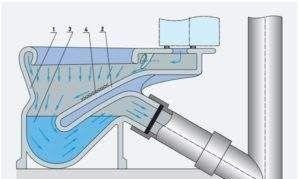
All elements of the sewer system are interconnected. For example, the waste pipe prevents the siphon from breaking off — drawing water into the riser during drainage by equalizing the pressure in the sewer pipe. For the same purpose, Air valves of various designs - see installation features, types, and manufacturersThey are used when there are no waste pipes in the building structure.
What types of hydraulic seals are there for sewerage systems?
Many designs of interrupting devices for drainage systems have been developed and used.
Watch the video
They can be classified based on various properties, but primarily rely on design differences. Thus, up to six main types of sewer water seals are distinguished.
Hydraulic toggle valves
This device is easily identified by its appearance – it is shaped like the Latin letter U. The advantage of this shape is its durability, allowing for easy installation of the system without fear of damage.
This type of trap is most often used for installation on bathtubs and sinks. The water trap is made of plastic or metal.
Simple plastic inserts are often disposable and cannot be adjusted. When disassembling, they are usually simply cut out.
Composite products allow you to adjust the position of the branch pipe by changing the relative position of the elements.
The elbow is manufactured with two bends—an inlet and an outlet—with the latter positioned 5-6 centimeters below the former. If cleaning is necessary, several methods can be used:
- with complete disassembly of the product, or;
- using a flexible cable with a brush at the end.
Some modifications are equipped with an additional inlet, which can be used when connecting a dishwasher or washing machine.
Bottle-type devices
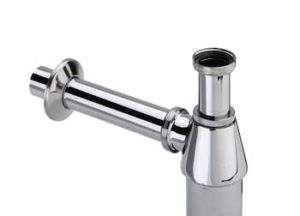 Siphons of this design are most often used on kitchen sinks. They are designed so that the flow of used water enters the bottom of the casing and then rises up through a gap.
This process causes solid particles, such as food residue, to settle. As they accumulate, they are removed by removing the casing. To do this, simply unscrew the union nut, remove the container, and clean it of any debris.
Then, rinse it with hot water and detergent to remove any grease deposits from the interior walls. Before installation, seal the threads with silicone sealant.
At the same time, such a siphon fulfills its main purpose - protecting the room from the penetration of sewer gases.
Bottle-shaped designs also ensure the integrity of jewelry, especially rings, which can easily slip off a woman's soapy finger and settle at the bottom of the settling tank.
Double-turn hydraulic valve
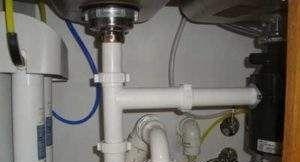 This device is similar to a knee-type device, but its configuration is more complex. The drain pipe connects to the outlet of the plumbing fixture, and a special mesh is installed at the connection point to catch hair and animal fur in the drain.
Next, it transitions into an elbow and, at an angle, connects to another pipe that leads to the sewer drain. The main location where this type of trap is installed is in bathrooms.
Some double-turn models are equipped with inspection holes, which allow for inspection and prompt cleaning in the event of a blockage.
Double-turn water seals are most often made of polypropylene, but high-end products can be made of brass with a chrome-plated surface. When working with these products, special tools with soft jaws should be used to avoid damaging the mirror-like surface.
Corrugated siphons
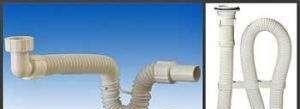 Water traps in sewer pipes can be made from flexible corrugated pipe. These devices are very convenient for installation in tight spaces. Using the material's plastic properties, this trap easily fits into the narrowest gaps.
This distinguishes this type of pipeline from rigid pipe systems. At the same time, the material—polypropylene—is durable enough for use in gravity and low-pressure drainage systems.
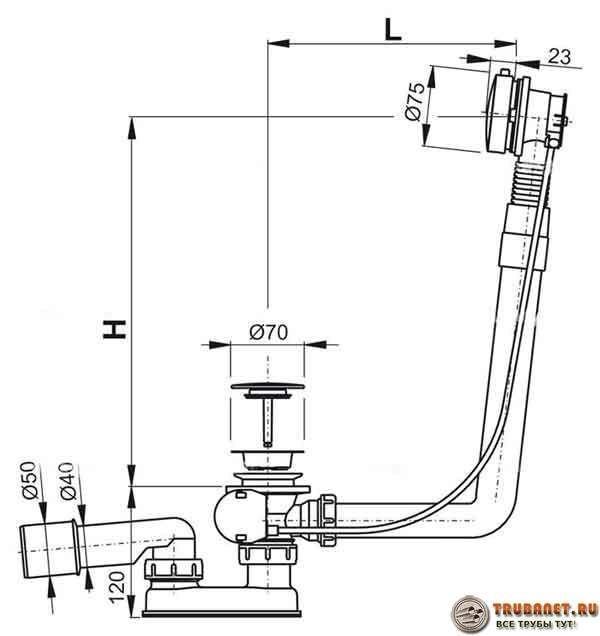
Corrugated pipe traps are popular for bathrooms, where space is typically limited. They require not only the main drain pipe but also an overflow hose. Furthermore, the pipe must be used to form a water trap.
When choosing a siphon of this design, consider the properties of the inner surface of the corrugated pipe, which actively traps all types of contaminants that can be found in wastewater. Therefore, a fine-mesh filter should be installed on the drain funnel.
A hydraulic seal for a corrugated pipe sewer requires constant maintenance to remove internal contaminants; otherwise, it becomes rigid and cracks appear at the bends of the corrugated pipe.
Overflow systems
This type of installation protects a home from flooding. If the drain hole becomes blocked for one reason or another, an overflow valve can save the day. This is a familiar occurrence, especially with bathtubs or kitchen sinks.
Of course, you'll have to pay for the water that goes into the overflow device, but it's cheaper than having to make unexpected repairs not only in your apartment, but also in your neighbors'.
Dry water seals for sewerage
While solving a similar problem to hydraulic seals, a dry seal operates in a completely different way. It uses the "nipple" principle.
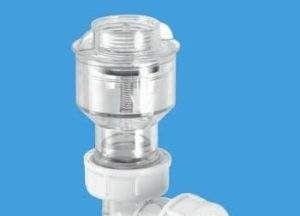
Water enters through a pipe with a check valve installed. This ensures that water remains in the pipe under all circumstances, preventing the foul odor from escaping.
It is advisable to use such a device in a bathhouse, where hydraulic devices tend to dry out.
Dry traps should never be used in kitchen sinks, where they can cause clogs, but they are effective in shower stalls.
There are several types of dry seals:
- Membrane ones, which close the hole when water leaves with an elastic membrane.
- Pendulum-type, quickly closing access to the hole.
- Float valves that operate on the same principle as a flush tank.
Sewer trap with a water seal
This type of unit is installed in rooms where drainage occurs over the entire floor surface. During construction, a sealed floor screed is installed, into which a trap is installed to prevent air from entering the sewer system.
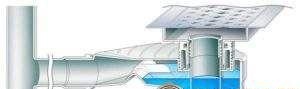
However, when using a sewer trap, it's important to consider long periods of downtime, especially in showers in bathhouses. In this case, when the water in the trap dries up, air from the sewer system can easily enter the room.
Therefore, in addition to a water trap, a dry trap is also commonly installed in bathhouses. It is not a special device and is installed as part of the sewer drain. This trap is guaranteed to seal the drain even without water.
Choosing a water seal for sewerage
 The modern construction market offers a wide range of siphons, which can differ according to various criteria:
- By material of manufacture.
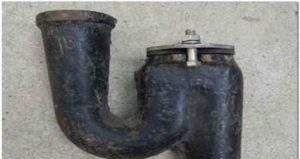
- Traditionally, water traps were made of cast iron. This material is extremely durable and strong, and is resistant to aggressive environments. A disadvantage of these traps is their rough interior surface, which tends to retain various contaminants, especially fatty deposits.
A cast iron siphon must be equipped with an inspection window so that the sewer system can be cleaned without completely installing it.
Hydraulic valves of this design are still used in industrial construction.
1.2.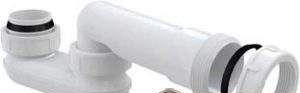 Plastic water traps are the most popular, thanks to their relatively low price. Their high performance qualities, such as a smooth interior and chemical resistance, also play a significant role. Furthermore, plastic pipe traps are easy to assemble and adjust to the desired location. DIY sewer water traps are most often made from this material.
Consider a plastic water trap made from corrugated pipe. During installation, they can be molded to virtually any shape and bending direction, making them suitable for use in confined spaces.
1.3. Popular metal products are made of bronze or brass, electrochemically coated with a layer of nickel. This is done not only for decorative purposes but also helps extend the life of the fittings by protecting the surface from oxidation.
Installation of such plumbing fixtures must be carried out with extreme caution, using tools with plastic jaws to avoid scratching the mirror surface of the products.
1.4. Water seals and other stainless steel plumbing fittings can be considered special-purpose products. They are used in childcare and medical facilities, as well as in catering establishments. This is done to take advantage of the material's key properties—it's easy to clean and disinfect.
- By special qualities.
2.1 When choosing a water seal for your kitchen sink, opt for a bottle-type design. This type of device allows you to quickly remove the outer container and clean out any food debris from the sink, or even retrieve a gold ring that slipped off a wet finger.
2.2. When choosing a drain for a shower, kitchen, or bathroom, consider the frequency of use of these rooms. If they are left idle for extended periods, the water seal will dry out, with predictable consequences. Therefore, all drains for a summer house should be additionally equipped with dry seals.
2.3. When connecting a bathtub to a sewer system, it is most convenient to use a water seal made of a corrugated hose, given its ability to fit into the tightest spaces.
When choosing a water seal for a sewer system, it is important to consider not only the specific installation location, but also the advantages offered by the design and other features of the device.
Watch the video
Prices for water seals
When studying the market, you are amazed by the variety of designs, the multitude of manufacturers, and the range of prices for these products.
The cheapest version of the siphon can be purchased for only for only 37 rubles, the most expensive one will cost more than 6000So, no one will leave the market without the necessary purchase.
Watch the video
Installation of a water seal on the sewer system
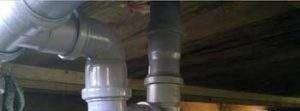 Today's siphon systems are so intuitive and simple that installing them in a system is extremely easy, and anyone can do it themselves. Let's look at a few examples:
- A self-assembled water seal device can be made from a piece of pipe and several standard fittings.
The use of additional sealant will ensure long-term operation of the device.
- The connection of a drain in a shower or bathroom is formed in the same way, and it can be connected directly to a collector pipe with a diameter of 110 mm.
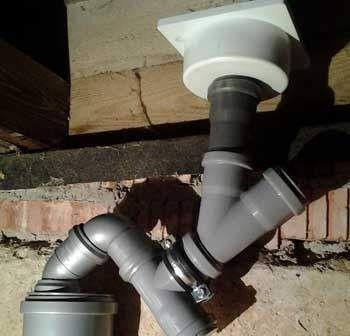
If cleaning is necessary, the device is simply dismantled and then reassembled.
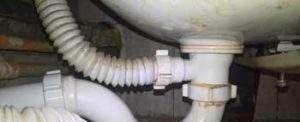
 A bathtub water trap, considered the most difficult to install, can easily be made using corrugated plastic hose. The corrugated hose is used for the overflow, which is also a necessary element of the bathtub plumbing system, and the trap can be either a solid one, selected by size, or made from the same hose. The inconvenience of working in confined spaces requires special attention to the quality of fastener installation—no distortions and strictly threaded.
- The easiest way to connect a bottle water seal to a kitchen sink.
To do this, insert the upper funnel into the sink opening and tighten the pressure nut. Before doing this, install a gasket under the funnel. Do not overtighten the nut, as this may displace the gasket from its conical seat and cause a leak.
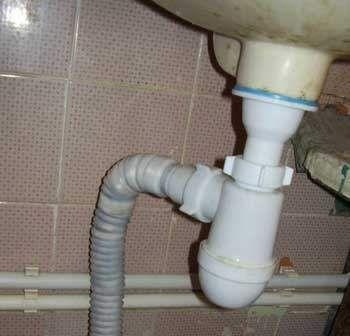
After this, the casing is placed on the pipe and secured with a nut. A corrugated pipe is extended from the casing to the inlet rubber bushing on the sewer pipe opening. The bushing's outer diameter should match the opening, and its inner diameter should match the diameter of the corrugated pipe tip.
To be on the safe side, it's best to seal the mounting surfaces with silicone sealant. This connection will take about 15 minutes.
Watch the video
How to make water seals yourself
The need for a trap in a sewer system is obvious. How can you make this simple yet essential component yourself? It's best to use standard fittings of the appropriate size. Of course, you'll need to have the skills to solder plastic pipes using specialized equipment—a soldering iron.
Watch the video
But it's a simple art, and learning it isn't difficult or time-consuming. The device can be rented on a daily basis, eliminating the need for a purchase.