 Heating sewer pipes with a heating cable is used when the system is located in areas prone to ground freezing. Extending the drain line below this level is not always possible. This may be prevented by:
- floating sand;
- other communications laid and much more.
Therefore, there is a need to heat the sewer system. The industry offers a wide range of insulation materials for this purpose. All of them are distinguished by excellent performance characteristics and high quality.
Another distinctive characteristic of these materials is their low cost. Heating cable for drain lines is considered the most effective thermal insulator.
Heating inside the system
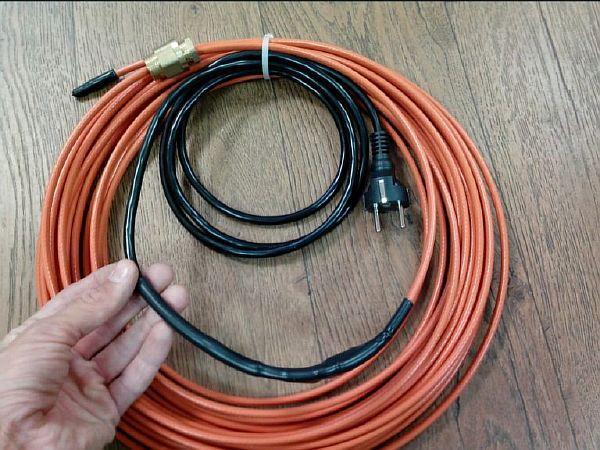
Heating cable inside sewer pipes has been used for quite a long time. In its structure, it is an electric cable where resistance is used to regulate the temperature within the network.It utilizes a well-known property of metal conductors: they heat up when electricity passes through them. As resistance increases, the heating level rises.
From the above, it becomes clear that the heating cable for sewer pipes must be equipped with good waterproofing, because it is constantly in water.
The cable that is laid inside is designed like this:
- metal conductor for heating;
- cores enclosed within heat-resistant insulation;
- another layer of fluoroplastic insulation;
- copper screen;
- outer layer of insulation.
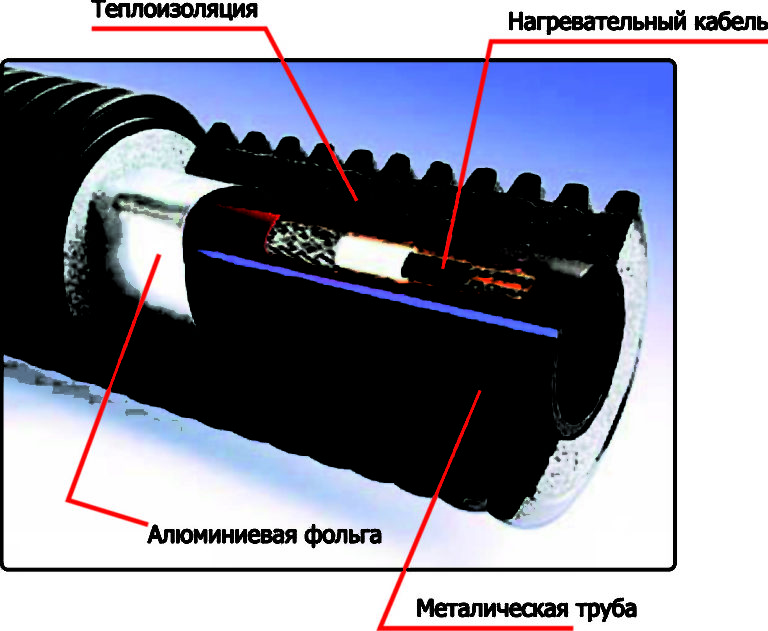
Additionally, the drain fitting inside the drain structure contains a temperature regulator. This prevents the mechanism from overheating and saves energy.
Advantages of sewer heating
Heating sewer pipes from the inside with a heating cable has a number of advantages:
- Wires that heat from the inside make it possible to maintain the required temperature level so that the liquid in the system does not freeze.
- High security of internally routed cables and their regulators.
- Such devices can be used not only inside, but also on the outside of the highway.
- Simple and convenient to use.
- Possibility to save electricity thanks to automatic regulator.
The only drawback of internally installed devices is their dependence on electricity. For this reason, additional sources are installed on important pipelines to provide backup during interruptions in the main power supply.
Types of devices available for purchase in Yakutsk
Heating cable for sewer pipes in Yakutsk is available in the following types:
- Resistive.
- Self-regulating.
Resistive options offered in Yakutsk are divided into the following types:
- Linear.
- Zonal.
Linear products generate heat when they come into contact with electrical conductors. They can be single-core or comprised of multiple metal strands, often shaped like a spiral.
TIP: In country houses and cottages, a 50-watt per meter heater is most often used to heat sewer lines. This is quite sufficient for a small drain system.
For a major trunk line in Yakutsk, a higher-power cable system can be purchased; it will effectively protect pipes from freezing even in this cold region.
It's important to understand that the heating cable's power depends not only on its diameter but also on its length. Since Yakutsk has a cold climate, more powerful options will be preferable, which will impact electricity consumption.
Self-regulating heating cable
The information above makes it clear that heating sewer pipes is essential in winter. Special devices are used for this purpose.
Self-regulating heating cable for sewer pipes stands out due to its ability to warm up or cool down depending on the ambient temperature, eliminating the need for any additional control mechanisms.
Self-regulating heating with an internal installation method is installed on drainage networks with a volume of up to 50 mm, which cannot be accessed directly.
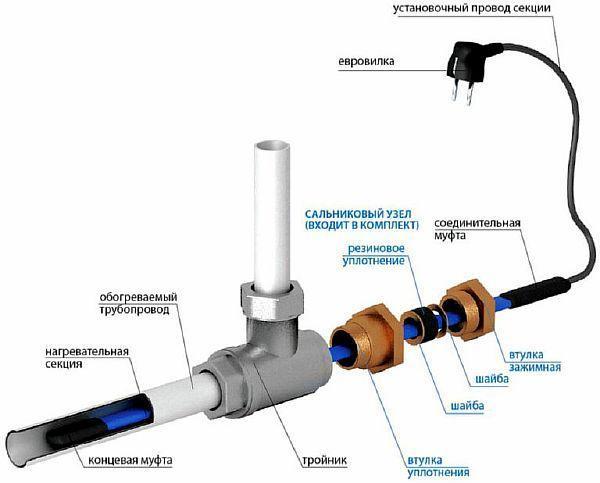 A heating device is installed in the center of the main line along its entire length. A gland assembly is used for this purpose, and all work is carried out in accordance with safety regulations.
Here are some quick conventions to adhere to:
- When inserting, cover all parts of the edges and threads of the fittings.
- Do not damage the outer shell of the heating device.
- The location of the cable installation must be marked on the outer part of the trunk line.
- The length of the heating pipeline must correspond to the length of the main line.
- It is not permitted to install a self-regulating heating device through shut-off valves.
This type of installation allows for the highest heating efficiency and is used for commissioned structures. Precise measurements of the area to be heated are taken beforehand.
Self-regulating wire for protection against short circuits is equipped with a device automatic shutdownIt should be added that a self-regulating heater inside the network is not recommended for main lines, supplying drinking water, but for drainage systems this option is very suitable.
Features of external installation
Self-regulating heating cable for heating sewer pipes on the outer part of the main line is very often located.
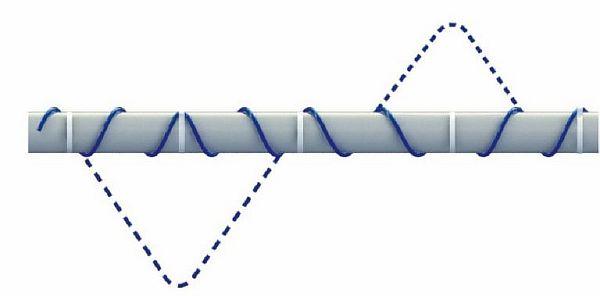 There are several options for this type of work:
- Wavy line styling.
- Placement along the tubular product straight.
- Several heating wires running parallel to the main line.
- In the form of a spiral.
- When installing heating pipes on elbows and taps, the previous methods are combined simultaneously.
Initially, the drain heating device is secured with small pieces of tape. These are spaced 0.3 meters apart. Then, aluminum tape is run along the entire length of the heating pipe. This creates a secure connection to the top of the main line.
TIP: The minimum bending volume for a heating wire is equal to the sum of six of its volumes.
If this installation is being carried out on a plastic system, it should first be sealed with adhesive tape. Aluminum foil can also be used for this task. This will ensure even heat distribution throughout the entire pipeline area.
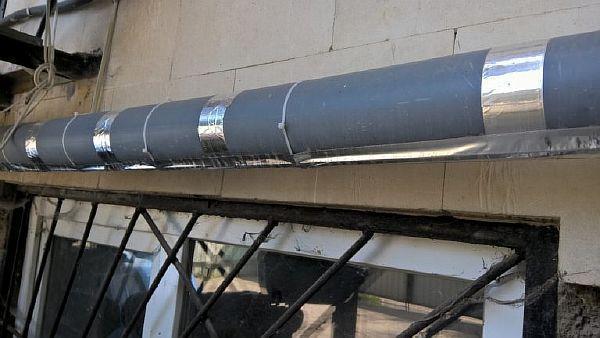 After installing the heating device, it is recommended to insulate the pipe system using special materials.
Heating sewer pipes with heating cable is easy and effective, thanks to manufacturers like Raychem, Esto, Lavita, and others. Devi products have received the highest ratings from technicians. All of these products help extend the life of the system, which directly depends on the quality of heating during cold winter weather.