A drainage system in a private home ensures comfortable and healthy living. However, as people live, their needs and needs change, which in some cases necessitates the use of additional equipment, such as a Sololift sewer pumping station.
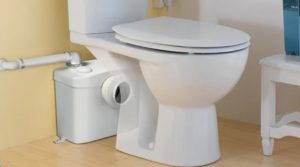
This device creates additional opportunities for changing the layout of the sewer system, including the installation of plumbing equipment below the discharge level.
- What is Sololift and what is it used for?
- Design and operating principle
- Technical characteristics and marking of the device
- Main pump models, their cost and installation methods
- Which Sololift should I choose for my sewer system?
- Installation of Sololift for sewerage
- Operating and maintenance rules
- On the advantages and disadvantages of sewer pumping stations
What is Sololift and what is it used for?
A properly designed sewer system requires pipes to be installed with a slope toward the drain. However, sometimes it becomes necessary to reconstruct the network, which places the drain sources below the drain outlet.
To remove wastewater from this level fecal pumps are used, as well as more advanced, relatively new equipment – Sololifts.
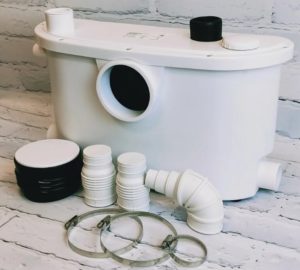
What is the Sololift2 sewer system (Sololift2 from Grundfos)? It's a pumping unit housed in a durable plastic housing, designed to process wastewater and transfer it to a higher level, corresponding to the sewer level.
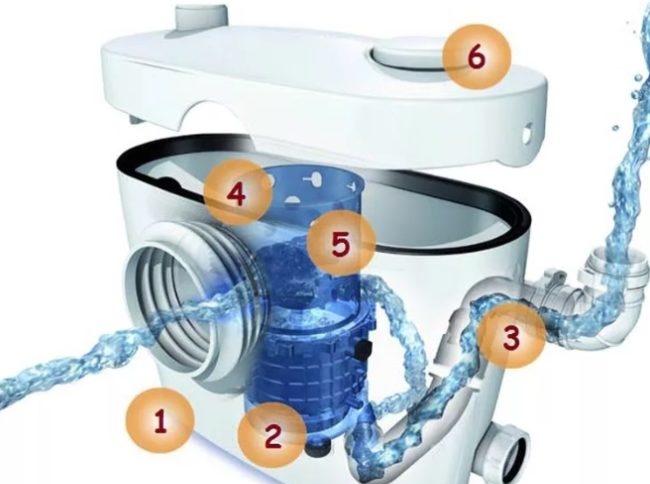
This happens in the following order:
Design and operating principle
The overall dimensions of this device are very small, usually their capacity does not exceed 9 litersIt's clear that the frequency of filling such a vessel is very low. Therefore, all devices are equipped with level sensors.
Thus, the processing and removal of wastewater is carried out in a continuous and short-term mode.
The device is also equipped with check valves to prevent backflow of sewer fluid. Pressure sewer pipes are installed with a slope of at least 1 percent.
Technical characteristics and marking of the device
Today, the Sololift range offers a variety of models and modifications. All products are housed in white plastic housings, with distinct differentiation based on their intended use and configuration. These pumping units are designed for residential, office, and industrial applications.
Devices of this type are equipped with shredders, but can only process toilet paper; waste should be prevented from entering the drains.
If this is not possible, you should select other similar equipment. Some models are capable of processing more complex contaminants, such as sanitary pads. This feature is reflected in the device's specifications.
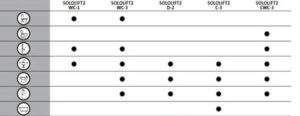
- C-3, where the index “C” indicates the size of the product, equal to 125 millimeters;
- D-3, the marking indicates that the device is suitable only for sinks and shower stalls; using it with a toilet leads to sewer blockages;
- WC – a designation indicating the presence of a cutting device for crushing inclusions in the kit, allowing it to be used with a toilet;
- WC-1 – the pump is equipped with one input;
- WC-3 – the device has 3 inputs.
Such systems can be installed with toilets, bidets, and washing machines.
Equipment of this class can operate with liquids having temperatures up to +45 degrees Celsius. If it is necessary to process streams containing hot water, a device of the model C-3.
Devices of this class provide a power of up to 10 meters with a productivity of approximately 4.3 cubic meters per hour of operation.
The design features and completeness of devices of this class give them the following capabilities:
- there is an overheating protection function;
- It is intended to use a carbon filter to eliminate sewer odors;
- The cable length of 1.2 meters allows you to choose the location for the pump.
 Units of this type operate from 220 volt networksHydrodynamic thermal relays are used to prevent the tank from overflowing. Check valves are installed on the discharge pipes to protect the unit from overflow and liquid leakage.
Metal parts can operate in aggressive environments as they are made of anti-corrosion steel.
Main pump models, their cost and installation methods
1. WC-1This device's compact size allows it to be installed in sewer systems inside small spaces. It is equipped with a powerful pump and a grinder, capable of effectively breaking down even items such as sanitary pads.
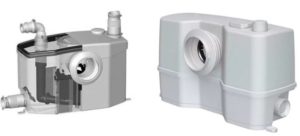
The unit has its own alarm system that responds to operational malfunctions. The design allows for maintenance and repair without disconnecting the sewer line.
Main parameters:
- Weight 7.3 kg;
- Overall dimensions – 347 x 426 x 176 millimeters;
- Capacity – 9 liters.
Depending on the complete set, the device can cost from 13 to 18 thousand rubles.
Sololift is installed by fastening it to the floor with dowels or screws. The most common installation location is is the space behind the toilet, while the distance from the device to it should be about 15 centimeters.
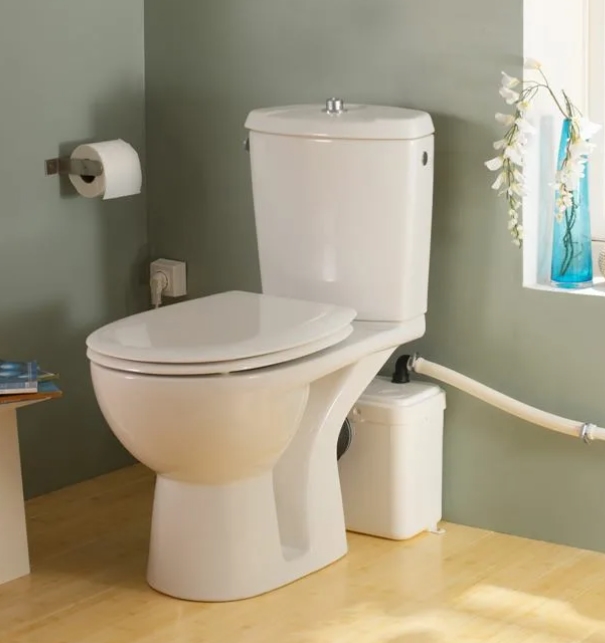
To install the Sololift, you need to drill several holes in the floor for plastic inserts (dowels). Self-tapping screws are used for fastening. There's no need to purchase any fasteners when purchasing the Sololift—they're usually included in the package.
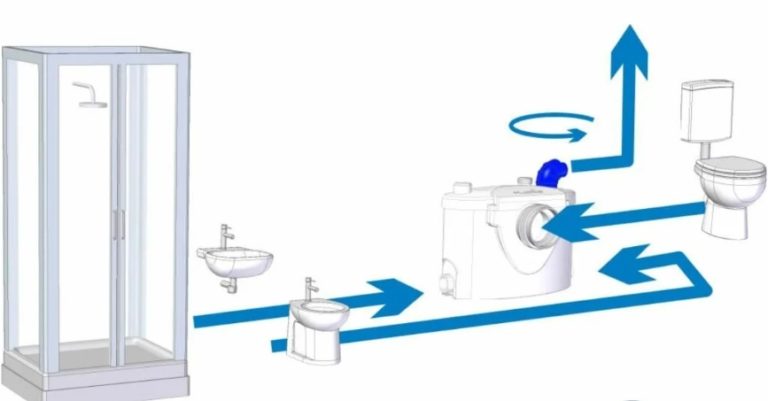
2. WC-3This model is identical in characteristics to the previous one. The difference is that it is equipped with three pipes, which allows for the simultaneous connection of wastewater from several sources – toilet, sink, shower and othersWhen choosing this model, the temperature of the wastewater should be taken into account.
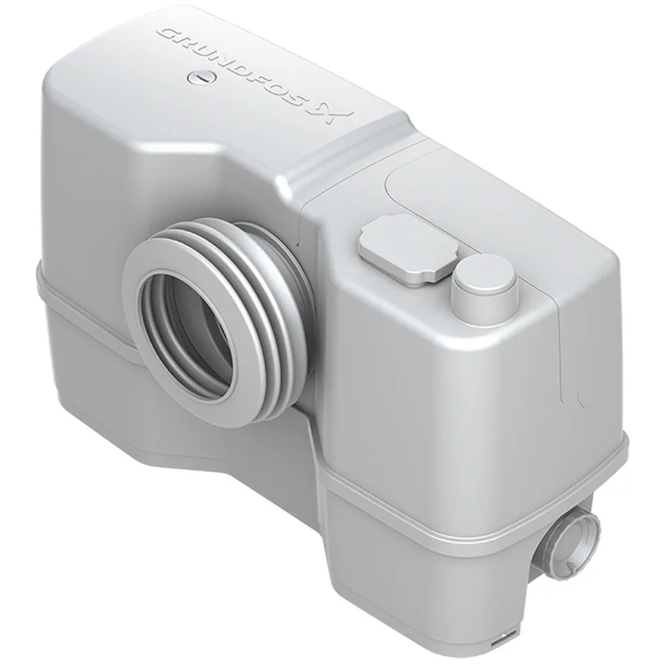 Parameters of Sololift WC-3:
- Weight characteristics – 7.3 kg;
- Overall dimensions – 426 x 442 x 176 millimeters;
- The tank capacity is 9 liters.
You can purchase this modification of Sololift for the drainage system for 22 thousand rubles.
3. CWC-3This type of installation can be combined with any type of plumbing fixture, as it has a high-power pump and a grinding mechanism.
It can handle almost any type of dirt except stones. The device has an audible alarm., protected from overheating, has a self-contained device restart.
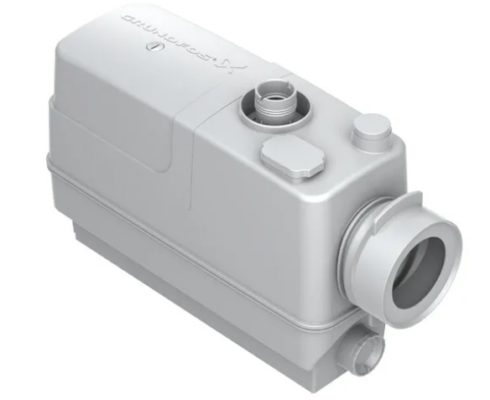
Main technical data:
- Weight – 7.1 kilograms;
- Dimensions: 539 x 496 x 165 millimeters;
- Capacity
- You can purchase it for 22 thousand rubles.
The rounded bottom of the housing prevents the accumulation of solids inside, significantly increasing the frequency of preventative cleaning. This frequency should be verified in accordance with the recommendations in the technical documentation.
4. The device of the D-3 modelThis compact unit is designed for pumping clean media, as it is not equipped with a macerator. Therefore, it cannot be connected to a toilet. The device is installed by fastening it to the floor with dowels.
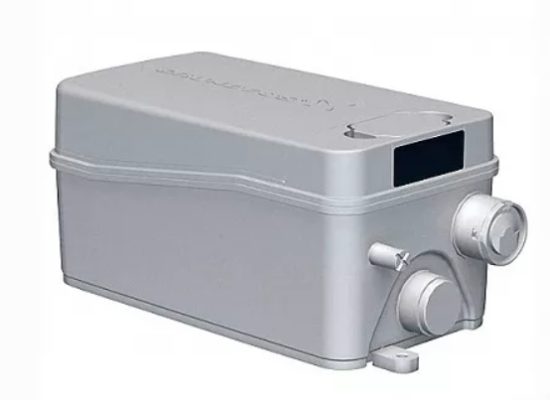 When installing in a shower room, you need to pay attention to the frequency of the drain mesh - it should trap hair and small debrisThe device should be placed at a level below the drain level; it is usually installed in a pit.
The rounded bottom of the housing prevents dirt from accumulating. It has the following parameters:
- Weight 4.3 kilograms;
- Overall dimensions: 165 x 380 x 217 millimeters;
- The tank has a capacity of 2 liters.
Price from 15,000 rubles.
5. Model C-3 It differs from others in its ability to pump hot water. The device reliably pumps substances with a temperature 75 degrees, and for a limited time of 30 minutes it can withstand temperatures up to 90 degreesIt is specifically used for the disposal of wastewater from washing machines and dishwashers.
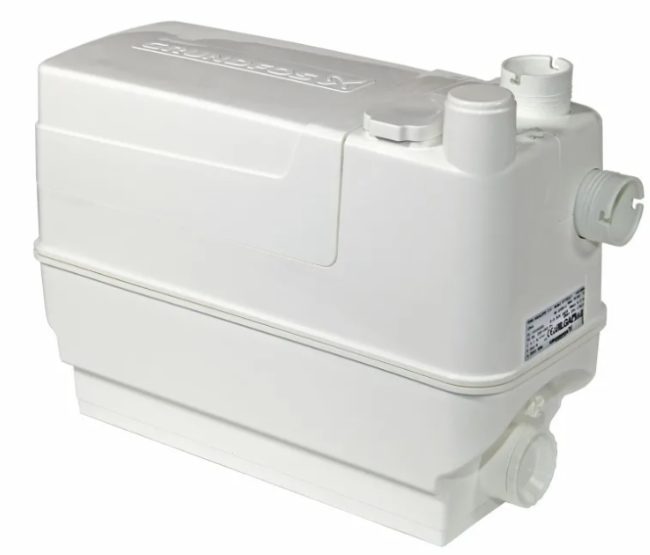 Chopper in the design absentA maximum of three drain sources can be connected to this type of unit. This type of sololift is equipped with a magnetic float switch and a malfunction indicator.
Main characteristics of the device:
- Weight 6.6 kilograms;
- Dimensions 158 x 493 x 341 mm;
- The capacity of the case is about 5.7 liters.
The price of Sololift model C-3 is from 20,000 rubles.
Which Sololift should I choose for my sewer system?
Let's imagine how the Sololift works in a wastewater disposal system. Wastewater flows from a sanitary fixture through a drain outlet into the device.
Next, the water rises through the Sololift outlet to the required height and discharges into the sewer riser or collector pipe. Ensure that the discharge section slopes toward the drain at least one millimeter per meter. Otherwise, the discharged water may flow back toward the pump.
When choosing a model, you need to consider:
- The temperature of the wastewater can range from 40 to 75 degrees, sometimes reaching 95. Naturally, taking into account your own operating conditions, you should check the unit's compliance with this parameter.
- The unit's capacity should be selected so that it is 10-15% higher than the maximum possible discharge volume. It's difficult to imagine a situation where the total volume is generated simultaneously, but it is theoretically possible and should be taken into account.
- The pump pressure must ensure that the water column rises to a certain height, therefore, when selecting a Sololift for sewerage, the power must also be checked according to the accompanying documents.
When choosing a device for a sewage pumping station, you can consider other options. Grundfos is undoubtedly the most reputable manufacturer of pumping equipment, but you should always have a choice.
First of all, this concerns the cost of this manufacturer's products. Granted, their equipment is consistently high quality and durable, but I'd like a more reasonable price.
The market also offers products from other manufacturers of pumping equipment for pressure sewerage:
- Onyx;
- Alta;
- Helix;
- Flotenk.
The listed pumping stations can be equipped with pumps of both imported and domestic production:
- Grundfos (Denmark);
- KSB (Germany);
- DAB (Italy);
- Willo (Germany);
- Takeoff (Russia);
- KIT (Russia).
It should be noted that despite similar technical characteristics, domestically produced equipment has a definite advantage as it is more easily repaired.
Installation of Sololift for sewerage
Despite the simplicity of installing fecal pumping units, it is necessary to know and strictly follow certain installation rules.
- The drain hose should not have any kinks, as this will negatively affect the filling of the container.
- If the pump unit is installed in a shower stall or bathroom, the connection must be made at the lowest point. A special pit for the Sololift installation is often constructed for this purpose. The drain grate should be selected with openings that will trap hair and animal fur.
- Before installing the Sololift, you should check the device's complete set to ensure that it has check valves to prevent backflow of liquid from the sewer into the room.
- When installing a pumping station, it's advisable to place a shock-absorbing plate under its body. This will ensure quieter operation and extend the unit's service life. A suitable 3-5 mm thick foam rubber plate can be used for this purpose.
- When joining pipes, sealants must be used to prevent liquid leakage.
Manufacturers typically include all materials necessary for Sololift installation in the delivery kit, so you don't need to purchase any fasteners when purchasing the equipment.

When laying the pressure section of the pipeline, one must not forget to observe the slopes indicated above.
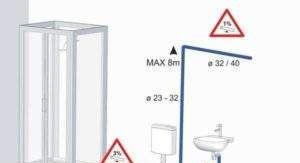
Upon completion of installation, a test run of the product must be performed. Any leaks detected must be repaired.
Operating and maintenance rules
The main task of servicing a pumping station for forced sewerage is periodic cleaning of equipment and flushing of filters.
The position of the bottom or its spherical shape does not fully guarantee self-cleaning of the pump. The frequency of cleaning the device is specified in the technical documentation.
To do this you need to:
- De-energize the device by unplugging the electrical cord.
- Remove the top cover of the unit.
- Fill the appliance with cleaning fluid. Consult the operating instructions to determine which type to use. Many manufacturers produce cleaning products specifically designed for this purpose.
- Wait a certain amount of time to allow the liquid to fully “work out” the contaminants.
- Connect the device to the power supply and turn on the pump to pump out the cleaning solution.
- Fill the container several times and pump out the water to flush the body.
- After finishing cleaning the device, close the lid.
- Remove the filter and rinse it thoroughly under running water several times. If the filter fails to rinse, replace it with a new one.
Sololift and forced sewerage, if properly installed and operated, will significantly improve the living conditions in your home.
On the advantages and disadvantages of sewer pumping stations
The main advantage of using Sololift for pressure sewer installations is that they allow for the installation without significant construction work. These devices allow you to:
- organize a drainage system provided that the source is located below the drainage point;
- equip a bathroom or shower stall without carrying out large-scale renovation work;
- avoid significant excavation work when laying gravity-fed sewerage systems from remote sites.
Another advantage is the ability to use small-diameter pipes (28, 32, and 40 millimeters). Their installation requires no wall demolition; drilling equipment can simply be used to create round openings. Pressure sewer lines of these sizes are easier to conceal in boxes or behind grates.
- Sololifts are compact and can be installed in almost any, even the most cramped, conditions.
- The products have an aesthetic appearance.
- They can be installed in any premises of houses, hotels or offices.
- Installing check valves ensures that the premises are protected from wastewater in the event of any problems in the system.
At the same time, such pumping stations are not without certain drawbacks. They are energy-dependent and stop working when the power supply is cut off. During this time, the use of plumbing fixtures is impossible. Alternative energy sources may be a solution.