To choose a cesspool or toilet cleaner, you should first review the list of available products in this category. These products vary in composition, application instructions, shelf life, and effectiveness.
Some products may contain harmful chemicals that will not help prevent the growth of harmful bacteria in toilets and cesspools and pose a health risk.
We strongly recommend that you read the instructions and consult with the seller before use. You can get preliminary information by reading this article.
- Operating principle
- Types of microorganisms used in pits and toilets
- Principles of selection
- Effects of exposure
- Popular products for cleaning cesspools and toilets
- Doctor Robik
- Waste Treat
- Septifos
- Vodograi
- Smart
- Happy summer resident
- Sanex
- Micropan
- Application
- Chemicals for cesspools
- Ammonium salts
- Bleach
- Choice of drugs
- Chemicals and biologicals – a comparative analysis, pros and cons
Operating principle
These are products that help process waste to produce fertilizer. They consist of bacteria that digest fecal matter. Learn more about septic tank bacteria.
The composition contains one or more types of bacteria. A combination of several types has a more powerful effect, accelerating the digestion process.
Microorganisms entering the septic tank begin to actively produce gases, chemicals, and other waste. The waste generated in this way is generally safe for industrial use or for disposal on your property.
The cleaning process can last from 3-4 days to a month, depending on the type of preparation and the amount of bacteria it contains.
Types of microorganisms used in pits and toilets
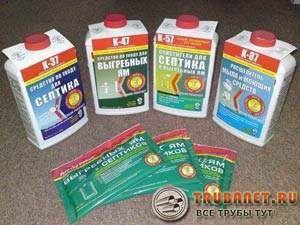 Several types of bacteria are used in the manufacturing process:
- anaerobic – reproduce and operate in the absence of oxygen;
- aerobic – oxygen is required for the activity of microorganisms.
Sometimes products combine two types of bacteria, greatly increasing their effectiveness and cleaning time. These products help process even solid (paper) particles.
For septic tanks, the most suitable option would be substances containing cultures of anaerobic bacteria.
Principles of selection
When purchasing a septic tank treatment, consider the composition, bacteria count, and processing time. To choose the right type, it's recommended to follow these guidelines:
- Bacteria type. The product is selected based on the area that needs cleaning. Not all types of microorganisms can cope with, for example, feces containing harmful chemicals. Therefore, each package indicates the best applications for which it is used.
- Microbial content. This quality determines the rate of fecal processing and how often it will need to be used.
- Volume. Calculated based on the volume of the latrine. If there aren't enough bacteria, they will die because they won't be able to form a colony. If there are too many, the microorganisms will begin to consume each other.
- Dry residue. This is indicated on the packaging and is the byproduct of microorganisms' activity. The lower the dry residue, the more effective the product.
- Expiration date. Do not use this medication after its expiration date.
For initial use, we recommend using starter preparations. These will help prepare waste for processing by creating initial bacterial colonies.
Effects of exposure
Cesspool recycling aims to remove harmful substances and organisms generated by human waste. These can include feces and other compounds, such as acids, paper, starch, soap scum, and fats.
The products help prevent:
- development of pathogenic microbes;
- release of toxic fumes;
- destruction of bio-toilets;
- clogging and deposition of masses on sewer pipes;
- occurrence of odors;
- development of allergic reactions in humans.
Most preparations, after treating septic tanks and cesspools, convert all harmful substances into a liquid, which can then be disposed of without fear of harming the environment, or used for technical purposes.
Bioactivators help liquefy hardened fecal matter on the walls or bottom of the cesspool and eliminate all pathogenic microorganisms in it.
The active activity of beneficial bacteria completely cleanses toilets of toxic fumes that affect human health and well-being. All pathogenic microorganisms responsible for the development of unpleasant odors are destroyed.
Popular products for cleaning cesspools and toilets
The popularity of cesspool cleaners depends on their intended use. Below, we'll take a detailed look at some of the leading toilet and cesspool cleaners in this field, providing their characteristics and determining which ones are best used where.
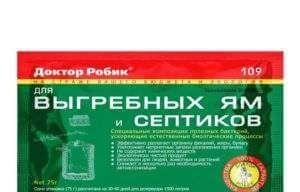
Doctor Robik
For example, this product is used in industrial facilities and contains six types of bacteria. It is effective in removing human waste, chemicals, paper, and fabric. It is also suitable for outdoor toilets and composting toilets.
Waste Treat
Another effective product is Waste Treat. It's suitable for both indoor and outdoor toilets. It can be used in households, home, or country outhouses.
Watch the video
Contains hybrid biocultures that help combat chemicals from detergents, soap, and chlorinated water. The product is also used to clean septic tanks containing nitrates.
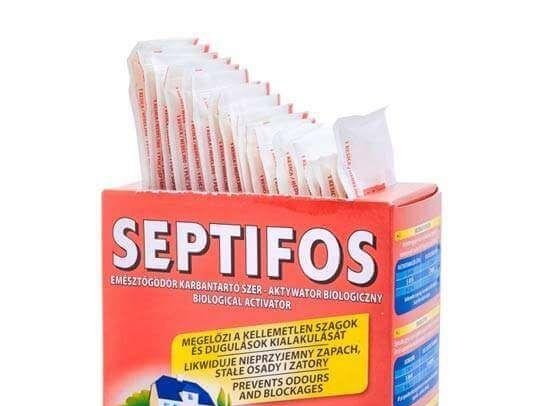
Septifos
Used in households and closed toilets. Available in granular form, it helps eliminate unpleasant odors and remove solidified sediment from the bottom and walls. Not suitable for use in chlorinated water.
Vodograi
 Used for cleaning household toilets and drains. Not suitable for industrial use, as it is ineffective in environments with high acid and grease content.
Smart
A whole series of different additives from a single company, Alfa Smart Ago. Suitable for closed cesspools. It removes hardened fecal matter, cleans sludge from the walls and bottom, and eliminates odors. It also combats soap scum and chlorinated water.
Happy summer resident
Happy Gardener – used to clean cesspools and drainage systems. The microorganisms in its composition convert waste into carbon dioxide.
Watch the video
[sociallocker]
Sanex
Cleans bio-toilets from paper, waste products, and fats.
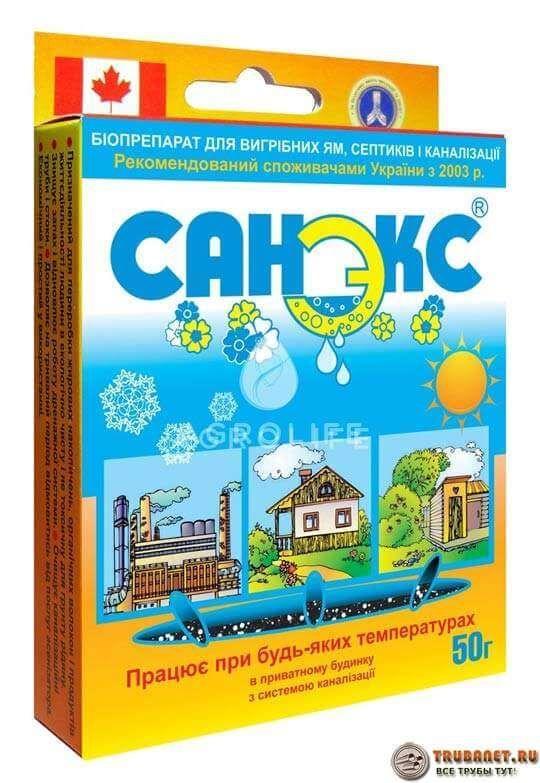
Available in powder form, it helps maintain the condition of sewer pipes.
Micropan
It processes waste in small toilets, septic tanks, and latrines. It quickly processes simple household waste products and eliminates unpleasant odors. It is available in tablet, granule, or liquid form.
Application
Watch the video
Toilet and cesspool cleaners come in several forms: tablets, liquid, and powder. Granular forms are also sometimes available. The type used depends on the location of application, such as a septic tank or a cesspool.
For example, tablets are not recommended for sealed septic tanks. For this purpose, it's best to use a powder or liquid mixture. Tablets or liquids are best for cesspools.
More about the varieties:
- It's a powder. It's packaged in bags of varying weights. It contains dormant saprophytic anaerobic microorganisms. To use, according to the instructions, dilute the powder with warm water. Let it steep for 20 minutes, then pour it down the drain.
- Liquid products. These are highly concentrated solutions that, when released into the toilet, convert waste into water and carbon dioxide. A relatively small amount is required to treat cesspools—1 liter per 2,000 liters of waste.
- Tablets. The number of tablets used depends on the volume of the septic tank or drainage system. This is usually indicated on the product packaging. The tablets do not require pre-dissolution; they are dropped into the latrine in their original form.
After this time, liquid remains in septic tanks or cesspools and is disposed of without the use of additional equipment or specialists (sewage disposal). A special pump (fecal or drainage) is used to remove the remaining feces.
Features of use:
- temperature - should not be below 5 0From and above 30 0C, therefore, the product is not used in winter;
- For microorganisms to work actively, new excrement must enter the drain;
- maintaining the humidity level in the latrine - if there is not enough moisture, microorganisms die;
- The cesspool should not contain any chemical compounds at the time of using the preparations.
Septic tank and cesspool cleaners do not dissolve metal, plastic, or other solid objects. However, they can be used if there are detergents in the drainage system.
Chemicals for cesspools
In addition to biological treatments for septic tanks, there are also chemical treatments. There are several groups:
- chlorine (lime);
- formaldehyde compounds;
- nitrates;
- ammonium-based products.
Formaldehyde, or formalin, is often used to clean toilets and cesspools due to its low cost. The product inhibits bacterial growth and disinfects the latrine. However, it has a high carcinogenic potential.
Ammonium salts have a pronounced disinfecting effect.
Ammonium salts
 The substance destroys pathogens and eliminates unpleasant odors. However, ammonia fumes have a negative impact on health. Therefore, it is used when the outdoor toilet or cesspool is located at least 20 meters from the living space.
Nitrate compounds, unlike previous treatments, are not hazardous to health. After application, the cesspool residue is used as soil fertilizer.
Nitrate is effective on hardened masses, converting them into a homogeneous substance. However, they are expensive and have a negative impact on metal structures.
Bleach is considered a cheap disinfectant. However, it is highly carcinogenic and toxic. When using it, it is recommended to follow the instructions for its use and storage.
Bleach
Popular Russian-made chemical products include Atlantis and Reakor. Prices range from 1,500 to 2,000 rubles.
Nitrate oxidizers can be purchased for 1,500 rubles. Chlorinated lime costs between 200 and 250 rubles.
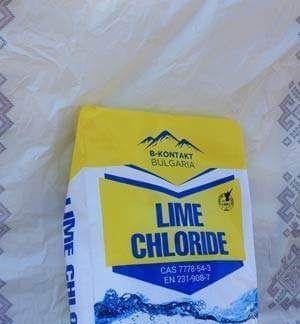
It is recommended to use chemicals in accordance with the instructions on the packaging, as they have a high level of toxicity.
Choice of drugs
When choosing chemical compounds, several factors must be considered. First, the need for further use of the processed waste. If the resulting material is not needed for fertilizing gardens or vegetable plots, then the use of chemicals is permitted. Nitrate salts are often used, as they are the least hazardous to the environment.
Another factor to consider when purchasing chemicals is the material from which the latrine is constructed. Metal walls and sewer pipes are often susceptible to chemical reactions from such substances. The fecal pump is no less susceptible.
Watch the video
[sociallocker]
When detergents enter wastewater, some chemicals are neutralized, reducing their effectiveness to a minimum.
Chemicals and biologicals – a comparative analysis, pros and cons
Chemicals are effective in removing waste from closed-loop septic tanks without a common sewer system. However, the process is accompanied by the release of toxic gases. For cesspools, biological products are better, as the converted waste can then be used for watering and fertilizing gardens.
Biopreparations, in comparison with chemical agents, have the following qualities:
- They act only on fecal matter, without the need to react with metals, while chemical reagents corrode all types of metal structures;
- biological preparations are used only once, but chemical ones will have to be used repeatedly;
- After the destruction of pathogenic microorganisms by biological preparations, the resulting masses are often used as fertilizer. When using chemicals, it is prohibited to use waste for the garden or vegetable garden, as this will lead to environmental pollution.
Biological substances, as opposed to chemical ones, have great advantages, so it is recommended to use the first option for toilets or cesspools.
Watch the video
After using chemicals, further use of biological preparations will not be effective, since When microorganisms are exposed to aggressive conditions, they die.
However, unlike biological agents, chemical preparations are used during cold seasons. Using wastewater transformed by chemicals as fertilizer is prohibited.