To clear a clogged toilet, chemicals and mechanical methods are used. Small organic clogs can be dissolve using household chemicals or folk remedies such as baking soda, vinegar, and hot water. Mechanical methods include pushing out the clog with a plunger or a plumbing snake, and pulling out larger objects.
A clogged toilet can be a significant nuisance, regardless of whether you live in a house or apartment. This unpleasant situation can arise from improper operation, accidental entry of solid objects into the drain, improper installation, and so on.
Based on the cause and severity of the clog, a suitable solution is selected. Periodic preventative measures are essential to avoid future problems. This article will help you learn what to do if your toilet or sewer pipes are clogged, describing methods for clearing various types of clogs at home.
- Clogged toilet - common causes
- How to find a blockage yourself
- Toilet cleaning with folk remedies – soda, vinegar, boiling water or mustard
- Mechanical methods – plunger, plastic bottle, plumbing cable or hydrodynamic cleaning
- The toilet is clogged - cleaning with a "doll"
- Clogged toilet - fix it with film
- Removing blockages with chemicals
- When to contact a professional
- Prevention - How to keep your drains from clogging
Clogged toilet - common causes
Sewer clogs can occur for a variety of reasons. The most common are the penetration of large objects, which block water flow and reduce the pipe's capacity.
IMPORTANT TO KNOW! However, sometimes the cause is improper design or poor installation practices. Typically, such problems appear early in the system's operation. However, they can also develop over time. Another common problem that causes blockages is the buildup of a salt deposit.
If such deposits are not removed promptly, the result will be a gradual reduction in pipe flow, eventually leading to clogging. In most cases, locating the blockage is quite difficult.
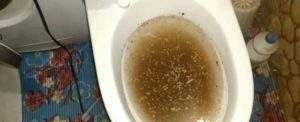
If the blockage is caused by errors made during pipeline installation, it will likely not be possible to quickly resolve the issue. Quite often, blockages are caused by sagging pipes where liquid can stagnate, freezing of liquid inside, or the use of poor-quality fasteners.
Another common cause is improper system design, which results in stagnant water at bends in the pipe. Failure to maintain proper slope also often results in clogged toilets.
To avoid such problems, follow the operating instructions. Only toilet paper should be flushed down the toilet; it dissolves in water. All other items are prohibited.
ADVICE! It is also not recommended to pour grease left over from cooking or used tea leaves down the toilet, as these substances can cause a fatty layer to form, which can clog the drain.
How to find a blockage yourself
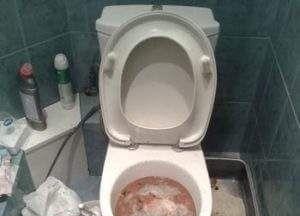 It's recommended to first check the sewer riser located in the toilet and kitchen. However, it's important to note that the riser is often shared between several apartments. Therefore, if you live in a multi-story building, a blockage in the pipeline may occur for reasons beyond the apartment owner's control.
You can check this by turning on the water in the kitchen and flushing the toilet simultaneously. If the water flows without a problem, the clog isn't shared. Otherwise, the clog is likely caused by a neighboring drain.
When living in a country house or cottage, the clog is most often located where the sewer pipe enters the cesspool, or where the individual sewer line connects to the central main line.
Toilet cleaning with folk remedies – soda, vinegar, boiling water or mustard
When a problem arises, the first thought that pops into residents' heads is, "What should I do if the toilet is clogged?" Clearing the clog as quickly as possible is desirable, so many resort to folk remedies first.
There are many similar methods, but the most common is the use of soda, vinegar, boiling water and mustard.
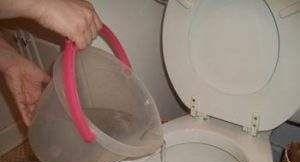 How to clear a clogged toilet yourself using boiled water:
- Boil 1 bucket of water.
- Pour the liquid into the drain at a 90-degree angle. This must be done very quickly.
- If the method works and the fluid gradually passes, it is recommended to repeat the previous steps 2-3 more times.
The next option is to use baking soda. This substance is an alkaline substance, so it can clear small blockages in pipes. Instructions:
- Prepare half a pack of ordinary baking soda.
- Pour the substance into the drain hole.
- Wait 3-5 minutes.
- Drain the water.
Using boiling water and soda, you can get rid of simple blockages.
The next method is more effective because it combines the previous ones. It requires baking soda, boiling water, and 9% acetic acid. Here's the procedure:
- Remove water from the toilet, leaving only a small amount in the drain hole.
- Pour 0.5 pack of soda into the drain as deep as possible.
- Pour a glass of acetic acid.
- Wait 20 minutes.
- Pour boiling water.
As a variation of this method, the following scheme can be used:
- Pour half a pack of baking soda into the drain hole.
- Pour concentrated acetic acid inside (the whole bottle).
- Close the drain.
- Leave for 2 hours.
- Pour in hot liquid.
- Wait until the dirt and small debris dissolves, if this is what caused the blockage.
It's important to note that boiling water isn't always effective in clearing clogs. If the sewer connection uses a corrugated pipe made of thin plastic, do not use boiling water.
In this situation, it's best to use hot (but not boiling) water. Also, be extremely careful when using vinegar.
You can use salt instead of acetic acid:
- Mix 1 cup of salt and 1 cup of soda.
- Pour the resulting substance into the toilet.
- Pour in 1 liter of boiling water.
- Leave for 7-9 hours.
It's best to do this at night. By morning, the blockage should be gone.
Another popular method for clearing clogs is using mustard. Instructions:
- Heat 10 liters of water to 80-90 degrees.
- Add 5 teaspoons of mustard to the water. If you heated a different volume of liquid, use the following ratio: 1 teaspoon of mustard per 2 liters of water.
- Pour the solution into the toilet.
- Wait 2-5 minutes.
- Wash off.
- If necessary, repeat this procedure a couple more times.
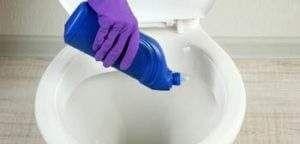 Sometimes, when searching for an answer to the question, "What should I do if my toilet is clogged?", homeowners decide to use Pepsi-Cola or Fairy detergent.
However, Pepsi-Cola can only be useful for removing plaque from plumbing fixtures, but this substance is not capable of unclogging the drain.
Fairy detergent can only help when the clog in the toilet is caused by a large layer of grease (this is often the case with clogs in the kitchen sink). In this case, you can pour half a bottle of detergent down the drain.
But in most cases, using Fairy in a fecal sewer system will not bring the desired result.
It's important to remember that these methods can only help with minor clogs. For more serious problems, it's recommended to contact a plumber who can use mechanical cleaning methods.
Mechanical methods – plunger, plastic bottle, plumbing cable or hydrodynamic cleaning
In addition to folk remedies, there are also mechanical methods that allow you to quickly and effectively clear a clogged drain. These are recommended when the clog is caused by foreign debris getting inside. How to clear a clog in such cases:
- rubber plunger;
- plastic bottle;
- plumbing cable;
- device for hydrodynamic cleaning.
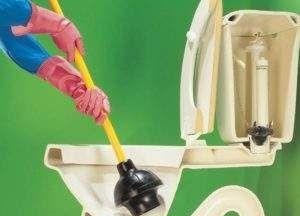
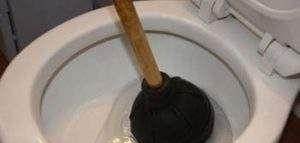 Clearing a blockage using a plunger with a 10 cm cone-shaped nozzle:
- Fill the toilet flush with water.
- Place the tool into the drain.
- Holding the plunger by the wooden handle, make several pressing movements.
- Pull the plunger out of the drain quickly.
- If necessary, repeat the procedure.
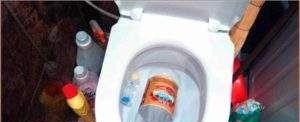
Sometimes you don't have a plunger at home and it's difficult to find one. In this case, you can use a regular plastic bottle with the bottom cut off. Instructions:
- Close the bottle (volume – 1.5-2 liters) with a lid.
- Cutting off the bottom will turn the structure into a kind of air bell that will be able to push the cork further.
- Insert the bottle into the drain and make several back and forth movements similar to those made when using a plunger.
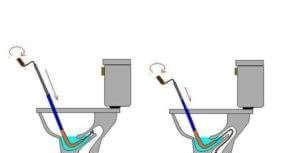
You can also quickly clear a clogged toilet using a toilet snake. This tool has a hollow shaft, a flexible base, and a rotating handle. The working end of the tool has a spiral-shaped extension that attaches to the snake via a small flexible tube. To clear a clog, follow these instructions:
- Insert the end of the plumbing cable into the drain until it stops.
- Slowly turn the handle, thus pushing the cable into the water seal mechanism.
- Once the blockage is removed, you need to pour hot water into the drain.
If you can't buy or borrow a toilet snake, you can use a regular construction snake. However, it's important to choose the correct diameter and length when purchasing.
For apartment plumbing, a 9 mm diameter is usually sufficient. The attachment can be either spiral-shaped or shaped like a small weight; this type of cable is used to clear the plug.
In most cases, plumbers use a cable with a metal tip. This design allows for greater depth in the pipeline and effective clog removal.
There are also more durable and reliable models made of special steel. Their main advantage is the ability to use the tool not only on metal pipes but also on plastic ones.
If there's no improvement after using traditional and mechanical cleaning methods, you should contact a plumber, as the cause is most likely a clogged sewer line, not the toilet. A plumber will typically use professional equipment to clear the clog, such as: Hydrodynamic cleaning device (learn how to make one yourself).
A video demonstrating what to do if your toilet is clogged.
The toilet is clogged - cleaning with a "doll"
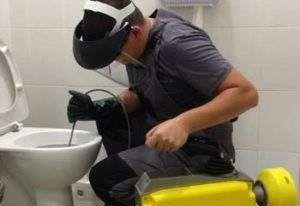 A fairly common and effective method is to use a "dummy." This device is a cloth bag filled with sand and attached to a long rope.
How to clear a clogged toilet using a "doll":
- Make a device.
- Lower the bag into the drain hole, holding it by the rope.
- Flush the tank. This will cause the "doll" to move with the water flow and, with its weight, break the clog.
- Once the water has drained, you need to carefully pull the rope and remove the bag from the drain.
When making the "doll," it's recommended to use a sufficiently long and strong rope. Using an old rope can cause the bag to tear, resulting in a complete clog of the sewer line.
Clogged toilet - fix it with film
There's also a method that's not widely known, but quite effective for clearing toilet clogs caused by debris or other objects. All you need is wide tape or cling film.
How to clean a drain using tape:
- The toilet bowl circle must be thoroughly wiped clean of liquid.
- Carefully apply lines of tape to the circle, connecting the strips together. This should create a tight, sealed film with no gaps on the toilet seat.
- Flush the water in the tank.
- Press hard on the film several times to remove the blockage.
- When the desired result is achieved, remove the tape.
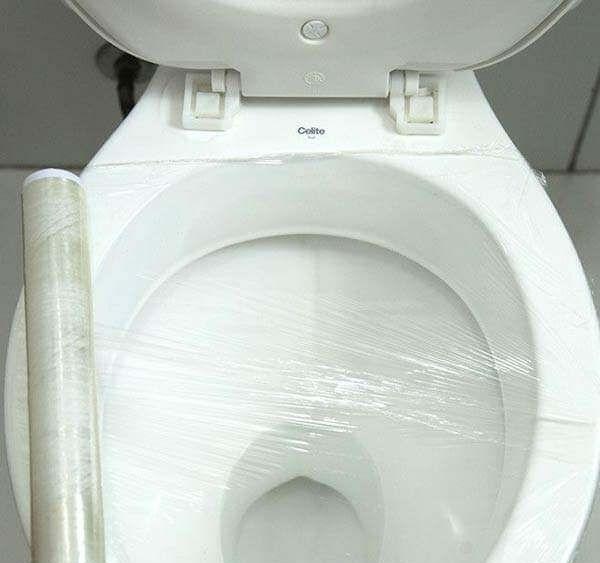
There's a special film for this purpose, so it's best to use it if possible. However, sometimes film can be difficult to find, so duct tape can be used as a substitute. The process takes longer, but it's just as effective as using specialized material.
Removing blockages with chemicals
The best chemical solution for toilet clogs is "Mole." However, it's not suitable for plastic pipes because it's alkaline. A small clog can be cleared with baking soda and vinegar. Mechanical methods include using a plunger and a plumbing snake.
Another effective method for unclogging toilets is the use of powerful chemicals. These are available in a wide range, varying in strength, application, and formulation.
Typically, such products contain highly active alkalis or acids that quickly clear clogs. However, it should be noted that these products should only be used if the clog is not caused by a large object or debris. The product will not dissolve such objects.
How to clean pipes:
- Sanox;
- "Bio Favorite";
- "Biocomposition Plunger";
- "Mole";
- "Mr. Muscle";
- "Deboucher".
Sanox is suitable for both plastic and aluminum piping components. It is affordable and has no strong, unpleasant odor. It can be used to clean old piping without damaging the inside of the pipes. Disadvantages:
- slow action, you will need to wait several hours to achieve the desired effect;
- It is only suitable for small blockages; if the blockage is serious, it is better to use a different substance, since even increasing the amount of the product used several times will not help.
Biosostav Vantuz is moderately priced but quite effective. Its main advantage is its immediate effect, eliminating the need to wait several hours. Although this product is classified as a chemical, it has several key features:
- You can work without gloves, the drug does not harm the body;
- the ability to clear blockages in the shortest possible time;
- does not have a strong aroma;
- can be used not only to clear blockages, but also to prevent similar problems.

"Biosostav Vantuz," like "Bio Favorit," contains organic microorganisms rather than toxic chemicals. This product can clean the interior surface of pipelines of salt deposits without damaging the pipes themselves.
"Mole" is the most well-known cleaning product. It is sold in powder and liquid gel form (the latter is more expensive due to its higher concentration).
Due to the aggressive environment, it is recommended to wear rubber gloves when handling this compound. Otherwise, the product can cause chemical burns to the skin.
 Before purchasing, it's important to carefully read the instructions and packaging, as some products sold under this brand cannot be used with plastic pipes. Doing so could damage the pipes.
"Mr. Muscle" also contains a higher concentration of acidic and alkaline compounds. This property makes it suitable for use when a toilet clog needs to be cleared quickly. However, if the clog is hardened and clogged, it will take some time for the product to take effect.
"Deboucher" requires several hours of waiting, but 20 minutes is sufficient for a minor clog. It differs from previous products by containing chlorine. It doesn't have a strong chemical odor and is capable of not only clearing clogs but also effectively disinfecting surfaces. The main disadvantages of this product are:
- approximately half a liter of the drug is required, which means that several packages need to be purchased at once;
- Due to the chlorine contained in the composition, it is not recommended to use this substance for cleaning plastic pipelines.
The choice of the appropriate product depends on the specifics of your sewer system. Before purchasing, it's recommended to consult with a specialist or a store associate to ensure the chosen product won't damage the pipe surface.
When to contact a professional
 If the clog in the drain hasn't cleared after trying the above steps (using folk remedies, mechanical cleaning methods, or chemical cleaning agents), the best solution is to contact a plumber. The clog may be located directly in the sewer line, in which case any DIY cleaning methods will be ineffective.
When you contact our specialists, your clogged toilet will be cleared as quickly as possible. Our technicians use professional equipment, such as a hydrodynamic unit.
Prevention - How to keep your drains from clogging
Basic methods for preventing toilet blockages:
- If it is necessary to replace a pipeline, it is advisable to select products that are exactly the right size.
- If the homeowner lacks relevant construction experience, it's best to entrust the toilet installation and its connection to the sewer system to a professional. This will prevent improper system design and installation, which can lead to frequent toilet clogs.
- If you're renovating a bathroom, keep the toilet lid down at all times. Otherwise, construction debris and other solid waste will fall inside.
- Follow the operating instructions: do not flush thick paper, grease, food particles, sand, or other objects that could cause a clog in the sewer.
- Clean the pipeline regularly using special chemicals.
- Every week, as a preventative measure, it is recommended to clean the sewer with boiling water or a plunger.
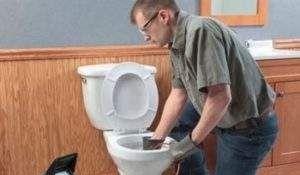 These simple rules will help you avoid replacing plumbing fixtures and worrying about what to do if your toilet clogs due to foreign objects, such as children's toys or rags. You can clear a clogged toilet yourself, but in more complex situations, it's best to entrust this procedure to professionals with the necessary equipment.
Thus, toilet clogs can be cleared using a variety of methods. You can use folk remedies, chemicals, or mechanical means. The choice of clog removal method depends primarily on the cause of the clog.
Based on this information, you can begin clearing the clog. It's also important to remember preventative measures. Regular cleaning will help prevent clogs and other sewer problems.
Watch the video: Clogged toilet, how to clear the blockage
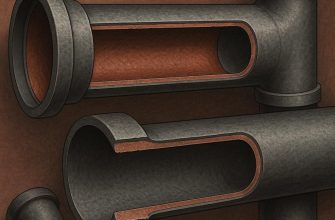
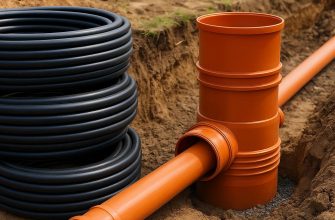
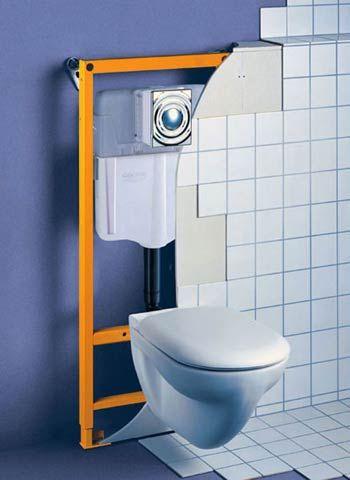
Imported products are less destructive to pipes and are recommended for use on new plastic pipes. Domestic products are also suitable for metal pipes.
I found this article at just the right time. I noticed the toilet wasn't draining properly. I started reading it and immediately tried various methods. I used baking soda and salt, a bottle, cola, a plunger, and chemicals, but my efforts were worth it: I finally got rid of the clog. I also read that you shouldn't throw away tea leaves, but I always did, and that's probably why I clogged it. Now I'll be implementing all the tips I read in the article.