 Modern technologies are widely used in various areas of people's lives. And heating networks are no exception.
In particular, video inspection of pipelines has recently become very popular. This new method of network monitoring is used not only in enterprises and organizations, but also on main lines in homes.
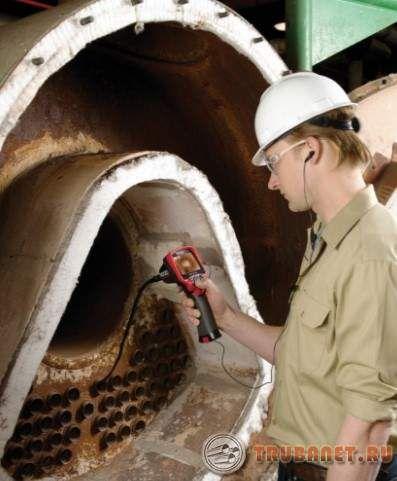
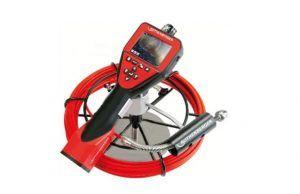
This method of pipe inspection is performed using a small video camera attached to the end of a flexible hose. The hose passes through the interior of the pipeline, recording its condition. The camera's data is transmitted to a monitor, allowing the operator to assess the appearance and condition of the pipeline in real time.
Currently, there are two types of specialized systems used for network video diagnostics:
- Push-through cameras. They are used to inspect the condition of small and medium-diameter pipelines. The camera is moved along the pipeline using a semi-rigid fiberglass rod. This rod is connected to the operator's console, which receives the video image from the network.
- Robotic systems. With this method, the camera is mounted on a wheeled platform and controlled by a robot from an operator console. This method is used to inspect the condition of medium- and large-diameter pipelines.
Video diagnostics of a pipeline system is limited by the size of the network. For example, if there is no wiring diagram, the search is carried out at random. While the camera can move freely along one pipe, it may not be able to penetrate another. It is also very difficult to conduct diagnostics in filled sections of the pipeline.
Network video diagnostics are essential in the following situations:
- When you need to obtain a guarantee of absence of axis displacement, the integrity of connections and pipes.
- The water utility requires video diagnostics to be carried out when issuing technical specifications for the connection.
- When the network is in a state of clogging.
- When there is a suspicion that foreign objects have entered the main line or that pipes have become disconnected.
- If there is a suspicion of unauthorized third-party connection to the system, it cannot be detected without video monitoring.
- When the network runs under the floor or wall, and there is a need to restore the lost wiring diagram.
- When the coolant consumption increases sharply, which means that a leak has appeared in some section of the heating network or equipment.
Conducting diagnostics of heating networks
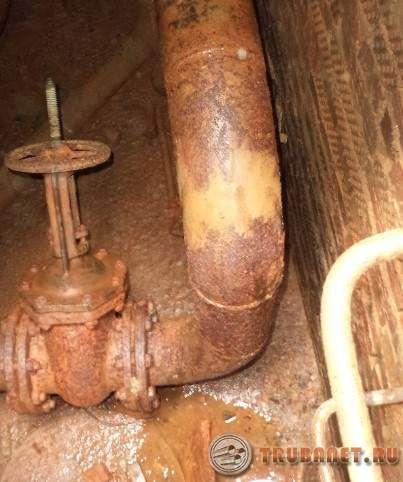 Two types of video diagnostics are in the highest demand among consumers:
- Quick inspectionThis is an assessment of the internal condition of pipes and equipment without focusing on minor details. This type of diagnostics identifies major "defects."
- Detailed inspectionThis is a thorough diagnostic procedure that stops at every joint, crack, and other suspicious feature. Not only are they examined in detail, but their condition is also analyzed with video recording and a paper report (including still images and final recommendations for further action).
Clearly, the labor and time required in both cases are completely different. The first type of video diagnostics takes a short period of time, while the other type of diagnostics cannot boast the same.
Modern diagnostics of heating network pipelines is performed at a high level thanks to the uniqueness of our software. This allows us to solve the following problems.
- To identify the actual condition of heating pipelines.
- Find the locations of coolant leaks.
- Inspect the condition of the network's structural components.
- Identification of factors leading to the acceleration of corrosion formations, stray current zones, siltation zones and flooding of channels.
- Assessment of the pipeline reliability level.
To implement video diagnostics of a heating network, the following conditions are required.
- The length of a single distance between installed sensors should be from 40 to 200 meters.
- The pressure of the heat carrier must be at least 0.25 MPa.
- There must be circulation of the coolant.
- The diameter of the pipes must be over 8 cm.
- There should be no vibration on the heating pipeline and equipment.
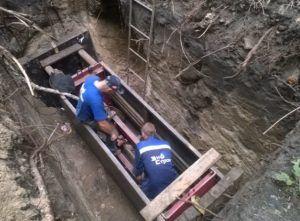
The results of this pipeline diagnostics are used for:
- assessment of the actual state of the material of rolled products and components.
- Establishing the degree of necessity for replacing a section and the sequence of its implementation.
- Identifying the portion of a system that is in full working order.
- Determining how rational it is to carry out actions to protect against corrosion processes, etc.
Equipment for television inspection
Video
Modern video diagnostic equipment for pipelines makes it possible to prevent serious accidents, thereby avoiding significant financial costs.
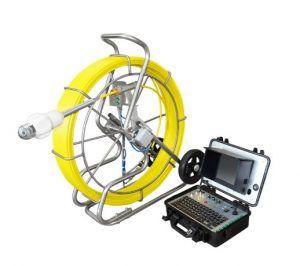 Professional technicians can easily identify any pipeline defects using video recording. This equipment helps:
- significantly reduce the time required to conduct the examination.
- Avoid drainage.
- Save money significantly.
Video diagnostic equipment is used for:
- water supply pipelines.
- At fuel energy enterprises.
- On gas pipelines.
Equipment for this type of diagnostics is the most convenient method for identifying problems in various pipelines. A camera mounted on a special cable can reach even hard-to-reach areas.
This equipment makes it possible to inspect every centimeter of the pipeline in a short time, and eliminates the cumbersome procedure of digging long trenches.
Another advantage of video equipment is that it can be used not only on small construction sites but also on large ones. This becomes especially important if the pipeline is located beneath critical infrastructure facilities.
Video
The equipment accurately determines the duration of the damaged area on the highway, which makes it possible to accurately determine the type of reconstruction work.
In addition to troubleshooting system problems, CCTV equipment is used to check the condition of the pipeline after scheduled maintenance or cleaning. This is done to ensure there are no problems.
Television inspection equipment is also used during the commissioning of new facilities. In such cases, the network is checked for reliability and the presence of foreign bodies.
You might be interested in the following articles - installation for hydraulic testing of pipelines, ultrasonic flaw detection of welded seams of pipe-rolling networks.
Equipment from domestic manufacturers
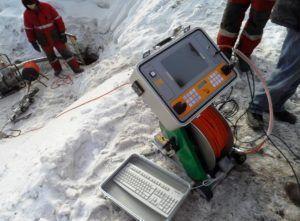 Equipment for video diagnostics of pipelines of Russian production according to its technical characteristics is not inferior to foreign analogues.
RostHydroHolding is the leading Russian manufacturer of this type of equipment. This company specializes in research and development and manufactures video diagnostic equipment.
This company's product distribution geography is extensive, covering virtually all Russian regions and CIS countries. RostHydroHolding's core operating principle is absolute customer focus and the high quality of its products.
Video
It is also worth highlighting the Russian-made Rokot products, which have undergone modifications this year.
This self-propelled robot boasts excellent cross-country ability and can easily maneuver on large-diameter highways.
It is equipped with a video camera based on a modern Sony camcorder and a special cable – a high-stretch rope (over 2000 N). This equipment can be supplemented with a portable manual cable reel for cable lengths of up to 200 meters and 400 meters. The Rokot allows inspection of networks with diameters from 20 to 180 cm.
The average price for a video diagnostic service is estimated at 5,000 rubles. Customers can pay for the service using their preferred payment method.
The service price is specified in the contract after calculating the length and complexity of the pipeline. Upon request, all recorded data will be provided on a digital storage device upon completion of the video diagnostics.
Utility company specialists recommend conducting video inspections of pipelines for preventative purposes. They also recommend focusing on more than just problem areas of the pipeline.
Video
This will help identify defects at an early stage. Typically, diagnostic companies can perform all necessary repairs to address any identified defects.
Before ordering a video inspection service, you need to determine exactly what you need: a simple inspection of a specific section of the heating network or a full inspection with high-quality, detailed recording. This will determine the cost of the video inspection.
Preparation of a technical report
Whatever the purpose of a pipeline inspection, a pipeline inspection system can solve it all. Many companies offer this service to consumers, and almost all specialists perform their work competently and promptly.
The video camera can orient itself, so the operator can always see a clear image, and also allows inspection in freeze-frame mode.
Based on video diagnostics and measurements, a conclusion is reached on the structure's compliance with building codes and regulations. A determination is also made on the pipeline's suitability for use.
Next, all the information obtained is recorded on a diagram, a technical report is prepared, and a report is prepared. Recommendations and a video on a CD are attached.
Video
Upon completion of the network video inspection, companies issue a technical report and a pipeline video inspection report. The report contains the following information:
- A complete picture of the state of the engineering communications used.
- Establishing the cause of an emergency situation in the network.
- Clients receive reliable information about the quality of construction, repair, or maintenance work performed, which can serve as grounds for filing claims against contractors or construction companies.
- Setting the exact period of use of utility lines.
- A complete schematic layout of the engineering structure.
Video diagnostics of the highway is beneficial to customers for the following reasons.
- Obtaining comprehensive information on the state of the constructed network for compliance with SNTP standards and its quality status.
- Guarantee that the use of the heating network is carried out in accordance with the rules and requirements of the organizations performing the control.
- Obtaining recommendations on methods for troubleshooting the main line.
- Significant savings in money and time during network operation.
- With this information, it is possible to draw up a plan for carrying out major repairs on the highway.
Video
Video diagnostics of pipelines is a completely new, high-tech method that allows monitoring of the network's activity, regardless of its depth.
In this case, they not only evaluate the internal condition of the system, but also make an optimal and cost-effective decision on cleaning or repairing the pipeline.