The cistern is the main component of the toilet. Inside the cistern are two mechanisms:
- for supplying and shutting off water after filling the tank;
- for direct flushing of water into the toilet bowl.
It's impossible to imagine a home without a well-equipped bathroom. And the most important element is a toilet with a flush tank.
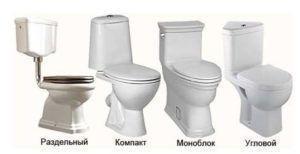 The toilet cistern is an integral part of this plumbing fixture; without it, it simply loses its purpose. The cistern's internal structure allows for the removal of human waste by delivering a measured amount of water and then refilling the tank.
The full importance of this plumbing fixture in a toilet can only be appreciated when the toilet is broken and cannot be used.
We have a great one on our website An article about covering toilet pipes with plastic panels
Drain tank - internal structure
During the process of improvement, many designs of these products were developed and used. Based on their location, drain tanks can be classified as follows:
- Upper – located approximately one and a half meters above the toilet bowl, water is supplied through a pipe by pulling the hanging handle. Pulling it opens the flush valve, and a portion of water flows into the bowl.
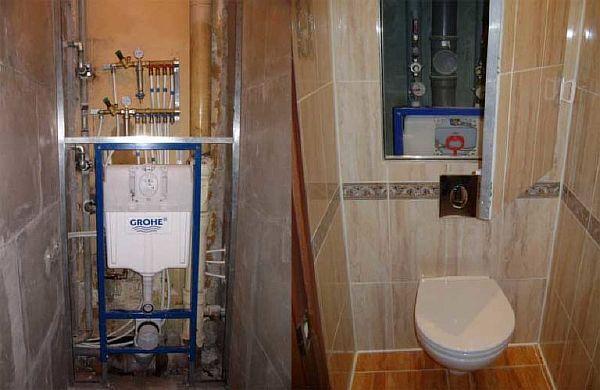
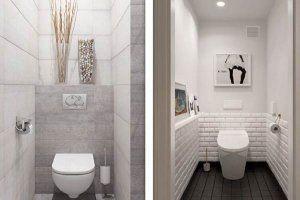
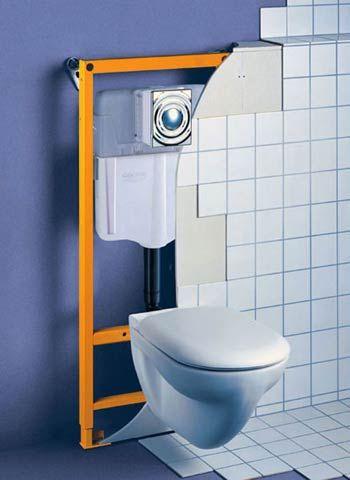
- HiddenThe tank is placed in a niche created in the wall of the room. In this design, the release button is located on the vertical surface of the partition (door). These are usually made of plastic.
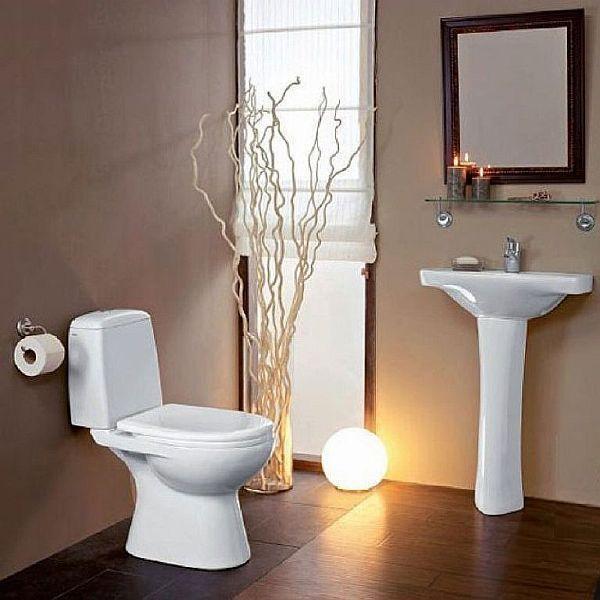
- Compact The cistern is attached directly to the toilet bowl. It has a special shelf with holes for this purpose. It is secured with screws; for porcelain toilets, these are made of plastic.
Toilet cisterns can be made from various materials:
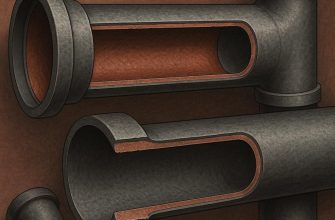
- Cast ironCastings made from this material were the original method for producing toilet cisterns. While their use is no longer relevant, demand remains, so they are still produced. Cast iron products are often decorated with decorative cast elements. The material itself is durable and reliable. (See photo 2.)
- CeramicsThe most popular material for plumbing fixtures today. The resulting products are quite durable with a clean, smooth surface that is easy to wash and clean. The use of powders and pastes containing abrasives is not recommended.
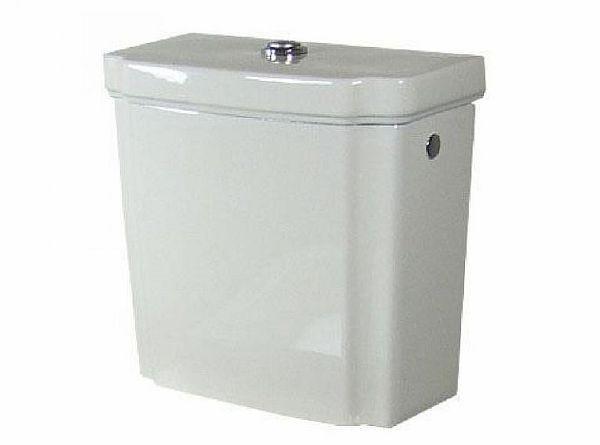
- PlasticThese plumbing fixtures are stamped from various polymers. Their advantage is high manufacturing precision, meaning mechanical finishing is virtually eliminated.
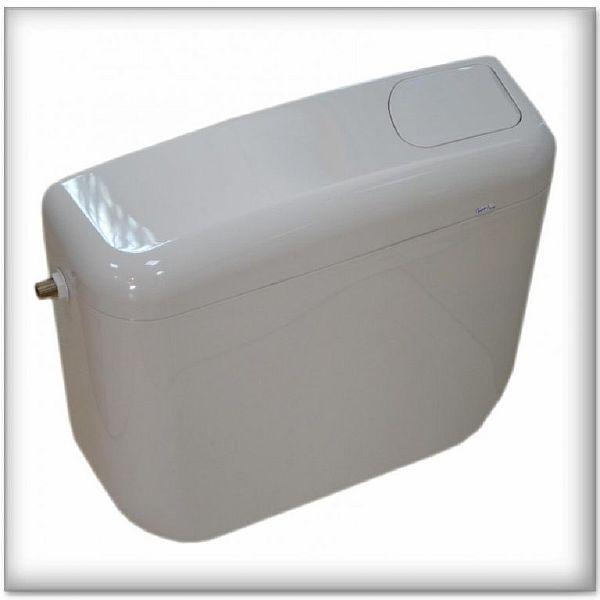
Products made of polymeric materials are usually used for concealed installation, so their width is smaller than that of products made of other materials.
Internal structure of the drain tank
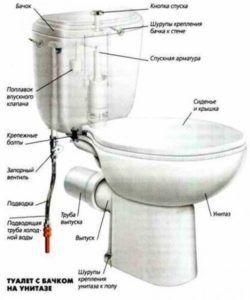
When installing a new toilet with a flush tank, the first thing to pay attention to is This is the completeness of the purchased equipment and its sizeWhile the bowl's condition can be assessed visually to ensure its integrity, the drain assembly deserves closer inspection. It needs to be not only installed correctly but also adjusted for optimal operation. This can result in significant savings in water consumption.
Today's building materials market is flooded with a wide variety of products, varying in material and internal components. If you need it, you can even find older-style plumbing fixtures.
The design of the internal structure of flush tanks is almost identical with minor differences between different suppliers:
- Mechanisms that include a stop button. Water will continue to flush until the button is pressed or until the toilet bowl is completely empty. If the button is released early, as the toilet bowl is being cleaned, the flushing process stops.
- Flush devices with two buttons. Pressing one releases the entire volume of water, while pressing the other releases a portion of the liquid, depending on the flow rate setting. The buttons are unmistakable, as they are different sizes. They have appeared on the market relatively recently, driven by the need to conserve water resources and, consequently, money.
- Two-mode flush mechanisms.
The tanks also differ in the flushing characteristics:
- direct - in this case, water flows into the bowl directly from the tank, in one direction;
- Reverse - when flushing, the water can change the direction of flow, which cleans the toilet bowl more effectively, although this creates noise.
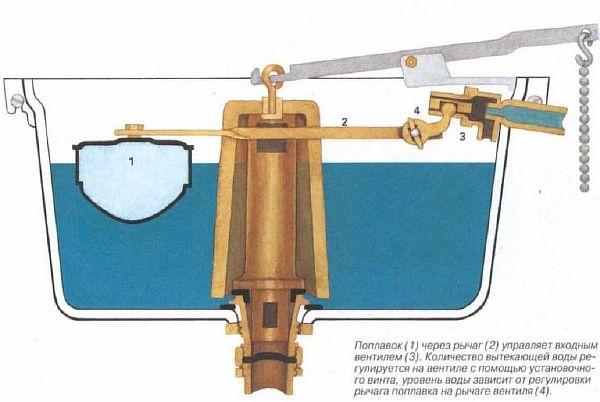
A typical toilet cistern design resembles a standard water trap, including a float and a system of levers. When a button or pull (for stem-type mechanisms) is pressed, water flows downward, cleaning the toilet bowl.
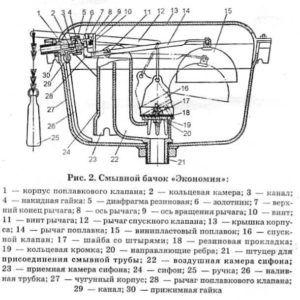
At the same time, the float moves down and, through a system of levers, opens the inlet valve, through which water from the water supply network enters the tank, filling it for subsequent use.
The cistern internals include:
- Inlet valve.
- Float.
- Siphon.
- A system of levers for moving parts and assemblies of a mechanism.
Inlet valve
This unit is offered in a variety of design solutions by various manufacturers, but the essence is the same for all: it is a drive valve in a water supply system that operates under the influence of force from a float.
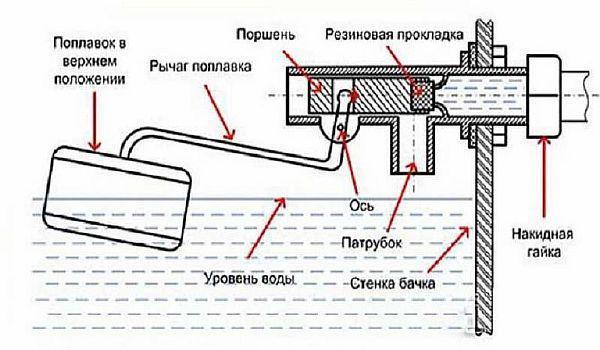 When the float is lowered, the piston opens and water flows through the pipe into the tank.
As the tank fills, the float rises and, using a lever, pushes the piston outward, gradually closing the inlet. As the water flows, it slows down, and when the inlet is completely closed, it stops flowing into the tank.
Float
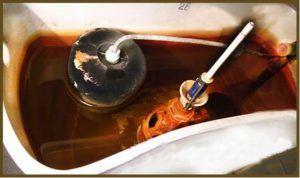
This product is a rubber or plastic container, the purpose of which, as the name suggests, is to float. This is accomplished through a metal lever. it opens and closes the intake valve.
Siphon
This device releases water from the cistern into the toilet bowl in a single burst. The cistern siphon is activated by pressing the flush button, creating a vacuum in the air chamber.
Under its influence, water is actively pumped out of the tank until it is completely empty.
Overflow device - common breakdowns and their repair
Filling the tank to 80% of its capacity is normal. This is achieved by adjusting the inlet valve, or more precisely, the float position.
However, situations arise when the shutoff device malfunctions and the toilet cistern overflows. In this case, overflow is inevitable, and water spills onto the floor.
To prevent this situation, an overflow pipe is installed in the tank and drains into the drain. When the liquid level rises above the normal level, it flows through the pipe into the drain, preventing flooding of the room.
Watch the video
However, a situation where water continuously flows from the cistern is a sign of a malfunction and requires immediate intervention to fix it. Given modern trends in plumbing fixture manufacturing, it's likely that the faulty component won't need to be repaired, but rather replaced entirely.
However, the replaced unit will still need to be disassembled to determine why it failed and correct the cause. For example, installing an internal fine (coarse) filter at the tank inlet.
Another cause of constant water leakage could be a leak in the locking mechanism due to a worn gasket. This simply needs to be replaced.
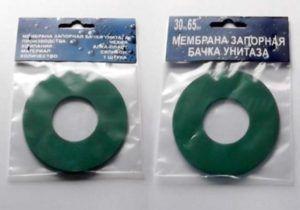
In general, a toilet leak is a common malfunction. One possible cause may be damage or wear to the internal components of the cistern's siphon membrane. This type of malfunction requires replacing the siphon membrane, which can be done in the following order:
- Drain the water from the tank. To prevent the tank from filling through the inlet valve, the float must be secured in the up position, or better yet, the ball valve on the water supply line must be closed.
- Unscrew the nut securing the drain pipe.
- Loosen the siphon nut located at the base of the outlet from the container.
- Disconnect the siphon from the liquid drain lever and remove it.
- Remove the membrane and replace it with a similar one.
- Assemble the mechanism in reverse order.
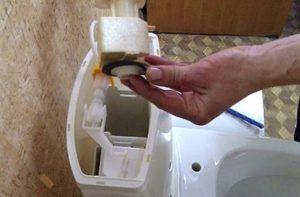
During the work, it's necessary to inspect other toilet components and make any necessary adjustments. Once the work is complete, fill the cistern and perform several test flushes to ensure the problem has been resolved.
It's also necessary to check all joints in the system for leaks. If any are found, take steps to eliminate them. If this fails, call a qualified plumber to fix the leaks.
What to do if the toilet tank won't fill
Watch the video: What to do if water isn't filling up
[sociallocker]
This is one of the typical problems with toilet flush systems. If it occurs, don't rush to the store for a new cistern. Let's try to figure out the problem ourselves using the following steps.
- Remove the cover.
- Check the float's position. In some cases, the problem is caused by a tilted float, preventing it from moving within the tank. It's necessary to restore the float's position, fill the tank, and perform a test drain.
- Check for water in the water supply system on other consoles.
- Turn off the inlet valve and unscrew the connection hose. Inspect it to ensure it is not clogged.
- Inspect the hole in the intake valve body and, if necessary, clean it from contamination using a nail or elastic wire.
- Check the piston stroke; if it is tight, it is necessary to remove and clean the surface of this part, achieving free movement in the housing.
Once this work is completed, reassemble the system and test fill the tank two or three times. This is usually sufficient to resolve the issue. If the tank still doesn't fill, you'll need to visit a plumbing supply store and purchase a new valve.
Installation is done in reverse order. We also recommend purchasing and installing tap water filters and placing them directly behind the faucet.
Finding out that your toilet cistern is broken shouldn't come as a shock. Most problems can be fixed at home. If that doesn't work, call an emergency service—for a fee, they can easily fix any problem.
Installation and replacement of fittings
"Nothing lasts forever," and this applies equally to toilet flushers. Sooner or later, you'll have to replace the fittings, or the internal structure of the cistern. When deciding whether to do the job yourself, consider several factors:
- The very need for replacement implies a significant lifespan of the device. Therefore, when shopping for internals, it's important to at least have a rough idea of the device's age.
- There are many plumbing manufacturers, and each one introduces its own design features. Therefore, it's also important to know the manufacturer of the product.
- The need for repairs and performing them yourself requires certain knowledge and skills, as well as the availability of special tools.
Installing the cistern's internal components is a painstaking task, comparable to assembling a new one, so it must be approached with the utmost care and attention. Otherwise, leaks may develop, which are quite difficult to fix.
Video: Replacing Rebar
[sociallocker]
It should be remembered that the insides of the tank can be quite complex and fragile structures, the breakage of which is very likely if installed incorrectly.
Differences in the internal components of fittings from different manufacturers may depend on the water supply method. These are the following features.
- Side-inlet water supply places the internal components at the top of the tank, which is typical for domestically produced models. This system is the most economical, but the water supply is noticeably noisy. In more upscale models, water is supplied through a tube, the end of which is lowered to the bottom, allowing for quiet filling.
- A bottom-mounted water supply device is most often found on foreign-made models, but recently it has also been found on domestic products.
The drain devices are activated when pulling the lever up or pressing the button, of which there can be two for different dosages of water during flushing.
What principles should be followed during repairs?
Watch the video to see the internal structure and operating principle.
[sociallocker]
Before starting work, it's necessary to prepare the equipment. This means completing the following steps:
- You need to turn off the tap on the water pipe before the inlet valve.
- Remove the lid. You may need to unscrew the button-shaped latch, usually located on the left side of the tank. Loosen the retaining screw and remove the lid, gaining access to the tank's interior.
- Inspect the fittings to identify worn or broken elements.
The filling valve contains a diaphragm valve or piston seal. Either design is sensitive to fine particles, which are always present in tap water.
By settling on the walls of pipes and any surfaces they come into contact with, these contaminants interfere with the operation of valve mechanisms. This deposit is very durable and can only be removed mechanically.
If the inlet pipe is not equipped with filtering devices, periodic replacement of the valves is inevitable. You can replace the push-button flush mechanism with a push-pull mechanism.
To install a new mechanism in the tank, you must first remove the old one. This can be accomplished by turning it clockwise until it completely disengages. Avoid using excessive force, as if the mounting point breaks, removing it will be difficult.
The new fittings must match the tank in size; this should be taken into account when purchasing.
Watch the video
Care must also be taken to ensure the sealing elements—gaskets—are installed correctly. If they are installed at an angle, this can lead to additional loads and, over time, cracks in the body, which is detrimental to ceramic products.
When installing fasteners, do not apply excessive force to them so as not to create additional loads.
Installing the cistern's internals doesn't seem like a difficult task. It can easily be done by hand.
Conclusion
The primary requirement for operating such plumbing fixtures is constant monitoring of their operation. Any deviation from the norm indicates certain changes in the device's internal components, and the consequences of such changes must be clearly understood.
The most dangerous situations occur when water overflows above the permissible level. This can lead to flooding for neighbors below and significant cleanup costs.
Watch the video
Currently, the plumbing market is seeing the emergence of devices that connect the toilet directly to the water supply. This eliminates the need for a cistern as such. It's safe to assume that these types of products are the future.
I recently struggled with a leaking toilet. I tried everything, but nothing helped. It turns out there was a problem with the float; there was water inside it, which was why it wasn't closing the valve. After replacing it, everything worked as it should.