 When considering the production of polypropylene pipes and fittings for water supply and heating pipelines, it is necessary to first thoroughly characterize the materials used in production.
Polypropylene pipes and fittings have a large number of advantages, which distinguish them from their steel counterparts:
- they are much lighter;
- resistant to corrosion;
- do not become overgrown inside during use;
- do not create vibration, rumbling or other noises;
- do not burst when the water in the system freezes;
- do not conduct electricity;
- do not require painting;
- very easy to operate.
Polypropylene pipes and fittings can last for decades. They are environmentally friendly products and are successfully used in pipelines of any complexity. Therefore, their production and manufacture are widely established worldwide.
The use of fittings with chrome and brass inserts allows combine these blanks with steel pipes.
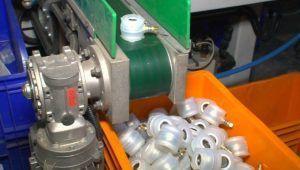
The construction made from these materials is very airtight, and this use brings significant economic benefits.
A little about polypropylene
Polypropylene is the starting product of the polymerization of propylene and ethylene in specific quantities. The resulting material is called random copolymer PPRC..
Currently, there is no worthy alternative to foreign polymers on the domestic market. We use the Finnish RA 130E BOREALIS and the Hungarian TIPPLEN CS4-8000 TVK for the production of polypropylene pipes.
The pipe manufacturing process is simple and not very labor-intensive. The following features should be highlighted:
- low energy consumption during production;
- environmental friendliness;
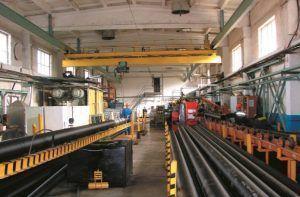
- for the production, installation and use of one complete line for the production of polypropylene pipes and fittings, you do not need a lot of space (this is approximately 100 m2);
A complete polypropylene pipe extrusion line is a complete cycle of extrusion, calibration, cooling, drawing, etc.
Raw material for work
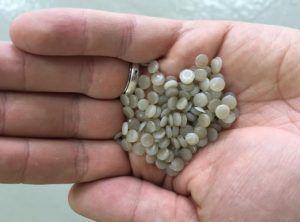 They come in the following types:
- Low and high pressure polymers.
- Polyvinyl chloride;
- Polypropylene;
- Polybutylene.
Types of equipment for manufacturing
Equipment for the production of polypropylene pipes (extruders) are machines of the following types:
- Auger-type. They function like a juicer or meat grinder.
- Screwless machines. They are used to produce blanks from mixed materials. The main component in these machines is the disk.
- Combined. These mechanisms combine the auger section with a disk.
IMPORTANT! Auger-type machines are considered the most common equipment for producing plastic products.
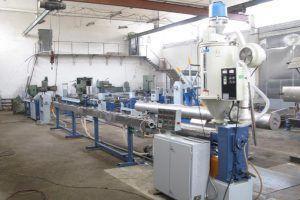
In addition to the extruder, plastic pipe production lines also have the following equipment:
- Raw material supply system.
- A machine that cuts blanks.
- Capacity for calibration and cooling.
- Pulling mechanism.
- Mixer.
- Conveyor belt.
- Vacuum forming.
- An accumulating mechanism that performs the stacking of blanks.
Selection of raw materials
When choosing raw materials, people opt for granulated polymer, but they need to carefully look at its expiration date.
Polypropylene and polyethylene are practically not limited by these indicators, which makes them more convenient to use.
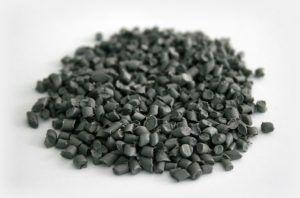
From an economic point of view, a copolymer and HDPE are advantageous.
IMPORTANT! When starting your own production facility for polypropylene pipes and fittings, it is recommended to maintain cooperation with a single supplier. Changing raw materials requires changing the equipment used to manufacture polypropylene products.
Manufacturing process
The main equipment that processes raw materials and turns them into polypropylene pipes or fittings is called extruderThe manufacturing process itself proceeds in the following sequence:
- The raw material for making pipes and fittings is fed into a special chamber. It comes in the form of small granules or chips. Secondary raw materials, which have undergone preliminary processing (crushing), are also often used. The secondary raw materials are mixed with the primary raw materials.
- Using electric or gas heating, the poured mass is melted. Temperatures range from 230 to 250 degrees Celsius. However, it doesn't liquefy, but rather becomes viscous. To prevent this viscous, heated mass from sticking to the walls of the apparatus, they are coated with Teflon.
- The extruder then extrudes the thick mixture into preforms of the specified size. The preform is typically two and a half meters long. The equipment performs all these operations very quickly and completely autonomously. Human intervention is required only to set the required operating parameters. The best equipment for producing polypropylene pipes and fittings can produce up to 200 kg of products per hour.
- The next step is cooling the blanks. They are placed in a cooling container. The cooling process takes a couple of minutes. Afterward, they maintain their specified dimensions perfectly. In the cooling container, the plastic undergoes a shaping process, during which the material is thoroughly rounded and takes on the desired shape.
- Upon completion of the manufacturing process, markings are applied to the products, indicating their operating parameters, the batch number, and the production date. The blanks are then pre-packaged, packaged, and shipped to warehouses or to customers.
Video
In addition to the main products (pipes), it is necessary to produce component partsThey are often produced in the same factories as pipes.
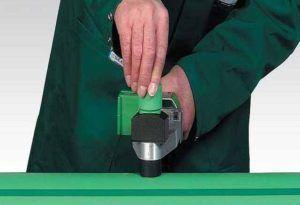
Only for the production of polypropylene fittings it is necessary to install additional equipment (machine).
It doesn't take up much space, but it does provide the opportunity to expand product range. This is becoming an important factor for companies, especially in a highly competitive environment.
The main problems and difficulties of production
Almost every country in the world produces building materials. This includes polypropylene pipes and other plastic products, the production of which is excellently established in Russia.
The main problem in the industry is that domestic investors are not very active in financing the acquisition of new modern equipment.
Many businesses are forced to operate with old technologies that are no longer relevant.
One-time capital expenditures could be the key to high profits in the future. But they don't do this. Therefore domestic pipe-rolling materials cannot create worthy competition to foreign analogues.
There are no external differences when comparing our polypropylene products with those made abroad. However, practical use reveals different results.
Video
Domestic blanks do not withstand wear and tear as well, are not as durable, and often have surprises in the form of defects that lead to breakthroughs.
For the reasons stated above, consumers often prefer more expensive but high-quality German products, Czech and Turkish manufacturers.
Video
Finally, it's worth noting that polypropylene pipe production has been transformed into an automated process that doesn't require significant energy or labor inputs. Furthermore, this production process produces virtually no waste and is environmentally friendly.