There are two popular types of heaters on the market: oil-filled radiators and electric convectors. While they serve the same purpose, there are significant differences between them.
In this article, we'll examine the characteristics of convectors, compare key parameters, identify the pros and cons, and determine which is best to choose and why.
Characteristics of heating devices
Electric convectors and oil-filled radiators have fundamental differences in their structure and heat transfer methods. However, they do share some similarities.
Oil radiator
The first heating devices to appear in Russia were oil-filled radiators. They were turned on by plugging a plug into a socket, which could easily cause burns. Today, this device has been improved. Radiator design:
- The body is made of steel and has several sections.
- Two manifolds, one (lower) for the heating element and the second (upper) for oil movement.
- A trolley with 4 wheels for easy transportation around the room.
- Carrying handle.
- Power cord.
- Indicator lamp, can be regular or LED.
- Mode switch.
- Thermostat.
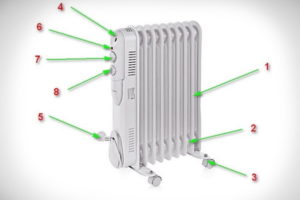
In models released in 2021, the last two positions contain a control unit with a display.
The heater's primary function is performed by transformer oil. This choice is not without reason:
- high boiling point, but the device does not heat up more than 120oWITH;
- the oil gives off heat longer;
- no corrosion in the body;
- the oil does not freeze.
The heating element itself is a tubular heating element with a cone-shaped thread. This design allows the element to be screwed in without the use of a gasket.
The operating principle of an oil heater is similar to that of a quartz heating panel, i.e., it uses both infrared radiation and convection heating simultaneously.
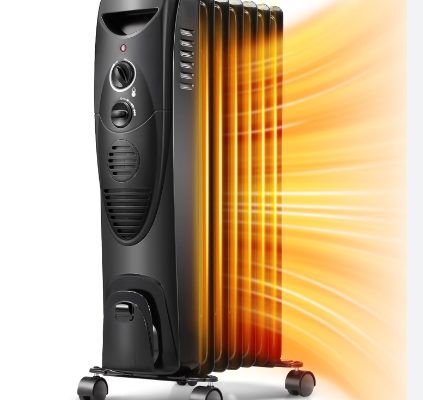
The room is heated according to the following algorithm:
- The heating element turns on and warms up;
- then the heating mechanism and oil in the lower part heat up;
- the liquid substance rises upward, heating the steel body first from below;
- it transfers heat to the air, which, when heated, rises to the ceiling and distributes heat throughout the room;
- The furniture also becomes warm and transfers its heat to the surrounding environment.
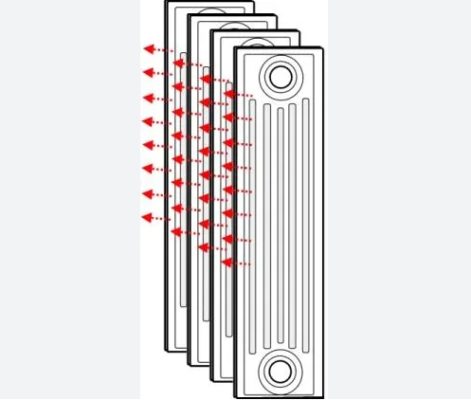
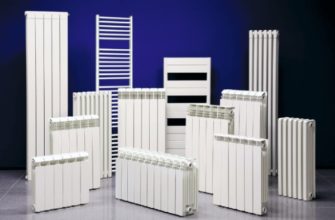
There are several types of oil radiators available on the market:
Maslyanik is a popular choice due to its many advantages:
- Simple design;
- Capable of heating a large room;
- Low cost;
- Long service life;
- Easy to transport indoors;
- Just plugs in;
- There is a choice of design parameters.
- Many models with auxiliary functions;
- Quiet operation;
- No dust will be released;
- Can work for days without the risk of failure;
- The body and liquid accumulate a significant amount of heat, meaning that even after the device is turned off, the room will continue to be heated for some time.
Disadvantages of the device:
- consumes a lot of electricity;
- takes a long time to heat up;
- dries the air;
- the temperature sensor may not work correctly;
- massive;
- it is difficult to fit the heater into the interior;
- If the housing overheats, a fire may occur;
- Sometimes microcracks occur in welding.
Electric convector
Convectors come in gas, water, and electric varieties. Only the latter are popular. The very word "convector" implies that the device is designed to transfer heat from the heating element to cool air, which circulates to warm the room.
Structure of an electric heater:
- The body can be made of metal or plastic.
- Ventilation grille for cold air intake.
- Openings for heated air outlet.
- Heating equipment.
- Control unit.
- Thermostat.
- A temperature sensor that shows the heat level in the room.
- Temperature sensor of the device itself for emergency shutdown in case of overheating.
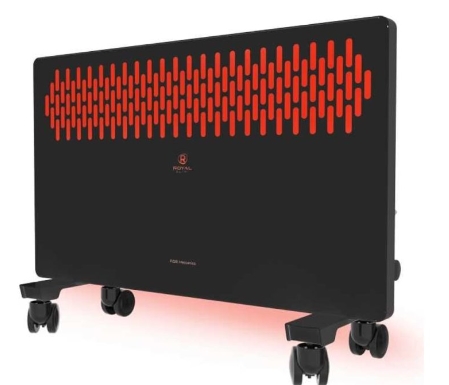
The heating element is located at the bottom of the housing. It can be of three types, which are further subdivided into subtypes:
- “Stitch” or needle heating element. The main element is a filament made of a nickel-chromium alloy. It passes through the dielectric plate several times, leaving numerous angles on both sides of the base. It looks like stitching.
The advantages of this design:
- heats up to +250 in a matter of secondsoWITH;
- cools down quickly;
- operates quietly.
Disadvantages of such a device:
- does not work for long due to contact with oxygen;
- does not tolerate direct contact with water;
- dust may ignite;
- short circuit when foreign objects enter the structure.
- Tubular. This is a steel flask filled with sand (fine-grained quartz or ceramic). Inside the sand is a nichrome wire, which heats up, transferring heat to the mineral filler. Heat transfer can be increased. To achieve this, manufacturers attach a ribbed aluminum strip to the flask. The shape of the heat exchanger can vary; it doesn't affect the operation of the device.
Advantages of a heating element compared to a needle element:
- lasts approximately 2 times longer;
- You can place the heater in a room with high humidity.
Flaws:
- takes a long time to heat up;
- makes a crackling sound when thermally expanding.
- Monolithic. It can be solid or slotted. It consists of a solid aluminum body with X-shaped fins that act as a heat exchanger, into which a quartz-filled silumin flask with a nickel-chromium coil is inserted. This design eliminates the disadvantages of needle and tubular heating elements.
The type of heating element plays a role in the device's service life, its ability to withstand moisture, noise level, and heating speed.
The operating principle is based on a simple law of physics. Warm air rises, giving way to cold air. More precisely, after switching on, the heater reaches its maximum temperature. The surrounding air comes into contact with the heat exchanger, absorbs some of the heat, and heats up.
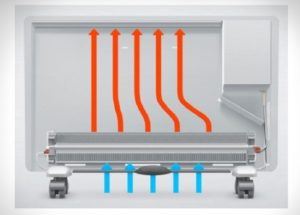
Coming out through special openings, the air rises to the ceiling, displacing cold masses.
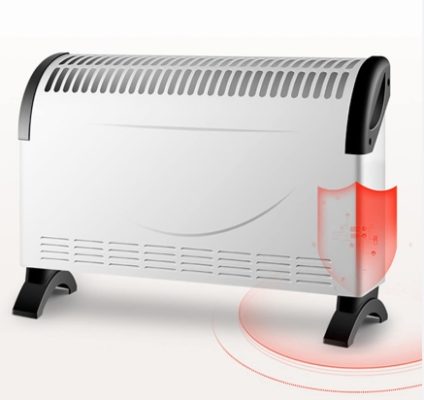 There are several types of electric convectors:
- Floor;
- Wall;
- Hidden in the floor covering.
Advantages of an electric convector in general:
- instant heating of the room;
- fire safety;
- safe to operate;
- it is possible to create a modular heating system;
- energy saving;
- can work in a room with high humidity;
- small size;
- fits well into the interior.
Flaws:
- It is useless to use if the ceiling height in the heated room is more than 3 meters;
- dries the air very much;
- actively raises dust;
- creates a draft at floor level;
- the temperature drops sharply after switching off;
- If you mount the heater on the wall, there will be a temperature difference between the ceiling and the floor covering equal to 10oWITH.
Basic comparison of devices
To buy a good heater that can quickly warm a room and last a long time, you need to pay attention to several key factors. You can compare two devices using several criteria.
Benefit
The price range for an oil-filled radiator and an electric convector is enormous. An oil-filled radiator with a 0.5 kW output starts at 1,699 rubles, while a similar oil-filled radiator with a higher output can be purchased for 1,999 rubles.
A 0.5 kW convector will cost approximately 3,500 rubles. Therefore, from an economical standpoint, it's better to choose a radiator.
Service life
Manufacturers indicate one period in the warranty card, but in reality they are different:
- near the oil radiator the term is 1-2 years according to the documents, but in fact they serve 5-7 years;
- convector – 5-10 year warranty, in reality 15-20 years.
Efficiency
The main criterion for evaluating a heater's efficiency is energy consumption. Convector heaters are considered superior in this regard, but it's important to remember that they cool down immediately after being turned off. An oil-filled radiator, on the other hand, continues to heat the room for some time after being disconnected from the power supply.
Other performance evaluation criteria:
- Installation location. The higher the unit is installed, the lower its output, as it primarily heats the ceiling. This applies to convectors, as most are wall-mounted models.
- Height of the room's ceilings. For an oil radiator, this indicator does not matter; heating remains unchanged.
Heating time
In this case, an electric heater is the clear winner. The device begins transferring heat to the air immediately after being turned on. The room warms up faster.
An oil radiator is often additionally equipped with a built-in fan heater; the warm-up time increases, but it still cannot be compared with a convector.
Comfort of use
If your oil-filled radiator has electronics, it's simple: just plug it in, set it up, and it works flawlessly. With a convector, things are more complicated:
- raising a huge amount of dust into the air, which tends to settle in places that are difficult to clean;
- crackling sound of the tubular heating element.
The oil appliance does not have any problems with dust due to weak air flows.
Design
Comparing heaters by this criterion is difficult, as everyone has their own tastes. Many prefer a radiator. If you place it on its own, without trying to create a composition, it looks quite acceptable.
Based on the overall design of the room, it is difficult to find a suitable place for both heaters.
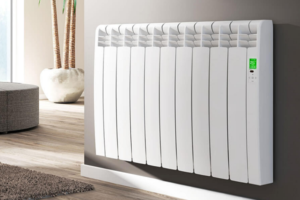
An oil-filled wall-mounted radiator can be used as an alternative. Its flat design is unobtrusive.
Safety
Both oil-filled radiators and electric convectors contain many safety features. However, there are still some differences:
- When oil gets too hot, it doesn't boil; it ignites immediately. It doesn't matter what container it's in. Drying items on the radiator is prohibited.
- The convector body temperature is no more than +60oS. And the radiator can heat up to +100oC, provided there's no protective cover. Without one, it's easy to get burned.
- Electric heaters can be used to heat a bathroom. Oil heaters should not be used in rooms with high humidity.
- The oil burner should not be left unattended for long periods of time. The device may have microcracks that are invisible to the naked eye, but through them, oil can leak and ignite.
Comparison by other features
Modern heater models are equipped with additional features. Both radiators and convectors have them:
- electronic control system;
- various operating modes;
- built-in ionizer;
- air humidifier.
An oil heater has something a convector doesn't: it dries clothes and shoes quickly. Electric convectors come with a drying attachment that does the job, but it takes considerably longer.
What is better to choose and in which case?
The advantages of an electric convector are obvious and justified, but for office spaces, an oil-filled radiator is more suitable.
When else to choose an oiler:
- if you have a limited budget and need uniform heating;
- for garages, to prevent excess dust from forming;
- into an apartment or house as a device for additional heating, but on condition that the central heating in the room is constantly on.
In other cases, it is better to purchase an electric convector.
Summary comparison table
For a clear overview of the heaters and their differences, an analysis is provided in the form of a table.
Comparative characteristics of an oil radiator and an electric convector in points (maximum score 5):
| Characteristics | Electric convector | Oil radiator |
| Price | 4 | 5 |
| Duration of operation | 5 | 3 |
| Efficiency | 4.5 | 5 |
| Room heating speed | 5 | 4 |
| Ease of use | 4.5 | 5 |
| Design | 4.5 | 3.5 |
| Safety | 5 | 4 |
| Additional functions | 4.5 | 5 |
| Average score | 4.63 | 4.31 |
Electric convectors and oil-filled radiators have many similarities and differences. Based on their pros and cons, the electric heater has the edge. However, oil-filled radiators also have their customers, as they perform their functions perfectly.