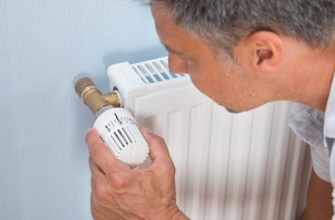
A thermostatic radiator head is a control valve for a hydronic heating system. Experts refer to it as a radiator valve or thermostatic control valve.
The device appeared in Russia relatively recently and was immediately included in the relevant regulatory framework as a legitimate element of a water heating system.
The thermostat is designed to regulate the heating level of one heating radiator or a chain of series-connected batteries.
It allows you to set a customized temperature regime in any room of your house or apartment. The device's versatility lies in its compatibility with all radiator models.
- How important and necessary is a thermal head?
- Thermal head device
- Operating principle
- Types of thermal heads
- Manual
- Mechanical
- Electronic
- Valves with thermal heads - straight and angled
- Wireless
- With a remote sensor
- Main criteria for selecting a thermal head
- Installing a thermostatic head on a heating radiator
- Installing a radiator valve
- Installing a thermal head
- Features of setting up the Danfoss electronic thermostat
- Rating of popular manufacturers
- Valtec
- Danfoss
- Oventrop
- Thermo
- Honeywell
- Caleffi
- Salus
How important and necessary is a thermal head?
A thermostatic radiator control unit optimizes energy consumption, which can lead to significant savings throughout the heating season. The boiler can raise or lower the heating temperature of all radiators simultaneously.
However, this isn't always necessary, as different rooms have different heating requirements. Bedrooms, children's rooms, living rooms, dining rooms, and halls all require different temperatures. 200 – 220, in the bathroom a comfortable level of air heating is desirable in the area 240 WITH, and there is enough in the utility rooms 160 WITH. Level 120 and 70 for special occasions.
By installing thermostatic heads, homeowners can adjust the temperature in each room according to their own preferences. Thermostat for heating very easy to install and operate.
Thermal head device
To better understand what the device is capable of and how best to use it, we need to look at what it consists of and how it functions.
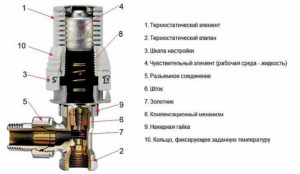
The thermostat's head is a sealed hollow cylinder containing a bellows—a container containing the working fluid. The bellows senses changes in the room's air temperature through the slots in the rotating plastic cap.
The head body is connected to the valve with a special nut. The figure below shows a cross-section of an angle valve with a thermostatic head for a radiator. As the diagram shows, the thermostatic head consists of 10 components.
Operating principle
The operation of a thermostatic head for a heating radiator is as follows:
- The rotary ring has markings indicating the regulator's four main positions. By aligning a specific mark on the scale with a mark on the housing, the device's operating mode is set;
- if the air begins to heat up more than the established norm, then through the cracks of the rotary cap it begins to heat the bellows with the working substance;
- the heated substance begins to increase in volume, which sets the rod in motion;
- the rod, in turn, through the valve begins to close the passage hole, thereby reducing the flow of coolant into the battery;
- As a result, the air in the room will begin to cool, and accordingly, the bellows with the working fluid will cool;
- the reverse process occurs, and hot water will be supplied to the radiator at the required intensity.
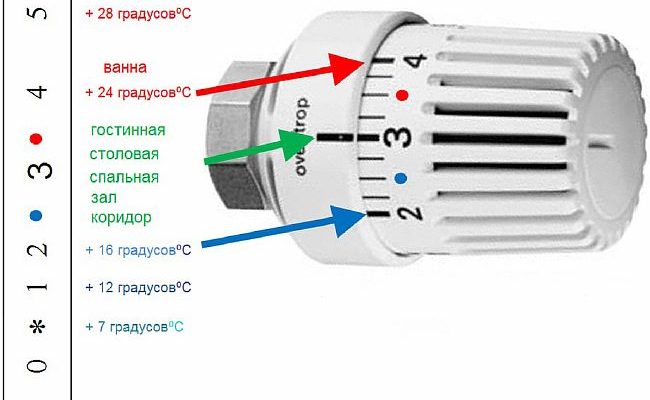
Control and adjustment accuracy may vary between devices. However, the operating principle is the same for all mechanical models.
Types of thermal heads
Thermal heads for batteries are divided into the following devices according to the type of built-in mechanisms:
- manual;
- mechanical;
- electronic.
Manual
Thermostatic control devices operate similarly to a regular faucet. By turning a knob, the flow rate of coolant entering the radiator is regulated. The scale is calibrated through a series of instrument tests. Each division corresponds to the desired room temperature.
Pros
Low cost. Easy to install and use. Beautiful appearance.
Cons
The radiator's heating level is manually adjusted using the thermostat knob. This means that room temperature control is impossible while the homeowners are sleeping or away.
Mechanical
The thermostat stem closes the valve, freeing the coolant flow in the pipe in front of the radiator, moving automatically following the expanding bellows. The temperature is manually adjusted using the rotary cap scale, setting the operating limits of the thermostatic valve.
Pros
This eliminates the need for the owners to be present to adjust the device. The thermostat maintains the set temperature 24/7, significantly saving heat energy.
Cons
The need for constant monitoring of the correct installation and implementation of the specified temperature modes by the device.
Electronic
The automatic thermostatic head with electronic control offers an expanded range of functions. The thermostat operates on the same principle as a mechanical device. The head offers fine-tuning capabilities. The thermostatic head is installed directly on the thermostatic valve and allows for room temperature control.
Pros
The advantages include the presence of such functions as:
- programming of temperature control devices for each day of the week;
- "Boost" enables rapid heating of the battery;
- “Vacation” sets a constant heating mode for the entire period of the owners’ long absence from the house or apartment;
- “Offset” is triggered when access is difficult or the battery is located in a deep niche;
- "Open window" - when the windows are opened, the head will automatically lower the radiator heating temperature.
Cons
The disadvantages include the high cost of an automatic thermostat head. Also noteworthy is the need to monitor the batteries and replace them regularly.
Thermal heads for heating radiators differ in the mounting method – these are:
- straight and angular taps with thermal heads;
- wireless;
- with a remote sensor.
Valves with thermal heads - straight and angled
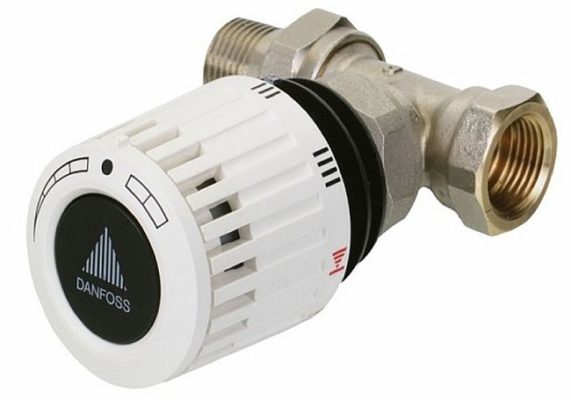
These include all manual and mechanical devices (see the "Manual" and "Mechanical" sections above). Straight (through) models have a tee for connection to a straight pipe.
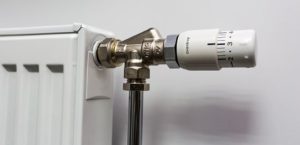
Corner thermostatic heads are installed at the corners of the heating main in front of the heating battery.
Wireless
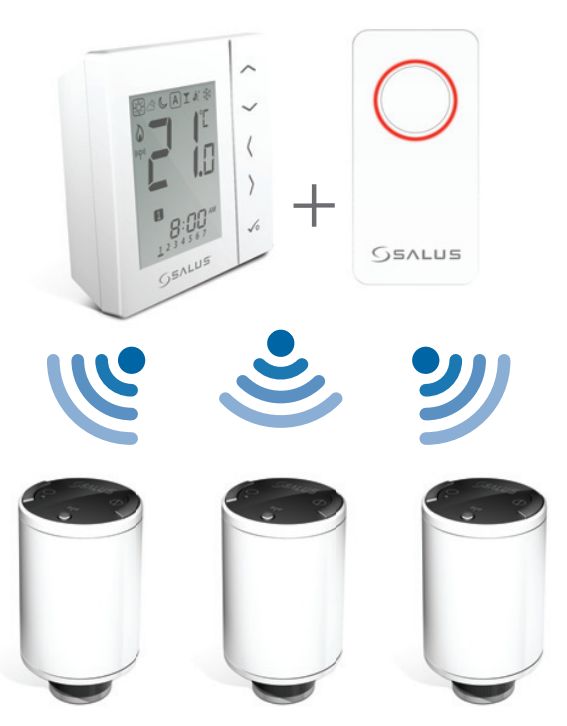
A unique feature of wireless radiator thermostats is that they can be controlled via Bluetooth from a smartphone or tablet. Wireless thermostats are completely standalone devices, requiring no additional equipment. The main advantages of these devices include:
- the ability to control not only remotely, but also using touch buttons located on the thermal head body;
- programming for each day of the week or for a longer period;
- The presence of self-learning functions, child protection, rod oxidation warning and open window recognition.
With a remote sensor
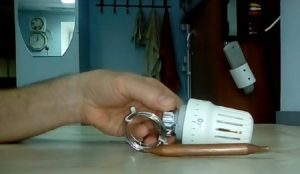
The remote sensor is an elongated, non-ferrous metal flask filled with liquid. The flask is connected by a steel tube to a bellows, through which the liquid moves in one direction or another depending on the increase or decrease in the room temperature.
A bellows is a container with accordion-shaped walls, so it can both expand and contract, acting on the valve stem.
The 2-meter long connecting tube allows you to place the remote sensor in any convenient location.
Main criteria for selecting a thermal head
Today, the heating equipment market is filled with a wide range of thermostatic heads of varying designs, mostly manufactured by brand-name companies. To help consumers navigate this diverse selection, experts recommend following these selection criteria.
- It is advisable to select thermostatic heads from the same manufacturer for heating radiators.
- When choosing a device, you should give preference to those models that require a minimum of additional fittings and fastening and connecting elements.
- If a small space includes one or two living rooms, it is advisable to install manual valves with thermostatic heads in each of them.
- In single-story buildings, it is advisable to install mechanical thermostats and thermostat heads with remote sensors.
- In two- and three-story mansions, owners can afford wireless thermostatic heads. They are required in homes connected to the Smart Home system.
- Compared to mass-produced counterfeits, brand-name products, despite their high cost, will not let you down for many years.
- The vandal-proof casing will protect against careless attempts to tamper with the device's settings.
- The design of the thermostatic head should not contrast with the background of the radiator and fit harmoniously into the interior of the room.
- To avoid buying a fake, you should ask the seller for a quality certificate.
Installing a thermostatic head on a heating radiator
Connecting a thermostat to a radiator consists of two operations: installing a thermostatic valve and installing a thermostatic head.
Installing a radiator valve


Installing a thermal head
The thermostat is installed as follows:


Features of setting up the Danfoss electronic thermostat
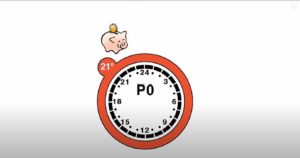
By default, the thermostat is set to the energy saving program P 1. You can select the program that best suits your family's lifestyle:
- P 0 – constant temperature 210 Around the clock.
- P 1 – energy saving, in which the temperature of 17 is maintained every night from 10:30 pm to 6 am0 WITH.

- P 2 is an extended energy saving program that reduces the temperature to 170 Every night from 10:30 pm to 6 am and on weekdays from 8 am to 4 pm.

- You can create your own settings in the energy saving program. To do this, press the middle button in the program menu and select the desired one. Using the arrow keys, you can set energy saving periods for weekends, weekdays, all days of the week, or a single day.
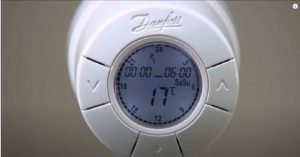
- After selecting the settings, confirm them by pressing the bottom key.
Rating of popular manufacturers
Lists of the most popular thermostatic head manufacturers help consumers navigate the wide range of radiator thermostats available on the heating market. Based on an analysis of online information, the following companies are presented:
- Valtec;
- Danfoss;
- Oventrop;
- Thermo;
- Honeywell;
- Caleffi;
- Salus.
Valtec
The company produces reliable heating devices and thermostatic heads. The brand is of Italian origin, although all production facilities are located in Southeast Asia. One of the thermostatic head models available on the Russian market, the VT.1000.0.0, allows for automatic, highly accurate regulation of the coolant flow rate based on the set room temperature.
Pros
Highly accurate settings. Beautiful design. Long service life.
Cons
There have been no negative reviews so far.
Danfoss
The renowned Danish company Danfoss has been developing energy-saving technologies for over 60 years. Its products, particularly its thermostatic valves, are very popular in the Russian heating market. Programmable electronic devices are often integrated into Smart Home systems. The home's microclimate can be controlled via software installed on a smartphone via Wi-Fi.
Pros
High efficiency, reliability, beautiful design.
Cons
High cost of the device.
Oventrop
Oventrop, a leading manufacturer of fittings for utility systems, including radiator thermostats, has achieved its success thanks to the highly qualified engineering staff and other employees. The most popular thermostat models are the Uni series. These devices are equipped with a liquid bellows and are designed for a maximum heating system temperature of 120°C.0 WITH.
Pros
Easy to use. Beautiful appearance. Precise settings.
Cons
Not compatible with all types of radiators. The device is expensive.
Thermo
Founded over 20 years ago, the Swedish company Thermo quickly became a leader in heating technology. This manufacturer's thermostatic heads are widely recognized and top most ratings. The Royal Thermo RTE 50.30 model is particularly noteworthy. It is valued for its wide temperature control range—from 6 to 28 degrees Celsius.
Pros
Beautiful appearance. Easy to operate. Fits into any room's interior.
Cons
For correct operation, the coolant temperature must not exceed 95 degrees.
Honeywell
An American company specializing in electronic automation control systems, it is known in Russia as a manufacturer of reliable and efficient heating equipment. Its electronically controlled thermostatic heads boast precise settings.
Pros
Beautiful design, simple installation and ease of use.
Cons
There is no such information yet.
Caleffi
The Italian company Caleffi manufactures fittings for utility networks for various purposes. In Russia, the company is known for its high-quality thermal valve heads. One of its programmable models, the Caleffi 210000, features an LCD display and offers a wide range of settings.
Pros
Precise settings. High efficiency and ease of use. Beautiful design.
Cons
There have been no negative reviews yet.
Salus
The British company Salus manufactures thermostatic heating equipment. Much of its production was previously relocated to Germany and Hong Kong. The Salus PH 60 thermostatic head is particularly noteworthy. This electronic device with non-volatile memory can set a room temperature for a week, ranging from 6 to 40 degrees Celsius.
Pros
The device is easy to use, has a beautiful appearance, and offers remote access to settings.
Cons
High price.



Fuel is not a heat engineer. Higher. Economist. Light technician.
Is there anything to say on the merits?