 The installation of exhaust ventilation in a residential building is essential for ensuring comfortable living conditions. Comfort is primarily determined by the composition of the air, humidity, and dust levels.
The gas composition of the atmosphere with a normal oxygen content for fuel combustion in heating units is also important.
Therefore, supply and exhaust ventilation is essential when building a home. One of the most important components of such systems is a supply and exhaust system, such as a corrugated exhaust pipe.
Types of ventilation ducts
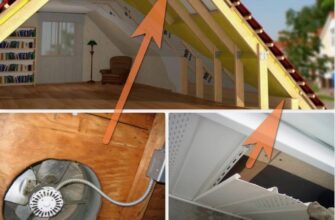
Installing a ventilation system in a home is a complex task. The main pitfall is the inequity in the capacity to remove stale air and fresh air coming from the outside.
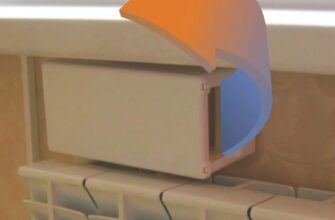
There are known cases where simply replacing traditional window frames with sealed plastic ones resulted in poor stove combustion and breathing difficulties for residents. This is due to an imbalance in the air flow and outflow.
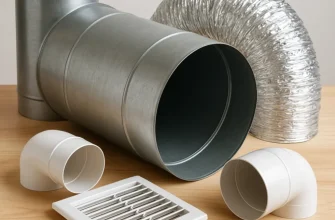
To properly install an exhaust system, various channels are used:
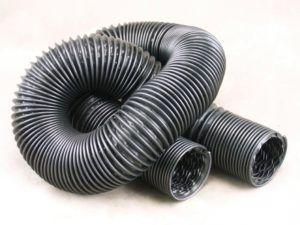
- corrugated plastic pipes;
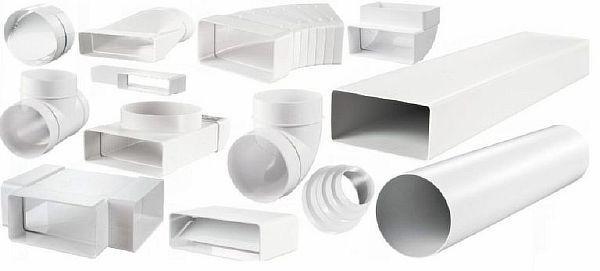
- plastic boxes of square or rectangular cross-section;
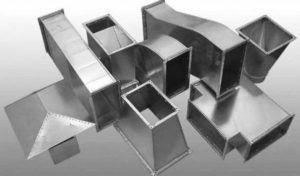
- metal boxes made of galvanized steel;
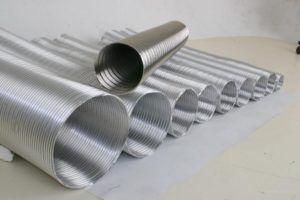
- corrugated metal pipes made of aluminum.
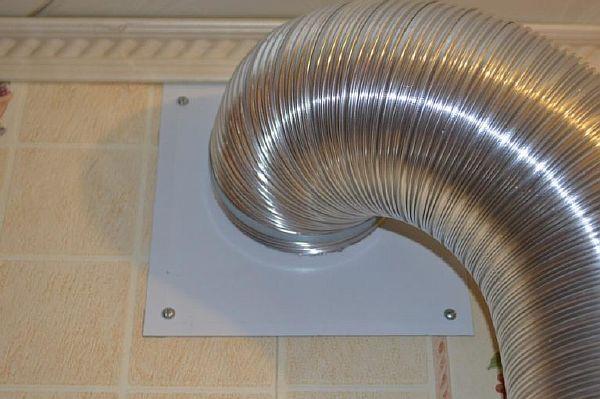
So, what should you choose? It all depends on the location of the ventilation system. For example, plastic products are unsuitable for the kitchen hood duct. Their service life is extremely short when venting hot gases. Galvanized ducts are expensive and difficult to install yourself; professional metalworking skills are required.
Moreover, the appearance of such a duct leaves much to be desired. Currently, aluminum corrugated hood ducts are popular, with a wide range of diameters available, allowing for installation of ducts of any complexity. The material can withstand temperatures up to 300 degrees, which allows them to be used not only in ventilation, but also as chimneys in gas water heaters and boilers.
What are the available corrugated hood diameters? These systems use pipes of the following sizes:
- 100;
- 120;
- 125;
- 150 millimeters.
The most popular corrugated hood size is 120 mm, with 125 mm diameter almost equally popular. Often, consumers simply don't differentiate between these dimensions, especially since they can be mounted on the same accessories. This is facilitated by the material's flexibility when using special connecting elements—clamps.
Corrugated pipes are produced in the form of individual pipes, which are 65-100 centimeters long when delivered, and can be extended up to three meters during installation without changing the diameter.
What materials are corrugated pipes made of?
The main materials for such products are plastics (PVC), aluminum, and stainless steel. We've already mentioned the use of the first two types, but stainless steel ducts are primarily used to remove flue gases from heating units.
Watch the video
This is due to its ability to withstand high temperatures—up to 600 degrees Celsius. Naturally, this quality is also useful for exhaust systems, but the cost of such a duct would be prohibitively high.
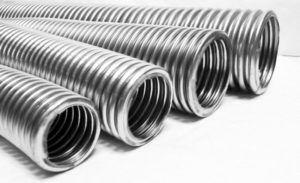 The production process for corrugated aluminum pipes utilizes high-precision equipment and modern technologies. The material used for these products is aluminum (stainless steel) tape with a thickness of at least 0.12 millimeters. It is wound from a reel onto a special mandrel, turn by turn, and laser-welded. The result is a thin-walled, spiral-welded pipe.
Transporting such a product is extremely inconvenient, partly due to its fragile construction. Therefore, the pipe is passed through another machine, where the corrugated pipe is rolled with a circular knife. This produces short pipes that are easily cut. 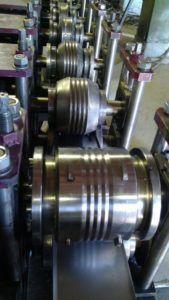 Transport. As we've already mentioned, the 100 mm corrugated exhaust pipe is cut to lengths of 65 cm or more; other sizes are cut in the same manner.
During installation, this pipe can be extended up to 3 meters in length, but extreme care must be taken when doing so, as the walls are easily deformed and dented. A pipe stretched to its maximum length is virtually incapable of being retracted if necessary.
At the same time, the residual corrugation negatively impacts the flow of contaminated air. With prolonged use of such pipes, a deposit forms on the inner walls, which is very difficult to remove due to the unevenness of the walls.
It will be easier to replace them with new ones, since the cost allows you to do this without significant expenses.
How to choose the corrugated pipe size for a range hood
When designing a home exhaust system, the first consideration is selecting the fan's power to ensure adequate air exchange in all rooms of the home. The recommended duct cross-section size is specified in the device's data sheet.
The fundamental principle of ventilation duct design is the equalization of air volumes per second. Therefore, in single-duct systems, narrowing of the duct is not permitted. This leads to overloading of the fan motor and increased energy consumption.
There are few options for choosing pipes based on material: it can be a plastic corrugated pipe for a 120 mm hood, or the same one, but made of aluminum. First option makes it easier to maintain the air duct by removing sediment from the walls. Second More technologically advanced in installation. A 150-millimeter corrugated exhaust pipe is typically used in branched systems as the main duct.
How to connect a corrugated pipe to a hood
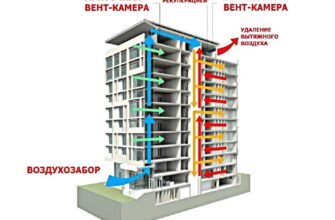
In multi-apartment residential buildings, an exhaust ventilation system is included in the design, and the task boils down to connecting the indoor air duct to this unit. How do I install a corrugated pipe on a kitchen hood?
Watch the video
[sociallocker]
Ideally, when the kitchen unit is equipped with a range hood in one of the cabinets, the task comes down to the following steps:
- Check the hood's draft. To do this, hold a thin sheet of paper (newspaper or toilet paper) up to the air intake grille. If it's attracted to the grille, the draft is normal and you can continue working.
- Before attaching the corrugated pipe to the hood, install a wall-mounted duct with a neck of the appropriate size onto the ventilation grille. There are 4-6 screw holes on the rim adjacent to the wall. Mark and drill the required number of holes in the wall. Insert plastic inserts (dowels) into the holes and attach the neck.
- How do you attach the corrugated pipe to the hood? Slide one end of the pipe onto the neck and secure it with a clamp. Press the wall of the hood firmly into place and tighten the screw securely. Remember that the hood pipe vibrates during operation, so the connection must be sufficiently strong.
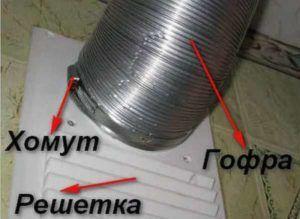
- Carefully, without squeezing the pipe walls, you need to stretch the pipe to the required length.
- Bend the pipe according to its route, insert it into the cabinet opening, and secure the other end to the fan neck using the same clamp. Flexible material can be laid along any route, avoiding any obstructions along the pipe's path.
It's best to stretch the pipe in several stages, avoiding sagging in any particular section. If the pipe isn't stretched to its maximum length, you can compress it lengthwise during installation to adjust it to the desired length.
If you have a suspended or false ceiling, the horizontal section can be concealed within these structures. Visually, a duct made of this material looks quite presentable if it is installed without significant damage such as dents.
Watch the video
Given the product's low mechanical strength, this isn't always possible. Therefore, many users of range hoods choose to enclose the hood inside specially designed boxes. This is especially true if the hood is not a built-in unit, but rather a canopy-type unit.
Before hiding the corrugated pipe from the kitchen range hood, you need to choose a method. This could be a box mounted directly to the wall. When wondering how to hide the corrugated pipe from the kitchen range hood, there are various box options available. In this The article describes in detail how to make a box with your own hands..
The box is made from readily available sheet materials such as drywall, plywood, chipboard, plastic, and other similar products. The front wall is designed to open for maintenance and repair during operation.
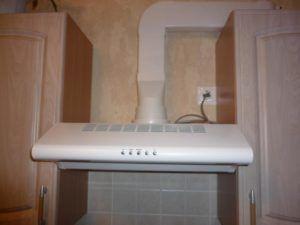 The second option for hiding the corrugated pipe from the kitchen hood is to make a separate box and hang it on the wall.
The advantage of a hidden air duct is that you can decorate the corrugated pipe from the kitchen hood to match the color of your kitchen cabinets or walls.
Such a box for the corrugated pipe from the hood also needs to be made with an opening front panel.
There are other ways to conceal the hood's corrugated pipe in the kitchen, using various materials. Any device designed for this purpose creates certain inconveniences during operation and repair. However, it's important to consider that the kitchen is a functional space, and whether concealing this duct is really necessary is crucial.
Installing a corrugated pipe on a kitchen hood yourself
Watch the video
[sociallocker]
As you can see from the exhaust pipe installation method described above, the process is quite easy to do yourself. You'll need the following tools:
- Marker for marking the position of holes when installing a wall neck.
- An electric drill with drill bits appropriate for the wall material (brick, concrete or other building stones) - if the work is being done in a wooden house, drills and a drill are not needed at all.
- A screwdriver for installing fasteners. Since you only need a small amount, a screwdriver with the appropriate profile may be sufficient.
Watch the video
And the entire job involves securing the neck and installing two clamps. This is one of those cases where you have to do everything yourself.
Ventilation pipe manufacturers
One of the main suppliers of these products to the domestic market is Chelyabinsk plant "Electrovent"This company's product range includes flexible aluminum pipes, heat-resistant stainless steel products, and plastic products.
Elektroventa pipes are popular for their high quality and reasonable prices. The company's product line is quite diverse and typically focuses on ventilation systems.
There are also products on the market LLC NPO Legion, which produces a wide range of corrugated metal pipes. The company specializes in steel products.
SV Profile Company, among other products, produces PVC ventilation pipes and successfully uses them in its operations. Founded over 10 years ago.
Enterprise "Ruvinil", Moscow has been operating in the ventilation systems market since 1998. It produces corrugated plastic pipes using the injection molding method.
The technology for producing any type of corrugated pipe is relatively simple, and the equipment is affordable. However, due to the growing volume of production in the construction industry, the demand for such products is increasing.
The incentive to use corrugated pipes for ventilation systems is their relatively low cost and ease of installation. The advantages of corrugated pipes are obvious, but the choice is yours.