To ensure adequate air exchange, it's important to understand how ventilation works in an apartment building and be able to identify and troubleshoot problems. The system operates through natural or forced circulation. Fresh air enters through the supply duct, and stale air is exhausted through the exhaust duct.
We'll discuss the types, layouts, design principles, and operation of utility networks in more detail in this article. Let's discuss the issue of the occurrence and elimination of air exchange problems.
- Types of ventilation in an apartment building
- General principle of the design and operation of ventilation
- The design and operation of ventilation shafts
- Air filtration
- Features of ventilation in an apartment
- How does sewer ventilation work?
- Methods for preventing air flow between apartments
- Ventilation problems and solutions
- Answers to frequently asked questions
Types of ventilation in an apartment building
Ventilation of the room is arranged in 3 ways: natural, forced and mixed.
Natural ventilation was designed in older apartment buildings. Air exchange occurs without the use of fans. The difference in temperature and pressure between the outside and inside the apartment creates conditions for natural air movement.
The air flows continuously as long as there is draft. Changes in weather conditions and the design of the communal air shafts lead to a decrease in circulation. A backdraft effect occurs, with dirty air returning to the apartment through the hood.
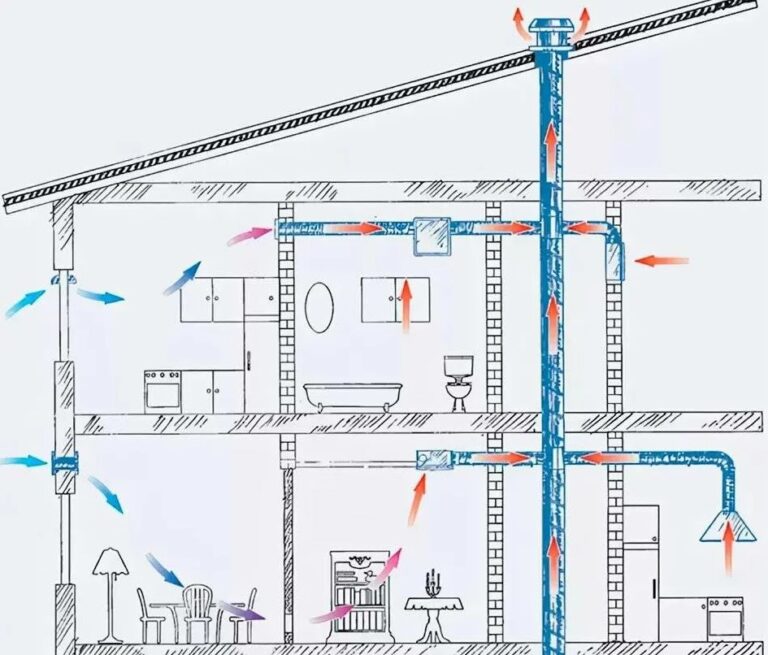
Modern high-rises have abandoned ineffective natural ventilation. The utility systems of apartment buildings are designed with forced-air ventilation. The exhaust and supply ducts are equipped with ducted fans, increasing air movement.
Stable circulation ensures adequate air exchange. The draft reversal effect is eliminated. Circulation is disrupted only in the event of equipment failure.
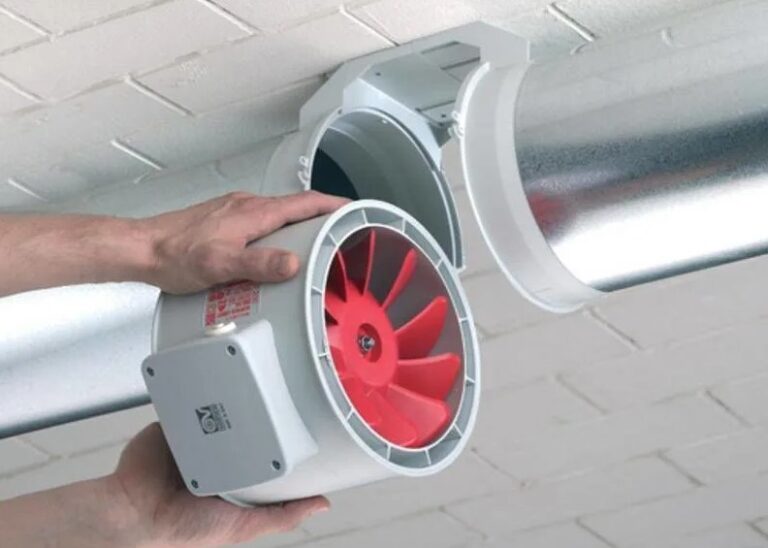
Mixed ventilation is a type of forced air exchange. A mechanical unit with a ducted fan is installed on the exhaust side. Air intake comes naturally through a pass-through unit on the wall or window frame.
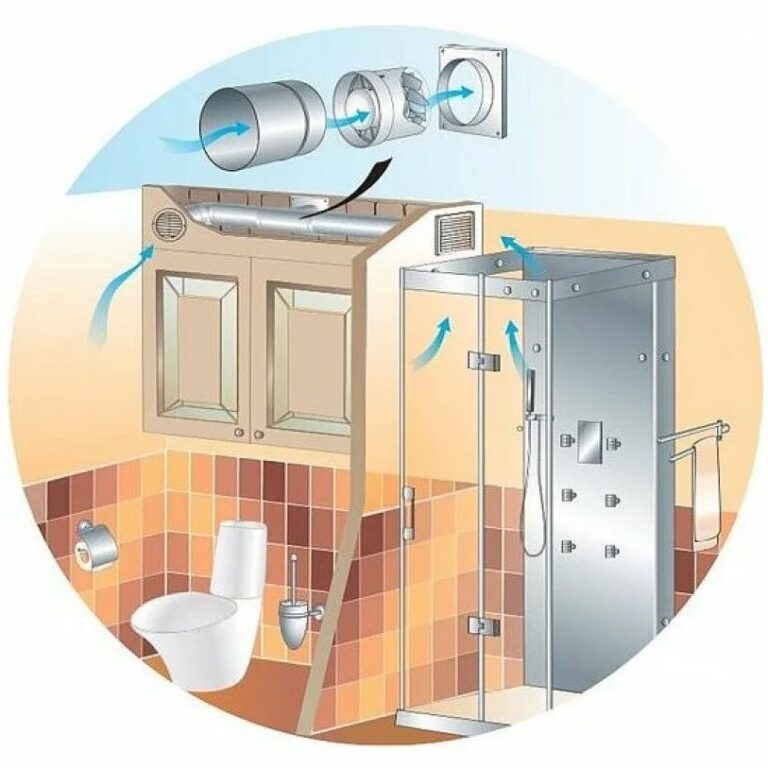
Common-building ventilation is incorporated into the design of an apartment building. The unified network consists of a group of ducts connected to one or more common shafts.
Modern ducted mechanical ventilation is usually supplemented with a heat recovery unit. This unit purifies the incoming air and maintains the desired temperature, humidity, and other parameters.
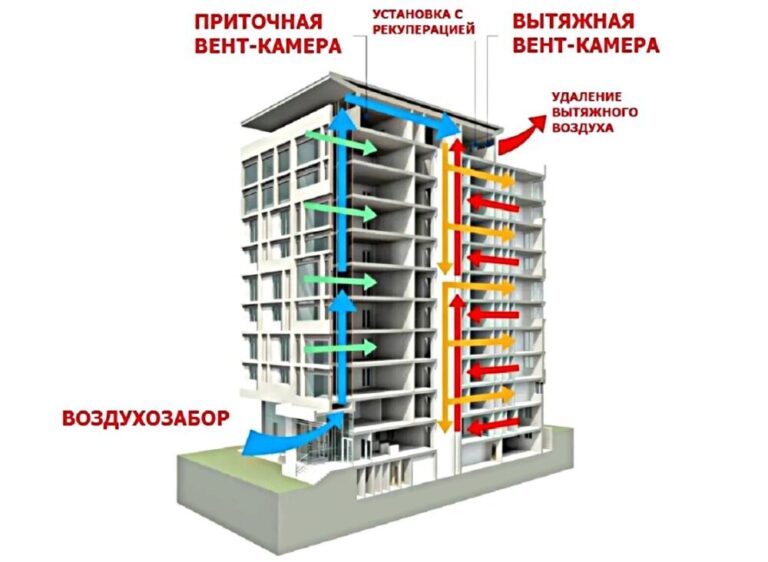
If the apartment owner is not satisfied with the building's general ventilation system, an independent system can be installed. Exhaust ducts are installed under the ceiling in each room and connected to a heat recovery unit installed in a designated location.
The exhaust and intake vents are installed separately through through-holes in the load-bearing wall. The apartment owner maintains and monitors the independent ventilation system.
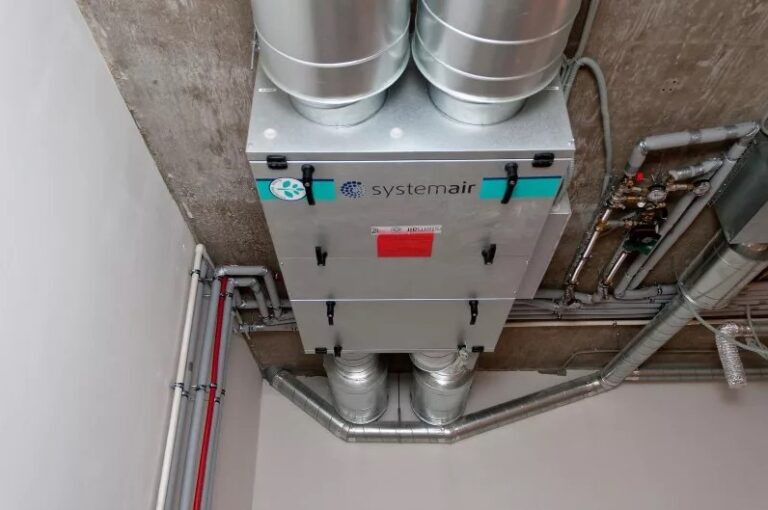
General principle of the design and operation of ventilation
The ventilation system of an apartment building consists of two interconnected units: the exhaust and the supply. The supply duct brings fresh air from outside into the building. The exhaust duct expels stale air outside.
Circulation between rooms of the apartment is carried out through crossflows – technical openings or gaps in the area of interior doors and partitions.
The first step will be to consider how the exhaust system in a multi-story building is designed to remove stale air. Design-wise, it consists of a common building shaft (vent shaft) running through each floor and terminating on the roof.
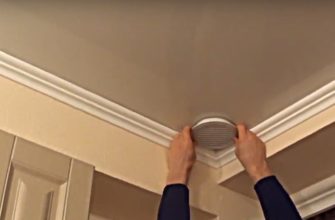
The exhaust hood is connected to ducts branching off from the apartments. From the inside, ceiling vents are visible, covered with decorative grilles.
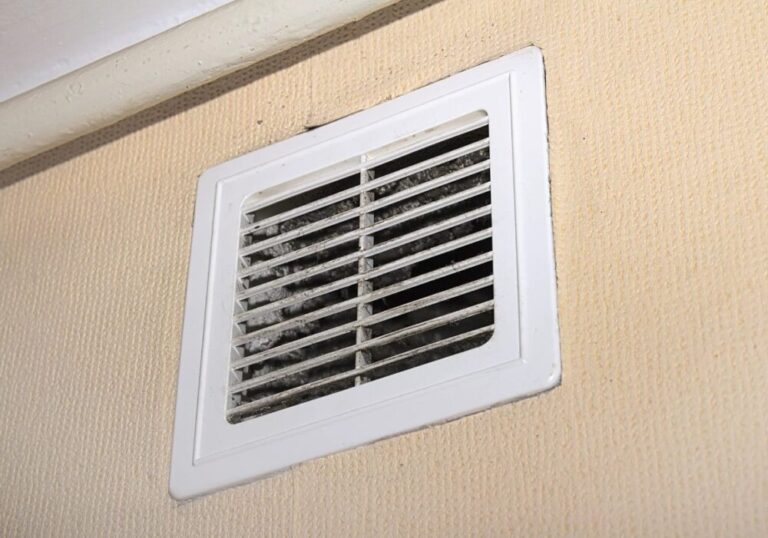
The second step is to consider the design of the air intake unit. In older multi-story buildings, air entered through cracks in wooden windows. Air exchange was enhanced by ventilation through open vents.
In new multi-story buildings, apartments are airtight. PVC windows with double-glazed windows, wall insulation, and artificial finishing materials prevent air from passing through.
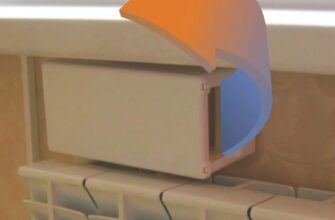
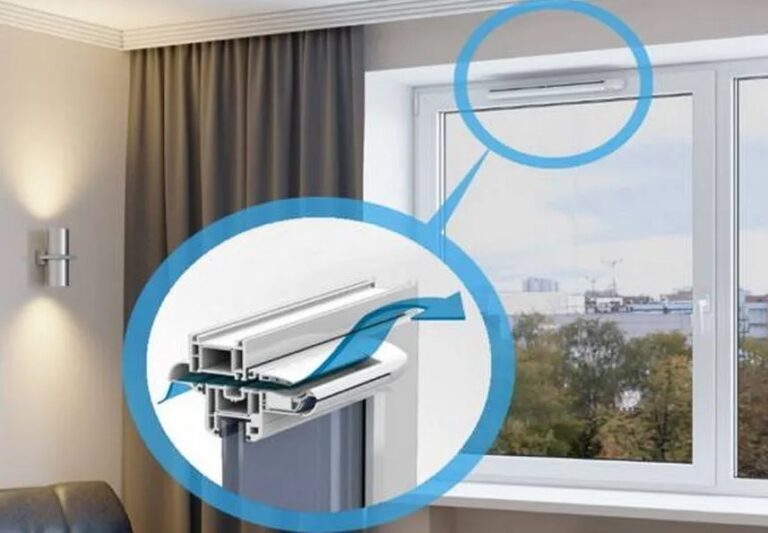
To restore air flow, separate ventilation ducts (ventilation ducts) are installed, and auxiliary units are installed. Wall and window valves and air breezers are considered popular air supply devices.
The design and operation of ventilation shafts
The general principle of air exchange is the same in a multi-apartment building. The air flow pattern depends on the ventilation system in the high-rise building.
The utility network type is developed during the building design phase. Taking into account the number of floors and apartment layout, four common schemes are:
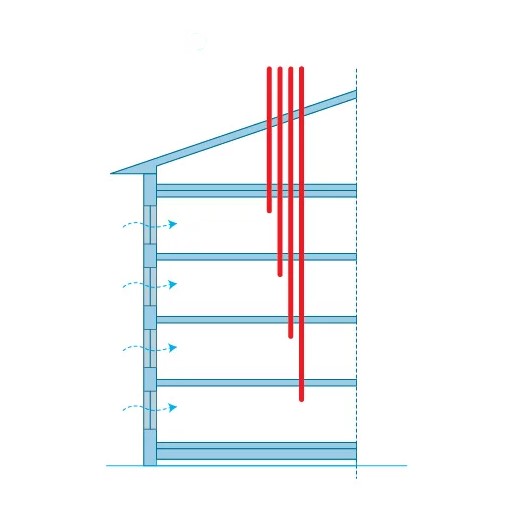
- Each floor is equipped with separate exhaust stacks for the kitchen and bathroom. The pipes exit to the roof. Individually operating exhaust stacks prevent dirty air and unpleasant odors from neighboring rooms from being drawn into the apartment when the draft reverses.
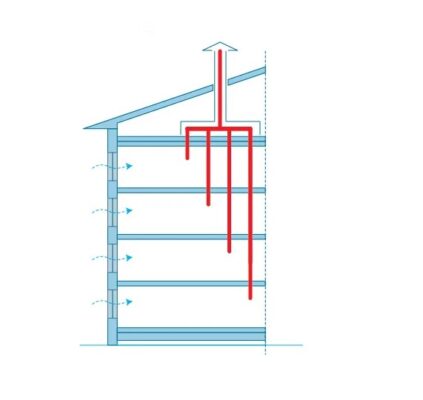
- Each floor is equipped with separate risers but is connected to a single exhaust duct on the roof. For the system to work, it's crucial that the shafts have the same cross-section. When the ventilation design is tampered with or a section of the duct becomes clogged with dirt, dirty air bypasses the exhaust duct and is directed back into one of the apartments.
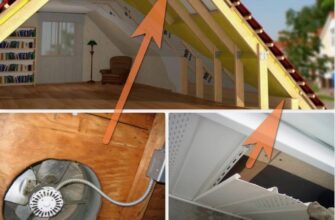
- Each floor is equipped with separate stacks leading to the attic. The attic space is equipped with a horizontal storage duct. A single exhaust ventilation shaft extends from the top of the duct to the roof. The system extracts stale air from the rooms through separate ducts into a common storage duct and then discharges it outside through an exhaust stack. A poorly functioning system returns stale air to the apartments on the upper floors. The lack of proper insulation leads to dampness in the attic.
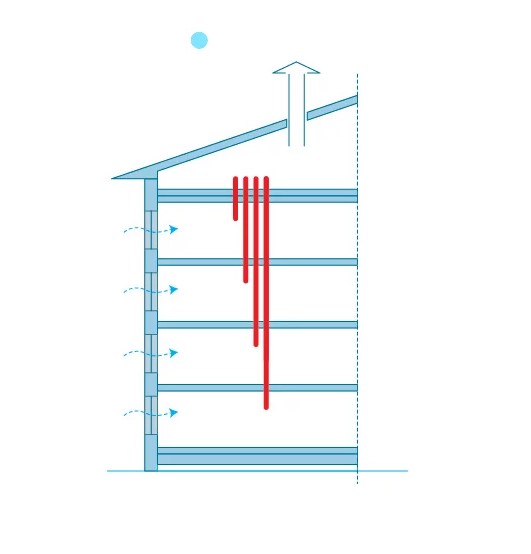
- Every floor equip with auxiliary satellite channelsThe exhaust hoods from the apartments are connected to a common building shaft. Dirty air is discharged through branches into a common riser pipe leading to the roof. If the exhaust hood becomes clogged or the draft reverses, exhaust air from the common building shaft begins to circulate between the apartments.
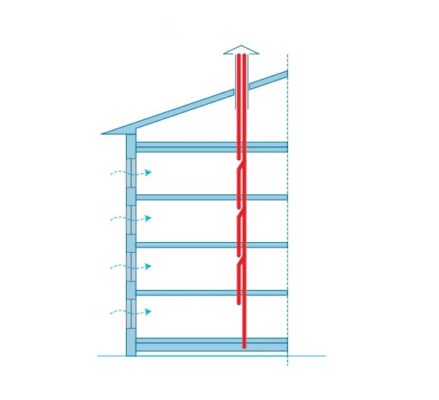
A multi-duct ventilation system in a multi-story building is reliable but complex. Using shafts on each floor is common in low-rise buildings. When a panel or brick building is limited to 2-9 stories, there's enough space for individual exhaust vents to reach the roof.
It's technically impossible to construct separate shafts for a residential high-rise complex with more than nine levels. Compact ventilation systems with a single riser outlet on the roof are commonly used:
- brought out from the storage box from the attic;
- passing through floors with the connection of parallel satellite channels.
These systems were used in older buildings, but natural ventilation was problematic. Frequent draft reversals resulted in dirty air returning to upper-floor apartments. Localized ductwork and enhanced thermal insulation were required, something the housing and utilities services were unwilling to undertake.
In modern buildings, these systems became popular when forced air exchange was introduced. Natural ventilation is gradually becoming obsolete. Modern high-rises are designed and built with forced (mechanical) air exchange.
Air filtration
Sanitary regulations require that apartments be supplied with clean air. The exhaust air must not pollute the environment. A filtration system is responsible for this function. The composition and material of the filter determine which pollutants it traps.
In older multi-story buildings, filtration is limited to ventilation grilles that trap large debris. Installing filters is unnecessary, as the filter assembly reduces the already weak natural air exchange.
Air filtration is essential for new multi-story buildings with forced ventilation. Based on their design, there are four types of filters:
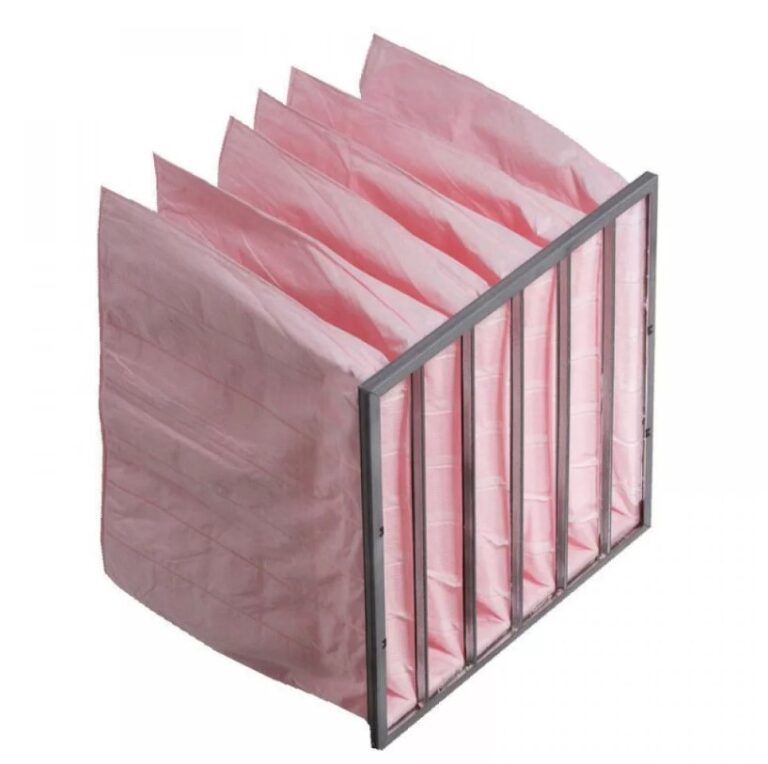
- Pocket-type bags consist of sewn pocket-shaped compartments attached to a rigid frame. The fibrous synthetic material has low resistance and allows air to pass through freely. The high strength of the pockets allows them to accumulate large amounts of dust.
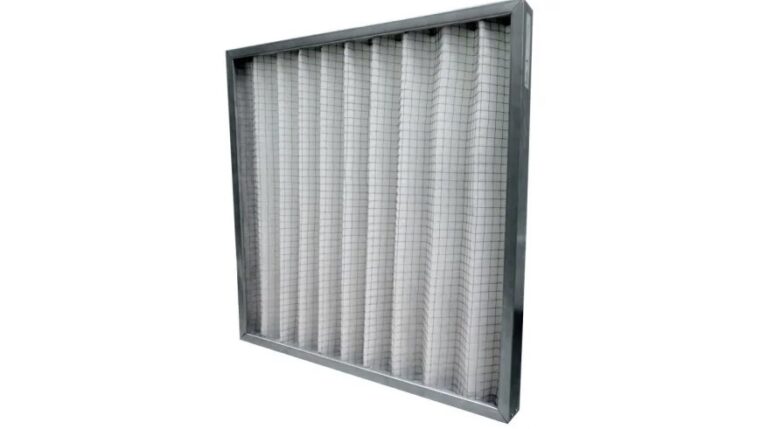
- Cassette filters are made of a rigid frame filled with polyester fibers. This material is characterized by low resistance and high dust collection.
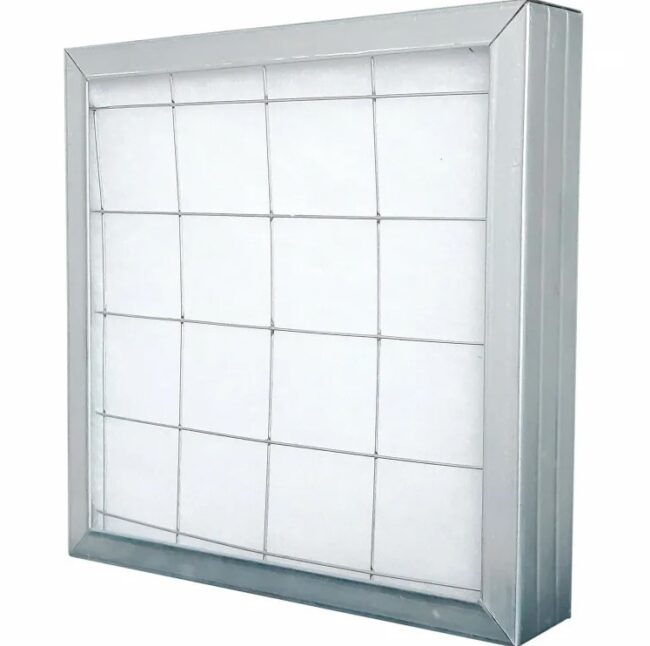
- Panel filters – similar to cassette filters, they are made of a rigid frame. The filter media used varies depending on the panel's intended use. Polyurethane foam, polyester fibers, and metal mesh are commonly used.
- Filter bags are made of polyester fibers and are equipped with membranes to improve air purification.

There are 17 filter types based on their degree of purification. The coarsest filtration is provided by the G1 filter unit. This material captures 50-65% of particles. The G4 filter retains 90% of contaminants. The finest filtration is provided by the U17 filter unit. This filter retains up to 99.999995% of particles. The filtration percentage for each filter unit type is indicated by a number following the letter abbreviation.
The new GOST R EN 779–2014 standard regulates the application of filters. Purification units are classified as general-purpose or special-purpose. Depending on the material used, they capture dust, allergens, bacteria, odors, and other contaminants.
General-purpose filters are most often used for ventilation in apartment buildings. The class is designated by a letter abbreviation:
- G – rough cleaning;
- M – medium cleaning;
- F – fine cleaning.
Special-purpose filters are installed in ventilation systems when effective filtration of specific pollutants is required. Classification is indicated by a letter abbreviation:
- E and H – high efficiency;
- U – ultra-high efficiency.
Special-purpose filters capture odors, grease, allergens, and bacteria. The general-purpose filter unit performs two functions: it captures mechanical contaminants and protects the special-purpose filter from damage. For comprehensive cleaning, two types of elements are installed. The general-purpose filter unit is placed before the special-purpose filter.
Air pollutants vary by origin. Filters are used to capture each type of particle, classified according to their operating principle:
- Mechanical – capture solid particles 5-10 microns in size.
- Oil filters trap large particles and are used as pre-filters. The combined filler consists of synthetic fibers and a metal mesh. Mineral oil impregnation is used to enhance dirt adhesion.
- Carbon filters purify the air by adsorption. The pores of the filter absorb odors and gases.
- Sponge - traps dust and other small particles.
- HEPA filters capture fine dust particles. An additional chemical coating inhibits bacteria, allergens, and pathogens.
ULPA filters are considered similar to HEPA filters, but offer increased cleaning efficiency. One innovation is the use of photocatalytic filter units. These filters neutralize viruses, bacteria, and toxins.
Features of ventilation in an apartment
Ventilation has little to do with airing. Air exchange is carried out in accordance with sanitary standards. A standard volume is established for each room. Temperature, humidity, and air flow rates are taken into account. Engineers perform the calculations. Apartment owners are responsible for maintaining the ventilation system adjusted by specialists.
The building's utility network is inspected by the management company that manages the apartment building. Technical inspections are carried out regularly according to a designated schedule. Apartment owners are also responsible for independently inspecting the ventilation system.
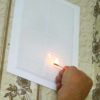
Accurate air flow measurements can be taken using a measuring device called an anemometer. For a simple draft test, simply place a piece of newspaper or a notebook sheet against the ventilation grille. The paper will stick to the exhaust vent, but will deflect from the air inlet. If the opposite effect is observed, or the sheet doesn't respond to the draft, the ventilation isn't working.
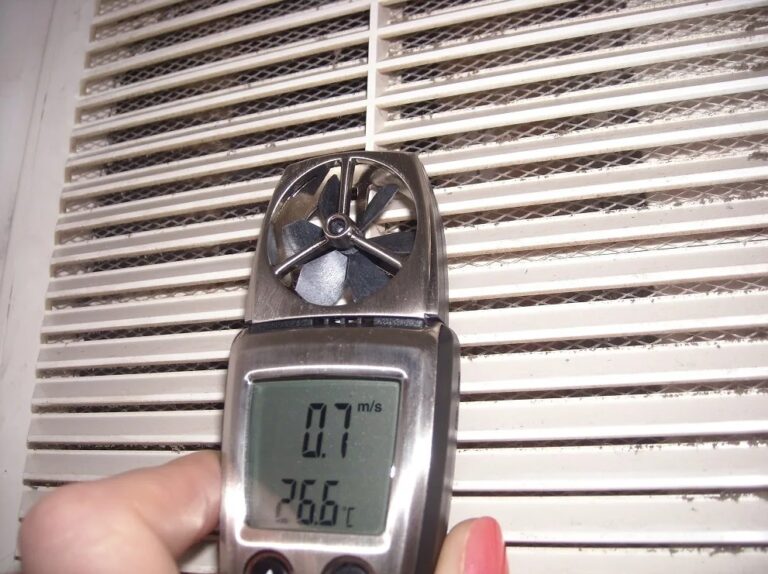
Restoring the general building ventilation system on your own isn't always possible. The user is permitted to clean dirt from the grates and the edges of the ducts leading from the wall into the room. Blockages deep in the shafts will be cleared by technicians. Video inspection equipment will be used to inspect the air ducts.
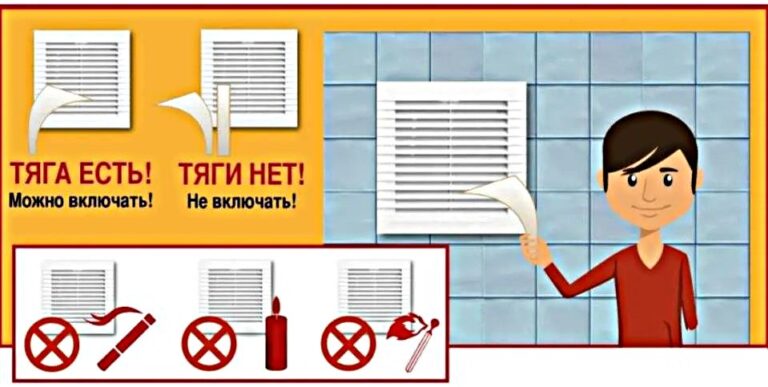
If the ventilation system is not working, the apartment owner must contact the service provider with a complaint. Third-party companies licensed to repair common building systems are permitted.
How does sewer ventilation work?
The sewer network is ventilated separately from the general building ventilation system. The layout, equipment, and operation are regulated by SNiP 2.04.01-85 (SP 30.13330.2020). The purpose of the utility network:
- Removal of gases from the pipeline.
- Preventing the penetration of unpleasant odors into the room.
- Preventing the formation of a vacuum in the pipeline, which can lead to the breakdown of water seals in plumbing fixtures.
The sewer system is vented naturally through a vent pipe—an extension of the riser with toilets connected to all floors. The outlet is through the roof to the street. The vent pipe does not extend into the attic.
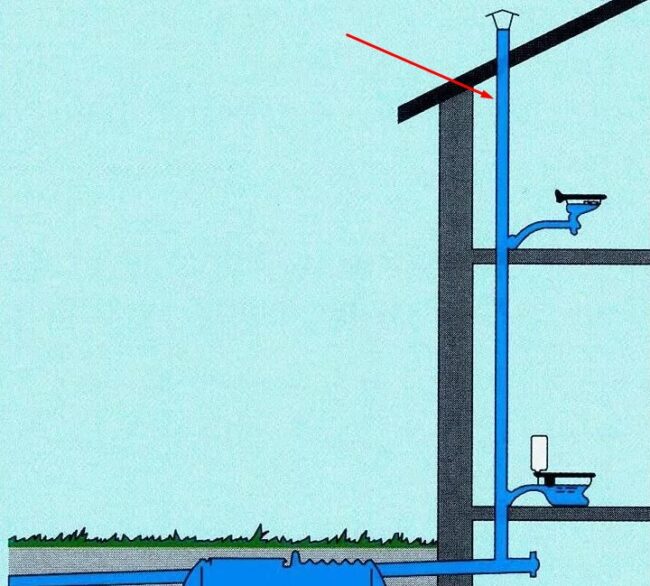
To understand how natural ventilation of a sewer system works in a multi-story building, let's look at the full cycle:
- after a sudden flush of water from toilets and sinks, a vacuum is created in the pipeline;
- new portions of air, eliminating the vacuum, enter through the waste pipe;
- With the influx of clean air, odors and gases are pushed out through the vent pipe into the street.
When the waste ventilation system isn't working, the resulting vacuum in the pipeline after a sudden flush of water blows off the water seals. Unpleasant odors and hazardous gases enter the apartment through the sink and toilet traps.
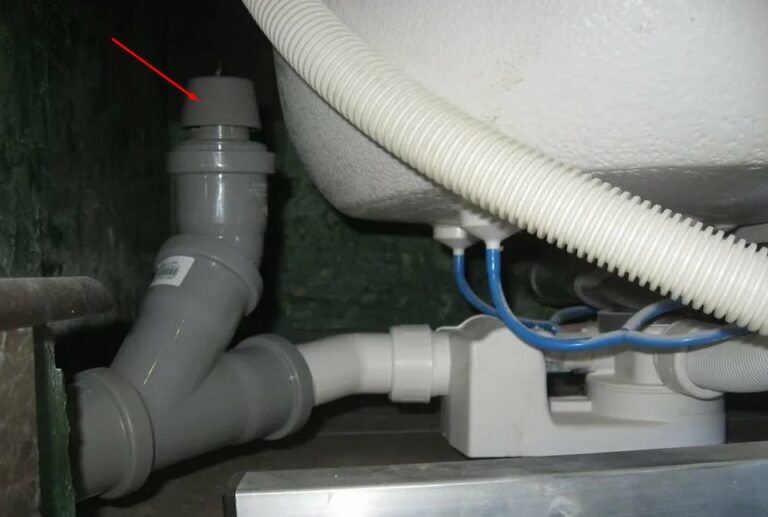
To vent the sewer system, a vacuum valve is installed instead of a waste pipe. This unit is equipped with a gate valve that remains permanently closed. When a sudden discharge of water creates a vacuum inside the pipeline, the valve opens. The incoming air prevents the water seals from being blown off. The valve returns to its closed position, preventing unpleasant odors from entering the apartment.
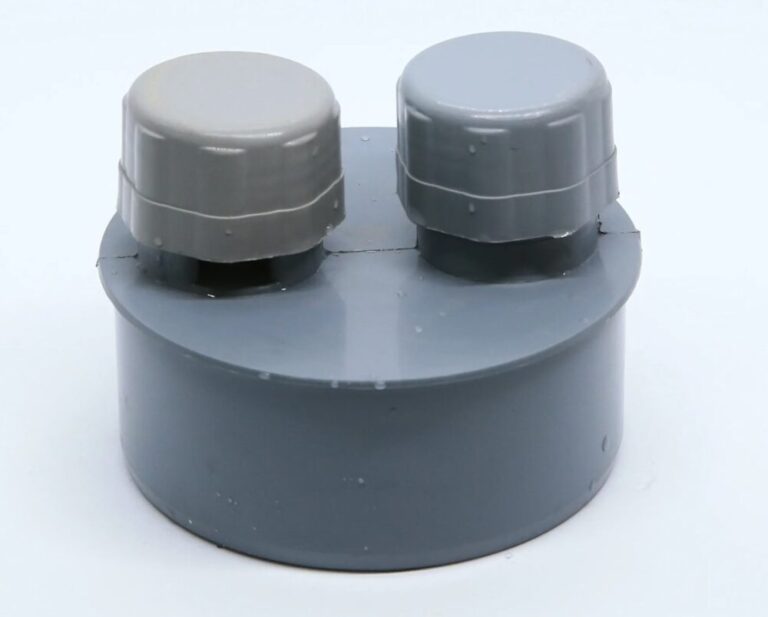
Vacuum valves are installed in private homesPublic buildings are equipped with waste stacks. Apartment owners can install a vacuum valve as an auxiliary unit on the branch of the sewer hose where a washing machine, dishwasher, or other plumbing fixture is connected.
Methods for preventing air flow between apartments
A faulty ventilation system accelerates the deterioration of the indoor microclimate. This is even more dangerous when air leaks form between apartments. Dirty air from neighbors, along with moisture vapor, unpleasant odors, and bacteria, penetrate through the exhaust hoods into living spaces. This problem is particularly acute for residents of the upper floors of apartment buildings with natural ventilation.
Inter-apartment air flows are formed as a result of the reversal of natural draft for the following reasons:
- contamination of air ducts and ventilation grilles;
- change in weather conditions;
- unauthorized modification of the design of ventilation ducts;
- Unauthorized installation by neighbors of a kitchen hood or other equipment with a fan into the common duct of an apartment building.
To prevent air leakage between apartments, do not modify the air ducts yourself. Clean the hood grilles and the edges of the ducts of any dirt. Ensure a stable air flow by installing a wall or window valve. Open the window frequently for ventilation. Install a grille with a check valve on the common-building hood opening. If the draft is reversed, the damper will block the flow of air from neighboring apartments.
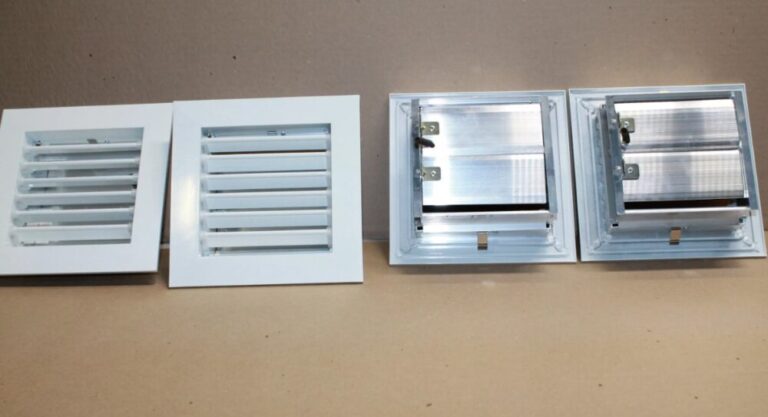
If the overflow is caused by pollution, failure of mines, or unauthorized interference by neighbors, file a complaint with the management company.
Ventilation problems and solutions
Residents of apartment buildings face two common ventilation problems: lack of air exchange and backdraft. When the utility system stops working, determine the cause yourself or file a complaint with the management company. The solution depends on the cause. Popular solutions:
- Increase air flow by ventilation, installing wall or window valves.
- Clean the exhaust grilles and accessible areas of the air ducts from dirt.
- Install an additional exhaust hood above the hob in the kitchen.
- Ensure air flow between the rooms of the apartment, clearing the path for circulating air flows from the inlet to the exhaust.
- Install exhaust grilles with check valves.
To ensure the utility network is working properly, regularly check it yourself and demand that the management company adhere to maintenance deadlines.
Answers to frequently asked questions
Modern multi-apartment buildings are designed with forced ventilation systems. High-rise buildings with more than nine stories utilize compact shaft designs, with a single riser pipe leading to the roof: either from a storage duct in the attic or running through the floors and connecting to parallel satellite ducts.
Fresh air enters from the air inlets and circulates through the rooms via crossovers. Dirty air is removed via the exhaust duct. The utility system operates with natural or forced air exchange.
The shaft runs through all floors of the apartment building, from the basement to the roof. Branch channels from the shaft lead to each apartment.
The management company that maintains the apartment building on its balance sheet monitors the technical condition, maintains and repairs the utility network.
A stand-alone supply or exhaust air duct may be routed to the outside through a hole in the wall. Connecting a kitchen hood to the common duct of an apartment building requires permission from the management company.
Poor air exchange affects people's well-being. Humidity increases, creating air that's hard to breathe and foul-smelling. Mold forms in the corners of walls. Condensation drips from fogged window panes onto the windowsill, forming puddles.