A pressing question for apartment owners: who is responsible for cleaning the ventilation in an apartment building, inspecting and maintaining the utility system? All work is handled by management organization, which owns the building. Hiring a licensed third-party company is permitted.
In this article, we'll explore the issue of checking and cleaning ventilation systems in detail. We'll also provide recommendations for independently monitoring their operation and improving the utility system. Finally, we'll answer some frequently asked questions.
- Who checks the ventilation in an apartment building?
- Who should clean the ventilation in an apartment building, and the frequency of work
- Recommendations for monitoring the state of ventilation
- Self-improvement and cleaning of ventilation
- Criteria for selecting ventilation cleaning specialists
- Ventilation cleaning technologies and methods
- Mechanical cleaning
- Dry cleaning
- Combined cleaning
- Dry ice blasting
- Causes and signs of ineffective ventilation
- Benefits of timely ventilation cleaning
- Regulatory and technical documentation for servicing apartment building networks
- Answers to current questions
- Video materials
Who checks the ventilation in an apartment building?
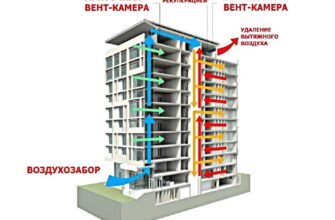
Multi-apartment buildings (MABs) have a unified ventilation system. Ducts run through all apartments and lead to a vertical shaft located in the entryway. To ensure proper operation of the engineering system, the entire length of the ductwork, including all connected equipment, is tested, not just a single section.
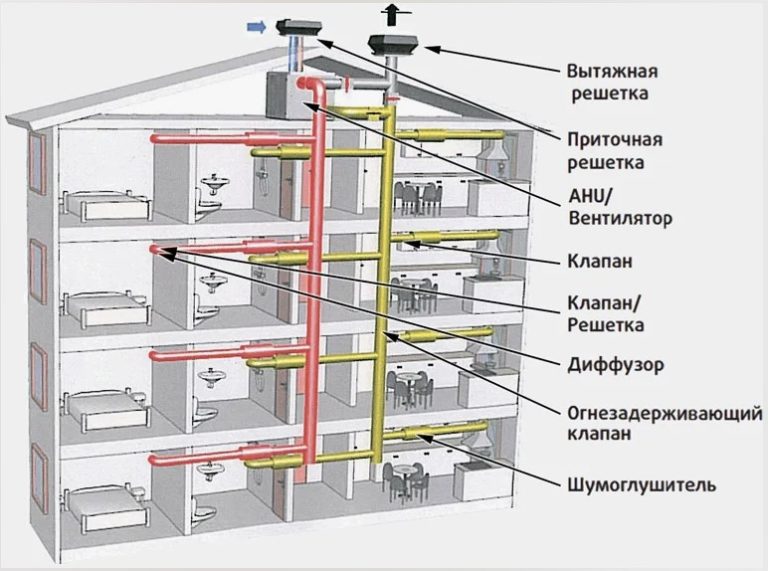
By Government Resolution No. 491 as amended on June 29, 2020, paragraph 2. ventilation is common property. Article 161 of the Housing Code of the Russian Federation obliges apartment owners to independently choose a convenient method of managing the building. The issue is resolved at a general meeting in favor of:
- management organization;
- homeowners' associations;
- housing cooperative;
- another specialized company that has a license.
The representative elected at the meeting is entrusted with the maintenance of all common property, including the ventilation network.
At the legislative level, it is determined who checks the ventilation Resolution of the Government of the Russian Federation of May 14, 2013 No. 410 (as amended on March 19, 2020). In paragraph 11 Specifies how the maintenance of smoke and ventilation ducts is ensured. Subparagraph "a" states that the inspection is carried out by the management company or by contracting with a third-party company.
The RF Government Resolution, as amended, No. 1885, paragraph 43, dated October 24, 2022, establishes that the frequency of inspection of ventilation ducts is determined by the responsible person of the management company, but not less than once a yearAccording to their purpose, events are of three types:
- Periodic planning.
- Seasonal.
- Before starting the equipment after downtime.
Who should clean the ventilation in an apartment building, and the frequency of work
The issue is more complicated if the apartment also has independent ventilation. The utility system is not considered common property and belongs to the owner of the property.
The answer to the question of who handles ventilation cleaning, inspection, and repairs is expected: the apartment owner. The owner either maintains the autonomous utility system themselves or hires a third-party specialist.
The frequency of maintenance activities is indicated By the Decree of the Government of the Russian Federation as amended No. 1885, paragraph 43 of October 24, 2022. The cleaning schedule for common house channels and shafts is determined by the person responsible for the management company, but not less than once a year.
Recommendations for monitoring the state of ventilation
Even with timely inspection of ventilation ducts and diligent cleaning of shafts, airflow issues can arise between scheduled maintenance. The apartment owner should also monitor the condition of the utility system:
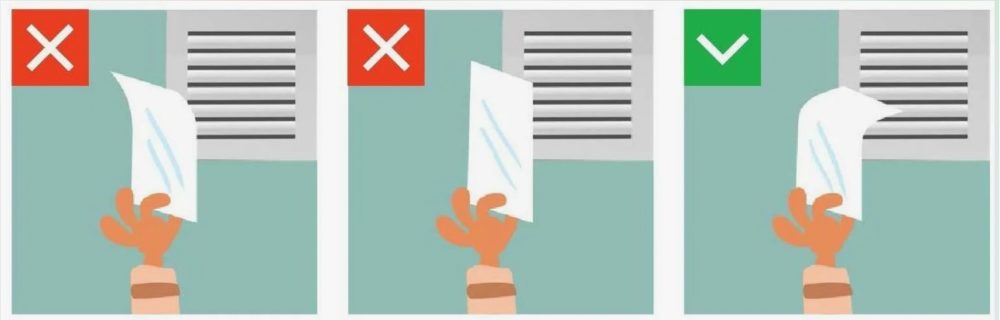
- Check for draft by holding a paper towel over the vent. The paper towel will stick to the grille of a running range hood.
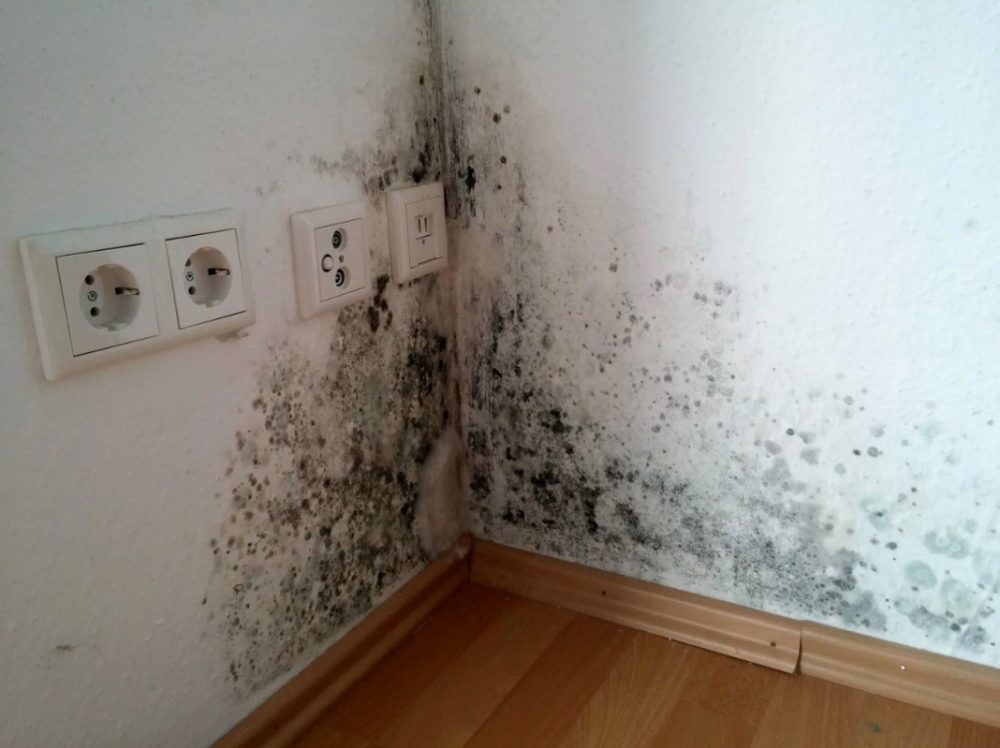
- Pay attention to the indoor microclimate. If humidity has increased, unpleasant odors and mold have appeared, the air exchange is not meeting sanitary standards.
If you notice any ventilation problems, please submit a complaint to the management company describing the problem. After reviewing your complaint, a repair crew will be dispatched to the apartment building to diagnose and restore the utility system.
Self-improvement and cleaning of ventilation
In an apartment building, ventilation inspection organizations only service common-building shafts and exhaust ducts. fresh air flow into the rooms – the concern of the apartment owner.
After installing plastic windows, the room becomes airtight. You can restore air flow yourself using the following methods:
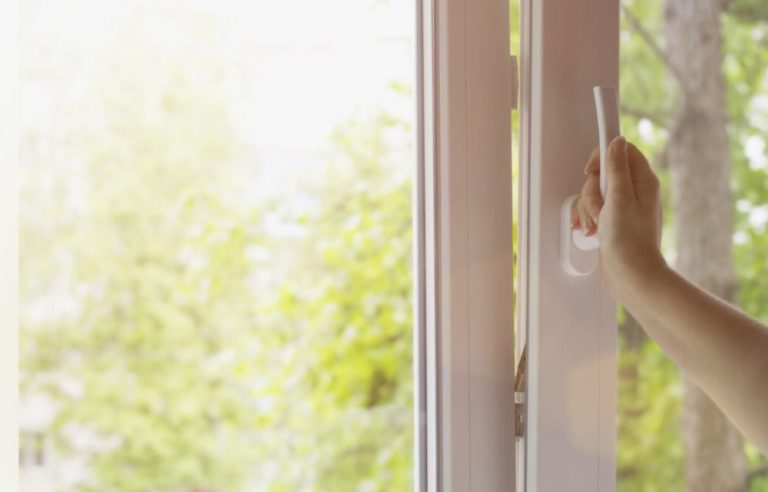
- periodically open the windows or switch the sashes to ventilation mode;
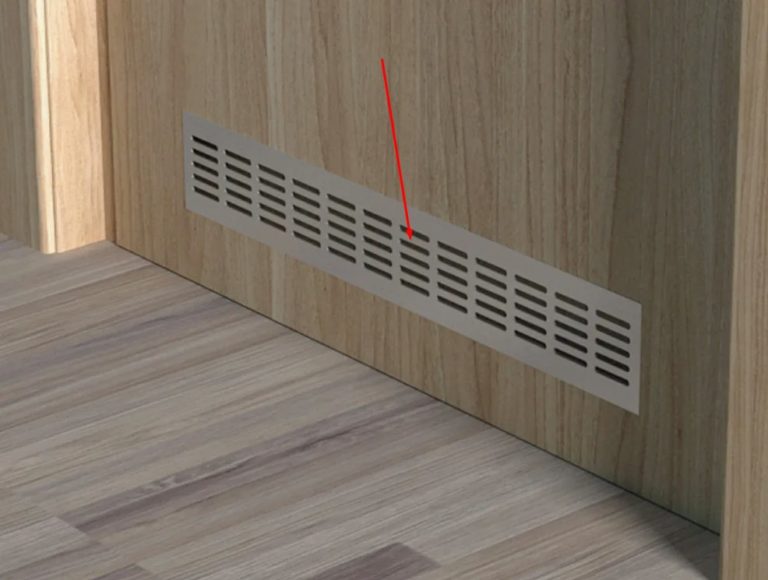
- install air flow gaps in interior doors and partitions to ensure air circulation throughout the apartment;
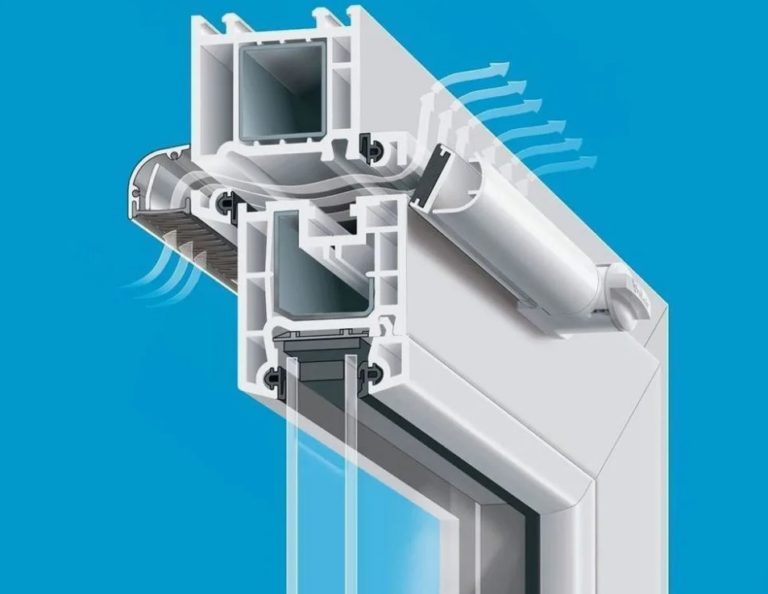
- Install window ventilators with a control damper and a check valve;
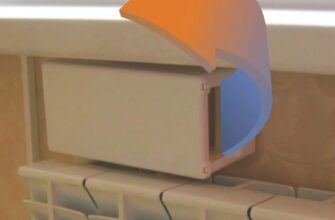
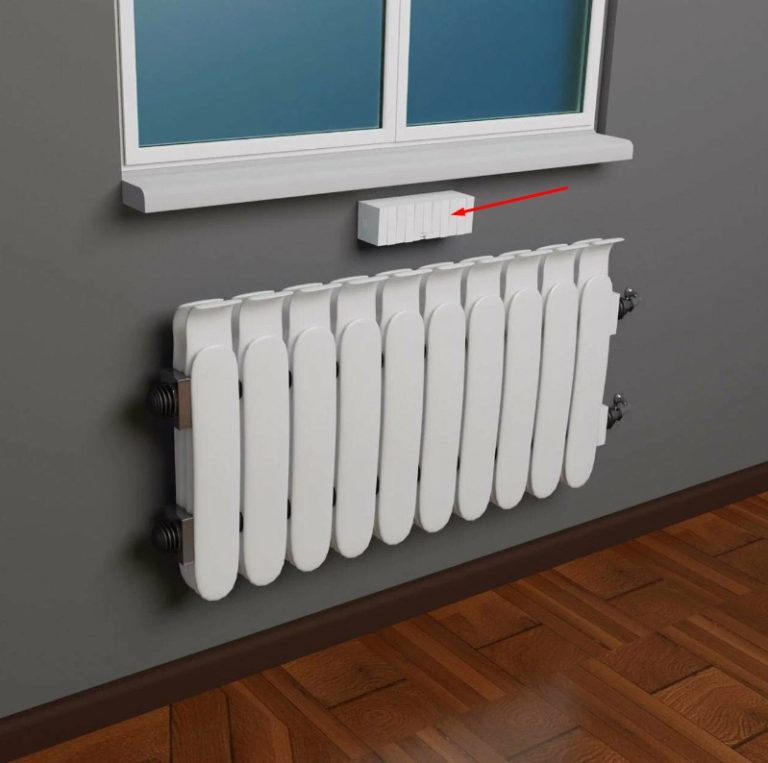
- Install a wall inlet valve.
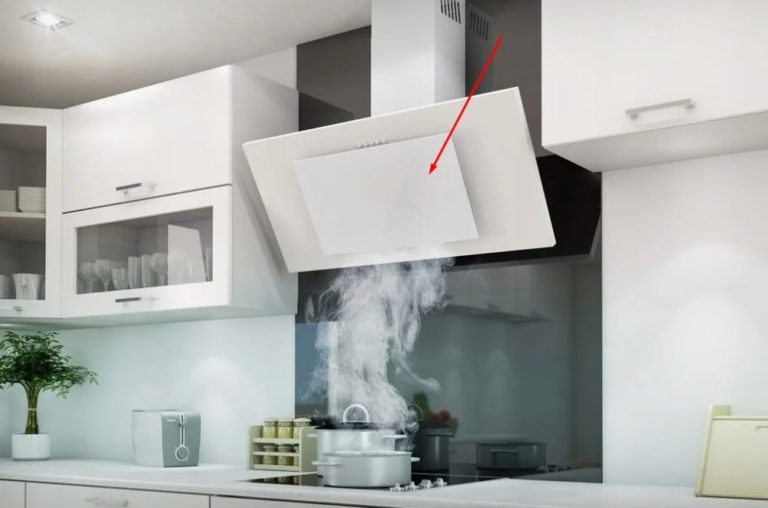
If the problem is with the range hood, install a fan-assisted exhaust system. Place the fan in contaminated rooms such as the kitchen, bathroom, toilet, and pantry. It's permissible to vent the range hood to the outside through a through-hole in the wall.
Connecting to the ventilation duct of the common building is prohibited without permission from the management company. Unauthorized interference with the utility network is punishable by a fine.
The rules provide exceptions allowing for home cleaning of ventilation systems in apartment buildings. Apartment owners are allowed to remove the ventilation grille and clean it of grease and cobwebs.
It is not prohibited to clean the exhaust duct coming out of the wall to a depth of 20-40 cm from the edge of the duct without using flammable substances or open flame sources.
Criteria for selecting ventilation cleaning specialists
Many private and public companies offer ventilation duct cleaning services, but the end result isn't always pleasing to apartment building residents. A few simple guidelines will help you choose reputable professionals:
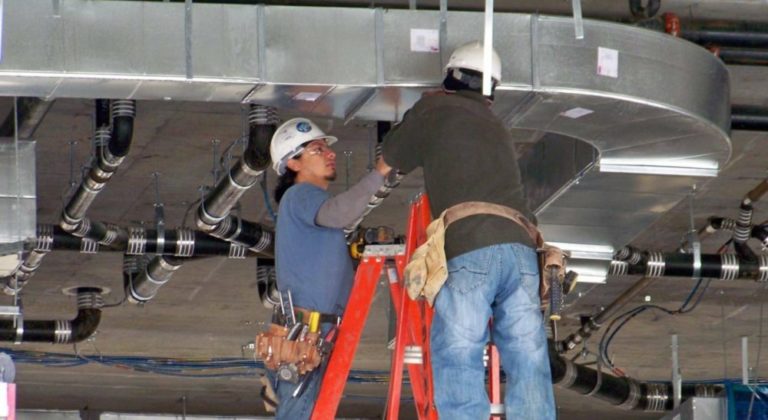
A company's reliability is reflected in its technical equipment. If its technicians only use cables, scrapers, and other primitive tools, don't trust them with your duct cleaning.
The presence of modern equipment, mechanisms, and telediagnostic devices demonstrates the base's advanced technical capabilities. This service will be more expensive, but the cleaning will be performed to a high standard, with a guarantee and a certificate of completion.
Ventilation cleaning technologies and methods
Based on the results of the utility network diagnostics, our technicians determine the duct cleaning method. The process involves the following steps:
- Visual or telediagnostics with display of the internal state of the channels on the screen.
- Determination of the method and direct cleaning of the ventilation shaft with exhaust ducts.
- Repeat diagnostics after cleaning, if required.
- Checking the ventilation system for functionality, handing over the facility according to the certificate.
The method of cleaning channels and shafts is determined by the master based on the complexity of the scheme, the degree of contamination, and other technical factors.
Mechanical cleaning
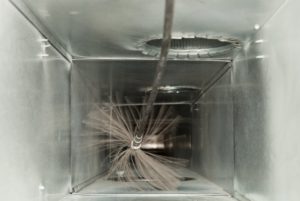
This method is effective for removing dirt from the walls of vertical ducts. To clean ventilation systems in apartment buildings, technicians use scrapers and a cable with a wire brush and a weight attached to it. Cleaning is performed manually.
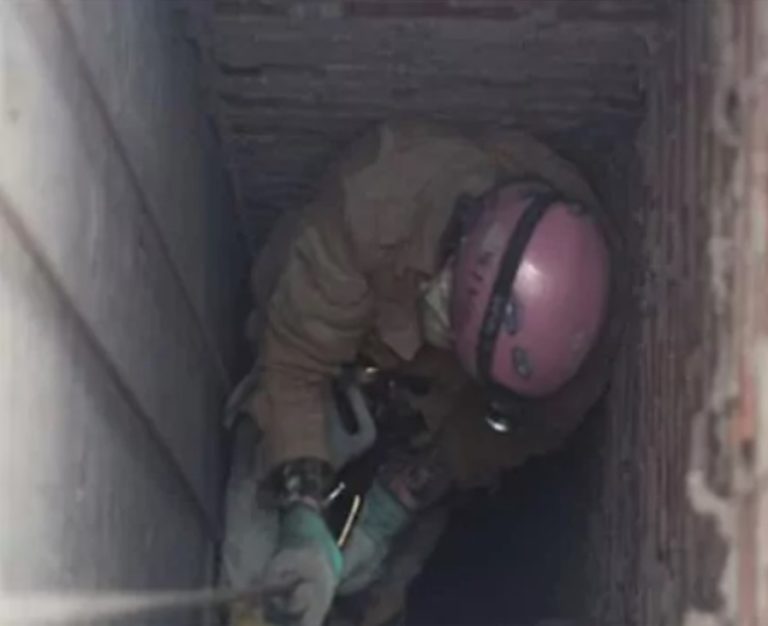
Dirt, cobwebs, small stones, and rodent and bird waste fall into the shaft pockets. Debris is removed manually or with a vacuum to prevent dust from spreading throughout the apartments.
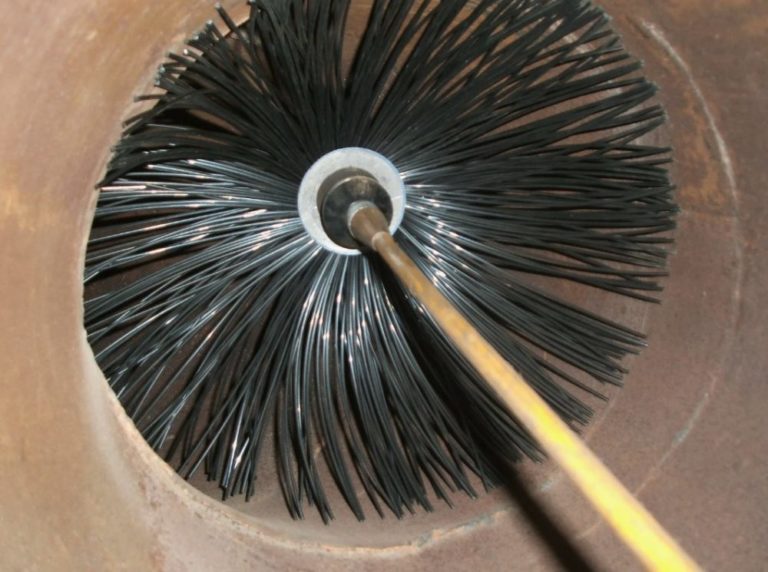
The disadvantages of this method include low efficiency. It is not possible to completely remove fat deposits from the canal walls at great depth.
Mechanical devices are inconvenient to use in air ducts with complex configurations with turns, bends, and branches.
Dry cleaning
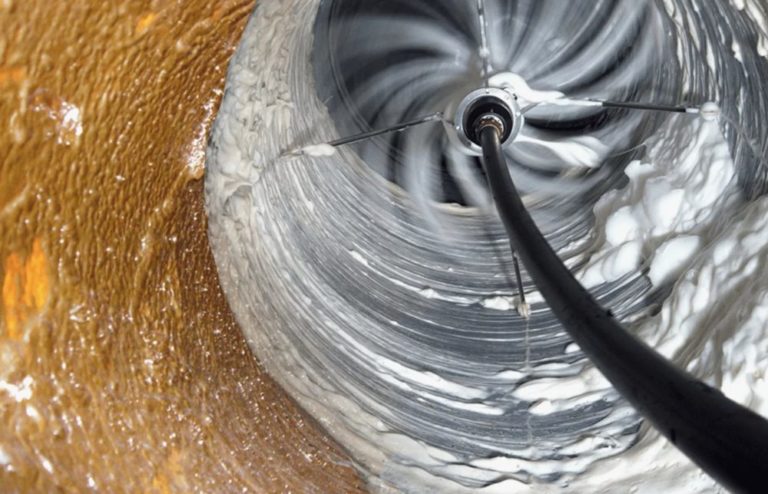
This method is effective for removing grease deposits. The technician sprays a chemical solution containing aggressive alkaline components into the air ducts.
The product breaks down fats. The small particles of debris that fall are carried away by air currents through an exhaust shaft or removed by a vacuum system.
Dry cleaning, along with grease neutralization, kills bacteria. If infection sites are identified through diagnostics, the air ducts are additionally disinfected. The disinfectant is selected based on the results of the sample analysis.
Combined cleaning
The air ducts of apartment buildings become clogged with all kinds of contaminants. Debris, cobwebs, stones, small rodents, and birds accumulate inside the shafts. Ducts leading from apartment kitchens become clogged with grease buildup. A combination of methods is essential for cleaning the utility lines of apartment buildings.
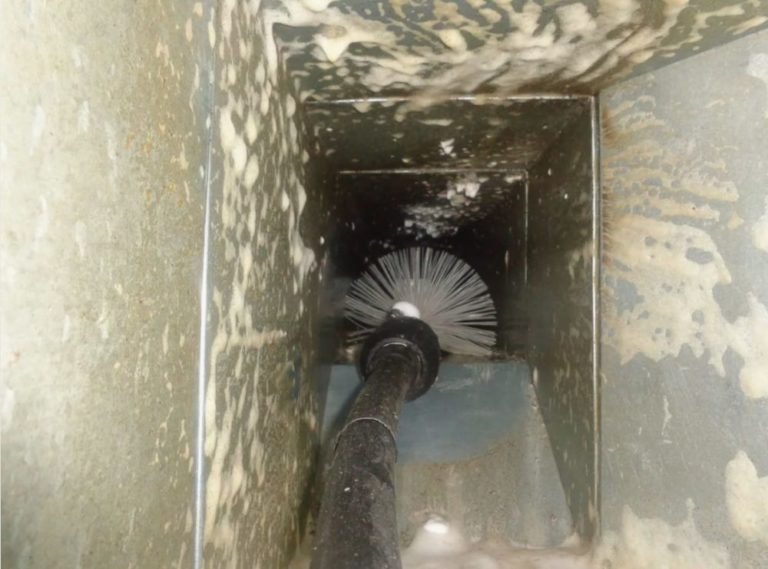
- The first stage Technicians mechanically clean air ducts of dirt. Debris is removed manually and using vacuum equipment.
- The second stage A chemical compound that breaks down grease is sprayed into the air ducts. If necessary, the third step is disinfection of the ducts.
Dry ice blasting
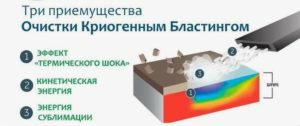
The method is called cryogenic blasting. The technician uses specialized equipment that injects dry ice into the air ducts. When the active substance comes into contact with the contaminated duct walls, it begins to evaporate.
The reaction causes microexplosions, breaking the dirt into tiny particles. The air duct walls are not damaged. During the decomposition process, dry fly turns into carbon dioxide and is carried away by air currents along with the small dirt particles.
Causes and signs of ineffective ventilation
Signs of poor ventilation in a room appear on deterioration in the health of apartment residents. Difficulty breathing stale air.
The rooms feel unpleasant odors. They are becoming more frequent. respiratory diseases, general malaise. It's increasing. air humidity, which provokes the growth of mold on walls and furnishings.
The reasons for the ineffective operation of the utility network are as follows:
- Contamination of ventilation grilles, ducts and shafts of the common house system.
- Unauthorized interference by homeowners or neighbors in the operation of utility systems. Modification of air ducts or the addition of additional equipment without permission from the relevant authorities.
- Lack of air flow after replacing wooden windows with sealed double-glazed windows.
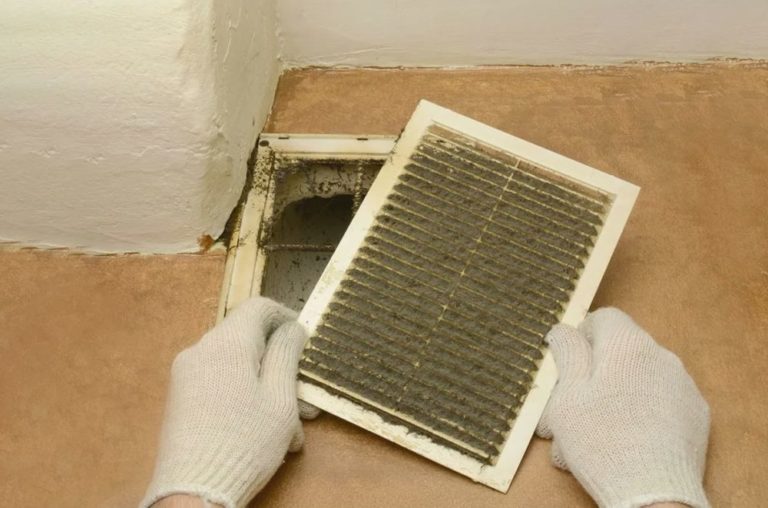
To restore air exchange, it is necessary to notice the signs, identify and eliminate the causes of poor performance of the utility network.
Benefits of timely ventilation cleaning
After cleaning the air ducts, normal air exchange is restored. The apartment becomes easier to breathe, bad odors are eliminated, and overall well-being improves. Heating and air conditioning costs are reduced.
A functioning range hood reduces the risk of accidents. The duct vents explosive gas leaks, choking smoke from burnt food on the stove, or in the event of a fire.
Regulatory and technical documentation for servicing apartment building networks
The organization of maintenance work for ventilation systems in apartment buildings is regulated by Government Resolution No. 410. Clause 41 of Resolution No. 1885 sets forth a set of fire safety regulations and lists prohibitions on the improper operation and maintenance of utility systems. Air exchange standards are reflected in SP 60.13330.2016, the current version of which is SP 60.13330.2020.
The technician records the results of ventilation network inspections and cleanings in a log. The document format is established by Appendix No. 14 of GOST R 54982-2012. Subsequent maintenance schedules are determined based on the information entered in the log.
Answers to current questions
Clause 10 of Russian Government Resolution No. 410 of May 14, 2013 (as amended on March 19, 2020) states that the owner of common property equipment, considered to be the management company, pays for the replacement and repair of common property equipment. Cleaning of ducts and shafts is covered by the management company through payments collected from apartment building residents for common property needs (ODN).
Ventilation is a common property for which the management company elected by the residents' meeting is responsible.
For ventilation issues, contact the management company that is responsible for the apartment building.
A team with equipment arrives at the site. The technician conducts a channel inspection, prepares a work plan, and selects a cleaning method. Dirt accumulations are removed using manual or mechanical equipment. If necessary, repeat inspections and shaft disinfection are performed. The operation of the cleaned system is checked and air exchange parameters are measured. After recording the results of the work in the log, the technician hands over the site with a certificate.
Obstructing the services that maintain the building's utility network will result in a fine. Failure to clean the ventilation system will worsen the indoor climate, increase humidity, and promote mold growth. Heating and air conditioning costs will increase. The risk of explosions from gas leaks, suffocation from cooking smoke, or smoke from a fire will increase.