When designing your own ventilation system, you might wonder whether you need a fan in the bathroom. The answer is clear: installing a fan in the bathroom (as well as in the toilet) is essential!
Since these rooms differ from others in that they accumulate moisture and unpleasant odors.
To ensure adequate air exchange, a forced-draft exhaust hood is recommended. The DIY installation process is divided into three stages: preparing the duct opening, attaching the motor housing, and connecting to the power supply.
We'll discuss fan types and selection guidelines based on technical parameters in this article. We'll also review the best models and provide step-by-step installation instructions.
- Classification of fans by design
- Recommendations for choosing a device taking into account technical parameters
- Top 10 Best Bathroom Fans
- Dospel Styl 120 WP 20 W
- AURAMAX OPTIMA 5C 14 W
- DiCiTi Breeze 5C TURBO 20 W
- Vortice Punto Four MFO 100/4 15 W
- Europlast EAT 125 G16 W
- ERA 4S-02 14 W
- CATA E-100 G 8 W
- DiCiTi AURA 4C 8.4 W
- Soler & Palau SILENT-200 CZ DESIGN 3C 16 W
- Electrolux Magic EAFM-150TH
- Step-by-step fan installation instructions
- Connecting a duct fan to corrugated air ducts
- Answers to current questions
- Video materials
Classification of fans by design
The general design of exhaust units is the same for all types. The working element is an electric motor with an impeller, enclosed in a housing. Duct connections are provided. Performance is determined by the motor power and the inlet and outlet cross-sections.
The first step is to understand how to choose a bathroom fan based on its classification. The equipment is divided into categories based on housing design and installation location. into 2 types:
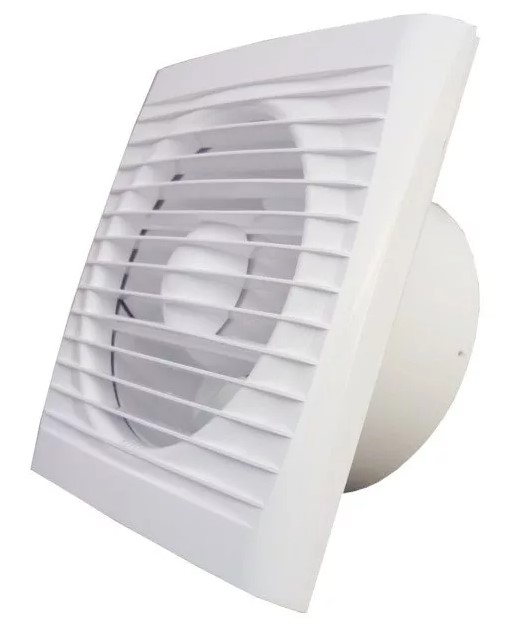
- Surface-mounted units are installed in the ventilation opening. The rear section is immersed in the duct. The front panel remains exposed, covering the rotating blades. Air enters through a decorative grille, a protective mesh, or a specially designed gap on the side of the blind cap.
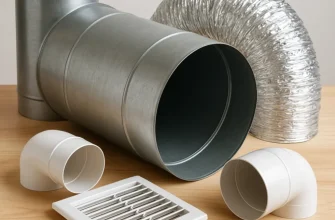
- Duct fans They are made with a motor and impeller enclosed in a housing. The sides are fitted with connections for connecting to ductwork.
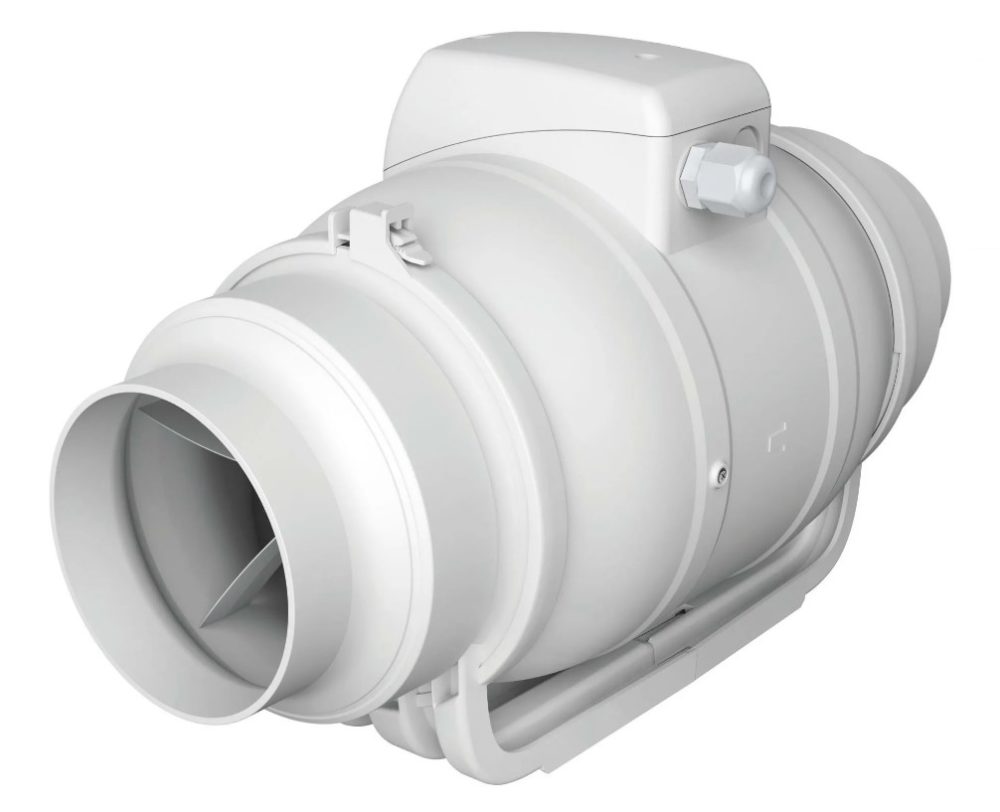
Ducted units are installed only in ducted ventilation ducts. Surface-mounted units can be mounted in any hood opening, regardless of their location: wall, ceiling, or window. This is where the names for wall-mounted, ceiling-mounted, and window-mounted units come from.
According to the design of the motor, the equipment is similarly divided into 2 types:
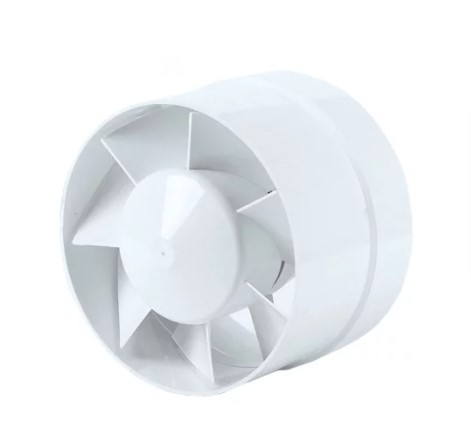
- Axial fan has a second name – axialThe motor and impeller are enclosed within a cylindrical housing, which serves as the axis. Rubber pads are installed around the motor's perimeter to dampen vibration. A check valve is usually included to prevent the fan from reversing when the fan is not running.
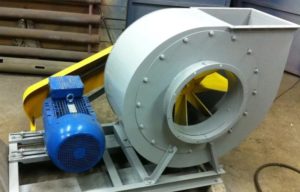
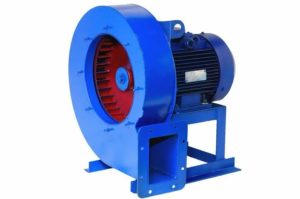
- Radial fan has a second name – centrifugalThe unusual shape of the housing resembles a snail shell. Air is drawn in through a side opening. The air outlet is positioned at a right angle to the inlet. An impeller is mounted inside the snail shell, connected via a direct or belt drive to a motor mounted outside the housing.
All overhead models are axial. Duct equipment is either axial or centrifugal.
Axial ducted and surface-mounted units are suitable for bathroom exhaust systems. Centrifugal scroll units are used in industrial ventilation systems.
Recommendations for choosing a device taking into account technical parameters
The main recommendation for choosing a bathroom exhaust fan is to use calculations to determine the appropriate model based on performance. For a room with high humidity, the recommended air exchange rate is 4-8 times in 1 hour.
The volume of the room is taken into account. To calculate, multiply the length, width, and height of the room by the number of multiples, then add 20% stock.
Additional recommendations will help you select equipment based on design and price:
- Domestic equipment is cheaper than imported analogues, but is not always inferior in quality.
- A timer, hygrostat, indicator light, motion sensors, and other useful features enhance the user experience, but they also increase the cost. It's advisable to choose a model with the necessary features to achieve a good balance between value and price.
- Increasing the number of speeds allows for smooth adjustment of the hood. If this feature isn't important, choosing a single-speed model is the right choice to save money.
- To ensure the housing fits into the ventilation opening, select the unit based on the mounting depth and the mounting diameter. The latter is often more important. A common mounting diameter for home ventilation is 100 to 150 cm.
- High noise levels negatively impact hearing. It's recommended to choose bathroom equipment with a noise level of up to 40 dB.
- The protection rating is important for user safety and to prevent damage to electrical equipment. For electrical safety, choose a device that operates on 12 or 24 volts. For splash and dust protection, it's recommended to choose an IP24 or IP25 model.
- Buy a duct fan if the ventilation system is installed throughout the room using ducts, where an intermediate unit should be installed between the pipes to increase air movement. A single system can be installed, connecting the bathroom with the toilet and kitchen. To prevent dirty air from one room from leaking into another through the shared duct, install intermediate units. check valvesBuy a surface-mounted fan when you need to install it on the opening of an exhaust riser leading outside or into a common building shaft.
Design, shape, and color are all personal preferences. A duct fan, built into the air ducts, is hidden from view.
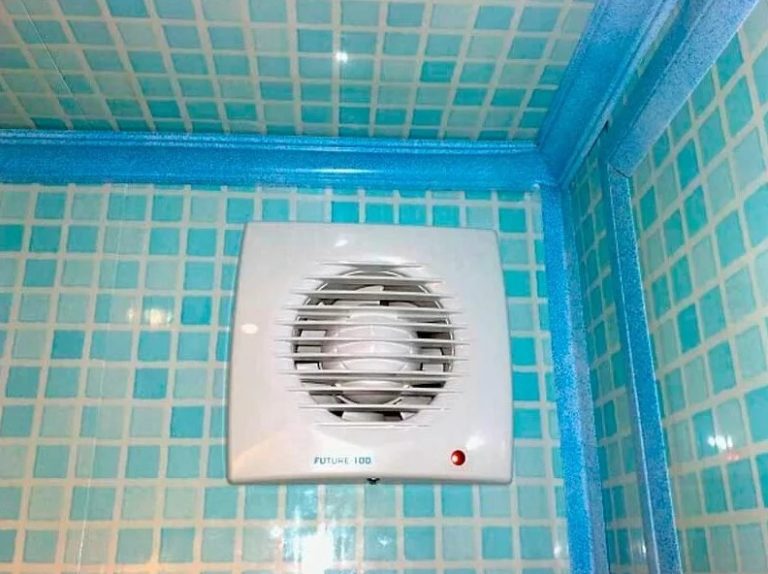
The color of the body and other components is irrelevant. Surface-mounted models that cover the ventilation opening remain visible. It's advisable to choose a design that matches the finish and style of your bathroom.
Top 10 Best Bathroom Fans
The best fan is one that can provide adequate air exchange in the bathroom. Select a model based on its technical specifications.
However, among the assortment presented in stores, there is equipment with similar parameters, but different prices.
This new rating will help you choose an exhaust fan from the selection available on Yandex Market.
Dospel Styl 120 WP 20 W
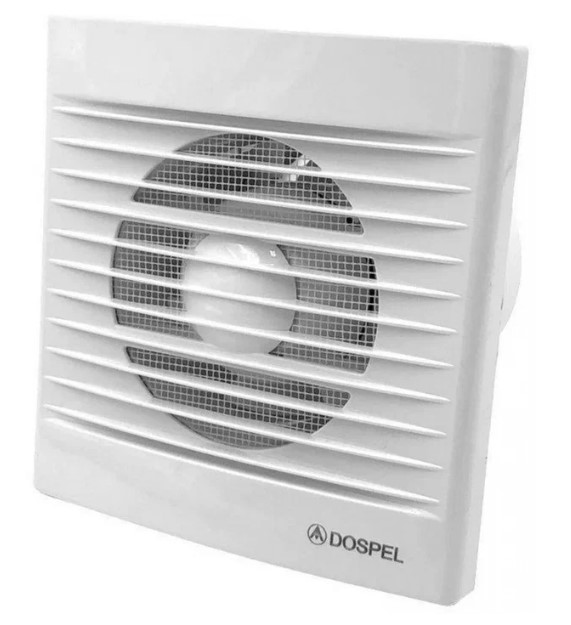
An axial fan provides air exchange. 150 m3/hourThe shock- and moisture-resistant housing is made of plastic. The blades are covered with a grid of horizontal slats. A protective mesh is also installed. The front panel is square with sides measuring 15.7 x 15.7 cm.
The cylindrical seat is 5.6 cm deep and has a 120 mm diameter. The working mechanism is a 20 W motor equipped with 10 cm diameter blades. At a rotation speed of 2650 rpm creates a maximum pressure of 49 Pa.
Pros:
- Low noise level – up to 46 dB.
- A check valve is installed.
- Light weight – 0.6 kg.
Users note the lack of speed control as a drawback. The motor runs at a single speed.
On Yandex Market average price for Dospel Style - 1780 rubles.
AURAMAX OPTIMA 5C 14 W
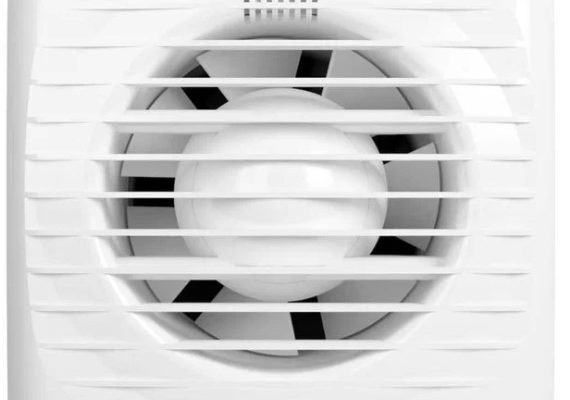
The axial type model provides air exchange 183 m3/hourThis fan is suitable for installation in a bathroom, toilet, combined bathroom, kitchen, or storage room. The moisture-resistant plastic housing is ideal.
The square front panel, measuring 17.5 x 17.5 cm, is equipped with a grille and insect-proof mesh. The rear panel is designed for a planting depth of 9.4 cm and has a mounting diameter of 125 mm. The working element is a 1000-watt motor. 14 W.
Pros:
- Low noise level – 36 dB.
- Light weight – 0.5 kg.
- A check valve is provided.
- 3 years manufacturer's warranty.
Customers haven't found any serious flaws. Some users dislike the mechanical controls and the flimsy valve, but nothing too critical.
On Yandex Market Average price of AURAMAX OPTIMA 5C - 931 rubles.
DiCiTi Breeze 5C TURBO 20 W
The stylish axial fan provides air exchange in a room with a volume of 1000 kg per hour. 205 m3The moisture- and shock-resistant housing is made of ABS plastic. The front panel has an attractive, streamlined rectangular shape.
The sides measure 19 x 23.7 cm. The front panel features a small grille that can be easily removed for cleaning the work areas. The rear panel has a mounting depth of 13.7 cm and a mounting diameter of 125 mm.
The 20W TURBO motor is protected from overheating and is designed for 40,000 hours of continuous operation. Performance is 25% higher than that of a conventional motor with similar parameters.

Pros:
- Low noise level – 39 dB.
- Manufacturer's warranty: 5 years.
- A check valve is provided.
Users recommend choosing this model for a modern-style bathroom. No significant drawbacks were found.
The inflated price of a mechanically controlled fan is considered a minor drawback.
The average price on Yandex Market is DiCiTi Breeze 5C TURBO - 2210 rubles.
Vortice Punto Four MFO 100/4 15 W
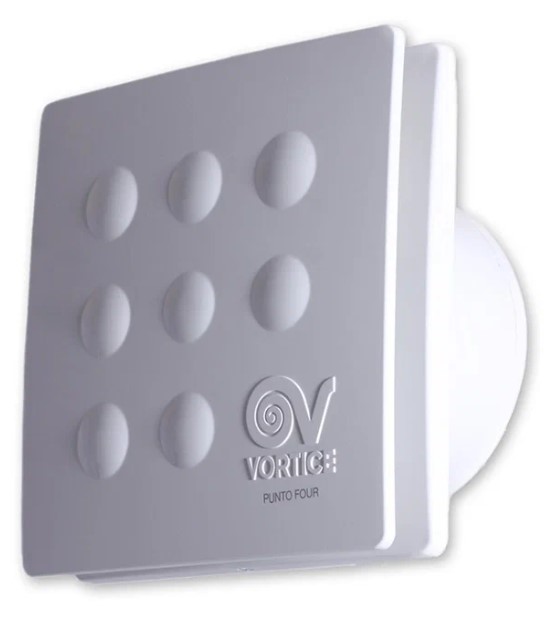
The Italian brand has introduced a reliable axial fan in a stylish design, designed for 10 years of stable workThe manufacturer provides a 1-year warranty, but it does not cover component parts.
The working unit is a 15 W motor, which provides air exchange 85 m3/hour and air pressure 29 PaThe square plastic front panel, measuring 15.8 x 15.8 cm, is not equipped with grilles and serves a decorative purpose.
Air intake is through side slots. The mounting depth is 9.7 cm, and the mounting diameter is 100 mm.
Pros:
- Low noise level – 33.1 dB.
- Light weight – 0.52 kg.
- A check valve is installed.
Users consider the high price for the brand name to be a serious drawback.
Average price on Yandex Market Vortice Punto Four MFO 100/4 - 6336 rubles.
Europlast EAT 125 G16 W
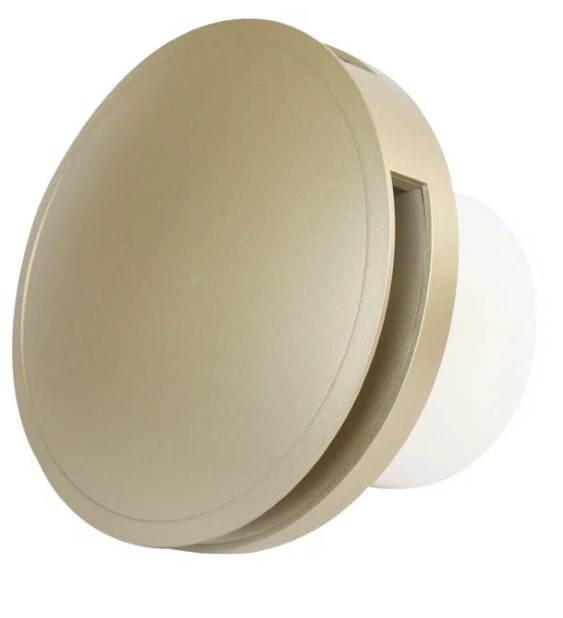
This budget-friendly axial fan is surface-mounted. The housing is made of ABS plastic, which is resistant to moisture and mechanical impact. The design adheres to the principles of minimalism.
This fan is ideal for a bathroom with a similar interior design. The front panel is a solid disc, with air intake coming from the side.
The rear mounting diameter is designed for a cylindrical ventilation duct with a diameter of 125 mm. The working element is a motor with a power of 16 W.
Pros:
- High performance - 150 m3/hour.
- Manufacturer's warranty: 2 years.
- Low noise level – 36 dB.
Not all users consider the price to be budget-friendly, which is a determining factor for the disadvantage.
The average cost of equipment on Yandex Market Europlast EAT 125 G16 Tue – 3581 rubles.
ERA 4S-02 14 W
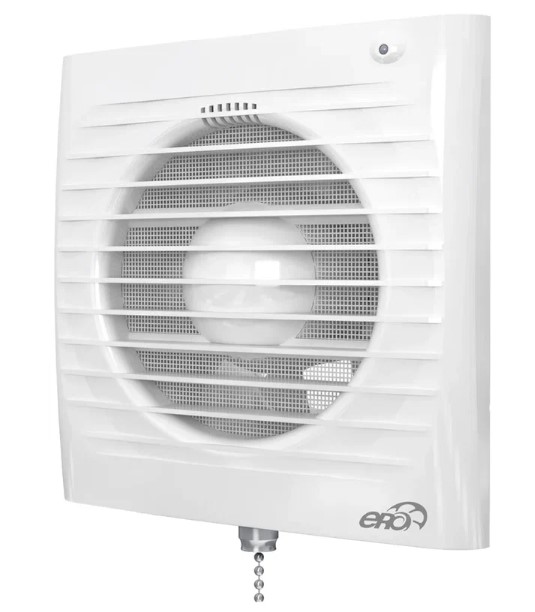
This axial fan is designed for continuous and intermittent ventilation of damp spaces. The ABS plastic housing has a classic design, allowing you to choose a model to complement any bathroom interior style.
Mechanical control is provided by a pull-pull switch mounted on the underside of the housing. The square front panel, measuring 15 x 15 cm, is equipped with grilles and an insect screen.
The manufacturer has included a light indicator as an interesting feature. The rear mounting part is designed for a depth of 7.7 cm. The installation diameter is 100 mm. The motor has a power 14 W provides air exchange of 97 m3/hour.
Pros:
- Low noise level – 35 dB.
- The convenient length of the switch cord is 50 cm.
- Light weight – 0.5 kg.
Users cite the short warranty period of 1 year for an overpriced model with only one speed mode as a disadvantage.
Average price on Yandex Market ERA 4S-02 14 W – 1614 rub.
CATA E-100 G 8 W
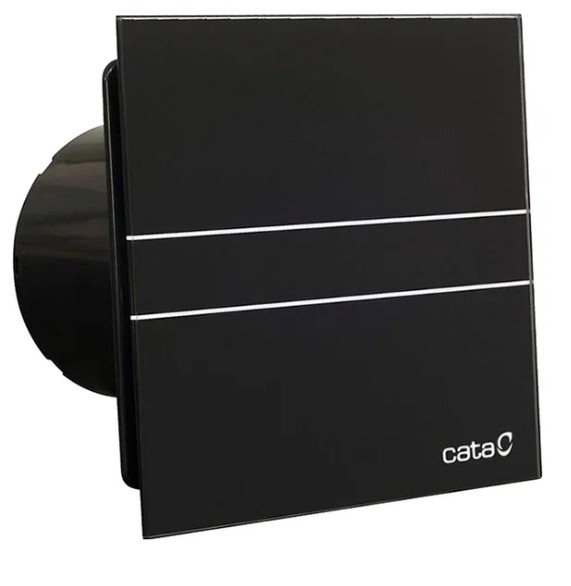
The intelligent axial fan is energy-efficient. Its 8-watt motor operates in two speed modes, features overheating protection, and ensures air circulation. 115 m3/hour.
The main body is made of plastic. The square front panel, measuring 15 x 15 cm, is solid glass. Air intake is through side slots. The unit is IPX4 dust and moisture resistant.
This model is ideal for a stylish bathroom where there's a risk of direct water splashes while bathing. The 9.4 cm rear depth accommodates a 100 mm installation diameter.
Pros and cons:
- Protection against direct splashes.
- Availability of two speed modes.
- Manufacturer's warranty: 1 year.
- The glass panel looks beautiful in the bathroom and is easy to clean.
- Low noise level – 31 dB.
- Overpriced.
- Heavy body due to glass panel – 0.95 kg.
- In a damp room, the motor rod rusts over time and the blades stop rotating.
Users recommend choosing a kitchen fan instead of a bathroom fan, where humidity levels are lower. The glass panel complements the wall tiles beautifully.
In terms of reliability, the equipment isn't worth the asking price. On Yandex Market CATA E-100 G 8 W sold in white and black for 5083 rubles.
DiCiTi AURA 4C 8.4 W
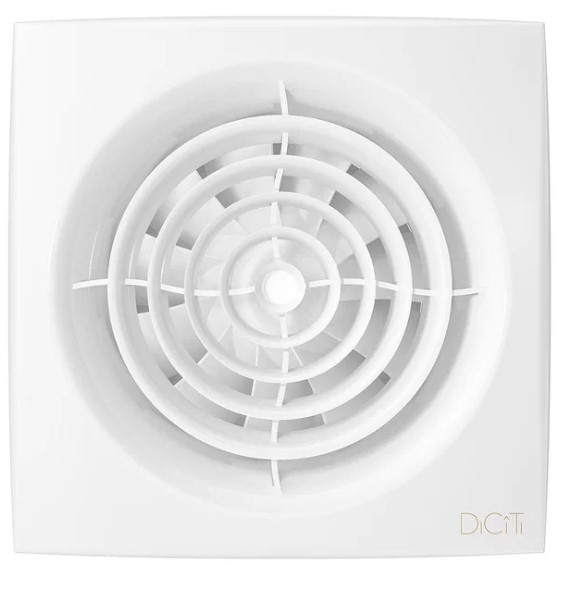
The axial exhaust fan is equipped with a check valve. The aerodynamically shaped impeller rotates on ball bearings and captures airflow equally well whether the unit is installed vertically or horizontally.
With a power of 8.4 W, the motor provides air exchange – 90 m3/hour and a pressure of 48 Pa. The plastic front panel, measuring 15.5 x 15.5 cm, features a round opening covered with a mesh and a grille. The mounting part is 10.1 cm deep and has a mounting diameter of 100 mm.
Advantages and disadvantages:
- The presence of light indication and protection against engine overheating.
- The manufacturer provides a 1 year warranty.
- Low noise level – 25 dB.
- Users consider the loud slamming check valve a disadvantage, but the mechanism's operating characteristics are not considered a defect.
- Another unpleasant detail is the inflated price for a plastic device with one speed and mechanical control.
Price DiCiTi AURA 4C 8.4 W on Yandex Market – 1627 rubles.
Soler & Palau SILENT-200 CZ DESIGN 3C 16 W
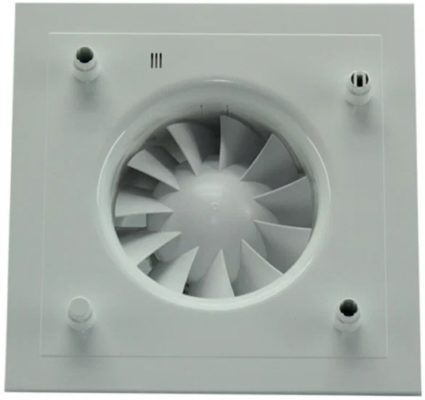
The axial exhaust fan is equipped with a 16W motor, secured to the plastic housing with rubber silent blocks to reduce vibration. A check valve is also installed.
The device is assigned a sealing class of 2 and protection against dust and moisture of IP45. The recommended operating temperature range is from 0 to +40OC. At 1 rotation speed, the fan provides air exchange of 175 m3/hour.
The front panel is 21 x 21 cm and is solid, without a grille. Air intake is from the sides. The mounting depth is 14.5 cm, and the installation diameter is 120 mm.
Pros:
- Low noise level – 35 dB.
- Comes with 4 replaceable color strips.
- A wide range of case colors.
- The bearings are designed to operate without maintenance for up to 30,000 hours.
- The manufacturer provides a 1 year warranty.
Users consider the large area of the cap and the high cost to be disadvantages.
Price on Yandex Market Soler & Palau SILENT-200 CZ DESIGN 3C 16 W - 7270 rubles.
Electrolux Magic EAFM-150TH
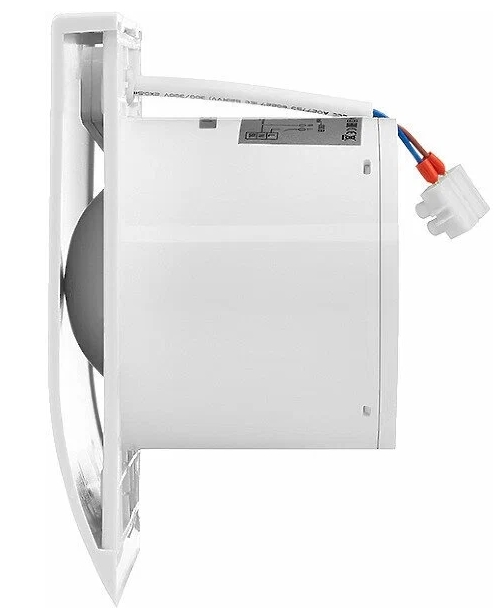
The axial fan with a check valve has an installation diameter of 150 mm, a rectangular blind removable panel measuring 19.4 x 22.3 cm. The depth of the mounting part is 11.7 cm, and the weight of the device is 0.79 kg.
The 25W motor provides 190m3 of air exchange3/hour. The performance is sufficient to choose a device for a bathroom of 14 m2.2.
Pros:
- The timer is set.
- Built-in hygrostat.
- Automatic on/off function based on humidity level.
- Dust and moisture protection class – IPX4.
- Low noise level – 32 dB.
Users cite the high price as a downside. Convenient control features require additional payment.
Price Electrolux Magic EAFM-150TH on Yandex Market – 6,127 rubles.
Step-by-step fan installation instructions
How to cope with this task - we will consider in detail in the step-by-step instructions.
Installing an overhead fan in an unprepared exhaust vent:
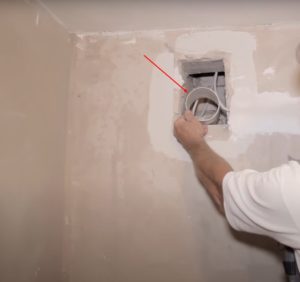
- The exhaust duct opening located on the wall is typically square or rectangular. To secure the cylindrical rear portion of the fan, prepare a mounting socket. Use a sleeve of the appropriate diameter as the base. The manufacturer-supplied fitting is made of soft plastic and may deform during installation. Make a sturdy sleeve yourself by cutting a piece of PVC sewer pipe of the appropriate diameter.
- Insert the homemade sleeve into the vent. Leave an extension above the wall plane. Allow for the thickness of any future finishing materials, such as tiles. Run the electrical supply wire through the vent. Fill the gaps with foam, and once the foam has set, plaster the area around the sleeve with concrete.
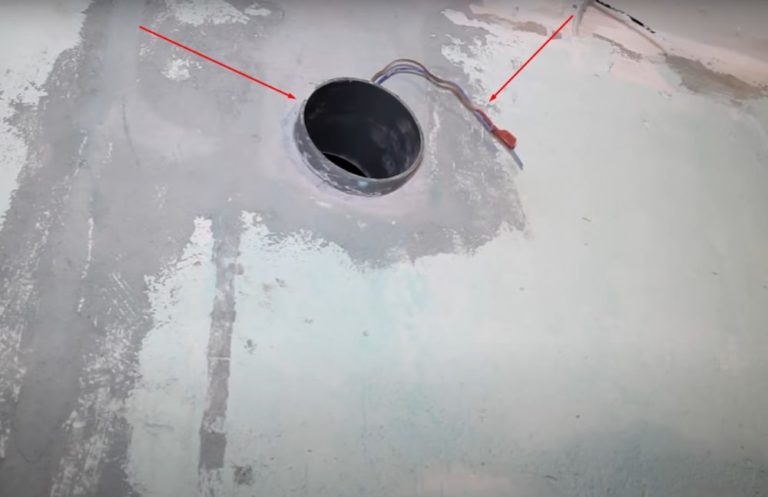
- The sleeve from the sewer pipe is slightly larger than the diameter of the cylindrical body of the exhaust hood. It's easy to insert and remove for maintenance. However, the loose body in the sleeve creates a gap for air to be sucked in and increases noise due to vibration. Solve this problem by purchasing two rubber rings. Choose the thickness based on the gap size. Place the rings on the cylindrical body of the exhaust hood, spacing them approximately 5 cm apart.
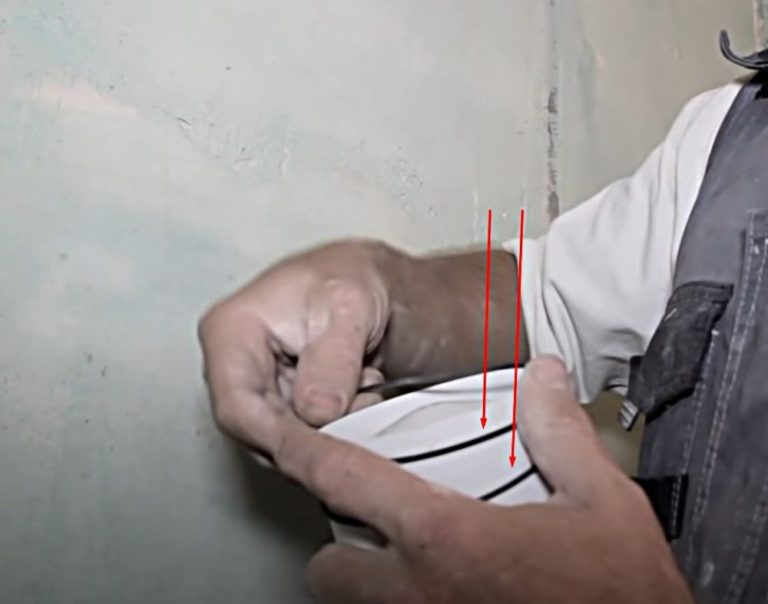
- Install the fan into the sleeve. The housing will fit snugly with the rubber seals, leaving no gaps. Connect the wires after finishing the wall. You can temporarily apply power to test the unit's functionality.
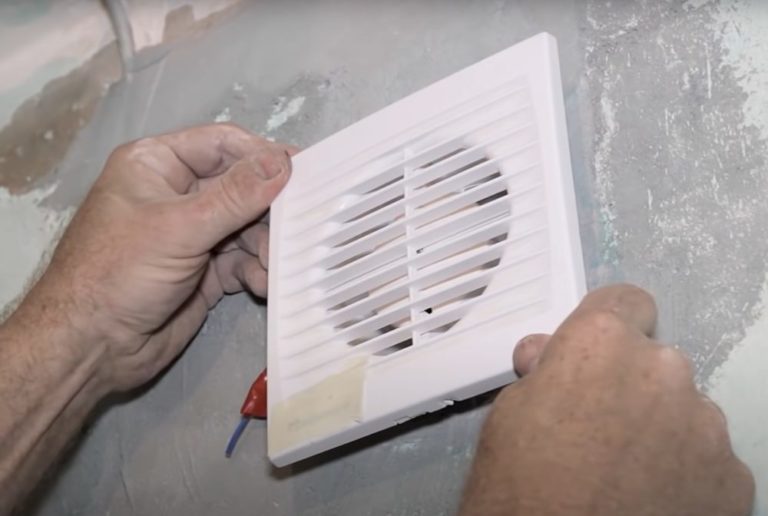
Additional screws securing the front panel and grille are not required. The unit is securely held in place by rubber rings in a plastic sleeve.
Connecting a duct fan to corrugated air ducts
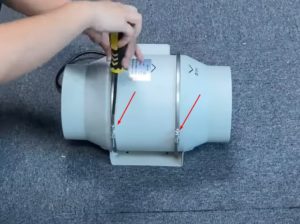
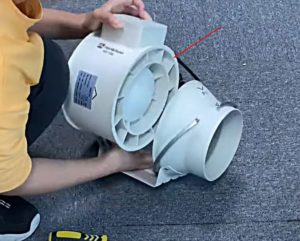
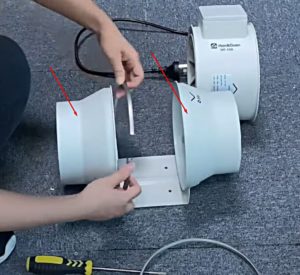
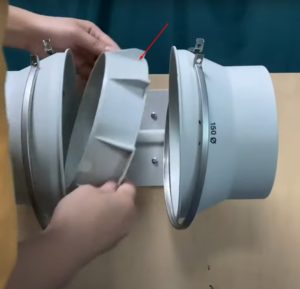
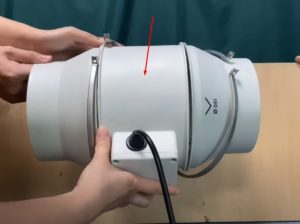
- Secure the bulky duct-type unit to a supporting structure: a wall, ceiling, or other structure. Use corrugated tubing for the connection. The manufacturer supplies the unit assembled with the connections on the base. Loosen the clamp screws. Remove the middle section with the electric motor and adapter insert. This will leave the base with two connections.
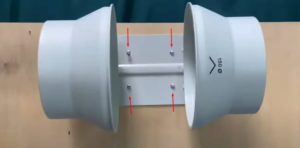
- Mount the frame on the supporting base where you intend to permanently attach it. Use a marker to mark the drilling locations for the screws. Prepare the holes and secure the frame to the supporting base.
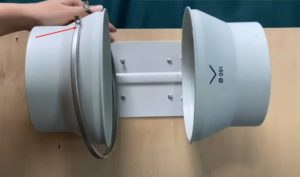
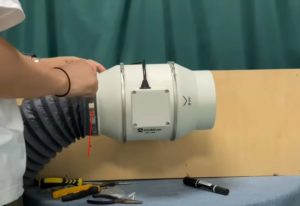
- Proceed with reassembly. Attach the clamps to the hoses and install the adapter insert. Place the motor on the base. Connect the middle section of the unit to the hoses and tighten the clamps.
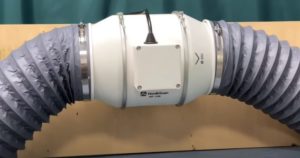
- Attach the corrugated tubing to the side pipes. Secure the joints with clamps. Connect the other end of the corrugated tubing to the ventilation pipes.
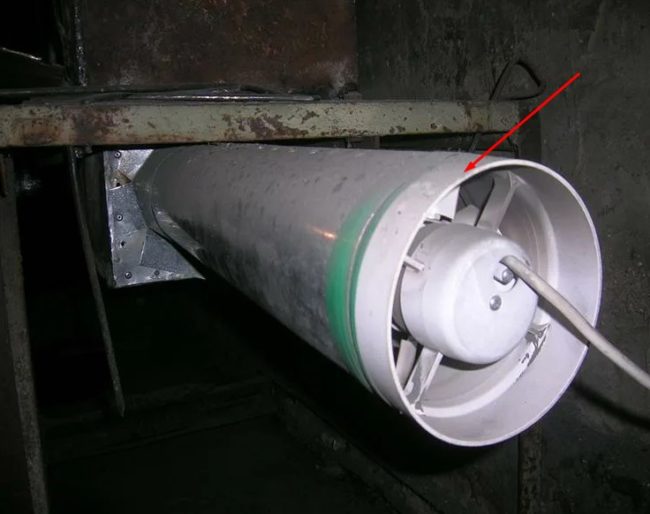
Lightweight duct fans do not have a frame. The installation principle is similar, but typically without the use of corrugated tubing. Insert the fan's nozzles into a ventilation pipe of the appropriate diameter.
Observe the direction indicated by the arrow on the housing. To add a check valve to the unit, use adapters.
Answers to current questions
In the bathroom, the recommended air exchange rate is 4 to 8 times. Given the room's volume, the fan's capacity should be sufficient to provide the required air exchange rate per hour. The recommended enclosure protection rating is IP24 or IP25. According to electrical safety regulations, it is optimal to install a device that operates on low voltage—12 or 24 volts.
Power is determined by calculations. The device must provide the required air exchange rate for a room of a given size. A good indicator is 95–100 m³/hour.
Power consumption depends on motor power. Average power consumption is 4-20 watts.
A fan is needed to remove moist air with unpleasant odors. A check valve is required to prevent the draft from reversing when the motor is not running.
The installation location for the surface-mounted exhaust fan is the top of the wall or ceiling as far away as possible from the door or opening window.