Not sure how a fan speed controller works? A fan speed controller operates by varying the frequency of the current or the voltage. You can solder the rheobas yourself from diodes, variable and constant resistors, capacitors, thyristors.
This article will detail the purpose and operating principle of a fan speed controller, its uses, and the different types available. We'll analyze its pros and cons, review the specifications, and review the ratings of popular models. You can also solder your own controller using the provided diagram and step-by-step instructions.
- Purpose of the rheobas
- The principle of speed control
- Scope of application
- Pros and cons
- Types of regulators
- Characteristics of rheobases, nuances of choice
- Top 5 Best Computer Rheobases
- Noctua NA-FC1
- Akasa FC.SIX AK-FC-08BKV2
- Thermaltake Commander FT
- DEXP CR-6025U
- Akasa AK-FC-06U3BK
- Assembling the regulator yourself
- Rules and diagrams for connecting regulators
- Rules for using the speed controller
- Answers to frequently asked questions
- Video materials
Purpose of the rheobas
Modern household appliances, electronic devices, ventilation systems, and other equipment are equipped with fans to cool their components. Constantly rotating the motor rotor at high speed is not always required.
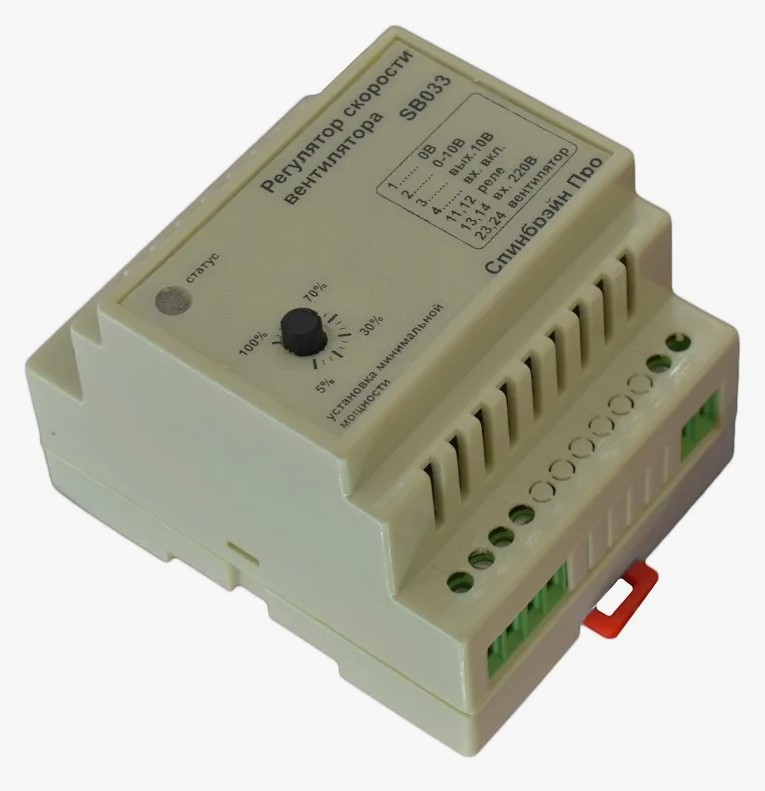
At minimum load, the fan speed is sufficient for cooling, reducing energy consumption and extending the life of the electric motor. Controls the motor rotor speed adjustment. rheobas installed in the electrical circuit.
The principle of speed control
According to its operating principle, the regulator is considered an electrical device that controls engine speed by changing the current frequency or voltage value.
The second type of controller is common in everyday life. Rheobases, which vary the voltage supplied to the electric motor winding, are reliable and affordable.
Frequency-varying controllers are expensive. This high price is considered a significant factor in the devices' low popularity.
Frequency drives for electric motors can be several times more expensive than the cost of the fan itself.
Scope of application
In computer technology, rheobases are used to control fans that cool the processor and the interior of the system unit. These devices are especially popular in powerful gaming PCs, where components are subject to high temperatures under heavy loads.
Air conditioners and other refrigeration equipment are equipped with fans that blow air over heat exchangers. As the air conditioning mode changes, the rheobasic system adjusts the electric motor's rotation speed to the optimal level.
The regulator is present in all inverter split systems, where the fan constantly rotates at different speeds without cyclical starts and stops.
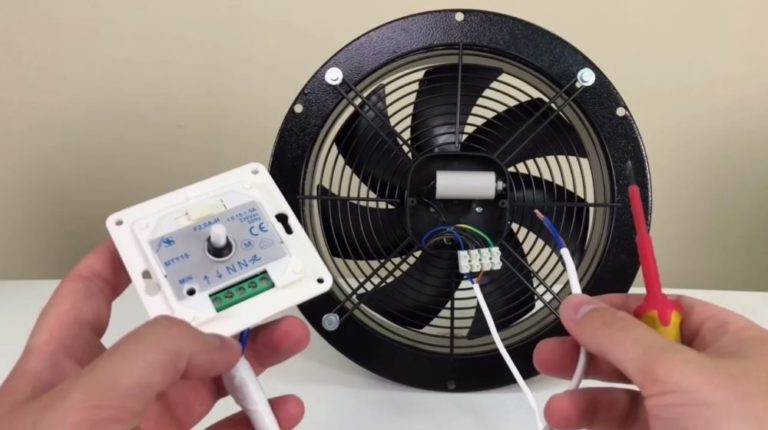
IN mechanical supply and exhaust The ventilation controller controls the operation of ducted fans. Precise speed settings reduce network noise and energy consumption, and set the optimal mode for standard room ventilation.
Controllers are used in children's toys with motors. Old cassette recorders were manufactured with a controller that maintained the motor's constant rotation at a set speed.
Pros and cons
When equipment comes factory-equipped with a regulator, no one bothers with the pros and cons of the electrical system. Analyzing the benefits of using a controller begins when you decide to install it yourself.
The list of benefits depends on the application of the control device. For example, in a ventilation system, a rheobas helps set an economical and comfortable ventilation mode by varying the speed of duct fans.
General advantages of using control devices include:
- Saving electricity.
- Extending the life of the electric motor.
- Maintaining optimal engine speed necessary to ensure the operability of other equipment components.
Disadvantages include additional installation costs and limitations in the range of models used.
Types of regulators
The controller type is determined by the operating principle of the control unit on the electric motor. This parameter determines the price of the product and its area of application. There are four main types:
XGE triac control devices are common in everyday life. RGE transformer controllers are expensive and used in industry. on powerful motors.
Characteristics of rheobases, nuances of choice
The performance of an electric motor depends on the characteristics of the connected controller. To select the appropriate model, consider the following:
- Functionality. The devices can monitor and display fan speed, temperature, and power consumption. Control can be performed on one or all points. Cheaper models do not have control sensors.
- Control type. Manual control models feature rotating handles, buttons, and touchscreens. This option is convenient for motors that don't require frequent speed adjustments. Automatic control models automatically adjust the engine speed based on sensor readings. This more expensive option is convenient for motors that require frequent and precise speed adjustments.
- Display. This option increases the cost of the device, but it provides useful information. The display provides important user information such as temperature and motor speed.
- Number of temperature sensors. A rheobase with a single temperature sensor monitors the temperature of a single working component. In computer equipment, monitoring multiple points is required, such as the CPU and GPU coolers. A rheobase with multiple temperature sensors is more expensive, but the risk of a processor or GPU burning out from overheating and being unmonitored will increase.
- Connectors. 2-pin, 3-pin, and 4-pin connectors are used for power supply. Make your choice based on the rheostat installation location. 4-pin connectors are currently used for the processor. 2-pin and 3-pin connectors are more commonly used for coolers that cool the system case and hard drives.
Options such as an e-SATA connector on the case, a card reader, and USB ports do not affect the operation of the rheobas, but do provide the ability to connect additional devices.
Top 5 Best Computer Rheobases
In a powerful computer, the rheobass controls the cooling system. This electronic device regulates fan speed based on changes in the load on the processor and other PC components.
Using a rheostat allows you to connect more fans to your gaming device than the motherboard allows. The top 5 rheostats are based on ease of setup and reliability.


Noctua NA-FC1
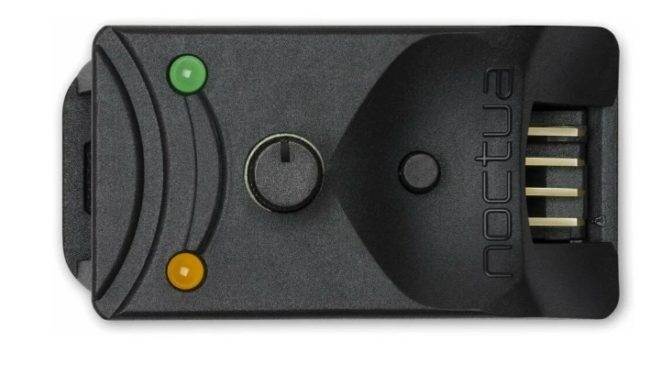
The controller offers a good price/quality ratio. The Austrian manufacturer provides a 6-year official warranty. The unit is externally mounted to a computer case or desk using adhesive tape. Fan speed is adjusted manually by turning the rheostat knob on the case.
Pros and cons:
- Possibility of connecting three fans.
- Easy installation of the controller without the need to disassemble the PC system unit.
- Smooth speed control.
- There is no additional functionality.
- Three coolers are controlled at once without the possibility of separate adjustment.
- Coolers of the same power must be connected to the rheobas.
The popular rheobass has been disappearing from Yandex Market. The model can be found in computer stores at a price 1,750 rubles.
Akasa FC.SIX AK-FC-08BKV2
This six-channel controller, manufactured in Taiwan, is designed for local speed control of six fans. Each channel is equipped with a mechanical control knob and an indicator light. There are no additional options. Users report reliable operation of the rheostat, but complain about the high price, despite the manufacturer's six-month warranty.
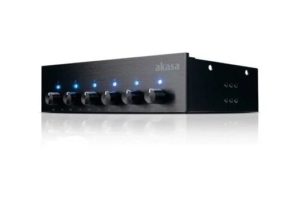
Advantages and disadvantages:
- Possibility of connecting 6 coolers with local control of each channel.
- A speed sensor is installed.
- Possibility of smooth adjustment of the engine until it stops completely.
- Temperature sensor is missing.
- No additional options are provided.
- Poor customer service.
Price of electronic device on Yandex Market 5430 rubles.
Thermaltake Commander FT
The controller is made in Taiwan and features a fan speed sensor and single-point temperature control. It can simultaneously connect up to five coolers. Touch-sensitive channel controls are located on the information display.
The manufacturer provides a one-year warranty. No failures were reported during the warranty period. After a year of continuous use, the controller's reliability depends on the user's luck.

Advantages and disadvantages:
- Touch control.
- Availability of temperature and speed sensors.
- Independent control of 5 channels.
- During operation, the controller body becomes very hot.
- The touch screen loses brightness over time.
- It is not possible to measure the temperature of 5 running fans at once.
The controller has been rarely seen for sale lately. The average price varies. from 3,000 to 5,000 rubles.
DEXP CR-6025U
The brand is registered in Russia, but the regulators are manufactured at a Chinese factory. The model's popularity stems from additional options.
A built-in e-SATA connector, a card reader, and two USB ports allow you to connect additional devices. Users consider the ability to control 2 channels to be a weak point.Reobas is suitable for entry-level PCs and office builds.
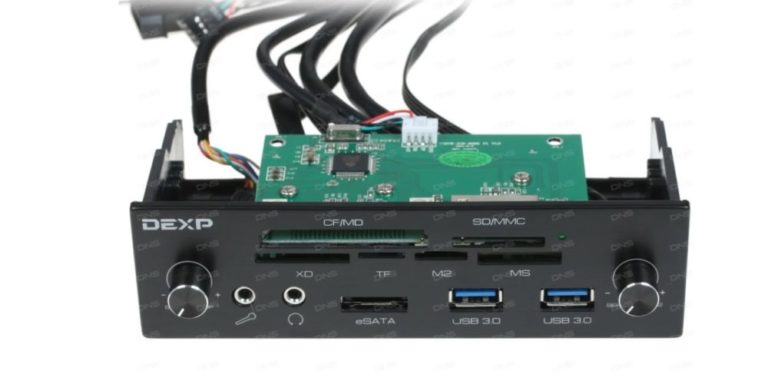
Pros and cons:
- Inexpensive controller with 1 year warranty.
- Availability of additional options.
- Detailed instructions in Russian.
- Manual control of rotary rheostats.
- Support 2 channels.
- Complete with short Molex cables.
Despite being manufactured domestically, the speed controller is not always available. Average cost 1300-2000 rubles.
Akasa AK-FC-06U3BK
Rounding out the ranking is a three-channel rheobass made in Taiwan. This compact model is designed for installation in small PC system units. In addition to three channels with manual control, the front panel features two USB ports for connecting additional devices.
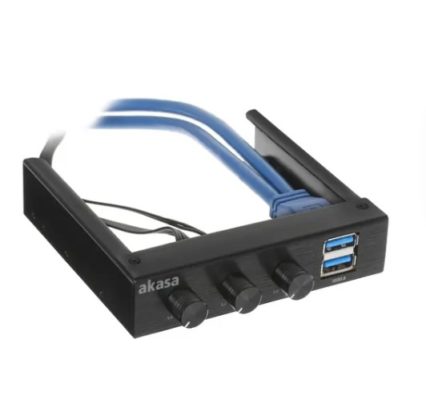
Advantages and disadvantages:
- Compact, easy to install rheobas.
- Availability of 3 independent fan speed control channels.
- Inexpensive controller with 1 year factory warranty.
- Small range of smooth speed control.
- Limited number of additional options.
- During long-term use, the controller overheats.
Rheobass isn't always available on Yandex Market. The average price of the model is from 1799 rubles.
Assembling the regulator yourself
A novice electrician can more easily assemble a single-phase fan motor speed controller. This requires understanding the circuit and knowing how to use a soldering iron. The controller works in tandem with a brushed motor.
The circuit in question does not provide for connecting an asynchronous, brushless electric motor. For this project, you will need radio components, a soldering iron with solder, and wires.
Let's start assembling a 220V fan speed controller according to the diagram:
- Study the regulator's electrical circuit. Select the recommended electronic components with the appropriate markings. You'll need resistors, capacitors, diodes, and other components.
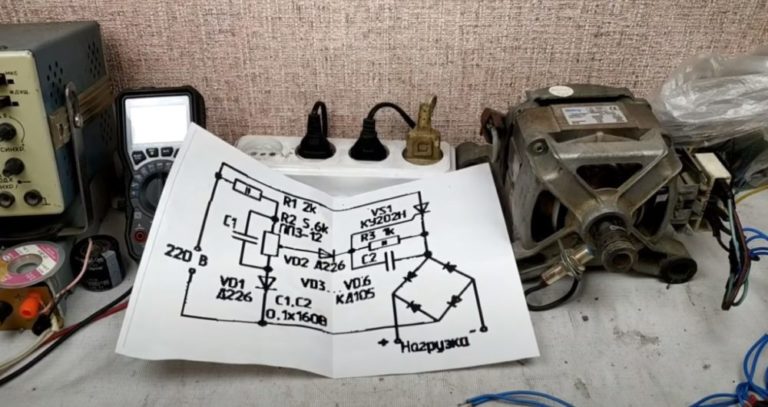
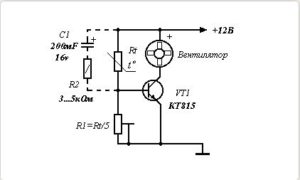
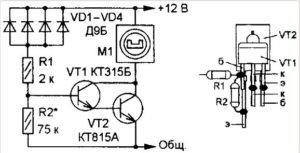
- The electrical circuit is soldered onto a PCB. In a hurry, you can solder a small number of electronic components together using their conductive pins or by adding wire pieces. In our example, soldering is done to the contacts of the diode assembly and the variable resistor. The resulting circuit consists of two parts connected by a diode.
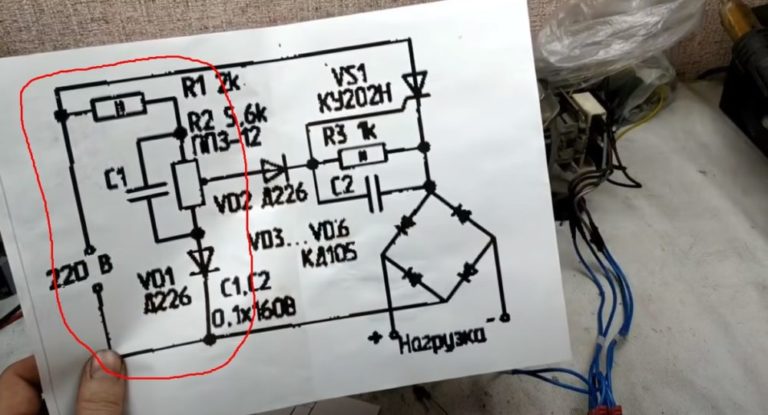
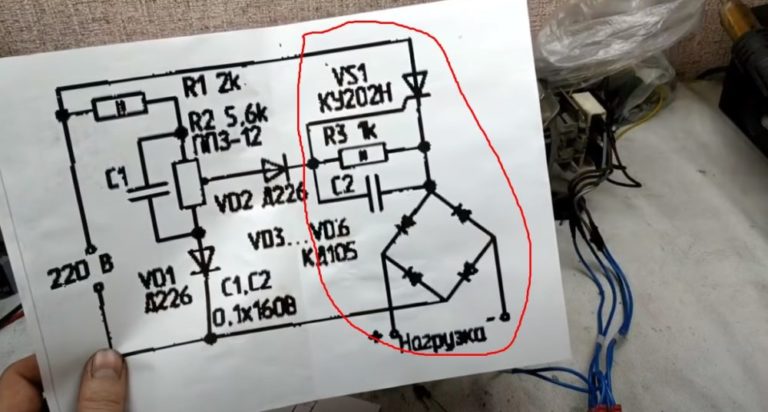
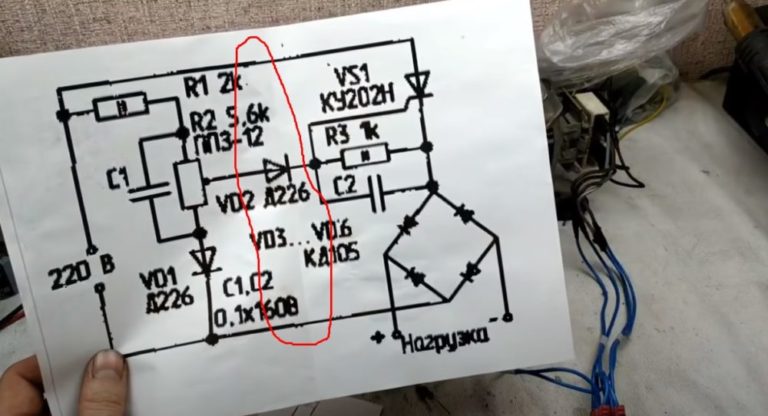
- Following the diagram, solder the components to the current-carrying legs of the variable resistor and the diode assembly. Connect the two resulting electrical components together using a diode and wires.
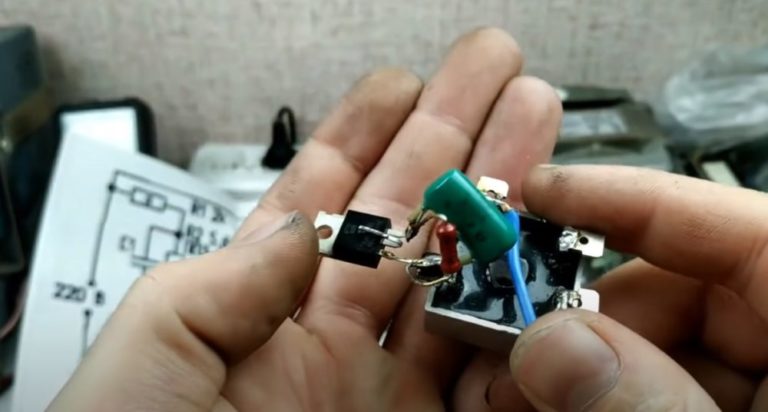
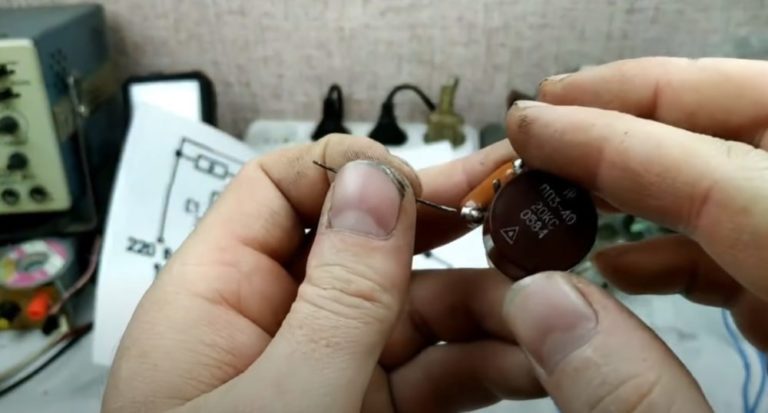
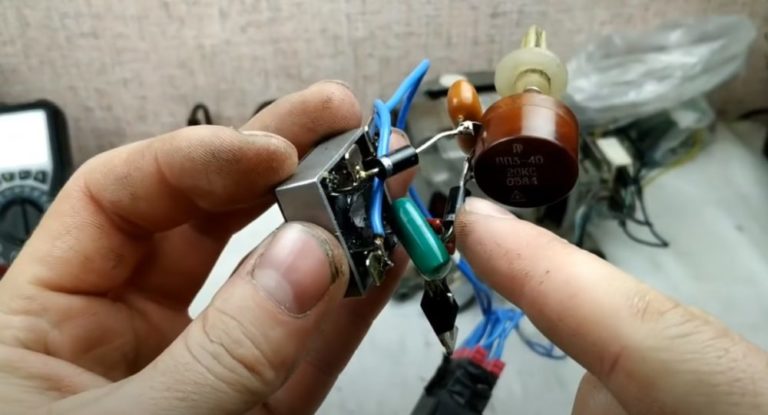
- Connect the 220V electric motor via a switch to the two free legs of the diode assembly. The connection point is labeled "load" in the diagram. Apply voltage to the contacts marked "220V" in the diagram.
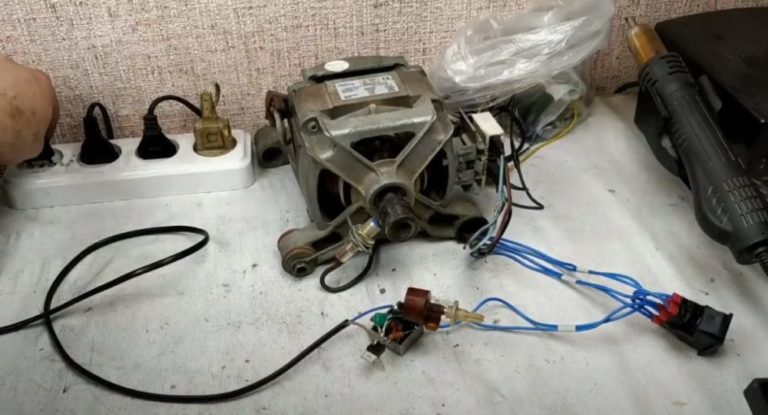
- Don't expect the motor to start smoothly after applying voltage. The initial start will be accompanied by a jerking motion. Check the functionality and proper connection of the regulator by turning the variable resistor knob. As the resistance increases, the rotor speed decreases. You will see the decrease in speed visually and hear it as a reduction in noise.
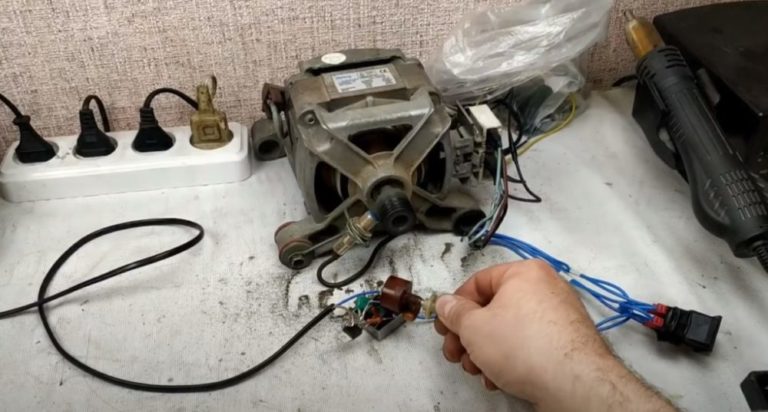
If the circuit works as expected and you want to use the controller to control the motor speed, hide the electrical component inside a dielectric housing. A plastic box or a piece of PVC pipe will do. Bring the control handle from the variable resistor outside.
Rules and diagrams for connecting regulators
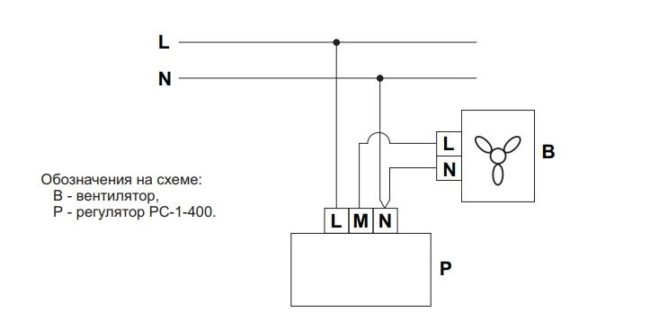
The factory-installed product comes with a wiring diagram for the speed controller, either printed on paper or drawn on the housing. Follow the manufacturer's recommendations. Select the controller based on voltage and power ratings to match the motor's characteristics.
For controlling coolers in computers and other household appliances, rheobasics are typically designed for 12 volts. Regulator circuit designs vary depending on the presence of additional sensors, options, and other features.
For proper connection, the user needs to consider the key parameter: the permitted number of connected fans. The location of each load point will be indicated in the diagram by the manufacturer.
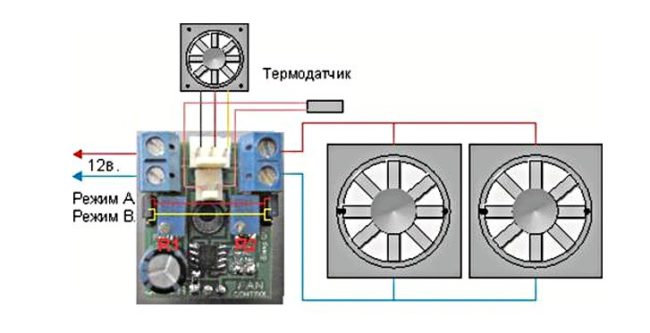
For computer coolers and small fans of other devices, install the rheobas inside the case. For external models, secure them with adhesive tape to the desk or the outside of the device's case.
If the fan has its own off button, install a speed controller in its place. Disconnect the switch from the wires and remove it.
General-building mechanical ventilation is powered by a 220-volt duct fan. Set the speed controller accordingly. Wall-mounted flush-mounted and surface-mounted controllers are popular.
The controllers come with a box, wall plugs, and screws for mounting. These controllers should not be confused with dimmers for adjusting the brightness of LED lighting. These devices differ in their intended purpose and operating principle.
Not every 220-volt controller is suitable for controlling the speed of a duct fan. Consider the load the controller is designed to handle. The cross-section of the supply cable must match the maximum current rating of the controller.
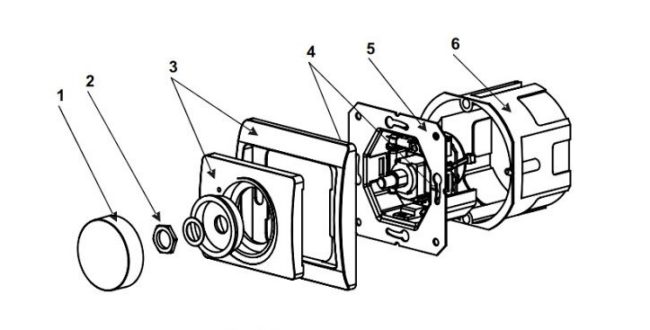
To install a wall controller, follow these steps:
- Remove the control handle.
- Unscrew the nut securing the outer cover.
- Remove the outer cover.
- Use a screwdriver to unscrew the screws securing the control mechanism to the mounting box.
- Remove the adjusting mechanism.
- Insert the cable into the technical holes of the mounting box and secure it to the wall using screws and dowels.
After securing the junction box, strip the ends of the cable wires. Connect the wires to the terminal block on the controller board. Follow the connection diagram shown on the manufacturer's sticker.
After connecting the cable, install the control unit inside the junction box and secure it with screws. After installation, the terminal block should be at the top. The potentiometer's slider, shaped like a Phillips screw, will be located at the bottom.
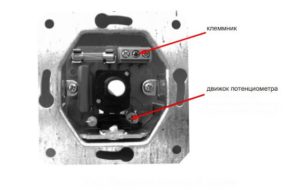
Take a Phillips screwdriver and begin adjusting the minimum speed for normal fan operation:
- Temporarily insert the controller's control knob. Turn it all the way to the left, but do not click it off.
- Turn on the circuit breaker in the electrical panel and apply voltage.
- Using a Phillips-head screwdriver, slowly rotate the potentiometer knob. Stop once the fan speed reaches minimum.
- Turn the control knob to the left to click the controller completely off.
- When the fan blades stop spinning, check the controller's operation. Turn the control knob to the right. After a click, the fan will begin spinning at low speed. The speed will increase with each clockwise rotation of the control knob.
After checking the controller's operation, turn off the fan and disconnect the power supply. Remove the temporarily installed control handle. Replace the outer cover and tighten the retaining nut. Install the handle to control the controller connected to the fan.
Rules for using the speed controller
After installing the 220-volt speed controller, use the potentiometer to accurately set the minimum speed. Incorrect settings will cause the electric motor to fail.
Operating features depend on the type of fan speed controller. With a mechanical controller, you turn the handle. Turning it to the right increases the speed, and turning it to the left decreases it. Parameters can be set using mechanical buttons or on the touchscreen.
The electronic version features automatic engine control. A sensor-equipped unit automatically adjusts the rotor speed without human intervention.
Answers to frequently asked questions
The controller is responsible for regulating the speed.
The device is called a rheobase or controller.
The rheobas is selected based on the electric motor's power and operating voltage. Additional options, such as manual or automatic control, are also taken into account.
The device is designed to set the required speed of an electric motor by changing the voltage or frequency of the current supplied to the winding.
You can reduce the speed by connecting a 400-volt capacitor in series with the power supply. Adjust the capacitance (microfarads) to achieve the desired RPM. A more reliable result will be achieved by installing a rheostat.
Video materials