Everyone wants to breathe clean air indoors, but not everyone understands what professional ventilation is. I often get questions about calculations and diagrams.
Once people have a general idea of the engineering system, they become apprehensive about the difficulties and costs of installing it. The idea of replacing the ventilation system with conventional ventilation or other primitive options arises. Let me give you a clear answer right away: this isn't always possible!
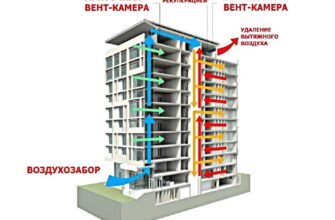
Professional supply and exhaust ventilation is a system of constant air exchange designed by engineers for a specific building, taking into account its parameters.
Installation of a ventilation system is relevant for architectural structures with an area of 100 m2, where a full air exchange cannot be organized by conventional ventilation through windows. This exhaust ventilation is installed in production areas.
You don't know, What is a split system?What are the differences between a split system, a multi-split system, and an inverter system, and which is better to choose?
- Why supply and exhaust ventilation cannot be replaced by ventilation or air conditioning
- What types of supply and exhaust ventilation systems exist?
- What components does the supply and exhaust ventilation system consist of?
- What standards are established for supply and exhaust ventilation systems?
- How to calculate a supply and exhaust ventilation system
- The importance of a supply and exhaust system in an apartment
- A brief step-by-step guide to installing autonomous ventilation
- Let's summarize with brief answers to pressing questions
Why supply and exhaust ventilation cannot be replaced by ventilation or air conditioning
If you think of ventilation, air conditioning, and ventilation as the same thing, you're deeply mistaken. Ventilation refers to the temporary process of introducing fresh air into a room. The exact volume of air exchange is impossible to determine. The intensity of circulation depends on the number of open windows and wind speed.
Opening too many windows creates a draft. This creates discomfort inside the room, and in winter, heat loss increases. Opening too few windows creates a shortage of fresh air from outside. Dirty air is not removed from the room.
Air conditioning is also not directly related to ventilation, since this process has a different purpose:
- The idea behind air conditioning is to maintain preset parameters for indoor air. The user can set the desired humidity, temperature, and ionization levels on the equipment. Ventilation aims to replace the entire volume of air within a room through the supply and exhaust ducts within a given unit of time.
- Air conditioning is characterized by its ability to operate indoor air masses without the need for outside air intake. Ventilation, on the other hand, cannot operate without both an outside air intake and an outside air exhaust. Air exchange occurs at the interface between the outside air and the enclosed space of the building.
- Air conditioning methods and equipment are more modest. A modular system consisting of several units can handle a limited volume of air masses, achieving sanitary and hygienic parameters in line with established standards. Supply and exhaust ventilation has unlimited means and methods.
You can install a simple ventilation system in your home or expand it to the required scale. Professional systems can purify, humidify, and regulate the air temperature in all or individual rooms of the building. In the event of an emergency, the ventilation system will quickly replace the entire volume of air.
Supply and exhaust ventilation systems come in several varieties, but differ in functionality and operating principle from ventilation or air conditioning.
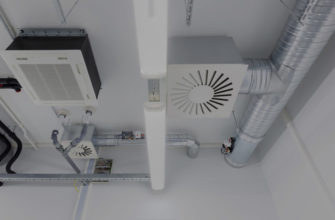
Ventilation is a process of air movement closely related to convection. The second definition refers to the physical phenomenon of thermal energy circulation, where molecules act as carriers.
Air masses are gases composed of 78% nitrogen, 21% oxygen, and 1% other impurities. The gaseous mixture inside a room, considered an enclosed space, heats unevenly at different altitudes. According to the rules of molecular kinetic theory, gas pressure in an enclosed space is proportional to the product of the average temperature of the molecules and their concentration.
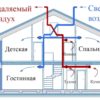
Warm air layers are lighter due to the lower concentration of molecules and, according to the laws of physics, rise toward the ceiling. Cold air masses are heavy due to the high concentration of molecules. According to the laws of physics, a cluster forms at the bottom of the building near the floor. This creates a pressure difference between the warm and cold air flows.
The lack of uniform pressure contributes to the random movement of air masses. Warm air flows from the house to the outside through the exhaust vent at the top of the wall.
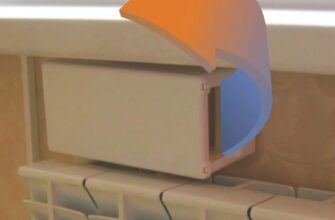
Cool air from outside enters the room through the lower intake vents. After heating, it rises again and is expelled through the exhaust duct. This creates a repetitive circulation.
What types of supply and exhaust ventilation systems exist?
A private home, apartment, summer cottage, or public building all have different technical parameters. Each space typically accommodates a certain number of people. To ensure adequate air exchange according to sanitary standards, supply and exhaust ventilation systems are designed with the intended use of the space in mind.
By circulation type:
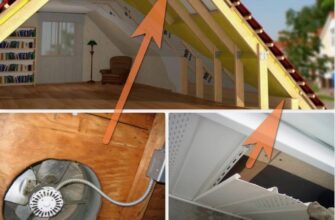
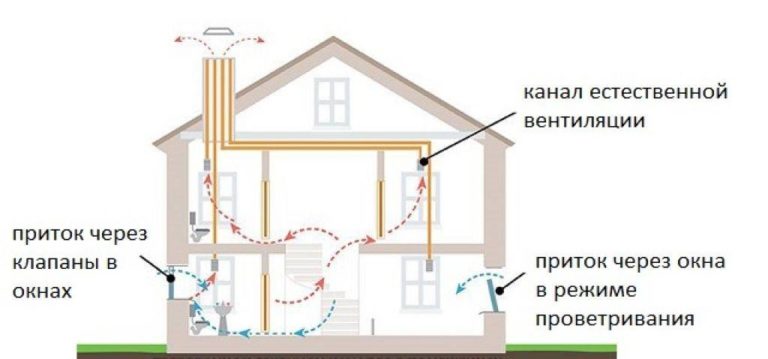
- NaturalSuitable for cottages, private houses, and apartments up to 100 m².2Warm and cold air flows spontaneously due to pressure differences. Circulation speed depends on the correct placement of the supply and exhaust vents, the intensity of the outside wind, and the temperature of the air masses. To avoid backdraft, locate the supply vents on the windward side and the exhaust vents on the leeward side. Consider the wind pattern of the building's location.
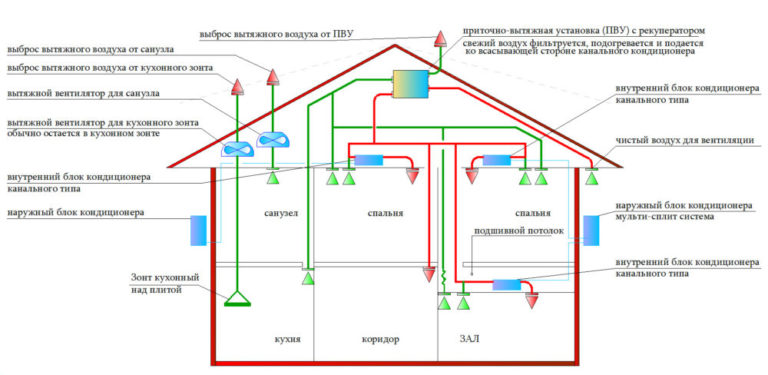
- ArtificialSuitable for public buildings, private homes, and apartments with an area of over 100 m2Air flows are forced by exhaust and supply duct fans. Ventilation functions can be expanded with filtration, ionization, and air temperature adjustment. Place exhaust and supply ducts according to the wind rose. If the building design does not allow for a duct to be routed upwind or downwind, circulation will still occur thanks to the fans. However, try to route the ducts according to the wind rose.
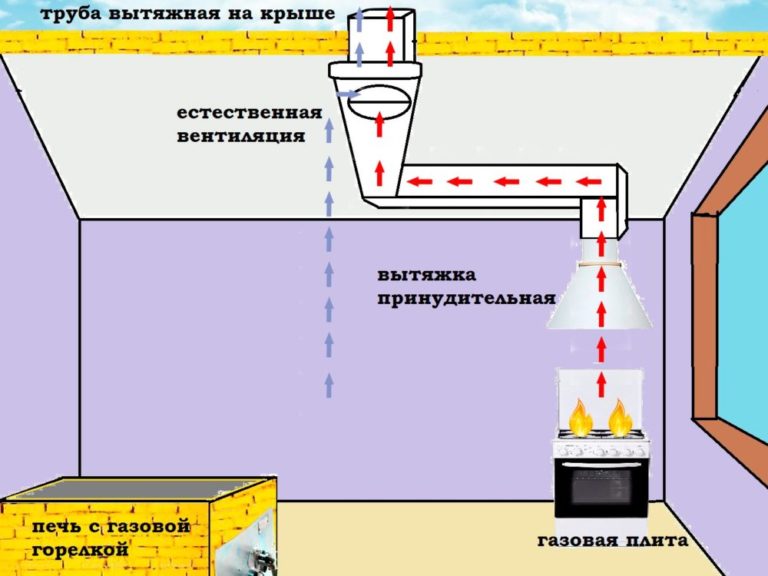
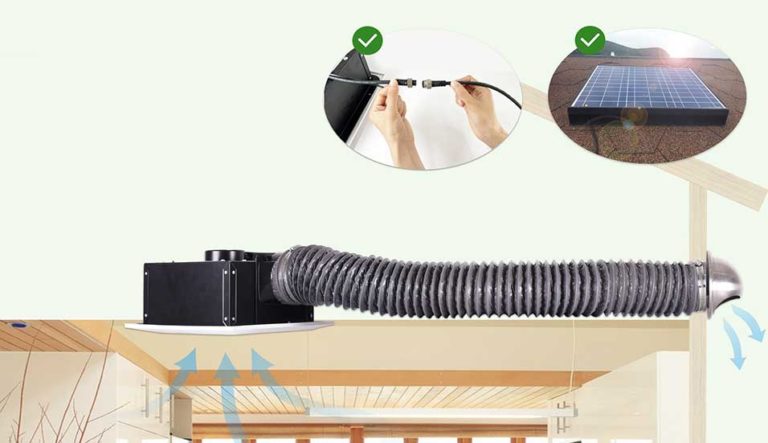
- CombinedA fan moves the cold incoming or warm outgoing air. Another, opposite flow circulates naturally. A range hood is often equipped with an exhaust fan. Intake occurs naturally through cracks in windows and doors or vents in the wall. I recommend installing a combination ventilation system with an exhaust fan in the kitchen, bathroom, or other room with a high concentration of steam and air pollutants.
By localization:
- A general ventilation system is designed to ventilate all rooms. Air ducts are laid throughout the building. Engineers calculate the duct cross-section, the presence of fans, and their capacity separately for each room.
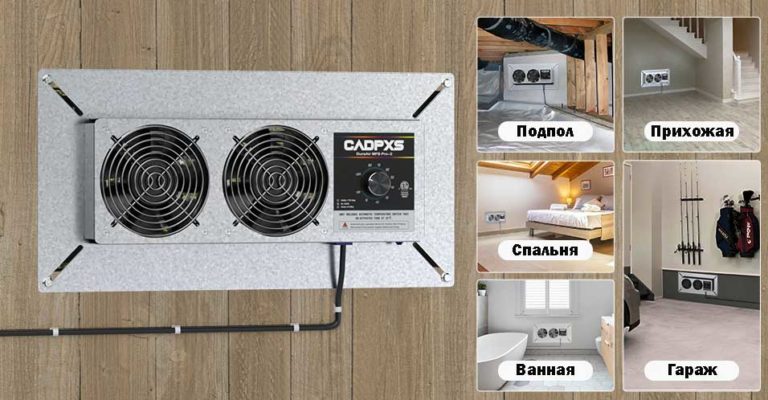
- A local ventilation system is designed for individual rooms in a building where air exchange is essential. Ducts are typically routed to the kitchen, bathroom, garage, bathhouseIn the bedroom and living room, ventilation is sufficient, or dirty air is removed through cracks under the door into a room with an exhaust duct.
According to technical parameters:
- Modular ventilation consists of individual units. You select the modules you need based on their functionality and assemble the system like a construction kit. You can install filters, fans, automatic controls, and other components.
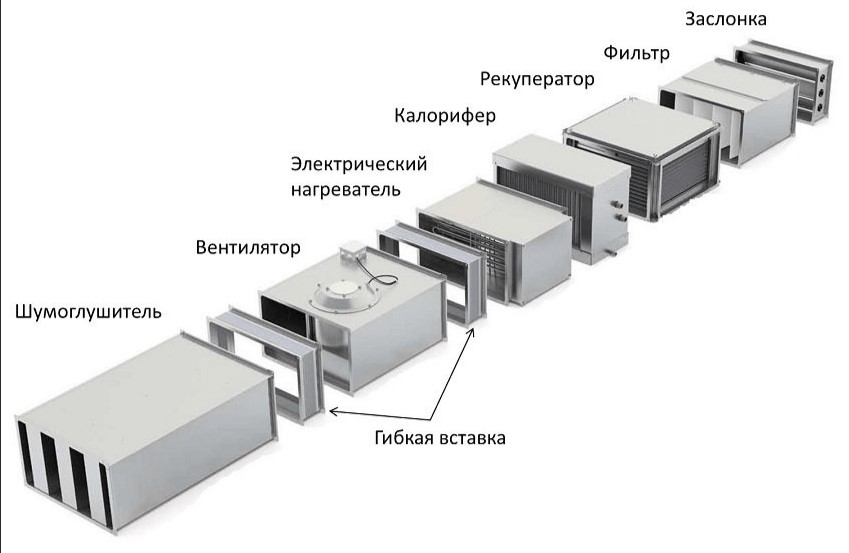
- A single-unit ventilation system is sold as a prefabricated unit. A single unit is easier to install and maintain, but is more expensive than a modular version.
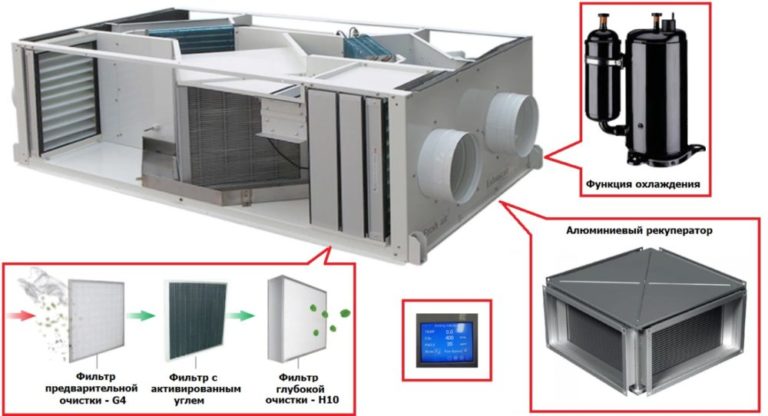
Ventilation systems are: supply - only air pumping ones, exhaust - only exhaust air masses and combined. In our case supply and exhaust – This is a mixed ventilation system that includes both inlet and outlet ventilation. It's preferable to install a combined system for residential and public buildings with an area of over 100 m2.2 with a large crowd of people.
What components does the supply and exhaust ventilation system consist of?
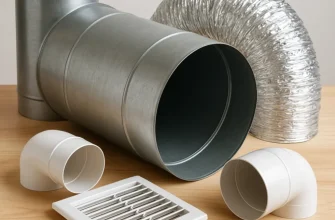
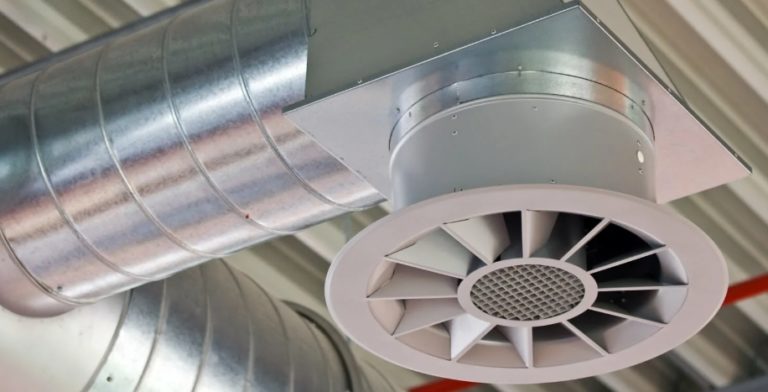
The simplest natural ventilation system may consist of supply and exhaust openings fitted with decorative grilles and valves. A moderately complex system includes ductwork distributed throughout the rooms. A complex ventilation system consists of the following components:
- Decorative gratings that protect the channels from the penetration of street debris and rodents;
- Filter elements;
- Valves that shut off cold reverse draft flows;
- Cooling evaporators for cool air in summer;
- Heaters for heating supply air flows in winter;
- Duct fans;
- Air ducts of round and rectangular cross-section;
- Silencer for absorbing the sounds of operating fans;
- Distribution grilles that disperse the air entering the rooms in small portions;
- Recuperator for redirecting, heating or cooling air flows;
- Sensors that transmit data about the indoor climate to the electronic unit;
- Automation for user programming of ventilation parameters and control of equipment operation.
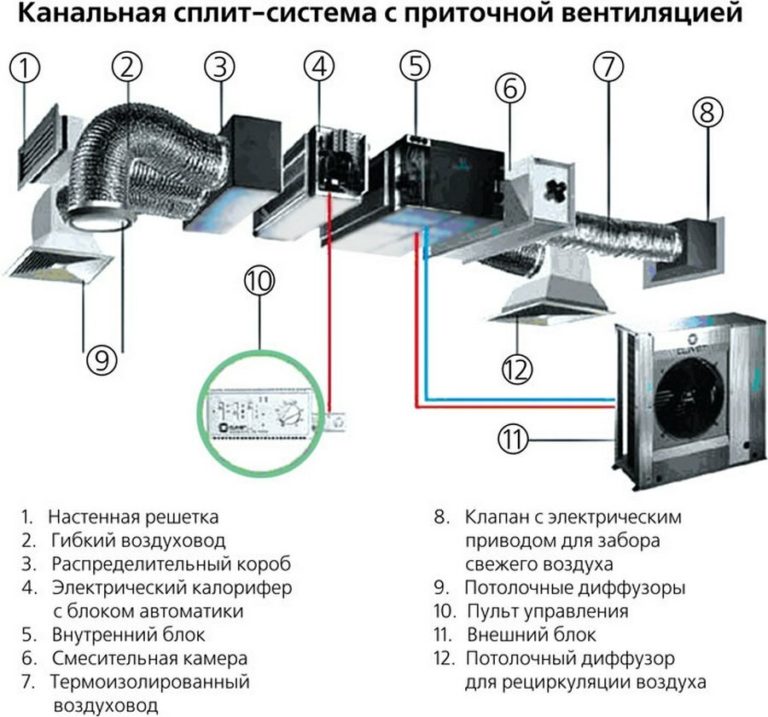
Engineers calculate the number and type of units for the supply and exhaust ventilation of a specific facility. The calculations use mathematical formulas and computer programs.
What standards are established for supply and exhaust ventilation systems?
A set of regulations, SP 60.13330.2016, and the current version of SNiP 41-01-2003, with amendments, have been developed. These regulations outline the standards and requirements for ventilation in buildings of various types.
It's impossible to review every point due to the sheer volume and complexity of the technical information for the average person. I'll cover the basics.
The complete cycle of air exchange in a room per unit of time is called the air exchange rate. For residential buildings, this value is 1 air exchange rate per hour, and for technical buildings, 0.2 air exchange rates per hour. Recommended air velocity through ventilation ducts: for living rooms – up to 2 m/s, for kitchens and bathrooms – from 4 to 6 m/s.
Standards for premises of different purposes are indicated in tables. According to the table data, for 1 m2 For a room's area, the following air exchange rate per hour is recommended:
- Bedroom, living room, other living room – 3 m3;
- Kitchen with 4-burner oven – 90 m3, 2 burners or electric oven – 60 m3;
- Bathroom – 50 m3;
- Separate toilet and bathroom – 25 m3.
Separate standards are established for garages, bathhouses, other technical, office, and public spaces. The number of occupants and the area of the room are also taken into account. A room larger than 20 m2 1 person is provided with 30 m3/hour of air.
If the total area is less than 20 m2, for every 1 m2 For rooms with 1 person, the air supply rate is maintained at 3 m3/hour.
How to calculate a supply and exhaust ventilation system
To calculate ventilation yourself, you can use online calculators by entering values into the fields. If you prefer mathematical calculations, use formulas and tables.
Working air volume (V m3(/hour) for an office, calculate based on the number of people. Multiply the table value of the hourly rate coefficient (k) by the number of employees simultaneously present at the workplace (N). Formula: V = k x N.
For private homes or apartments, calculate the volume of the interior space without furniture and other furnishings. Multiply the table coefficient (k) by the area (S) and height (H) of each room. Formula: V = k x S x H.
 You can use round or rectangular air ducts. Calculate the cross-sectional area (S) of the ducts using the online calculator. You can use the formula for calculating round ducts. Air volume (V m)3/hour) multiply by the dimensional matching coefficient (k) and divide by the recommended air velocity through the ventilation ducts (ω). Example formula: S=Vх2.8/ω.
Calculating the size of air flow diffusers is straightforward. Use diffusers 1.5 to 2 times larger than the cross-section of the main ducts.
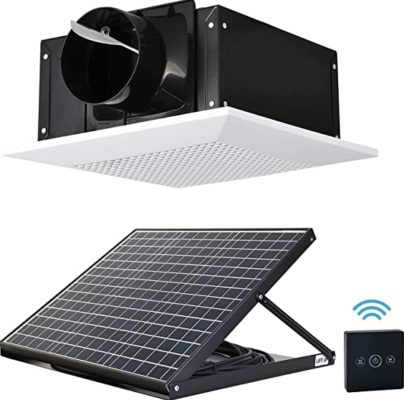
The number of nozzles (N) is determined using the formulas:
- For round ducts. Air volume (V m3/hour) divide by the other calculation result in brackets, where the number 2820 is multiplied by the air velocity (ω) and the diffuser diameter (d)2). Example formula: N=V/(2820хωхd2).
- For rectangular ducts. Multiply the generally accepted value of Pi (π) by the volume of air (V m3/hour). Divide the resulting value by the other calculation result in parentheses, where the number 2820 is multiplied by the air velocity (ω), by 4, and by the dimensions of the sides (a and b). Example formula: N = πxV/(2820xωx4xaxb).
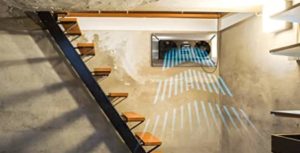
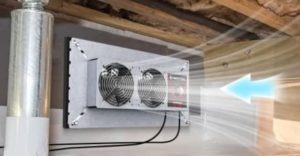
The power of the ventilation unit (P) is calculated by multiplying the delta of the temperatures at the inlet and outlet (ΔTOC) per volume of air (V m3/hour) and the heat capacity of air masses (Cv 0.336 W*h/m³*°C). Divide the result by 1000. Example formula: P=ΔTхVхCv/1000.
The generated pressure is equivalent to the aerodynamic resistance of the ventilation network. Determine this parameter from the performance curve of the main fan, using the graph in the equipment datasheet.
The importance of a supply and exhaust system in an apartment
The apartments are connected to the building's shared ventilation system. Maintenance representatives monitor its operation. Interference with the shared network is punishable by administrative penalties.
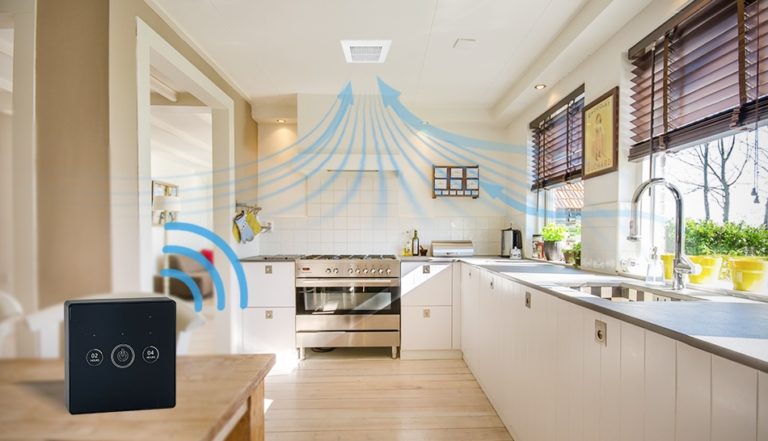
If the centralized communication system cannot cope with air exchange, the installation of autonomous ventilation is relevant.
A brief step-by-step guide to installing autonomous ventilation
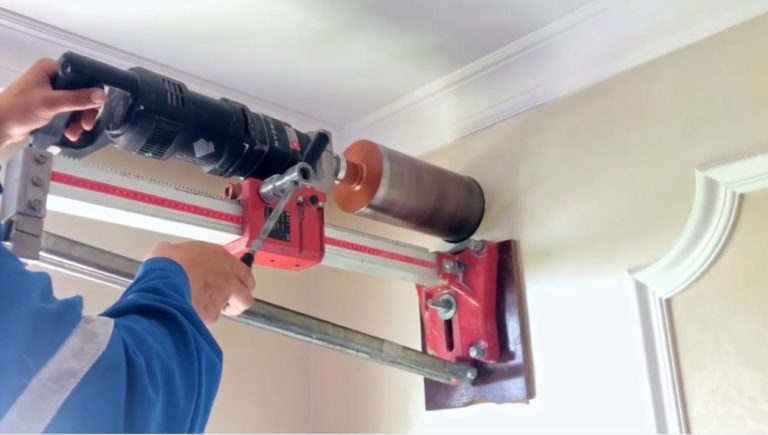
- Perform calculations and draw a diagram of the air duct layout. Use diamond core drills to create neat holes through the wall.
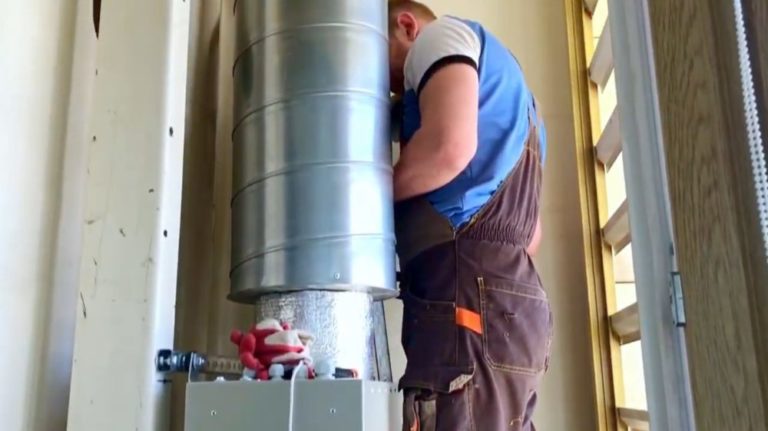
- Install a supply air unit with a silencer. Build a metal frame to house the equipment.
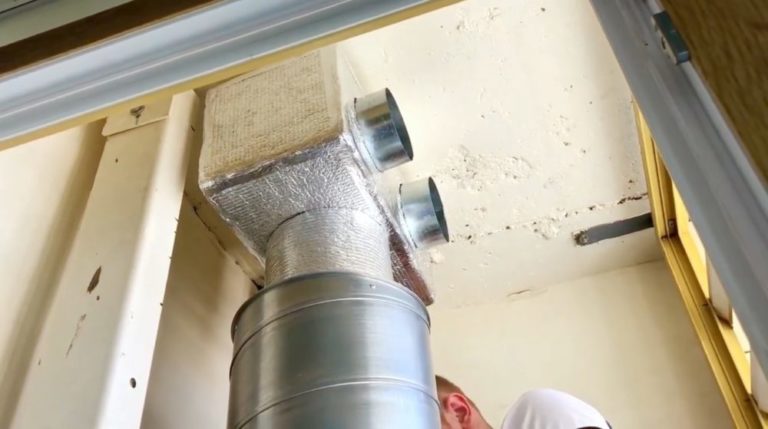
- Install an air distribution chamber on the muffler. From there, distribute ventilation ducts throughout the apartment.
- Install the air handling unit control panel. Connect the electrical equipment.
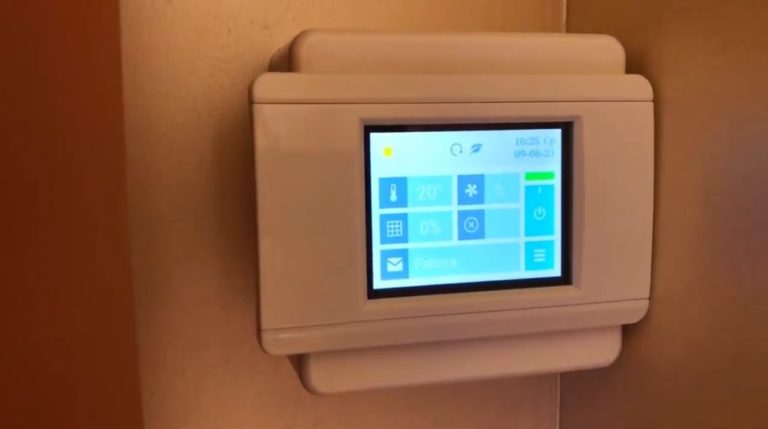
Test the ventilation system. Set the appropriate modes on the remote control and check the air flow from the diffusers.
For more information on the step-by-step installation of autonomous ventilation, watch the video.
Let's summarize with brief answers to pressing questions
By a supply and exhaust unit we mean a unit with fans and other equipment that distributes air flows through ventilation ducts.
The supply system serves to pump fresh air into the room.
It is better to have an exhaust ventilation system, where polluted air with unpleasant odors is forcibly removed from the room by a fan.
The system is suitable for public places, private houses and apartments with an area of more than 100 m2.