The question of how to properly install ventilation in a private home is relevant for every owner of a country property.
To obtain professional advice on this issue, the owner of the website fixit.washerhouse.com interviewed an air conditioning and ventilation engineer.
A qualified specialist with two higher education degrees and practical experience, she has worked in the housing and utilities sector for 11 years. She designs and installs ventilation systems in residential and public buildings.
To create an effective ventilation system, calculations, the correct selection of a design, and professional installation of equipment are required.
A complex process must be dealt with certified specialistsPrivate homeowners will benefit from the basic information provided in detail in Sergei Ivanovich's answers.
Interesting article: How to ventilate a chicken coop DIY - diagrams, photos and videos, step-by-step installation instructions.
- Is it necessary to install ventilation or can regular airing be sufficient?
- What are the air exchange standards and how to calculate them?
- What is the best ventilation system for a private home, and how will it work?
- Scheme of arrangement of natural ventilation in a private house
- Scheme of forced air exchange arrangement in a private house
- Scheme of arrangement of combined air exchange in a private house
- How to properly install ventilation in different rooms of a private home.
- In conclusion, I will give brief answers to pressing questions.
Is it necessary to install ventilation or can regular airing be sufficient?
To understand the importance of a ventilation system, I'll first explain how it differs from ventilation. Ventilation is defined as the constant exchange of a specified volume of air through a system of ducts. Regardless of its design and operating principle, a ventilation system performs two functions:
- Removes air saturated with carbon dioxide, dust, and bacteria from the room to the street.
- Provides an influx of fresh air from the street into the room.
Ventilation of the living space is carried out on a continuous basis until the owner of the house forcibly stops the system.
The principle of ventilation is built on chaotic temporary air exchangeThere are no calculations for the volume of air entering and leaving a room per unit of time. A room may be under-ventilated or under-ventilated to create a comfortable atmosphere.
Air exchange occurs only when the windows are open. During the rest of the day, no fresh air enters. The accumulated polluted airflow manifests itself in the following ways:
- Dampness appears in the kitchen and bathroom;
- Fungus is growing on the walls in black spots, destroying the wooden structures of a private house;
- The air becomes stuffy and stale, making it difficult for people to breathe;
- Unpleasant odors spread throughout the rooms from the kitchen, bathroom, and basement.
Poor ventilation can lead to allergies, respiratory problems, and nervous system issues. If you care about your health, I recommend ordering a professional air conditioner or trying to... DIY simple ventilation system.
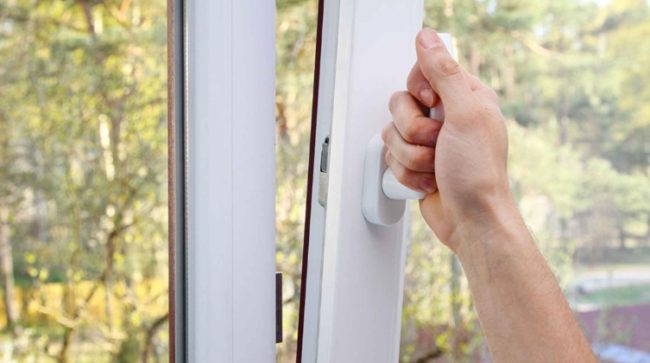
Ventilation is essential in modern frame and stone houses, where the facade is insulated with airtight foam and sealed PVC windows are installed.
The ventilation system prevents the formation of a “thermos effect” inside the room.
What are the air exchange standards and how to calculate them?
There is a set of rules, SP 60.13330.2016, which specifies requirements for heating, air conditioning, and ventilation of buildings for various purposes. The current version is SNiP 41-01-2003, with amendments and additions.
According to established standards, for every 1 m2 A certain volume of air must be supplied to the area of the room per unit of time. A complete air exchange cycle is called the air exchange rate. Minimum requirements have been established for rooms of different purposes, conventionally divided into two groups:
- For premises with permanently occupied people – 1 frequency/hour.
- For technical rooms – 0.2 times/hour or 1 full volume in 5 hours.

Examples of standards are given for an outside air temperature of +5OC and indoors +18OC. Separately, the air volume standards are calculated per 1 m32 area of rooms for different purposes:
- living room – 3 m3/hour;
- separate bathroom and toilet – 25 m3/hour;
- combined bathroom – 50 m3/hour;
- kitchen: with electric and two-burner gas stove – 60 m3/hour;
- kitchen: with a four-burner gas stove – 90 m3/hour.

When conducting professional calculations, the number of people in the living room is taken into account. If the area of the room is more than 20 m2, 1 person requires admission of 30 m3/hour of fresh air. When the area is less than 20 m2, 1 person is provided with 3 m3/hour of fresh air for every 1 m2 rooms.
Complex calculations are done at the ventilation system design stage. I recommend leaving this work to engineers.
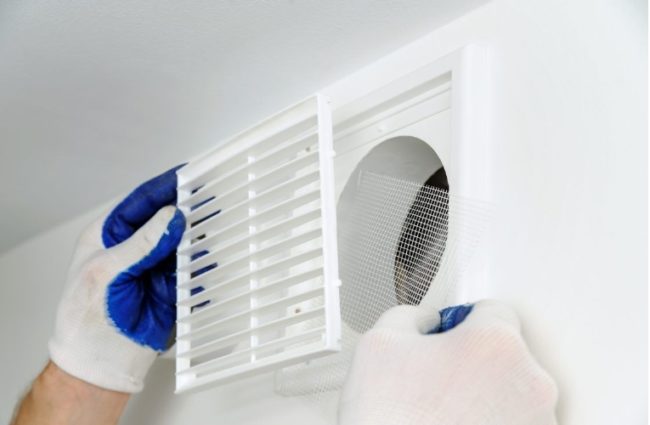
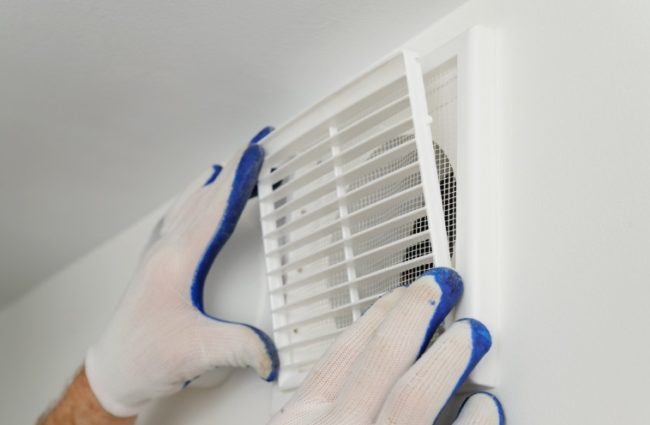
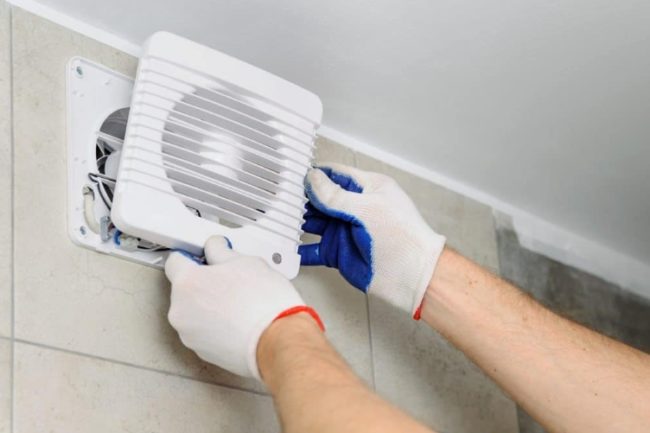
You can perform approximate calculations for a private residential building yourself:
- by multiplicity - multiply the volume of the room by the table value of multiplicity;
- according to the consumption rate - multiply the number of people by the table value of air exchange for a room of a specific purpose.
Knowing the required air exchange rates, you can begin to select the appropriate ventilation system and equipment.
What is the best ventilation system for a private home, and how will it work?
We suggest you read the article on how to do it ventilation in a house made of SIP panels: diagrams, project example.
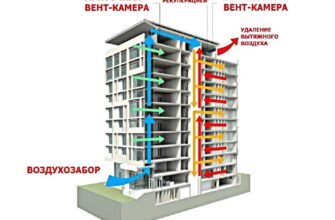
Before we move on to the review of the schemesLet's briefly explain how ventilation works. The principle is the same for all systems. Fresh air from outside enters the house through intake ducts located in the lower portion of the walls.
After a room becomes heated and polluted, the laws of physics force warm air masses to rise to the ceiling. They are then discharged outside through an exhaust duct. The air exchange cycle can be natural or forced, depending on the type of ventilation system.
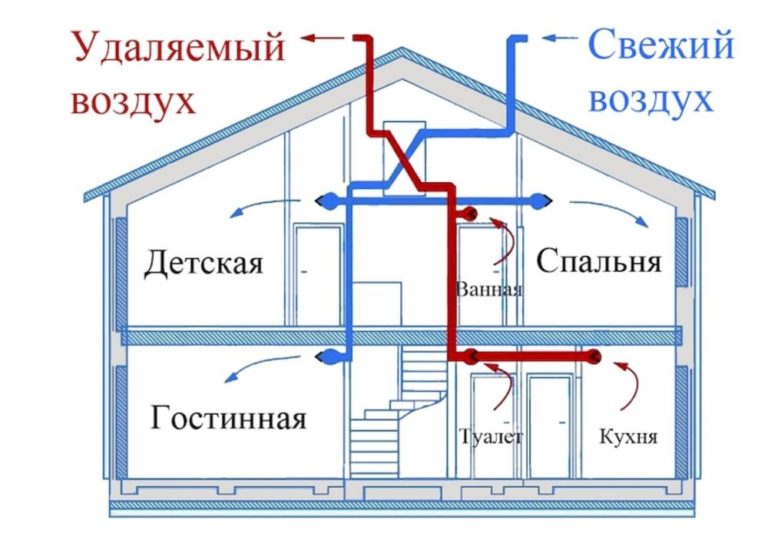
Scheme of arrangement of natural ventilation in a private house
The unique feature of this design is the absence of energy-dependent equipment. I recommend choosing this option if you want to install the ventilation system yourself.
The scheme is also called natural, since air masses circulate due to differences in temperature and pressure.
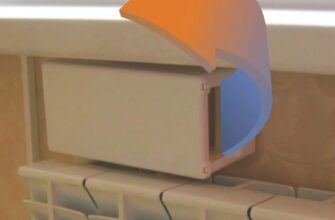
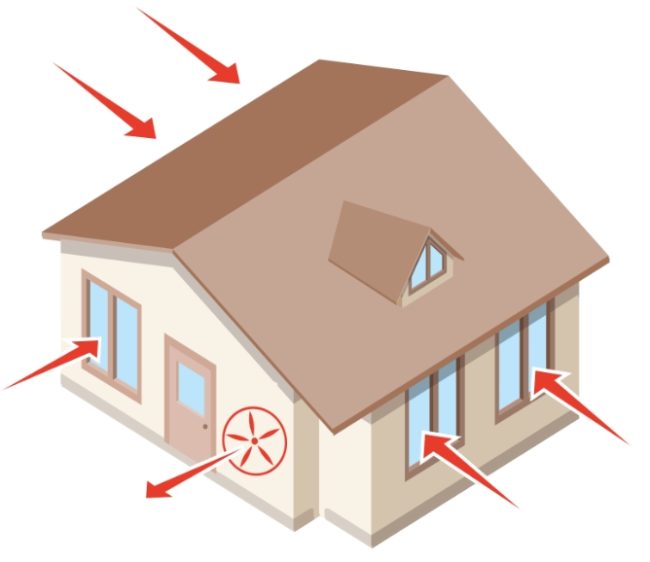
In a house with old windows and doors, air intake comes through the cracks in the doorways. Additional vents at the bottom of the wall are unnecessary. Energy-efficient double-glazed windows and entryways prevent fresh air from entering from the outside. When renovating, install air intake valves in the wall or window vents.
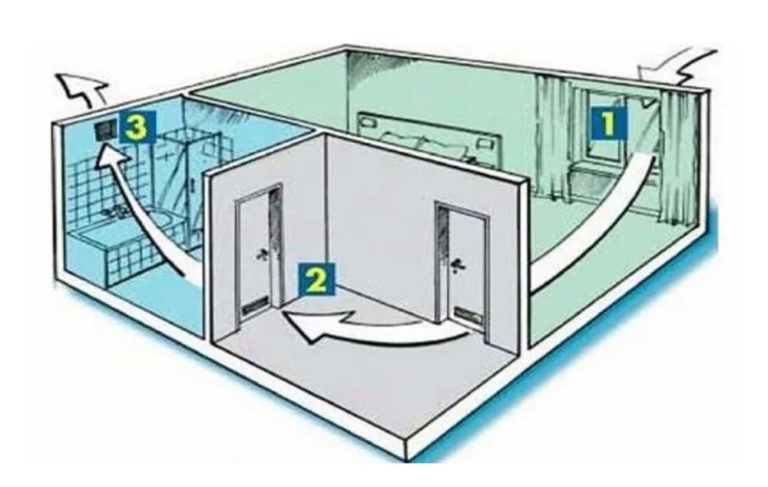
Vent dirty air through exhaust ducts. Install separate valves in the bathroom and kitchen to ensure dirty air and unpleasant odors from specific rooms are immediately vented outside.
Before installing vents, consider their proper placement on the sides of the building, taking into account the wind direction. Place the vents on the windward side to allow easy access to the building's interior.

Place the hoods on the leeward side so that wind currents capture the exhaust air leaving the house through the exhaust valves.
Scheme of forced air exchange arrangement in a private house
The design's unique feature is the presence of energy-dependent equipment and a group of ventilation ducts. I don't recommend installing it yourself, as it requires complex engineering calculations and installation experience. I'll briefly describe the forced mechanical design for general understanding.
Fresh air enters the home and exhaust air from the room is forced through the system by fans. They are installed on the exhaust and supply vents. If a fan is not operating, circulation stops, which is considered a system failure.
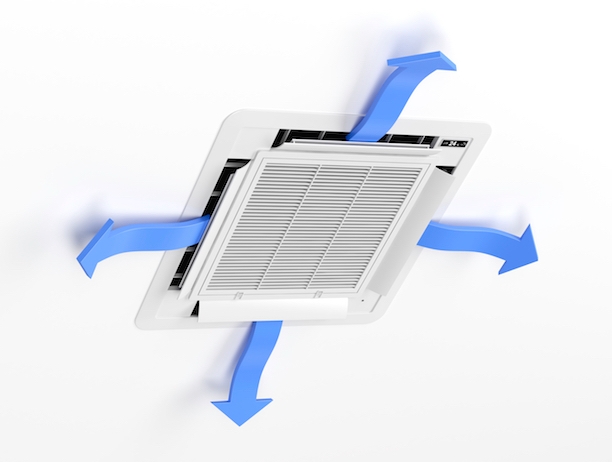
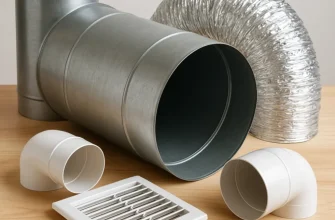
Supply and exhaust air aren't limited to valves alone. They are connected by a duct. This duct is typically a round or rectangular pipe. Engineers calculate the duct size individually for each facility.
The working element of improved mechanical ventilation is a recuperator. A unit is installed in each room of a large cottage or one for the entire small house. The recuperator redirects air flows through the ducts.
It features heating, cooling, filtration, dehumidification, and humidification. The number of functions varies by model.
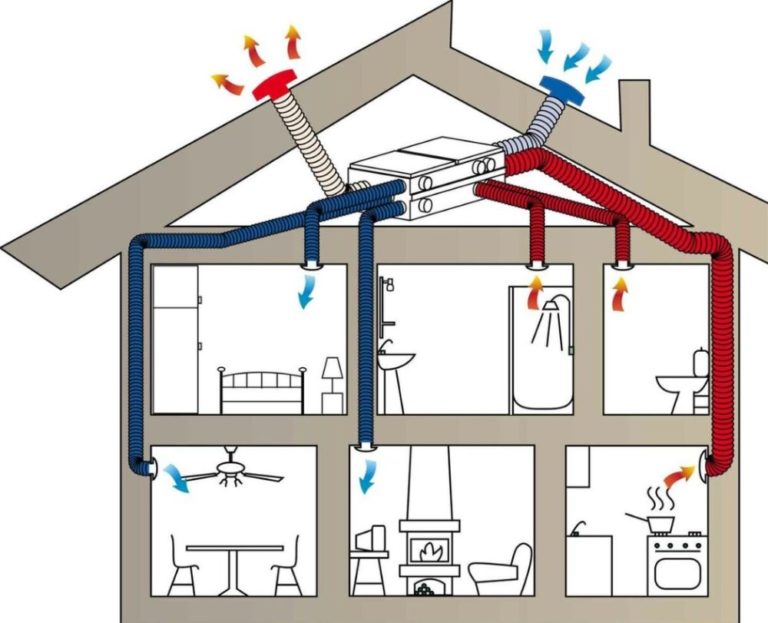
To prevent the noise from the supply and exhaust fans from spreading throughout the rooms, the system is equipped with a sound absorber—a muffler. An electronic unit with sensors is used to control the operation.
Do you know that it exists? bladeless fanWe invite you to learn about its design, types, model ratings, and how to make one yourself.
Forced ventilation isn't necessary in a small country house or a small one-story private building for permanent residence. A complex system is installed in larger two-story cottages, attics with a garage and sauna, where the complex layout prevents adequate natural ventilation.
Find out how to arrange natural ventilation in a private house, pros and cons, how to ventilate through the wall.
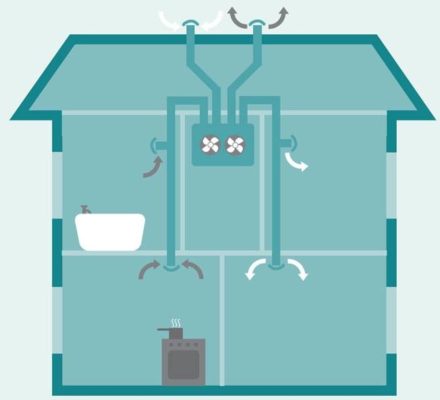
Scheme of arrangement of combined air exchange in a private house
Ventilation is called mixed ventilation because it consists of half forced and half natural air exchange. You can implement this system yourself, but some basic knowledge is required.
You can ventilate your living space in two ways:
- Force air into the house using a supply fan through a vent at the bottom of the wall. Exhaust air will naturally be expelled from the house through the exhaust duct.
- Forcefully remove stale air from the home through the exhaust hood using an exhaust fan. Fresh air will naturally enter the room through supply vents. Cracks in windows and doors can also serve as supply vents.
I don't recommend forced air circulation through air inlets. If you miscalculate the fan's power, drafts will occur. The range hood may not be able to handle the natural exhaust, increasing heat loss in the home.
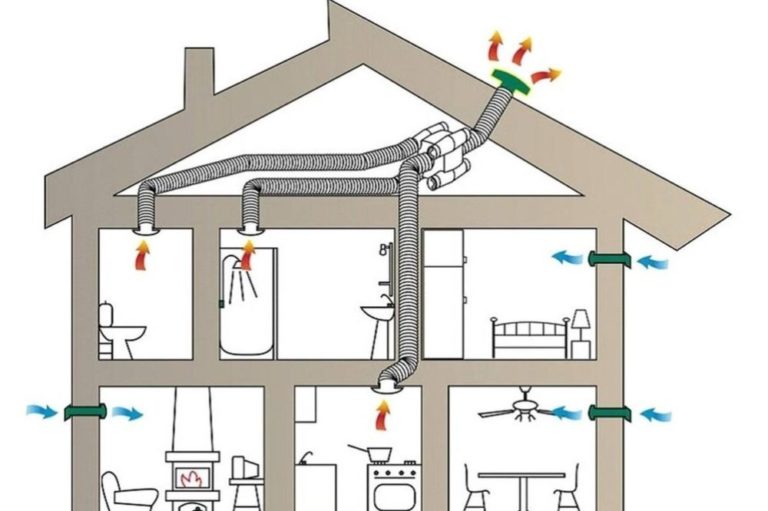
I recommend the second option – forced air exhaust. I recommend installing exhaust fans in specific rooms that require the removal of large amounts of moisture and dirty air with unpleasant odors: bathrooms, toilets, kitchens, and pantries.
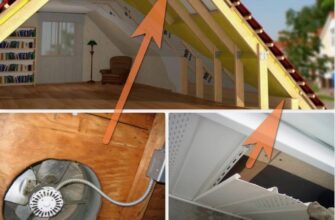
You can install a single exhaust fan in the attic for the entire house, with a vent pipe leading outside. From there, branch off the exhaust ducts into each room.
How to properly install ventilation in different rooms of a private home.
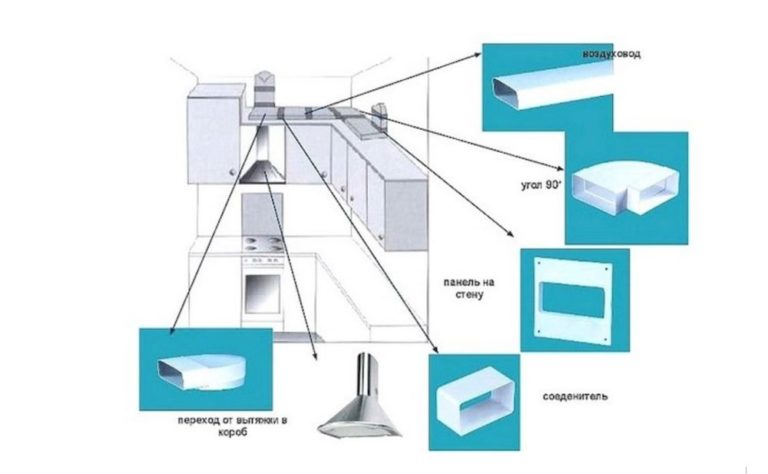
Design your kitchen ventilation system based on the room size and the expected volume of food preparation. If you have a small kitchen where you prepare small portions for 2-3 people, a ventilation system with a fan is sufficient. install a hood with a fan next to the stoveIn stores, they are sold in the form of domes with filters, lighting, and other functions.
If you have a large kitchen with a dining area where you prepare a large number of meals and the entire family eats, install a range hood above the stove. Install additional exhaust ducts under the ceiling above the entire work area.
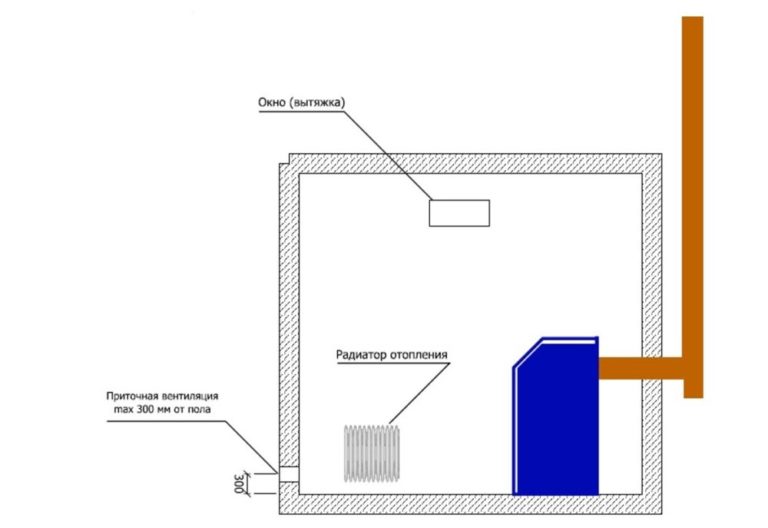
In a private home's boiler room, be sure to install an air intake at the bottom and a hood with or without a fan at the top. An air intake is necessary for proper combustion and draft in the boiler. The hood will also exhaust any gas or smoke leaks.
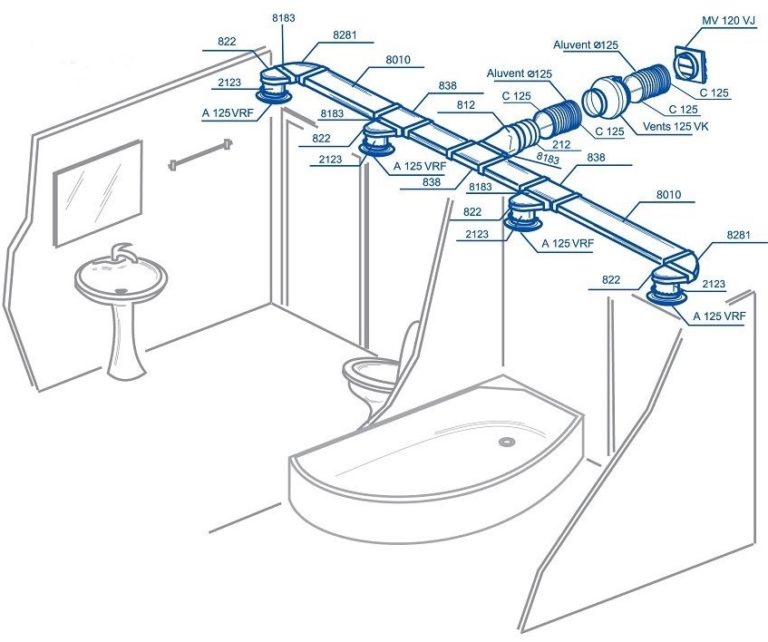
The bathroom and toilet have sufficient ventilation with an exhaust duct. Air intake comes through a gap under the door. In the adjoining bathroom, branch off the exhaust duct to each plumbing fixture. To create an exhaust duct, you can either route a pipe outside or install an exhaust fan.
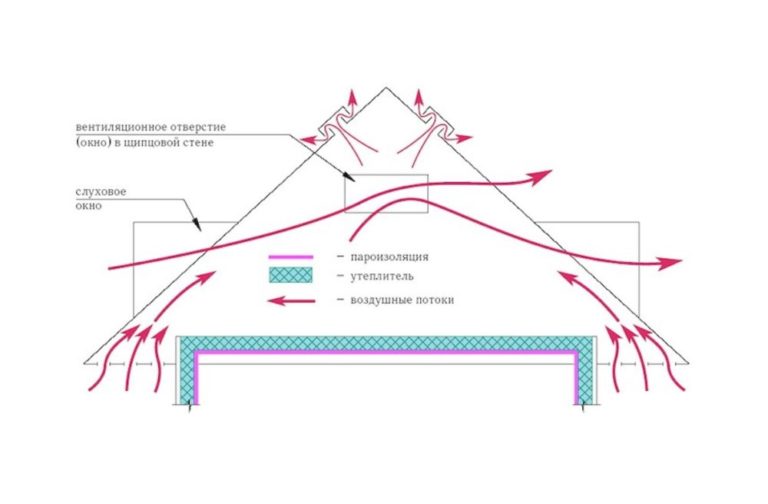
Install attic ventilation according to the same scheme as for the entire house—intake and exhaust. Ventilation of a non-residential attic is installed during the roof installation phase. A ventilated space is created between the roof covering and the thermal insulation layer. Air is exhausted from the attic through dormers, and intake is provided through gaps in the eaves.
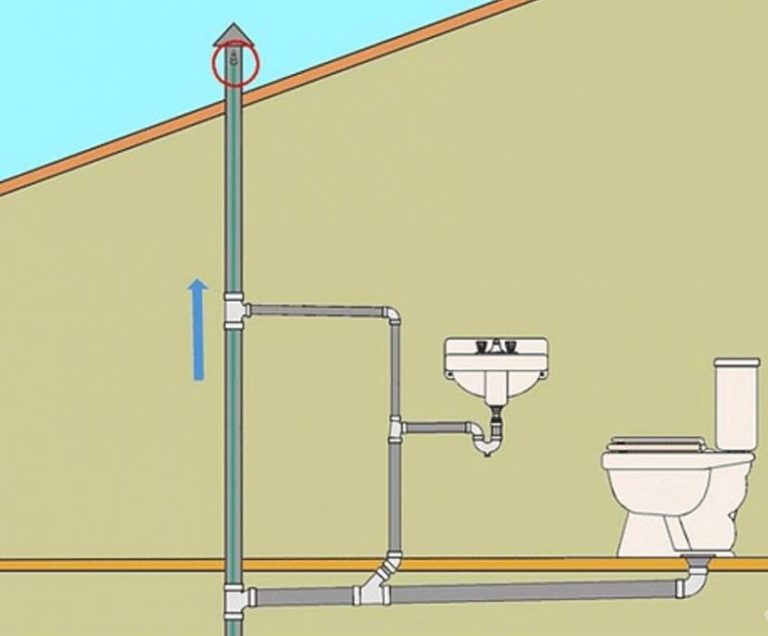
The sewer ventilation system is separate from the toilet or adjacent bathroom ventilation system. To install it, route the top of the riser outside so that the waste pipe extends at least 1 m above the roof.
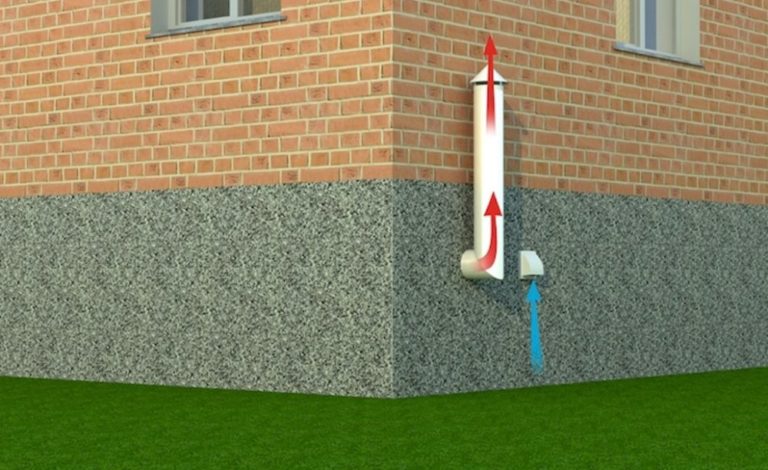
To prevent moisture from entering a house with a strip foundation without a basement, ventilate the subfloor. Install vents with a cross-section of at least 0.05 m in the basement.2The total area of the ventilation openings relative to the floor area should be approximately 1:400. Individual exhaust hoods can be installed with pipes or connected to the main building ventilation duct.
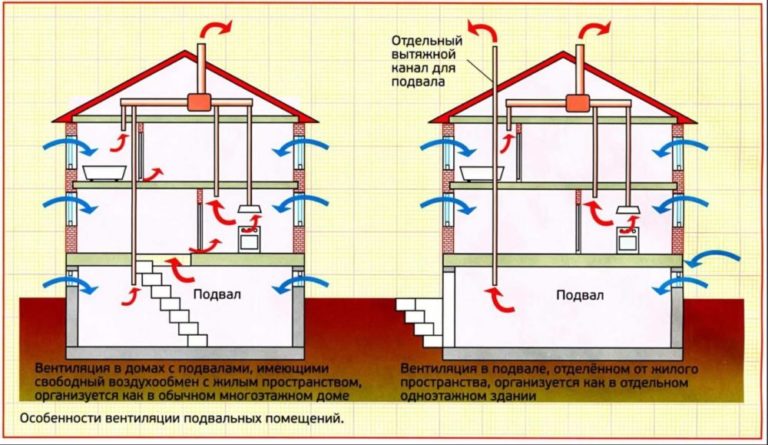
If the building has one or two floors and a basement, design a ventilation system diagram for each level, with an inlet and outlet. Combine the ductwork on each floor into a building-wide system. In the basement, lower the inlet pipe to the floor, and leave the exhaust duct protruding about 20 cm from the ceiling.
Modern home designs include a garage, sauna, and swimming pool all under one roof. These specific spaces have high humidity and exhaust fumes. Effective ventilation with precise calculations is essential. Don't attempt to install the ventilation system yourself. I recommend contacting a specialized company.
In conclusion, I will give brief answers to pressing questions.
Entrust the installation of a forced-air system to professionals. Natural and mixed ventilation can be installed independently. Perform calculations and draw a diagram of the layout of the inlets, exhaust vents, and air ducts. After installation, check for draft with a piece of paper or a lighter flame held to the vents.
Insulate exhaust pipes passing through cold areas of the house and the outlet to the street with mineral wool, foam plastic or other thermal insulation.
Leave complex calculations to engineers. Natural ventilation can be calculated by multiplying the room volume by the table's ventilation rate or by multiplying the number of people by the table's air exchange rate for a specific room.
Ventilation is necessary in all rooms, the crawlspace, the attic, and the basement. An exhaust hood is required in the toilet, bathroom, and boiler room.
A specified volume of air must be supplied per unit of time per square meter of room area. Parameters for rooms of different purposes are reflected in the current version of the code of rules – SNiP 41-01-2003.
In an unheated building, the vents are not closed. In a residential heated building, open vents in the basement will cause heat to escape from under the floor in winter, causing condensation. Close the vents in late fall, when the outside temperature is consistently below freezing. Open the vents in the spring when the weather warms up.