Modern buildings with rigid partitions require efficient ventilation systems. The ventilation chimney in a private home is responsible for the intensity of air exchange in the rooms, helps create the appropriate microclimate, provides oxygen for breathing and proper fuel combustion in the kitchen and heating appliances, and dilutes and removes harmful substances from indoor pollution.
- What material should you choose for a ventilation duct in a private home and why?
- What types of ventilation pipes are there?
- What pipes are best for a private home?
- What's wrong with corrugated pipe?
- The operating principle of ventilation in an apartment building
- Natural and forced ventilation - pros and cons
What material should you choose for a ventilation duct in a private home and why?
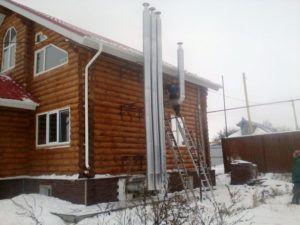 Not long ago, ventilation in private homes was made from flexible and rigid pipes. Recently, For ventilation, plastic exhaust pipes are mainly used with a cross-section of 75 mm.
Flexible aluminum air ducts are popular due to their ease of installation and low cost. The main disadvantages The disadvantages of this solution are its bulkiness (usually caused by improper installation by unskilled workers) and the lack of cleaning channels. The advantages include very good sound and thermal insulation, lightweight construction, and a relatively low cost.
Watch the video
Ventilation is often provided partially by flexible pipes and rigid ducts. This clever combination of these two systems ensures a durable installation at a relatively affordable price. Insulating the ventilation exhaust pipe is necessary to extend its service life, preventing condensation and subsequent structural damage. Mineral wool is most often used as insulation.
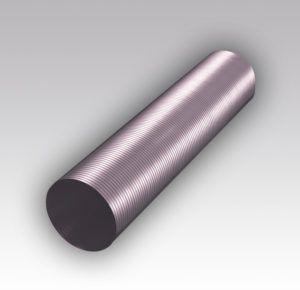 The aluminum exhaust structure is characterized by:
- high strength and the ability to lay pipes in the floor under screed, dry and wet plaster;
- low resistance due to the smooth inner surface of the pipelines and the absence of the need for additional elbows and tees;
- very good acoustic properties;
- simple sealing with a gasket without the need for special tools;
- Anti-static designs are available with additives that limit the growth of fungi and bacteria;
- the ability to thoroughly clean the channels.
All this makes these systems very attractive and cost-effective compared to ventilation using flexible or rigid ducts. The simplicity and wide range of installation options, combined with high durability and cleanability, make this type of solution a popular choice for home construction.
What types of ventilation pipes are there?
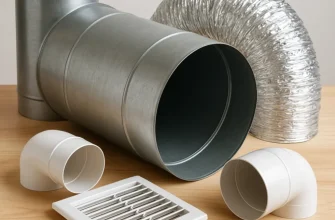
Pipes for supply and exhaust ventilation used in buildings and industries are divided into the following types:
- rigid air ducts made of galvanized round pipes;
- flexible channels made of aluminum;
- rectangular steel rigid ventilation ducts;
- flat rectangular PVC pipes;
- Flexible polyethylene pipes.
It's important to remember that every building requires effective ventilation. The comfort of our own homes depends on it. In modern energy-efficient buildings, only mechanical ventilation with heat recovery can ensure optimal air circulation, so choosing the right ducts is just as important as choosing a good heat recovery unit.
What pipes are best for a private home?
Watch the video
In recent years, air distribution systems have become increasingly popular in home construction, where air is transported through flexible plastic ducts with small cross-sections.
Due to its small diameter and high strength, this type of pipeline can be recessed into the ceiling insulation layer or installed in places where this was previously impossible.
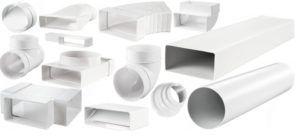 The externally cut tubing makes it highly flexible, significantly simplifying installation. This design eliminates elbows or tees, and the smooth interior offers low airflow resistance.
Furthermore, this is the only ventilation system that can be 100% cleaned. Thanks to the above, you can be sure that the structure's functionality will remain at the proper level over time.
This system consists of two distribution boxes (one for power supply and one for exhaust) connected to a heat recovery unit. The ventilated ducts are connected to these boxes (their number depends on the intended ventilation characteristics), which are then connected to expansion boxes, which serve as the ends of the ventilation system, where room diffusers are installed. All connections are made very simply and quickly using a gasket.
It is optimal to transport no more than 30 m3/h of air through an exhaust ventilation pipe with a diameter of 75 mm, therefore, if you need to install a system with a maximum capacity of 300 m3/h, you should choose a distribution box with 10 connections.
Similarly, if you need to introduce, say, 60 m³/h of air into a room, select an expansion box with the ability to connect two ducts. The diameter of the exhaust pipe for cellar ventilation should be no smaller than the supply pipe.
However, to design and balance such a device, it is better to seek help from a professional installer who will make the calculations correctly.
Until recently, distribution systems based on plastic ducts with small cross-sections were available only to a small segment of the market. Their popularity was limited due to the very expensive materials used in these devices. However, today, affordable designs are being manufactured.
What's wrong with corrugated pipe?
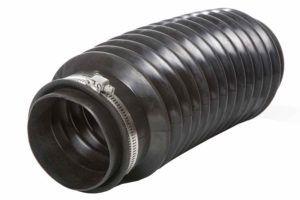 Corrugated ventilation pipes are most commonly used in industrial installations and are characterized by high mechanical strength and low flow resistance.
But elbows, tees, small diameter pipes, protruding screws and often inaccessible inspection openings where the system is hidden in the building make cleaning corrugated piping not so easy.
IMPORTANT! The disadvantages include the complex installation of such a unit and the high cost of its purchase - the materials are relatively expensive, and the corrugated pipe must be insulated, which is labor-intensive.
The corrugated wall also causes pressure loss in the unit, which negatively impacts ventilation quality. Corrugated pipes have a shorter lifespan than smooth pipes. For more information on corrugated pipes, see this article..
The operating principle of ventilation in an apartment building
Until recently, most newly built homes were ventilated naturally, often using corrugated pipe. Airflow was achieved by the pressure difference between the inside and outside of the home.
Good natural ventilation requires a constant supply of outside air, which is most often provided through windows. When windows are replaced with modern, more energy-efficient ones, the air flow decreases, and natural ventilation becomes less effective. As a result, the atmosphere in the home becomes heavy and humid, and mold and mildew grow on the walls.
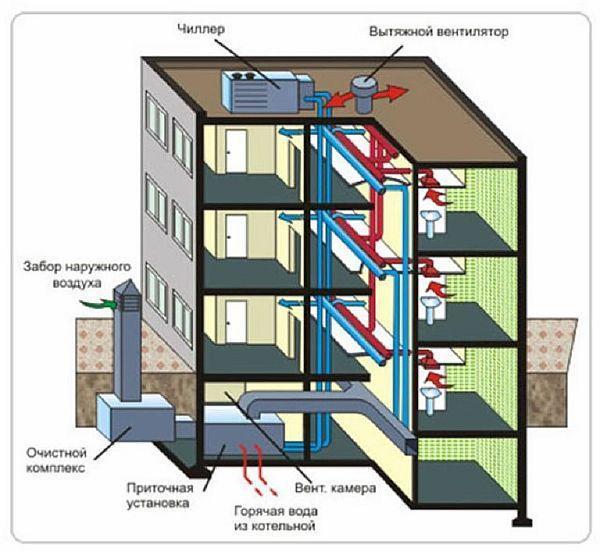
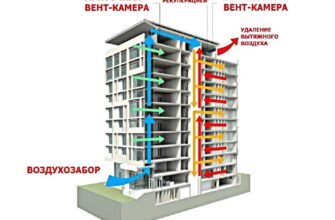
That's why forced-draft ventilation is used in apartment buildings. It involves an exchange of air flow generated by an electrically powered device. Furthermore, fresh air is heated by exhaust gases before entering the room.
This process is called heat recovery and significantly reduces heating costs. The downside of this solution is its high cost. A complete heat recovery system can be quite expensive, with the payback expected only after many years. Therefore, in private homes, the vast majority of users opt for natural ventilation due to its low installation and operating costs.
Natural and forced ventilation - pros and cons
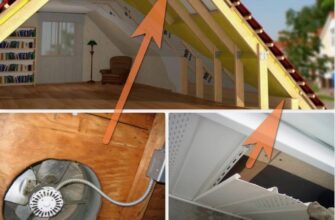
In residential buildings, the common method of air exchange is gravity (natural) ventilation. Air is supplied through windows or other openings in exterior spaces, and the exhaust air is removed through vertical ventilation ducts of appropriate cross-sections, which are often installed on the roof.
This system utilizes the displacement force generated by the difference in fresh air temperature and the temperature of the used air. The air flow is periodically influenced by wind. Natural air exchange influence:
- building height;
- the type of windows used, including the slots in the window frames;
- blocking the inlet of pipes;
- the type and height at which the exhaust pipes for ventilation onto the roof are located;
- conditions of use of premises.
In apartment buildings, the supplied atmospheric flow can be disrupted by the operation of central heating, convection currents from electrical appliances, and turbulence caused by the movement of people in the room.
The ventilation system operates in different places with different effects, which can lead to the creation of areas that are not ventilated, such as a basement.
Watch the video
Operating heating appliances and local exhaust fumes affect ventilation efficiency. Connecting range hoods to ventilation ducts is not recommended. For natural ventilation, it's best to use only those that filter the air rather than exhaust it to maintain a uniform flow of incoming and outgoing air. The minimum height of the ventilation exhaust pipe should be 4 meters.
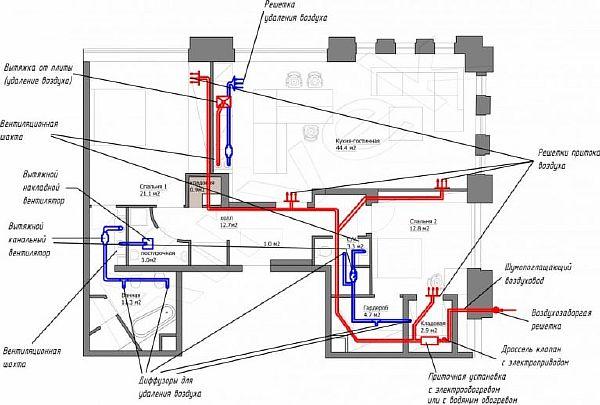
For heating in a private home, additional air must be provided to ensure proper fuel combustion. For a fireplace with a closed fire, the stove must have a minimum airflow of 10 m³/h per 1 kW of the fireplace's rated heating power. To ensure a fire with incoming air, a minimum airflow velocity at the combustion chamber opening (0.2 m/s) must be maintained.
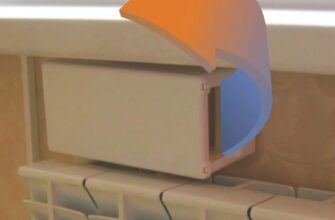
To ensure as much fresh air as possible, it's best to install a separate supply that doesn't interfere with room ventilation, such as a dedicated intake duct in front of or under the stove. If the fireplace draws air directly from the room, consider installing additional wall or window diffusers.
Providing adequate ventilation airflow to meet all needs (household appliances and heating appliances) prevents negative pressure from building up in a house or apartment. This pressure causes outside air to enter through the chimney and fireplace vent.
Existing standards exclude the simultaneous use of natural and mechanical ventilation when heating devices are used to collect atmospheric flow and exhaust gases by gravity.
Such devices include: central heating boilers with an open combustion chamber, fireplaces, and gas water heaters. In such situations, the air supply must also be mechanical to ensure a balanced air balance, taking into account the appropriate amount of combustion air.
Mechanical ventilation, or heat recovery, is a ventilation system designed to counteract natural ventilation. It combines the advantages of the latter but eliminates its main drawback: heat loss. Mechanical ventilation ventilates a room while simultaneously recovering heat loss. This design is preferred by those who value ergonomics and energy efficiency.
For single-family homes, there are mechanical ventilation systems that remove heat from the air. If a fireplace serves as an additional heat source, the heat from the fireplace can be distributed using exhaust and supply/exhaust ducts, which should be insulated for more efficient operation and a longer service life.
The ventilation ducts shared between the fireplace's hot air distribution system and the mechanical ventilation system with heat recovery must have increased thermal resistance. The difference between the two designs lies in the number and placement of the vents.
Watch the video
Warm air from the fireplace mixes with cooler air coming from the recuperator and is then blown through room diffusers. Exhaust air from "dirty" rooms is removed by exhaust diffusers. Ceiling and exhaust vents should be located in the ceiling or walls.