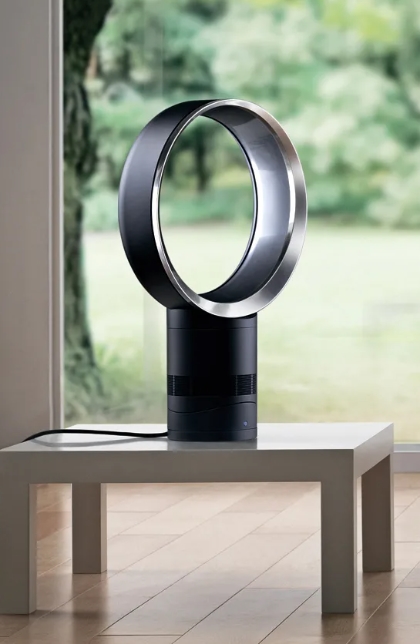
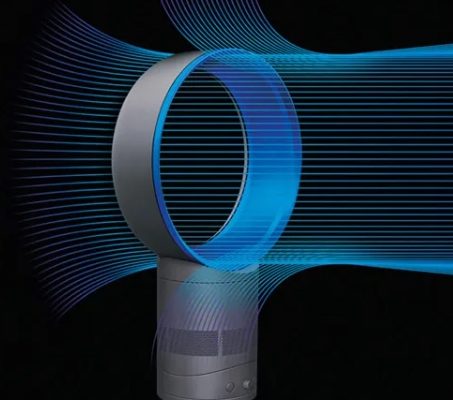
Saw a Dyson bladeless fan at the store, but don't know how it works? A bladeless fan operates on the principle of an air multiplier. A rotating turbine impeller captures airflow from the room and blows it out through a ring-shaped or oval nozzle.
You can assemble a modern fan yourself from cardboard cylinders of three diameters or pieces of PVC pipe and a computer cooler.
In this article, we'll take a detailed look at the device's manufacturing technology and who created it. We'll also review six of the best models. We'll explore the operating principle, applications, and pros and cons of bladeless air conditioning systems.
- Who is the creator of the modern fan?
- The difference between Dyson fans and bladed models
- Scope of application
- Main structural components
- The principle of air flow creation
- Pros and cons
- Classification by performance
- Which model to choose?
- User manual
- TOP 6 best models
- Dyson AM07
- Xiaomi Mijia Smart Leafless Purification Fan
- Galaxy Line GL 8112
- Libhof AFB-550
- Xiaomi Daewoo Bladeless Fan F9 MAX
- EcoHitek Flair 16
- Making a bladeless fan out of cardboard
- Operating and maintenance instructions
- Answers to frequently asked questions
- Video about the Dyson bladeless fan
Who is the creator of the modern fan?
The authorship belongs to an English developer To James Dyson, who dedicated 30 years of his career to improving household and industrial equipment.
To develop a bladeless fan, the creator based it on the operating principle of a hand dryer. Dyson engineers spent about four years developing and testing the ring-shaped air multiplier.
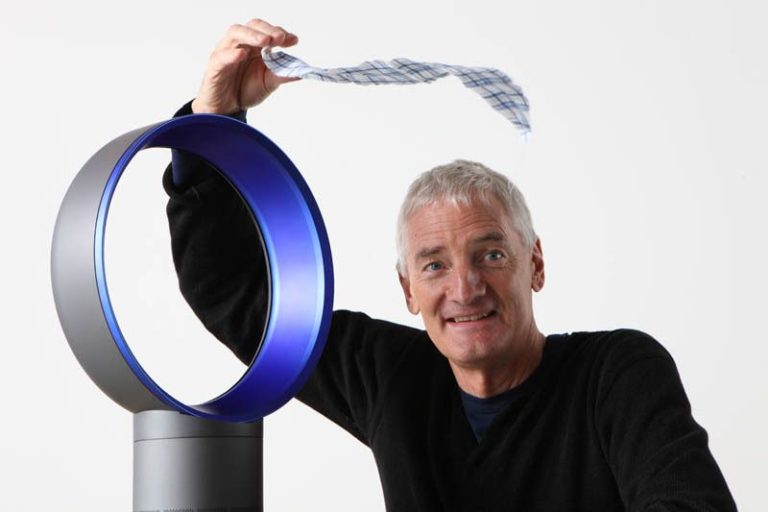
Since 2010, the first devices have been available in stores. Price 199 English feet The price seemed prohibitive, but buyers showed interest in the new product. Over time, store shelves around the world were filled with affordable knockoffs from Chinese and other manufacturers.
The difference between Dyson fans and bladed models
The modern type of fans differs in the design of the unit that supplies air to the room.
In traditional models, blowing is performed by a visible motor with a fan.
The rotating blades are usually covered with a decorative grille, but the thin rods do not provide 100% protection against accidental injury to a person.
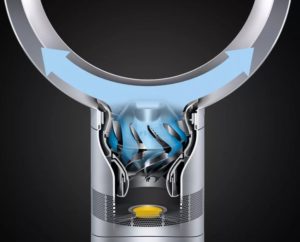
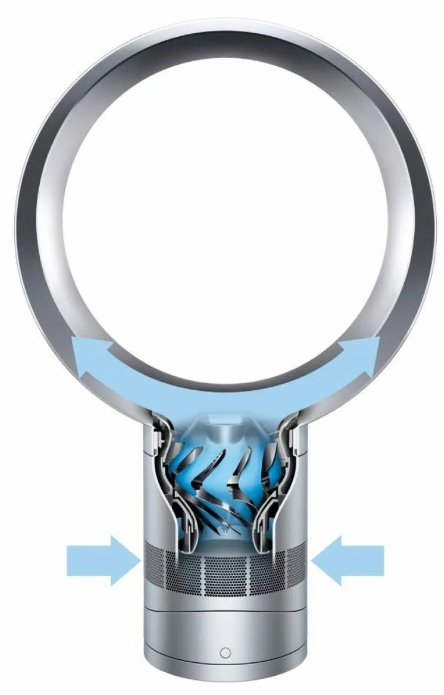
The Dyson fan's air supply unit is designed without an electric motor or blades. The electric turbine is mounted inside the lower base housing. Air is supplied from a ring multiplier opening, which has no moving mechanical parts.
Scope of application
Low-noise models are convenient for bedroom and children's roomThe backlight allows the device to be used as a nightlight. Additional heating, cooling, air purification, and ionization functions help create a cozy atmosphere in your living space. favorable microclimate.
Main structural components
Since its introduction, the innovative device has been enhanced with additional features. Three key design components remain unchanged:
- Basic bodyThe unit is located at the bottom of the device and contains an electric turbine for generating air flow. The control panel is located at the base, and a ring-shaped air multiplier is attached. The bottom is perforated to allow air flow to be drawn from the room by the turbine impeller.
- Air multiplierThe classic design of the multiplier is annular or oval. To attract customers, heart-shaped, apple-shaped, and other designs have also been introduced. The unit consists of a set of rings of varying diameters that form a channel for receiving air from the turbine and distributing it through a nozzle into the room.
- Control PanelThe unit is equipped with buttons, switches, or a touchscreen. The panel is located on the base unit and controls operating modes.
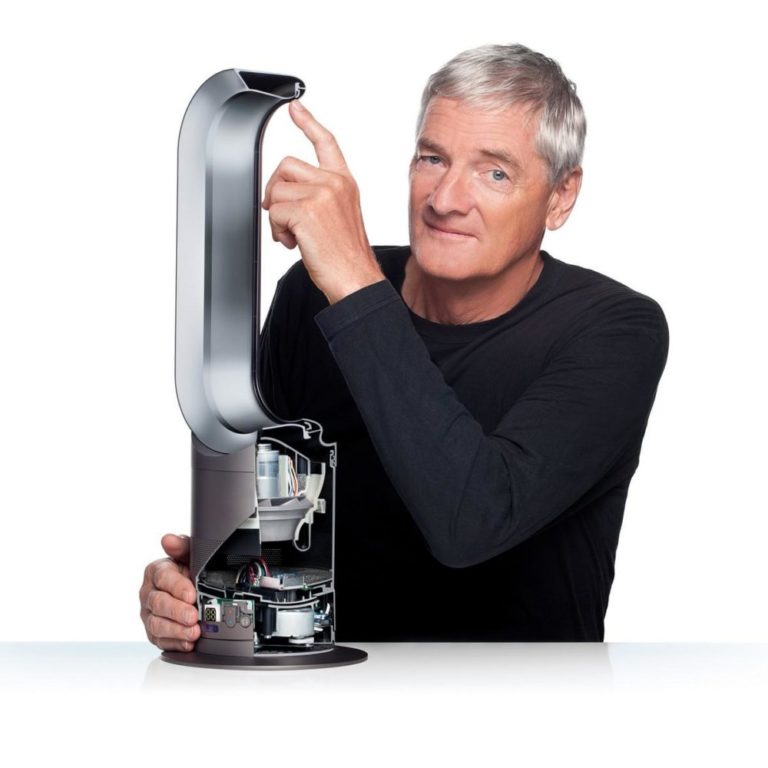
Depending on the model, the device without blades is equipped with a backlight, a rotary and tilt multiplier.
The principle of air flow creation
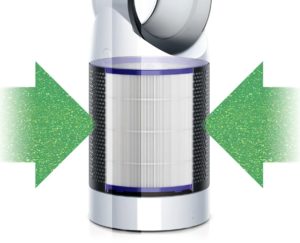
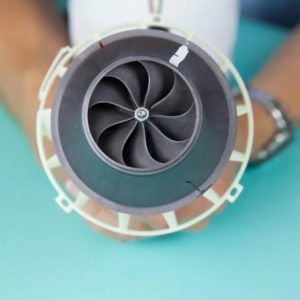
To understand where the airflow comes from, we need to understand how bladeless air conditioning systems work. Air is drawn from the room by a turbine impeller through intake openings on the bottom of the base unit.
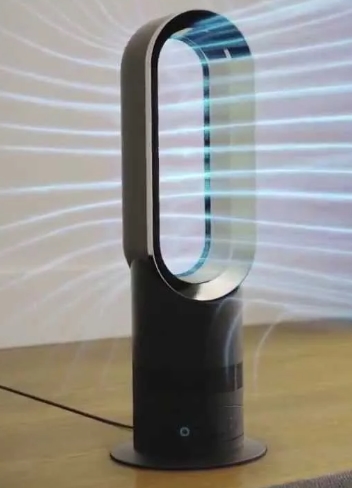
The air flows are directed into a hollow channel of the blower, formed by rings of varying diameters. The unit is designed like an airplane wing. The air flows moving within the channel increase in speed and are uniformly released into the room from the multiplier nozzle.

The basic operating principle of a bladeless fan is based on an air multiplier. The outlet annular opening is narrower than the inlet section of the hollow channel. A low-pressure region is created at the rear of the multiplier.
The volume of incoming air increases up to 20 times compared to the initial flow to the turbine impeller. People standing in front of a bladeless fan are blown more strongly than with a traditional bladed device.
Pros and cons
The advantage of innovative climate control technology is safe operationThe lack of easy access to rotating mechanisms eliminates the risk of injury. Other advantages users highlight include:
- Obtaining a powerful, uniform air flow.
- Energy savings, as the average power of household models is 25–40 W.
- Convenient control via remote control, smartphone, touch screen or buttons.
- Easy care and maintenance.
- Modern design.
Disadvantages include high cost, fragility of the multiplier, and increased noise. The last two disadvantages are typical of cheap Chinese equipment. High prices are typical of brand-name models.
Classification by performance
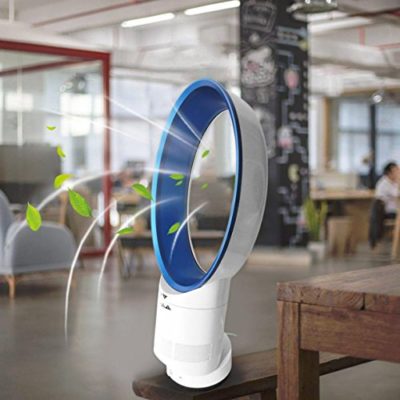
New generation air conditioning equipment is classified by installation type. Stationary models are wall-mounted. Portable units are designed for floor-standing or tabletop installation.
The user can place the combination unit on the floor, tabletop, or wall. The housing is equipped with mounting fasteners. The kit includes anchors and brackets.
Which model to choose?
Portable models are more convenient for home use. Place the device in a convenient location for localized air flow. Stationary fans are ideal for public spaces where floor or tabletop installations would impede the flow of large numbers of people.
Choose additional features as needed. The manufacturer increases the price for each feature. Night lighting is useful for the bedroom. Smartphone connectivity, a timer, and a remote control make mode control even easier.
Expensive equipment is equipped with functions cooling, heating, ionization and air purificationThese chips are useful for residential premises where a more comfortable microclimate is required.
User manual
TOP 6 best models
After its release, users praised the safe fan, demonstrating its superiority over its bladed counterpart.
The new product has started to fill store shelves in droves. Customers have left numerous reviews of the models on sale, which served as the basis for compiling rating of the best fans.
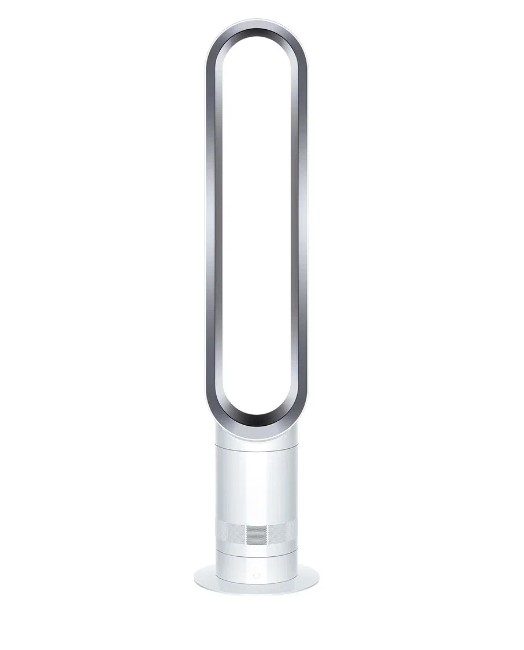
Dyson AM07
This powerful, bladeless floor fan with 10 speeds operates using the manufacturer's proprietary Air Multiplier technology. It is manufactured in Singapore. With a power output of 56 watts, the fan produces a noise level of 64 dB.
The airflow speed is controlled by a button on the housing or the remote control. The user can use the timer to set the fan speed over a 9-hour period, with 15-minute increments.
Pros and cons:
- Stylish case design.
- High-quality assembly and components.
- Creating a powerful cooling flow in a small housing size.
- Short power cord – 1.8 m.
- Overpriced.
The model is rarely available for sale. When the new model appeared on store shelves, the asking price for the device was 47,000 rubles.
Xiaomi Mijia Smart Leafless Purification Fan
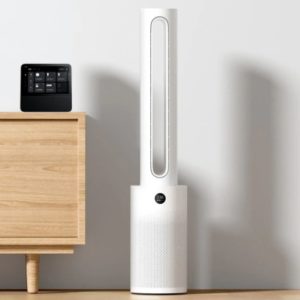
The floor-standing model is equipped with a HEPA filter for fine dust filtration. The turbine operates at 5 speeds, allowing the user to set a comfortable airflow level.
A useful feature is the filter contamination indicator and smartphone control. The air flow direction is adjustable from 30 to 150 degrees.OWith a power of 28 W, the blowing speed is 15.5 m/s.
Advantages and disadvantages:
- A reliable fan for home and garden with intensive cooling.
- Availability of air flow direction adjustment.
- Air purification from dust and formaldehyde.
- Frequent replacement of filters is necessary for high-quality air purification.
- High price.
- The device rarely appears on sale.
Average cost of the model 29,000 rubles.
Galaxy Line GL 8112
This floor fan does a good job of cooling and ionizing the air, making it popular among owners of country houses and city apartments.
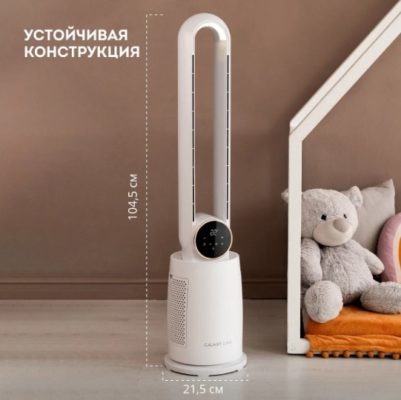
The device with 3 speeds and a power of 70 W is designed to blow air into a room of 15 m2It has a backlight function, air purification, and automatic rotation of 70 degrees.OThe noise level at 3 operating speeds reaches 50 dB.
Advantages and disadvantages:
- The backlight is convenient to use instead of a night light.
- Lightweight body despite the height of 1 m.
- Convenient control with remote control and touch display.
- At speed 3, rattling of body parts appears.
- The price is unreasonably high.
The model is often available for sale on Yandex Market. Average price 14459 rubles.
Libhof AFB-550
The brand is registered in Slovakia, but production is established in China. The bladeless unit has three operating speeds, capable of cooling a room of 35 m2.2.
Control is provided by remote control, buttons on the housing, or via smartphone via Wi-Fi. With a power output of 50 W, the turbine produces 45 dB of noise.
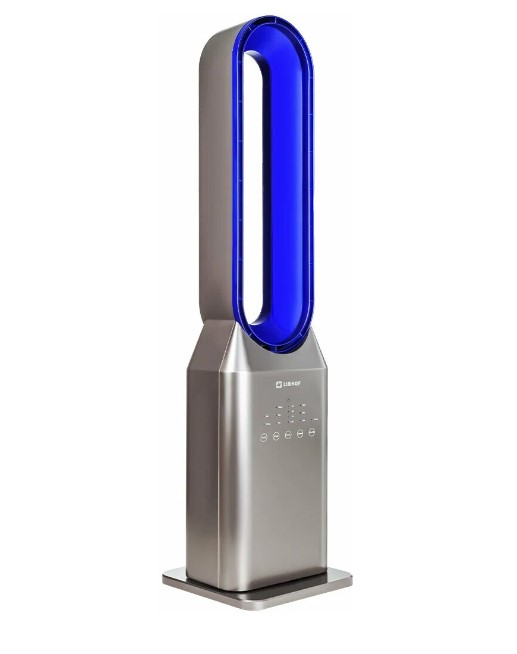
Pros and cons:
- At a height of 1 m, the body is stable on the floor.
- The budget price matches the quality.
- There is a rotation adjustment.
- Cheap plastic has a toxic smell, which is especially noticeable when the device is first turned on.
- Short power cord.
A compact fan without blades is available on Yandex Market. 6999 rubles.
Xiaomi Daewoo Bladeless Fan F9 MAX
A silent floor fan is convenient for use in bedrooms and children's rooms. Tilt and swivel adjustments allow you to set the desired airflow direction. with five-stage filtration purifies the air from dust, allergens, odors, bacteria.
Adsorption technology extends the filter's lifespan by 5 years before it needs to be replaced. 30W of power is sufficient to cool a room of 30 m2.2At maximum speed 9 the noise level is 38 dB.
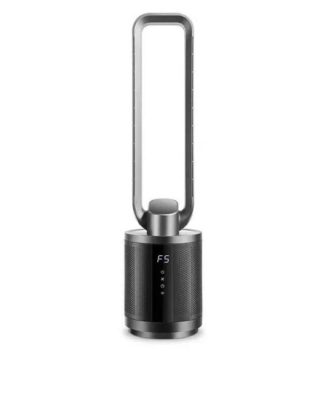
Advantages and disadvantages:
- Availability of display, timer.
- Wide range of operating modes.
- Doesn't interfere with sleep at night.
- Lack of Russian language instructions.
- You need to buy an adapter for a power cord with a Euro plug.
On Yandex Market the device costs 43% off 11,490 rubles.
EcoHitek Flair 16
This inexpensive Chinese mini fan without blades is designed for floor and tabletop installation. While it's not very effective at cooling large spaces, it's suitable for localized cooling of an object or a small room.
The collapsible housing is convenient for winter storage in a closet or transport to the dacha. Noise levels do not exceed 40 dB with a power output of 40 watts.
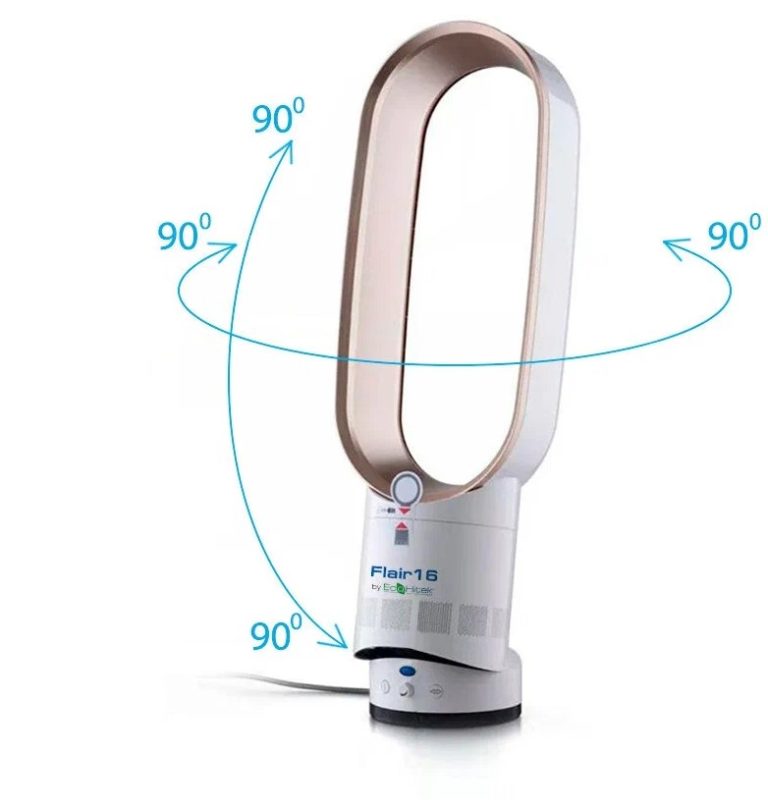
Advantages and disadvantages:
- Availability of rotation and tilt adjustment.
- Convenient electronic control.
- Modern design.
- The noise level is higher than stated by the manufacturer.
- The body is made of cheap plastic.
On Yandex Market the model costs 60% off 7990 rubles.
Making a bladeless fan out of cardboard
The parts for a powerful, beautiful bladeless fan are cut out on a 3D printer. Not every DIY enthusiast has access to such expensive equipment. Additionally, you need to be able to design and draw the parts in a computer program for printing.
We'll be building a silent fan without blades from cardboard and a computer cooler. You'll also need Secunda glue, a switch, and a power adapter. Tools include scissors and a utility knife.

Let's start assembling the bladeless fan:
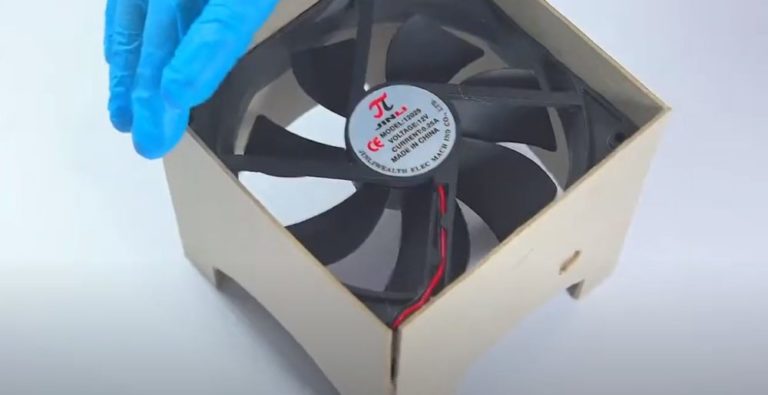
- For the walls of the base, cut four identical squares out of cardboard. Match the side sizes to the dimensions of the cooler.
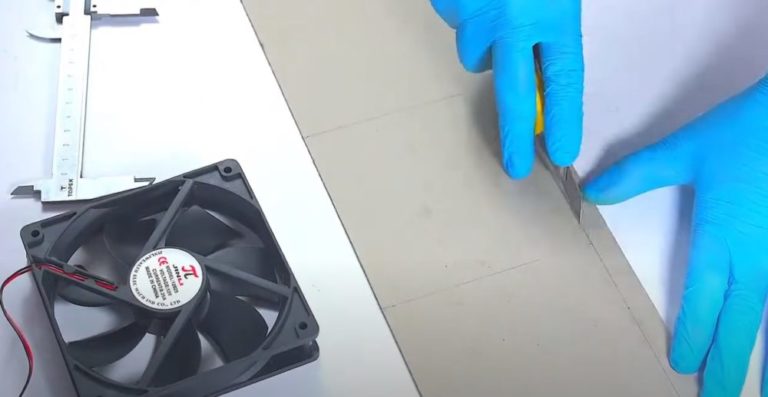
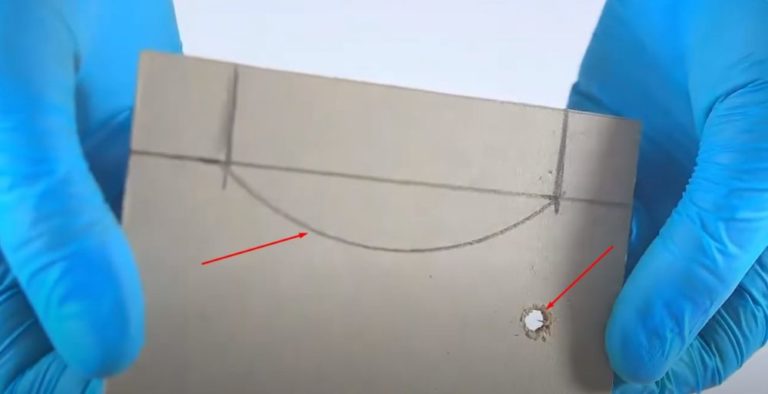
- Draw semicircles on one side of each square. Cut out the pieces along the markings once the airflow cylinders are ready. Cut small holes in the two square pieces to mount the switch and power adapter.
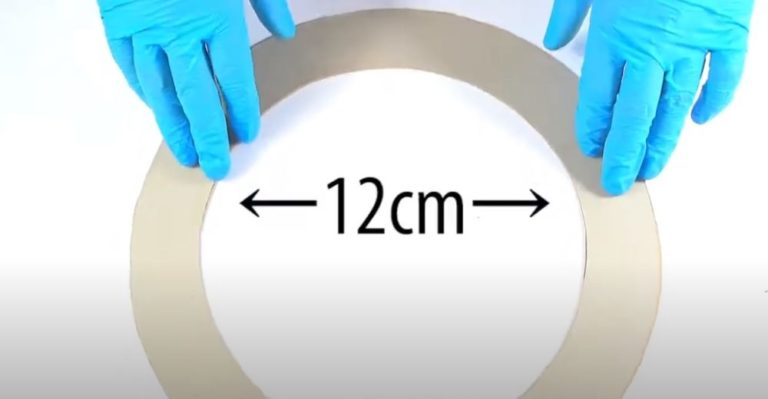
- Using a compass, draw two circles with a diameter of 15 cm on sheets of cardboard. Cut out two rings from the blanks. Draw a smaller circle with a diameter of 11 cm inside the first piece. Draw a circle with a diameter of 12 cm inside the second piece. Cut out the rings along the markings.
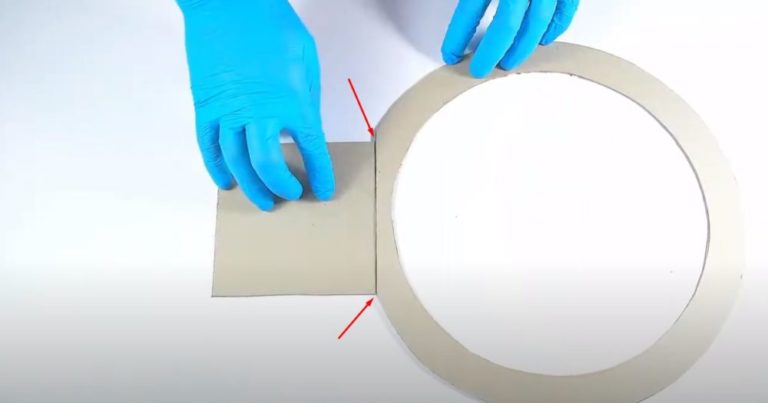
- To ensure the rings fit snugly against the ends of the base, make a straight cut on the outer side. The cut should be the same size as the width of the square side.
- Prepare 3 cardboard strips measuring: 12x74, 12x82, 15x86 cm.

- On the square blanks, cut out semicircles along the markings on one side. The remaining protrusions will serve as legs.

- To assemble the base, glue the square pieces to the side of the cooler. Make sure the fan is blowing upwards, not towards the case feet.
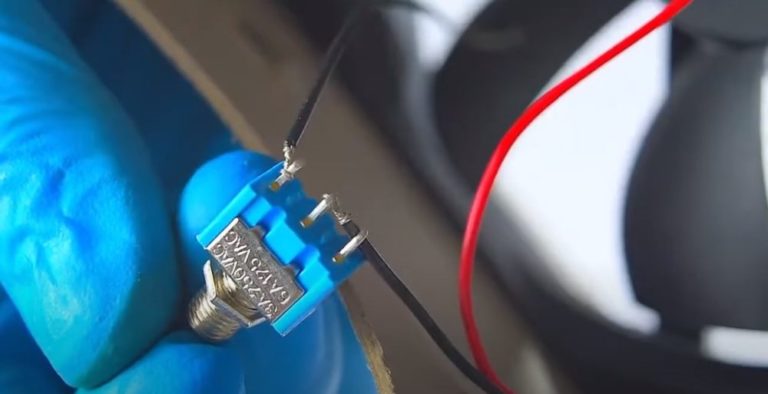
- Connect the wires from the cooler in series to the switch and the power connector on the adapter. Check the operation of the electrical circuit.
- To assemble the fan, take a ring with an inner diameter of 11 cm and a 12x74 cm strip. Glue the cylinder for the front of the fan together. Glue the strip along the end of the inner edge of the ring. Make a similar piece for the back of the fan using a ring with an inner diameter of 12 cm and a 12x82 cm strip.

- Glue the cylindrical fan piece with a 12 cm inner ring diameter to the end of the square base using a straight cut. Do the same with the second piece on the opposite side. The smaller cylinder will fit inside the larger diameter piece. A 1 cm gap will remain between the walls.

- To prevent the cylindrical parts from sliding apart, connect the ends of the rings with reinforcing bars. Cut five bars out of cardboard.
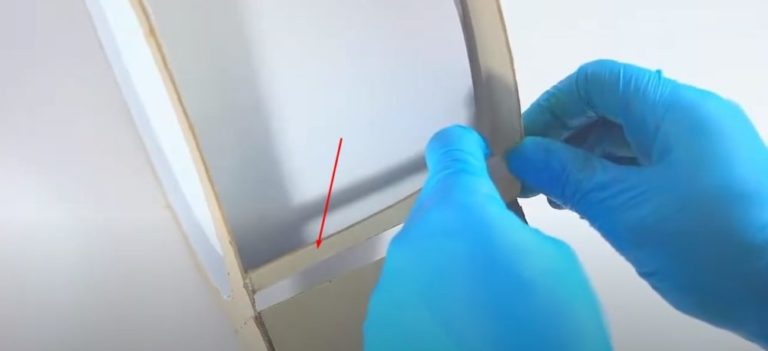
- Cover the top of the blower with a 15 x 86 cm strip. Glue cardboard to the ends of the rings and to the reinforcement partitions.

Decorate your homemade bladeless table fan by painting the body with water-based paint. Plug in the power, and enjoy.

The homemade fan isn't entirely bladeless, as the working element is a classic computer cooler. However, the impeller is hidden inside the housing, preventing possible contact with human hands and other objects. The air delivery principle, as conceived by designer James Dyson, is preserved.
The cardboard body of the device without blades is durable, but can become deformed due to changes in humidity and exposure to sunlight. The model will be more durable if you cut out ready-made cylinders for the blower from PVC pipes Three different diameters. Cut the rings out of plexiglass with a jigsaw.
Attach a piece of LED strip to the walls between the inner and outer cylinders and connect it to the power supply. This will create a plastic fan with decorative lighting.

Operating and maintenance instructions
Use a homemade or store-bought Dyson fan like a traditional bladed device. The only operating requirement is to avoid using the fan blades to move the device.
If the cylinders become deformed, the air flow will decrease. Move the unit by holding onto the base lower housing.

Maintenance involves cleaning the blower hole with a soft brush or plastic swab. The nozzle rarely becomes clogged. Debris is blown out by the air flow, but sometimes hair or cobwebs can get caught inside the device when it's not working.
Do not use abrasive or caustic cleaners to clean the housing. Light dirt on the plastic can be easily removed with a damp cloth. Avoid getting water inside the housing containing electrical components.
Answers to frequently asked questions
The device is called a Dyson fan with an air multiplier or an air multiplier.
The Dyson device blows air out of a ring or oval hole where there are no blades.
A Dyson fan uses a turbine driven by a brushless electric motor to draw air from the room. Air enters the housing through intake openings. Air exits the fan through a ring-shaped or oval nozzle.
The advantage of a bladeless blower is its safe use and the production of a uniform, powerful air flow.
Video about the Dyson bladeless fan