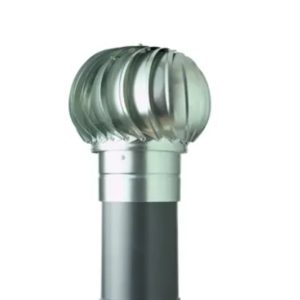
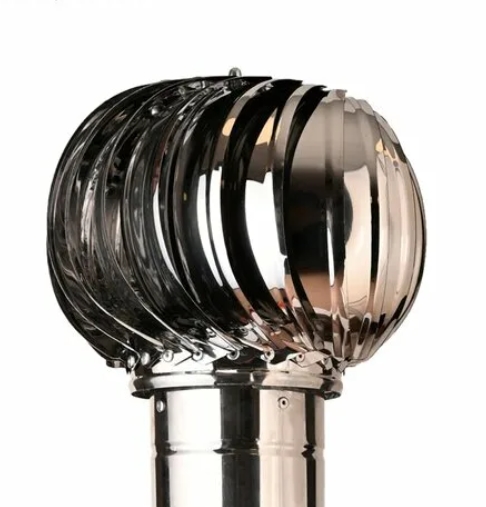
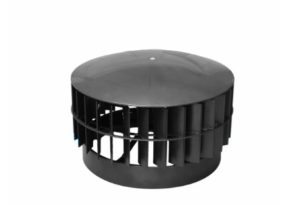
If you want to know how a turbo deflector for ventilation works, I will answer briefly - The rotating rotor creates a vacuum in the pipe, increasing the draftThe installation process involves placing the head on the end of the air duct leading from the building to the street.
Read this article to learn more about the components of a turbo deflector for ventilation, its application, operating principle, and installation. You'll also find a ranking of the best models and answers to frequently asked questions.
- Application area of the rotary nozzle
- The operating principle of a turbine
- Design, drawings, varieties
- Top 10 Best Turbo Deflectors
- 5 Best Metal Turbines
- ERA 130 stainless steel turbine
- Turbine ERA Street line TD-110 260 x 260
- Turbine TD-315 brown
- TD100 turbine
- Turbine TD160 red wine
- 5 Best Plastic Turbines
- Rotary hood PBT-160
- Nano deflector ND-160 with 100/125 adapter
- Nano deflector ND-160, silver
- Nanodeflector RVT D355
- Insulated outlet 150/125 mm for soft and folded roofing
- Recommendations for choosing a turbine
- Self-installation of a turbo deflector
- Operation and maintenance
- Answers to frequently asked questions
- Video materials
Application area of the rotary nozzle
Turbine cap serves to strengthen and stabilize the draft in the exhaust duct of the natural ventilation of the buildingThe nozzle is installed at the end of the pipe leading from the building to the street.
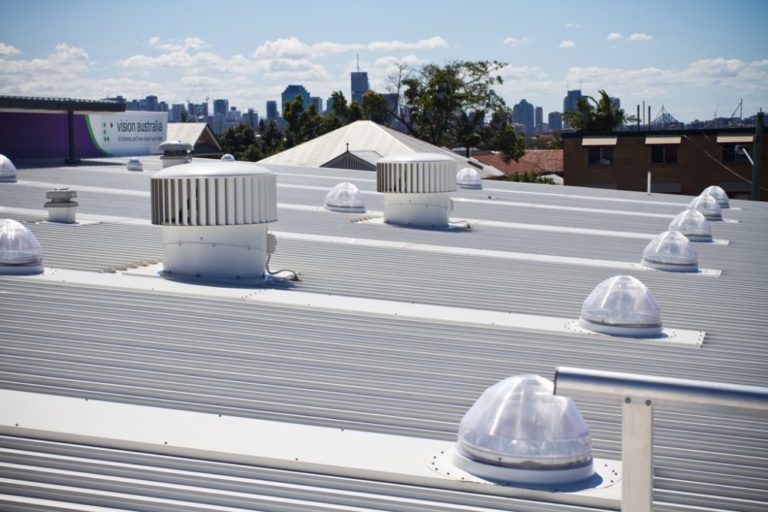
Do not install a turbo deflector on the chimney. Hoods and exhaust devices are prohibited on gas boiler pipes that exhaust combustion products.
When using a solid fuel stove, the turbo deflector becomes a problem. The rotor will become clogged with soot, and draft will be lost.
However, for fireplace and stove chimneys, rotary turbines are produced from steel that can withstand the temperature of the exhaust gases. +250OWITHTurbomax is considered a popular manufacturer.
The operating principle of a turbine
The turbo deflector's rotor begins to rotate when exposed to air currents exceeding 0.5 m/s. This creates a vacuum in the ventilation duct, improving draft and increasing the rate of exhaust air removal from the room or attic space.
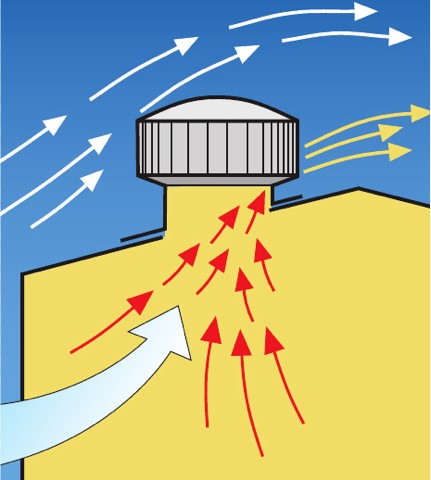
As the rotation speed increases, the EfficiencyThe rotor rotates in one direction, regardless of the wind direction. Turbine operation prevents the formation of backdraft.
Design, drawings, varieties
To fully understand how a turbo deflector works, let's look at its design and drawings. The nozzle consists of two components:
- The rotor is made of a base equipped with blades 0.45-1 mm thick. The number of parts varies by model. The average number of blades is 20. The rotor axle is equipped with a movable bearing assembly attached to the fixed part of the attachment.
- The fixed assembly is a ring-shaped base for mounting on a ventilation pipe. The component has an average wall thickness of 0.7-0.9 mm. To connect the larger-diameter base to a smaller ventilation pipe, the manufacturer includes an adapter—a rubber cuff.
The fixed base diameter ranges from 100 to 800 mm and is selected to match the cross-section of the exhaust pipe. The rotor height is at least 1.7 times the base diameter.
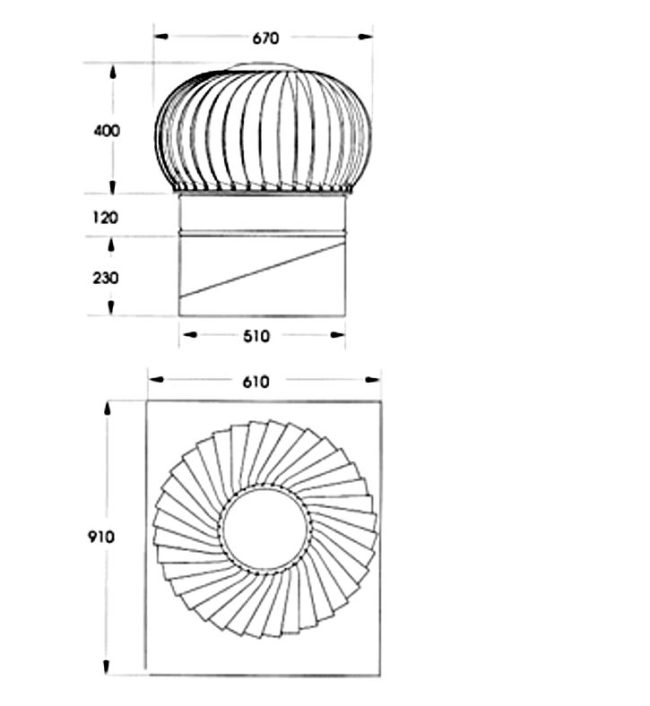
Turbo deflectors are sold as a separate version and as a ready-made solution with a roof pass-through element for installation on a roof slope at an angle 15-30O.
Turbo deflectors vary in the material they are made from. Aluminum, galvanized steel, and stainless steel are used for metal nozzles. The decorative layer is applied using enamel paint. Stabilized ABS plastic and composite materials are used for plastic turbines.
Top 10 Best Turbo Deflectors
Manufacturers produce turbo deflectors for exhaust ventilation Made of plastic and metal, which determines the product variety. To make model selection easier, we'll divide the rating into two groups.

Let's do it first Review of the 5 best metal turbines, considered the most durable and reliable in operation. In the second group Let's look at the 5 best plastic rotary attachments that beat the competition at an affordable price.
5 Best Metal Turbines
Compared to static ventilation hoods, turbo deflectors have a rotating head. To prolong the life of the operating mechanisms, metal is considered the best material for the moving parts.
Additionally, the robust housing is resistant to temperature and mechanical influences, which reduces the risk of deformation of parts.
ERA 130 stainless steel turbine
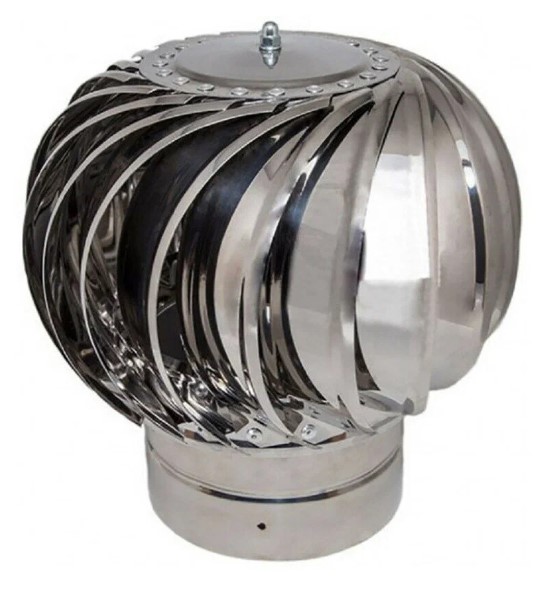
The cap is designed for installation on a ventilation pipe with a diameter 130 mmThe material used is glossy stainless steel. The active ball is driven by wind currents. The rotating head enhances the ventilation hood's draft.
Pros and cons:
- There is no need to connect electricity to rotate the head.
- Gusts of wind, regardless of direction, act as the driving force. The ball always rotates in one direction, increasing the thrust.
- The nozzle is designed for a 130 mm diameter pipe. This duct cross-section is suitable for ventilation of private homes.
- When windless weather sets in, the turbine stops rotating.
- You'll have to pay a pretty penny for stainless steel.
The cost of a turbine on Yandex Market 4000 rubles, where the discount is included 29%.
Turbine ERA Street line TD-110 260 x 260
The nozzle is made of galvanized rolled metal and is designed for 15 years of use. It features a solid silver design. The cap is designed for installation on a 110 mm diameter exhaust pipe. A rotating ball increases the suction force by up to 20%.
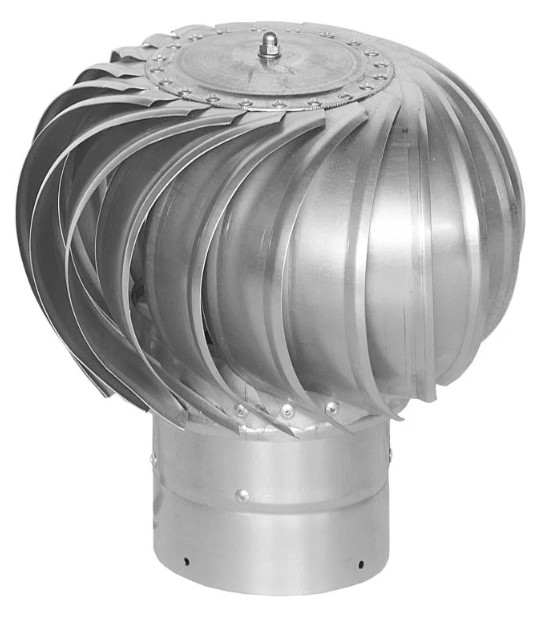
Advantages and disadvantages:
- An inexpensive, reliable turbine for an exhaust hood that works without electricity.
- If there is no damage, the nozzle continues to function after the guaranteed 15 years of operation.
- The manufacturer equipped the rotating mechanism with reliable bearings.
- Galvanized coatings are prone to deterioration when exposed to airborne chemicals. Areas of exposed metal begin to rust.
- During calm weather the turbine does not work.
There is a rotary cap on Yandex Market 1965 rubles.
Turbine TD-315 brown
The rotating cap is made of galvanized steel. An additional protective and decorative layer of brown enamel is applied, creating a glossy finish.
The nozzle is designed for installation on a round ventilation pipe with a diameter of 115 mm. The polymer decorative enamel is resistant to fading and peeling.
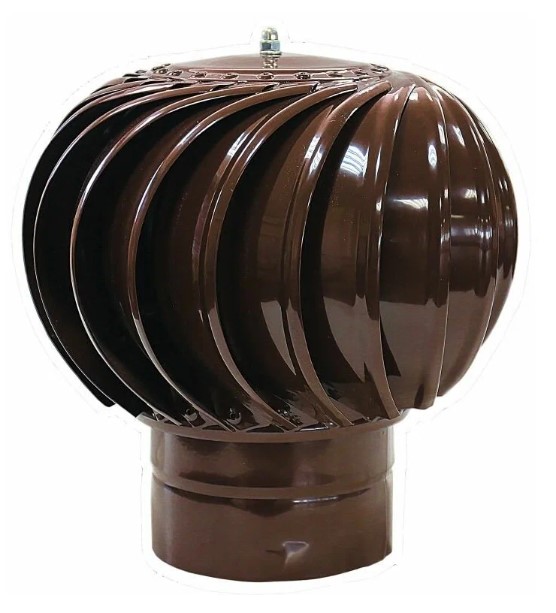
Advantages and disadvantages:
- The presence of 2 protective layers of zinc and enamel increases the service life of the turbo deflector.
- The rotary ball increases the traction force by 2 times.
- The simplicity of the design and light weight of 4 kg allows you to install the turbine yourself.
- Limited use due to decorative coating. For aesthetic reasons, it's common to install brown turbo deflectors on a roof of a similar color.
- Overpriced.
The price of the model on Yandex Market 2878 rubles.
TD100 turbine
The rotating hood quadruples draft. It is used for ventilation of private and multi-family homes, as well as industrial buildings. It is installed on a round exhaust pipe with a diameter of 100 mm.
The nozzle components are made of rolled metal with a glossy galvanized finish. The manufacturer specifies a minimum service life of 15 years and provides a one-year warranty.
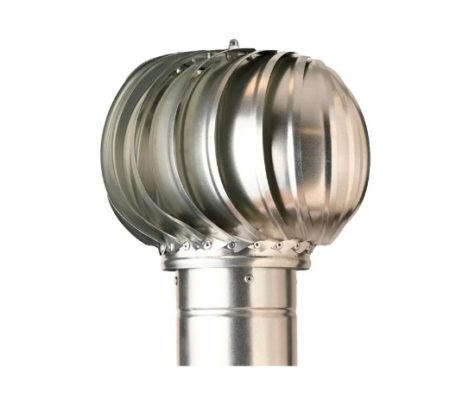
Pros and cons:
- The rotary cap prevents the draft from tipping over and wind from blowing into the ventilation duct.
- After the manufacturer's recommended 15 years of operation, an undamaged turbo deflector can be used again.
- The silver color of the body matches all types of multi-colored building roofs.
- After rain containing chemical impurities falls, the galvanized layer deteriorates. Rust appears on the exposed metal.
- The small diameter limits the use of the nozzle in powerful ventilation of large buildings.
On Yandex Market, the price of the model with a 13% discount is set by the seller 2,562 rubles.
Turbine TD160 red wine
The hood with an active head is designed for installation on a 160 mm diameter ventilation exhaust pipe. The housing is made of galvanized steel and features a decorative layer of red wine-colored polymer enamel. The manufacturer recommends a service life of 15 years.
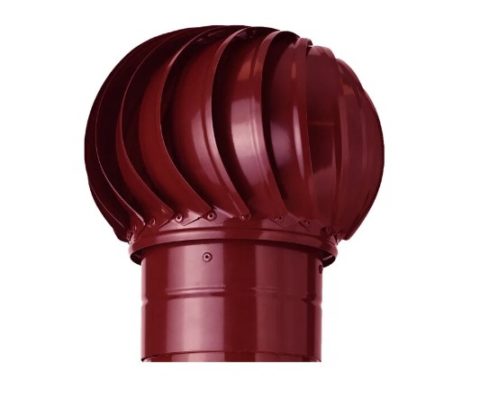
Advantages and disadvantages:
- The rotating ball increases the thrust up to 4 times and does not require an electrical connection.
- The presence of two protective layers of zinc and enamel increases the metal's protection against corrosion.
- Simple installation can be done independently without hiring specialists.
- The presence of a decorative red layer limits its use. The model matches the roofs of similarly colored buildings.
- The price is too high. For that price, they sell stainless steel turbines that match roofs of all colors.
The price of this model is discounted by 13% on Yandex Market. 3,387 rubles.
5 Best Plastic Turbines
Plastic caps are corrosion-resistant and operate reliably in conditions of constant high humidity. They are inferior to metal turbo deflectors in terms of strength, service life, and high-temperature resistance.
The recommended area of use is exhaust ventilation. Plastic caps are not installed on ducts that exhaust high-temperature gas-air mixtures.
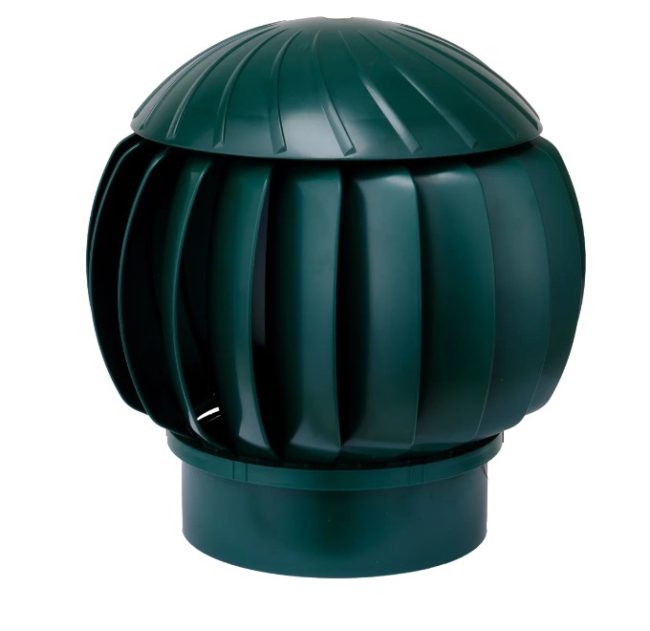
Rotary hood PBT-160
This turbo deflector is designed for installation in the exhaust ventilation of residential, public, and utility spaces, including saunas, poultry houses, and cowsheds. It is made of UV-stabilized green ABS plastic.
The hood is designed for a 160 mm diameter pipe. Adapters for installation on exhaust ducts with a diameter of 100-200 mm are acceptable. The manufacturer has established a recommended service life of 10 years.
Pros and cons:
- Silent rotation of a plastic ball.
- Extended area of use in ventilation systems where there are no high temperatures.
- The ball is perfectly balanced and does not create vibrations along the hood riser.
- The color of the rotary deflector is compatible with the green roof, which limits the area of use.
- The price is higher than the stainless steel analogue.
The price of the model on Yandex Market 4290 rubles, taking into account the 17% discount.
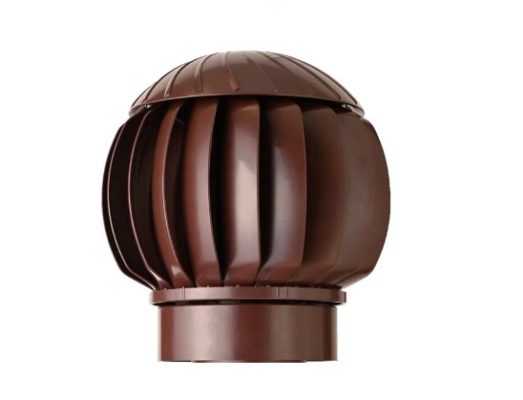
Nano deflector ND-160 with 100/125 adapter
The brown cap is designed for installation on a ventilation exhaust pipe with a diameter of 100-200 mm. It is made of stabilized ABS plastic and comes with a rubber mounting cuff.
With the use of an adapter, it can be installed on a 100/125 mm pipe. It maintains its performance properties in both cold and hot conditions. The recommended service life is 10 years.
Advantages and disadvantages:
- Complete with mounting adapter.
- Perfect ball balancing.
- Equipped with a level for ease of installation.
- The brown cap is combined with a roof of the corresponding color, which limits its use.
- High cost.
Model price on Yandex Market 4990 rubles with a 13% discount.
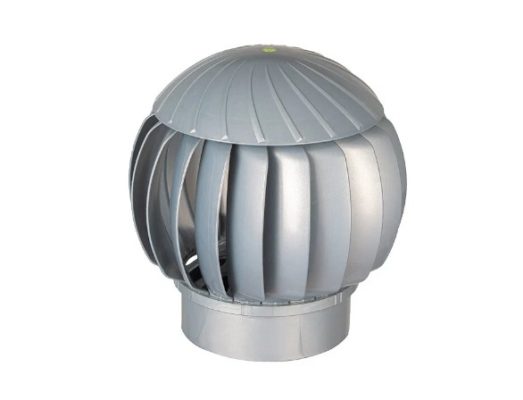
Nano deflector ND-160, silver
The rotating hood is made of UV-stabilized ABS plastic in a silver color. It is designed for mounting on a 160 mm diameter exhaust ventilation pipe.
Installation on 100-200 mm ducts is permitted using an adapter, which must be purchased separately. The recommended service life is 10 years.
Advantages and disadvantages:
- The silver plastic turbo deflector is compatible with all types of roofs, which expands the range of application.
- A perfectly balanced ball does not create vibrations or noise during rotation.
- The manufacturer has provided a level for ease of installation.
- An adapter is not included.
- High cost.
Model price on Yandex Market 4,590 rubles with a 13% discount.
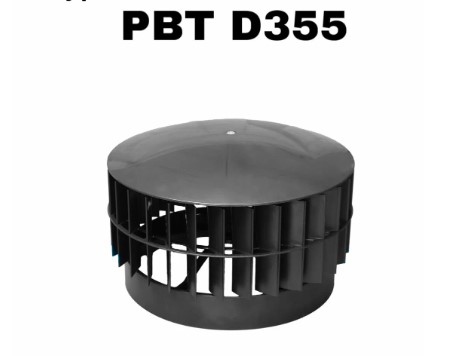
Nanodeflector RVT D355
This unique turbo deflector is made of composite material. The glass-filled polyamide is resistant to UV rays and aggressive environments. The manufacturer guarantees a 20-year service life. The upper cap is a fixed component.
The rotating element of the turbine is equipped with a reliable unit where the following are installed: Japanese (NSK) or Swedish (SKF) Bearings. Seat size: 355 mm.
Pros and cons:
- Silent operation, high performance, level indicator on the body.
- Modern design in black. This model matches all roof types.
- Long service life.
- Due to the large diameter of the seat, the model is not suitable for a small private house.
- High cost.
The price of the model on Yandex Market 7900 rubles no discounts.
Insulated outlet 150/125 mm for soft and folded roofing
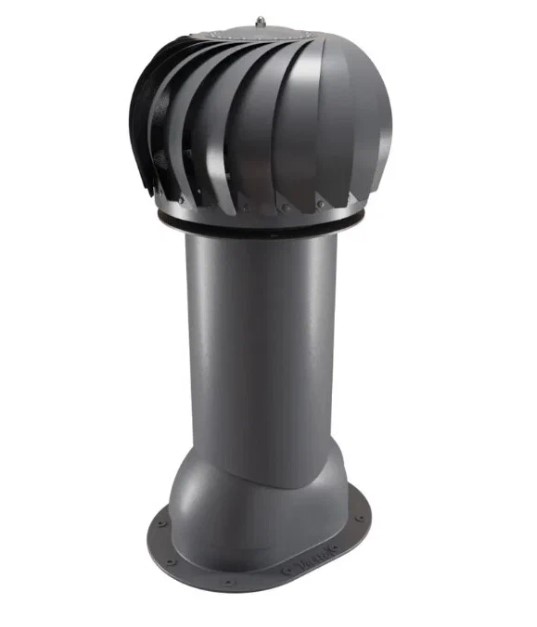
The Viotto Turbo Deflector is a ready-made ventilation solution for both soft and standing seam roofing. The pipe requires no additional insulation, as it is already provided by the manufacturer.
Natural air exchange in ventilation systems increases by up to 30% with the installation of a Viotto deflector. Installation is provided on a 125/150 mm pipe. The recommended operating temperature range is from -45 to +80°C.OWITH.
Advantages and disadvantages:
- Complete set with fasteners and a pass-through element for quick installation.
- The presence of insulation prevents the formation of condensation in the pipe.
- Gray color matches with all roof colors.
- Suitable only for soft and standing seam roofing.
- High cost.
The price on Yandex Market with a 9% discount is set by the seller. 8,600 rubles.
Recommendations for choosing a turbine
The design and operation of turbo deflectors from any manufacturer are identical, but the distinguishing characteristic is their performance. This depends on the diameter of the nozzle base. When choosing a turbine for ventilation, consider the following recommendations:
- A turbine with a nozzle base cross-section of 110-160 mm is suitable for ventilation of a living room, basement, garage, or other small utility room.
- For ventilation of rooms up to 40 m22, where 4 people are constantly present, a turbo deflector with a diameter of 200 mm is required.
- In warehouses, farms, and apartment buildings, a rotary hood with a base cross-section of 400-680 mm is required for the general ventilation riser.
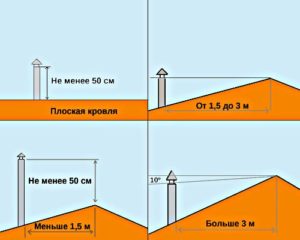
If you plan to install a large turbo deflector through an adapter on a smaller-diameter pipe, performance will be reduced. The walls of the adapter will obscure part of the flow opening.
There's no point in overpaying for a larger nozzle. Choose a model that matches the diameter of your ventilation pipe.
A low-mounted turbo deflector hidden behind the roof slope will not be exposed to airflow, reducing the effectiveness of the exhaust ventilation. Choose a turbine deflector based on color and material, based on personal preference and operating conditions.
Self-installation of a turbo deflector
Installing a turbo deflector takes 20-40 minutes, assuming the exhaust pipe is already installed. No tools or materials are required. The bulk of your time and effort will be spent on accessing the top of the exhaust pipe.
Step-by-step instructions:
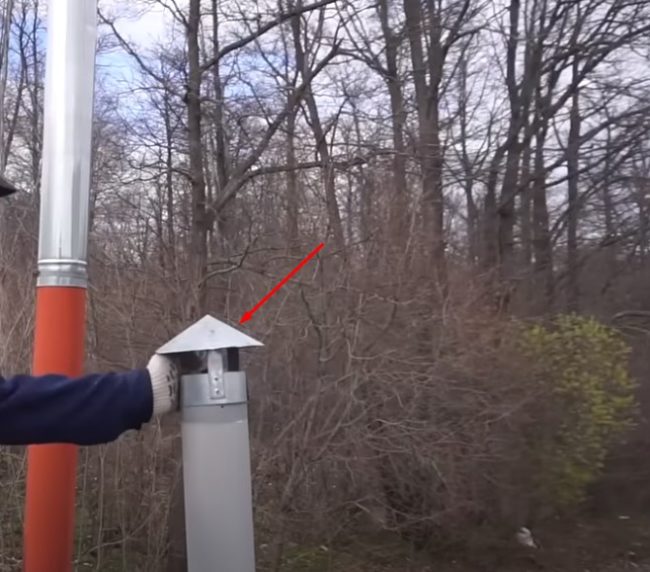
- Unpack the turbo deflector from its original packaging. Check that the components are included and that the turbine rotates freely. If the exhaust pipe has a mushroom-shaped or other cap, remove it to make room for the rotating nozzle.
- For ease of installation, the manufacturer may include a rubber cuff with the turbo deflector. Attach the adapter to the top of the exhaust pipe.
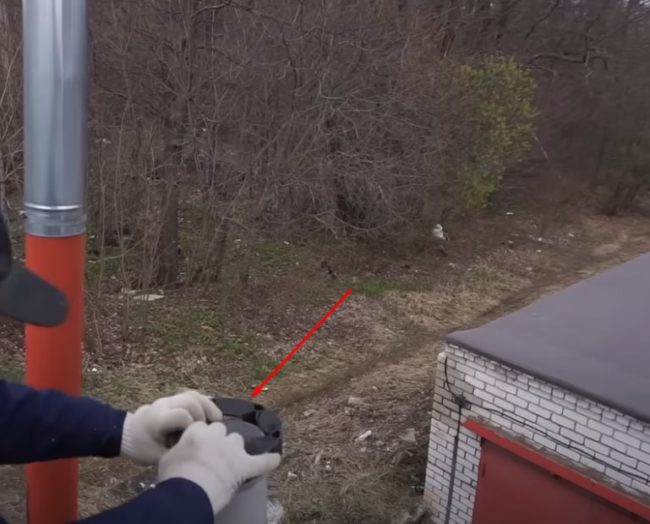
- Place the turbo deflector onto the pipe with the rubber seal. Align the cap with a level. No further action is required. The turbine will begin to rotate due to the air flow.
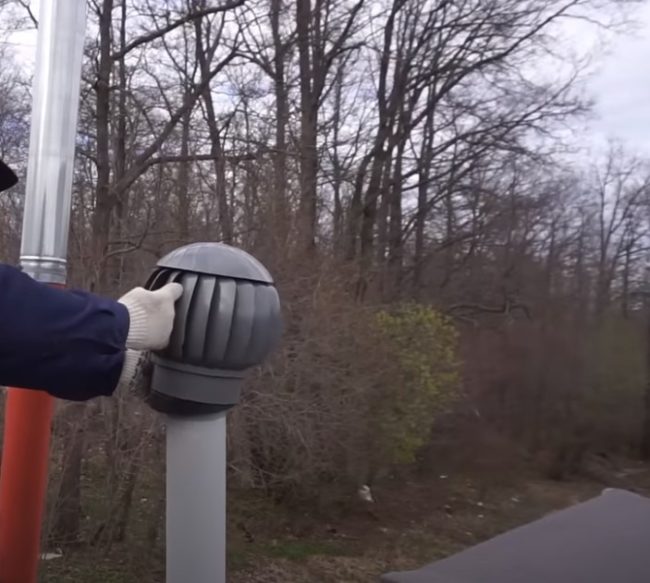
The installation principle for turbo deflectors from different manufacturers is the same. Some models have different mounting methods. The base of the nozzle can be clamped to the exhaust pipe or secured with screws.
Operation and maintenance
The rotary hood has a rotating assembly that requires periodic maintenance. Lubricate the bearings at least once a season to ensure the impeller rotates easily in the wind. Moisture or wear can cause the rotating assembly to rust or seize. Replace worn bearings with new ones.
In winter, the blades of the rotating ball can freeze. The exhaust ventilation stops functioning. To restore operation, take steps to defrost the turbine or wait for a thaw.
A bird or a nearby tree branch could become caught in the rotating ball. A problem will be indicated by unusual noises and decreased ventilation. Remove any foreign object from the ball's blades. Inspect the mechanism for damage.
Answers to frequently asked questions
Ventilation caps improve draft and protect the channel from precipitation, birds, and large debris.
Galvanized caps cost 2,000-3,500 rubles. The average price for a stainless steel product is 4,000 rubles. Plastic turbo deflectors cost 3,000-9,000 rubles. The price depends on the configuration, size, material, and manufacturer's reputation.
For safety reasons, installing hoods and exhaust devices on the flue of a gas boiler is prohibited. Fitting a turbine to a solid fuel heating system is problematic. The rotor will become clogged with soot, blocking the draft in the duct.
The cap is placed on the end of the ventilation exhaust pipe that leads outside the building.
Video materials