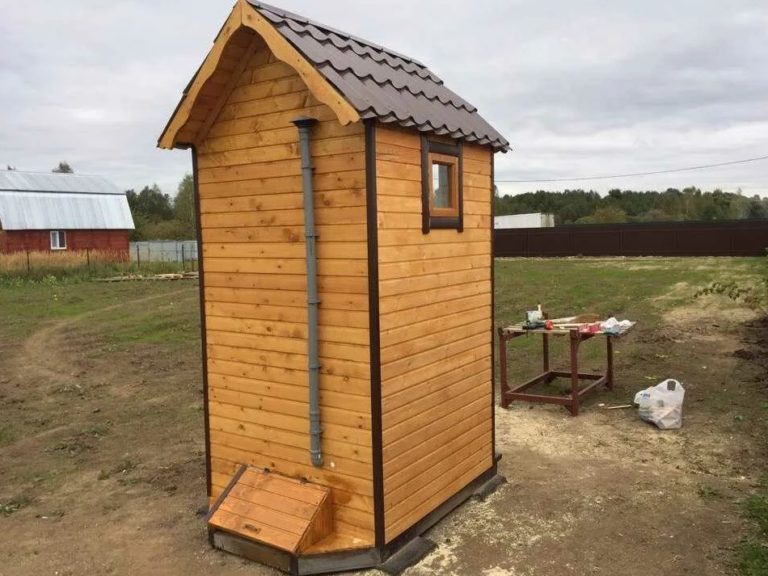
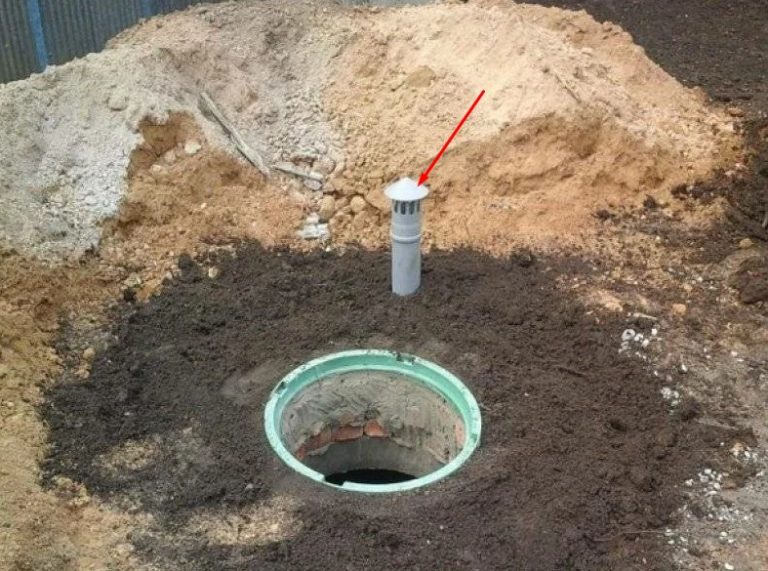
If you're installing a toilet in your dacha but don't know how to ventilate it, create an inlet through a gap under the door and an open window. Extend the exhaust pipe from the cesspool 1 meter above the stall's roof.
In this article, we'll take a closer look at the existing types of country toilets and their ventilation systems. We'll also discuss methods for ensuring proper operation of the utility system and other ways to eliminate unpleasant odors.
To ensure effective ventilation in your country toilet, follow the step-by-step instructions below for installation.
- Types of country toilets and ventilation systems for them
- Installing a hood in a country toilet with a cesspool
- Instructions for installing natural ventilation for a cubicle and cesspool
- Instructions for installing forced ventilation for a cubicle and cesspool
- Recommendations for maintaining ventilation
- Methods to ensure proper ventilation operation
- Methods for combating odors to help improve ventilation
- Chemicals
- BIO preparations
- BIO fillers
- Answers to frequently asked questions
- Video materials
Types of country toilets and ventilation systems for them
At the dacha, two types of toilets are installed: outdoor and indoor. First option common for areas where owners only stay temporarily during the warm season. Second option This is relevant for summer cottages with year-round living or frequent stays of the owners even after the end of the summer season.
Outdoor toilets are equipped with separate ventilation. Ventilation for indoor toilets is usually provided through the building's utility system.
For frequent use, it's common to install a toilet with a cesspool, where waste accumulates. Three common types are available, depending on the technical design.
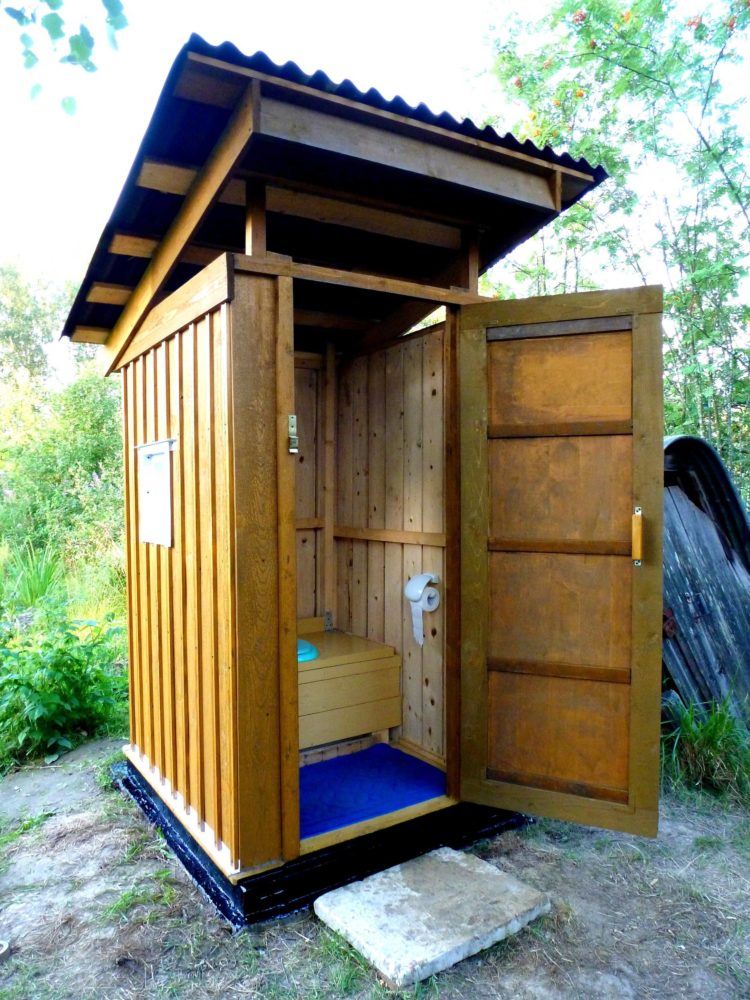
- The cubicle is installed directly on the cesspool, where a floor slab is placed. The advantage is its simplicity and low cost. The disadvantage is that unpleasant odors from the cesspool directly enter the cubicle. Even powerful ventilation does not completely eliminate the stench.
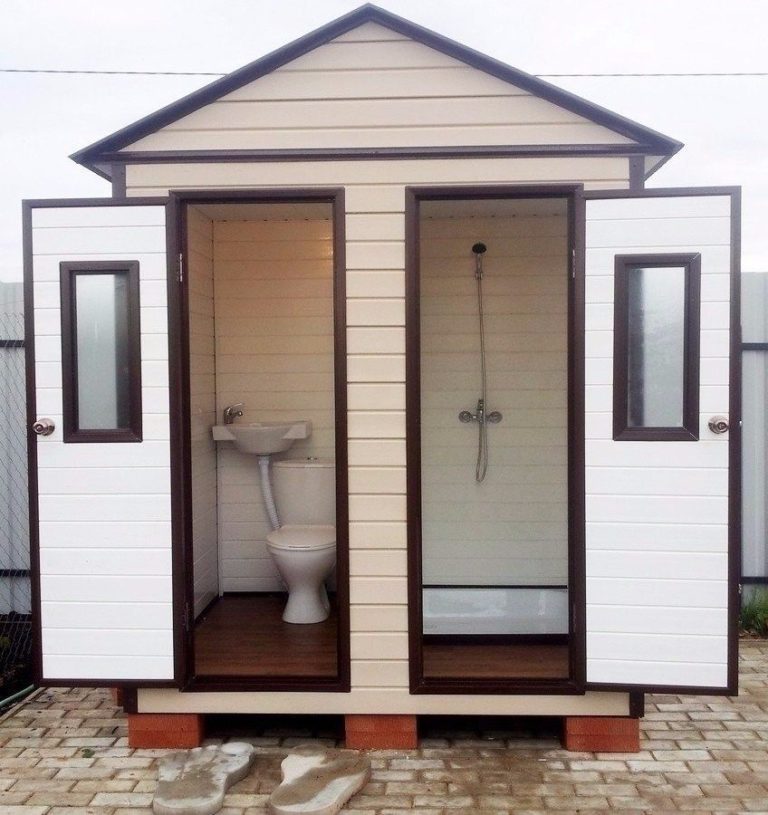
- A water-flush system operates on the principle of an indoor toilet. The toilet is installed inside the house or in an outdoor stall, away from the septic tank.
The plumbing fixture is connected to water. Wastewater is drained into the pit via a sewer pipe.
- Plus – no unpleasant odors.
- The downside is the high cost and complexity of installation.
In winter, the system cannot be used in an unheated outdoor stall due to freezing of the water in the toilet cistern. Natural ventilation through vents is sufficient to maintain clean air in the toilet.
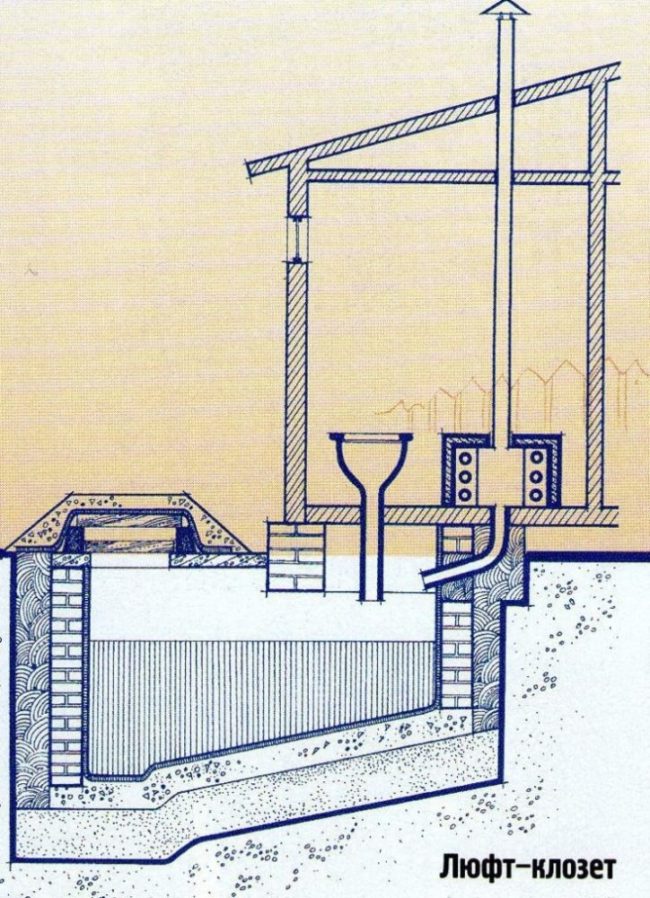
- A vent closet is similar to a toilet system, but has design differences. There is no water flush. The toilet is designed without a water seal. A vent closet is located inside the house or in a separate stall outside.
The cesspool has been removed but not connected to a sewer pipe. Organic waste flows down a sloping channel to the collection point.
- Plus, there is minimal penetration of unpleasant odors into the toilet.
- The downside is the complexity of installation and maintenance.
A flush toilet installed inside a house requires good ventilation.
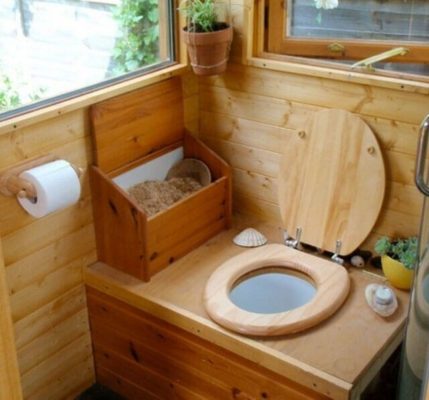
When a non-residential dacha is used for gardening and vegetable gardening, it's economical and technically feasible to install a garden toilet without a cesspool during the summer season: a powder closet, chemical toilet, or composting toilet. The mobile home is equipped with a waste collection tank.
Depending on the methods used for processing organic matter, waste is stored as compost or disposed of.
- The advantages are the mobility of the cabin and tank, ease of maintenance, and the absence of unpleasant odors.
- The downside is the cost of purchasing a toilet and waste disposal products.
Powerful ventilation is not required for cubicles without a cesspool. Ventilation is provided through vents installed under the door and in the ceiling.
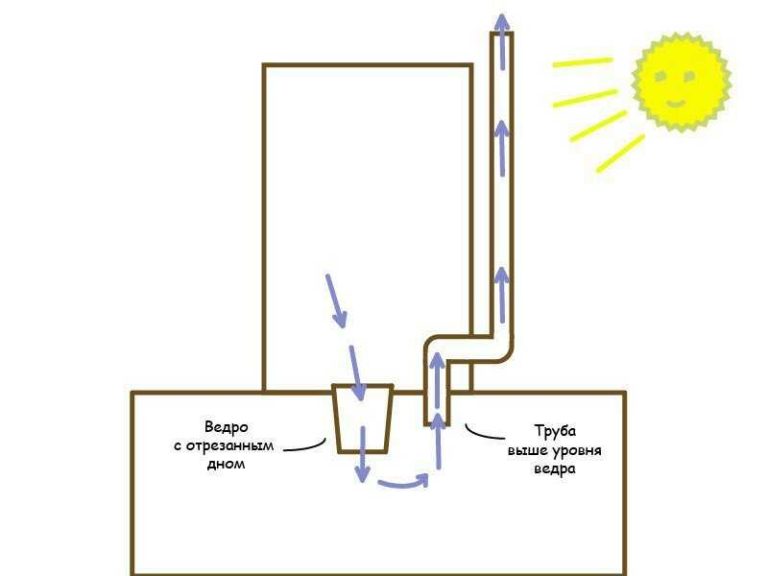
For all types of country outhouses, as well as other buildings, ventilation can be either natural or forced. In the former case, air exchange occurs through spontaneous air movement.
Fresh air flows through a gap under the closed door and specially designed windows. Dirty air exits through an exhaust pipe or vents on the walls of the cabin near the ceiling.
The pipe is placed at a height from 1 meter above the cabin roof levelThe vents are cut out with a jigsaw or a saw, or they are cut out with an angle grinder. A piece of PVC pipe found lying around the garden is used for the exhaust hood.
- The advantage is minimal or no costs.
- Disadvantages: dependence on weather conditions.
The pull may be strong or absent.
In the second ventilation option, air exchange is achieved by forced airflow using a fan. The volume of air inflow is equal to the volume of air outflow. Forced ventilation is suitable for bathrooms inside a country house where the owners reside year-round.
A utility system with exhaust and intake is installed separately for the bathroom or integrated into the general building system. Less commonly, forced ventilation is installed for an outdoor stall. Electricity is supplied from the country house.
- The advantage is stable ventilation regardless of weather conditions. There's no risk of loss of ventilation or backdraft.
- The downside is the financial and labor costs for installation and maintenance of mechanical components.
Installing a hood in a country toilet with a cesspool
To eliminate unpleasant odors as much as possible in your outdoor toilet, install proper exhaust ventilation—separately for the toilet stall and the cesspool. Whether the system is mechanical or natural is irrelevant.
The air duct installation technology is identical. The only difference is the presence of a duct fan in the forced-draft exhaust system.
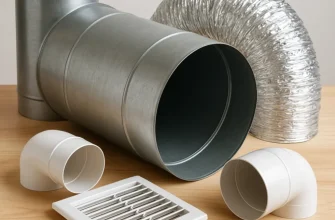
For this project, you'll need a 110mm diameter PVC sewer pipe. Use fittings to create elbows, couplings, clamps, and a hood deflector.
Choose the right tools based on the specifics of the work and the materials you'll be working with. A jigsaw, drill, grinder, screwdriver, and pliers are usually sufficient. You might also need metal shears, a chisel, and a hammer. For marking, use a tape measure, level, and marker.
Instructions for installing natural ventilation for a cubicle and cesspool
- Cut a 110 mm diameter hole through the bottom of the toilet side wall for the coupling. Raise the future inlet 25-30 cm from the ground to prevent it from being covered by snow in the winter. Cut off the edge of the socket on one side of the coupling where the rubber band is inserted.
Insert the cut side of the fitting facing the street into the cut hole in the toilet stall wall. Use sealant to eliminate any gaps and secure the fitting.
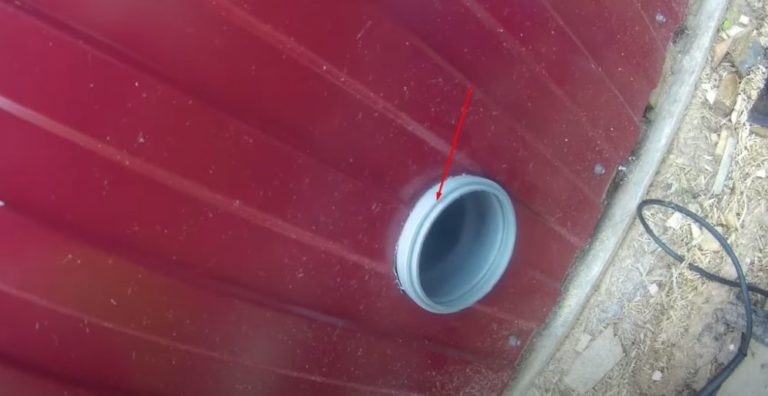
- To prevent wind from blowing debris into the cabin through the air inlet located close to the ground, install a mesh screen. Cut the mesh to the diameter of the socket's annular socket, where the sealing rubber should be located.
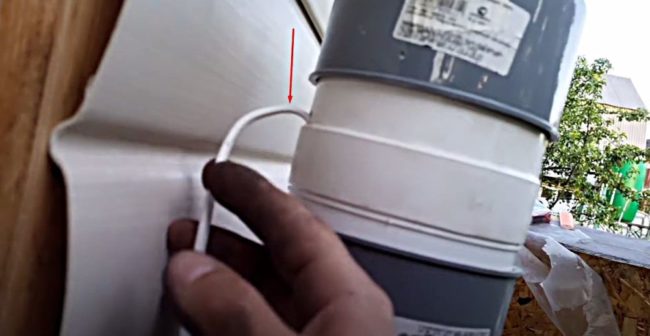
Install the mesh into the molded recess. Place the rubber ring inside the socket. If the original rubber seal doesn't fit due to the installed mesh, make a ring-shaped retainer from a plastic rod of a smaller diameter.
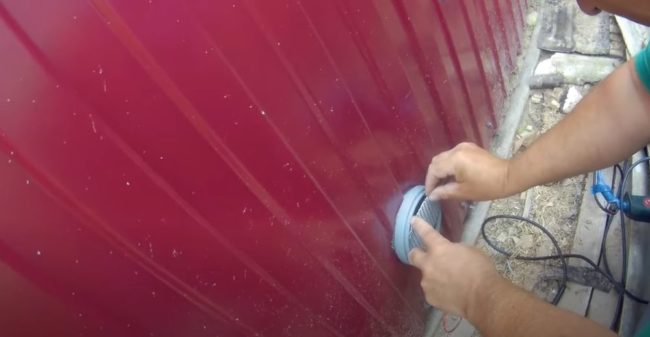
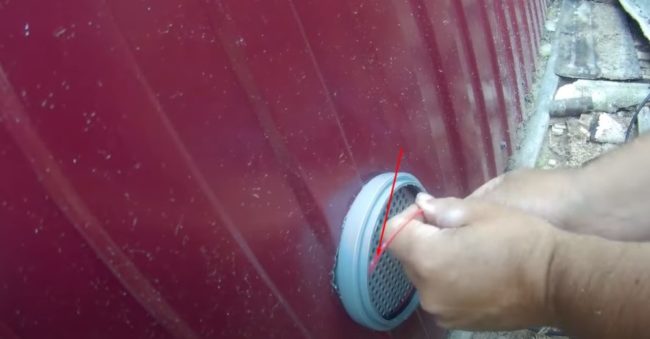
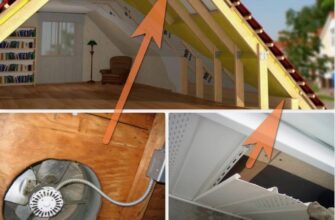
- For the exhaust vent, cut a hole in the top of the wall. Leave a space of 15-20 cm from the ceiling. Mount the exhaust vent on the side wall of the toilet opposite the inlet.
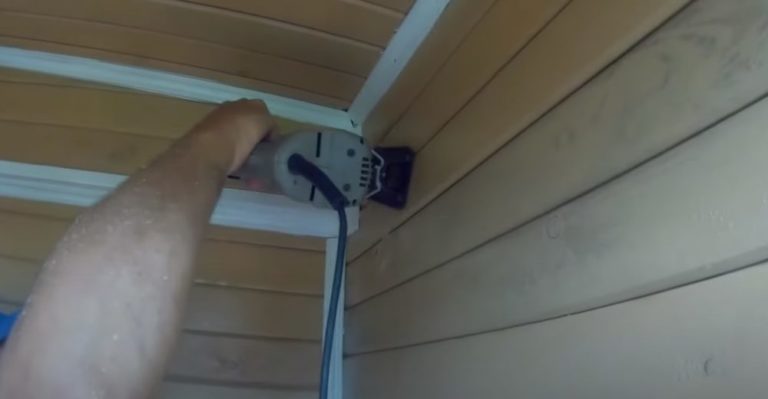
- Following the same principle as the inlet duct, insert a fitting with a mesh into the exhaust vent. Instead of a coupling, use a 50 cm long socket. On the street side, the air duct will need to be extended to extend the riser above the toilet roof.
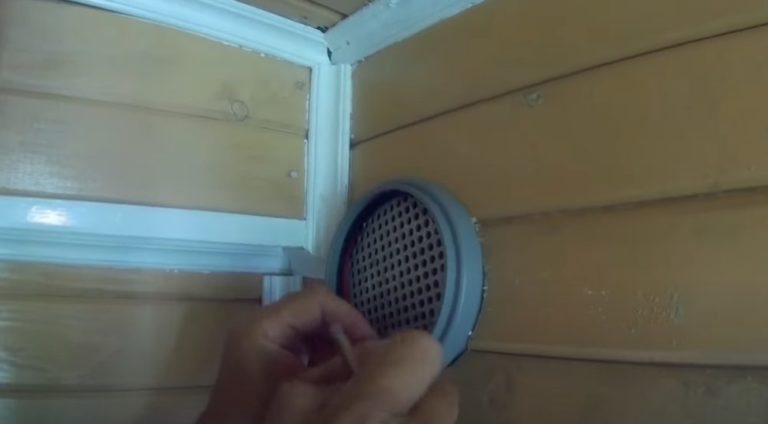
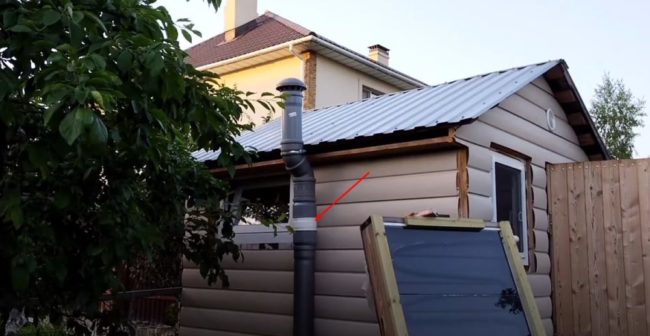
- Cut the vent pipe coming out of the wall on the street side to the required length, taking into account the roof overhang. Assemble the riser from an elbow, a coupling, and a straight pipe 1-1.5 meters long. Install a deflector to protect the hood from precipitation. If there is no cap, make a bend from two elbows, as in our example.
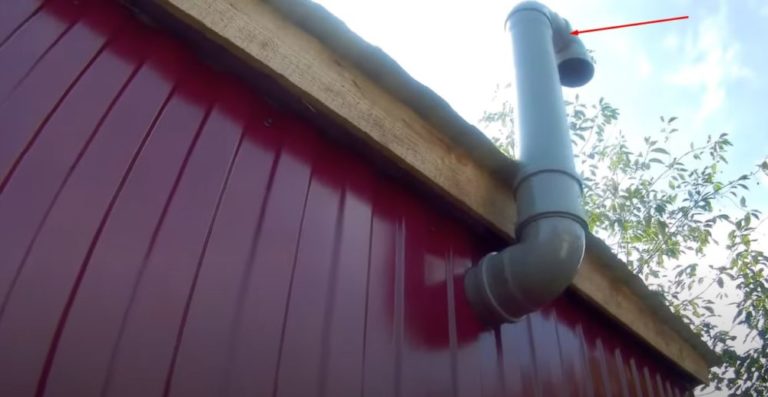
A simple DIY natural ventilation system will ventilate the stall. To prevent odors from the holding tank from permeating the toilet, install an additional exhaust stack.
You can run a 110 mm diameter pipe directly through the septic tank ceiling or through the wall at the bottom of the cubicle. Determine the installation method based on the cubicle's design and distance from the storage tank.
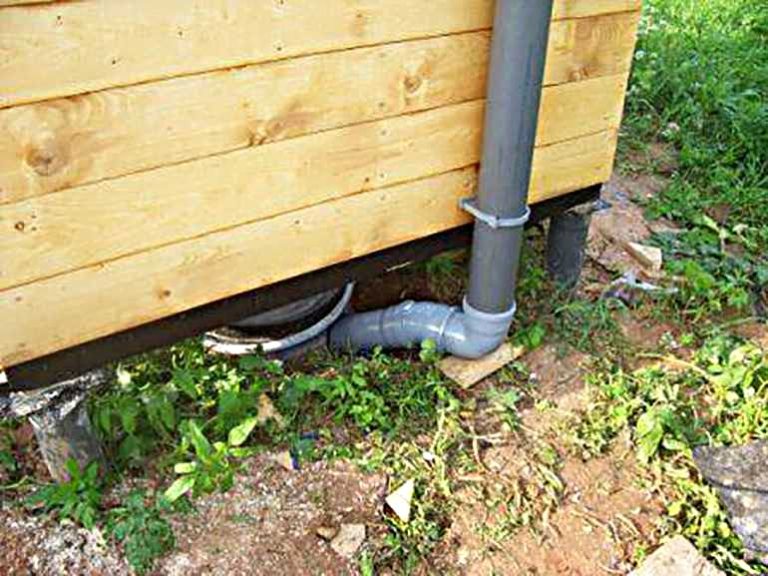
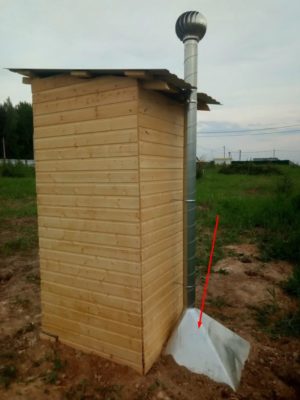
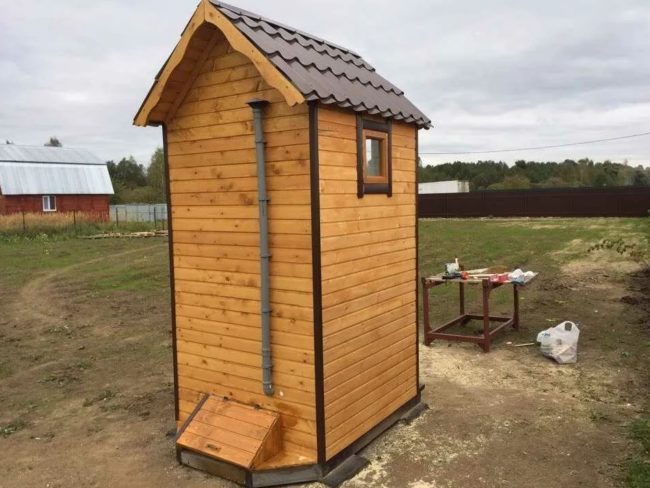
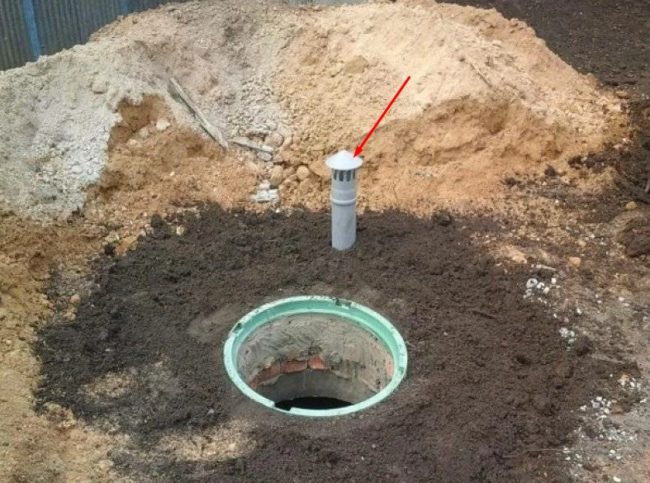
Instructions for installing forced ventilation for a cubicle and cesspool
- Extend an exhaust stack from the cesspool near the toilet wall, 1-1.5 m above ground level. Use a 110 mm PVC pipe.
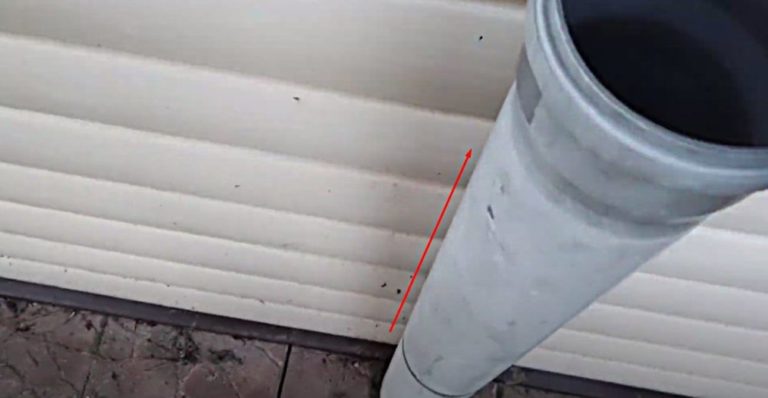
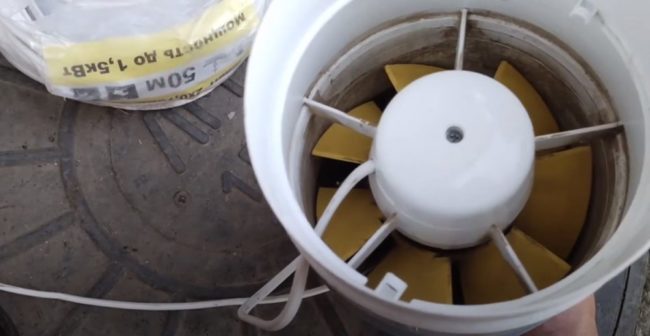
- Prepare two 110x125 mm adapters from plastic to cast iron pipe. Purchase a ducted exhaust fan with a 125 mm housing. Attach the adapters.
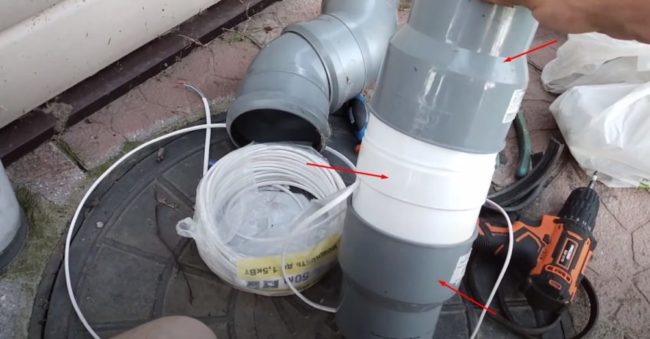
- Install an exhaust unit consisting of a fan with adapters on the riser coming out of the septic tank. From the top outlet, use an elbow and pipe to extend the pipe above the roof of the toilet stall.
Cover the top of the hood with a deflector. Route the power cable from the fan inside the cabin to the junction box.
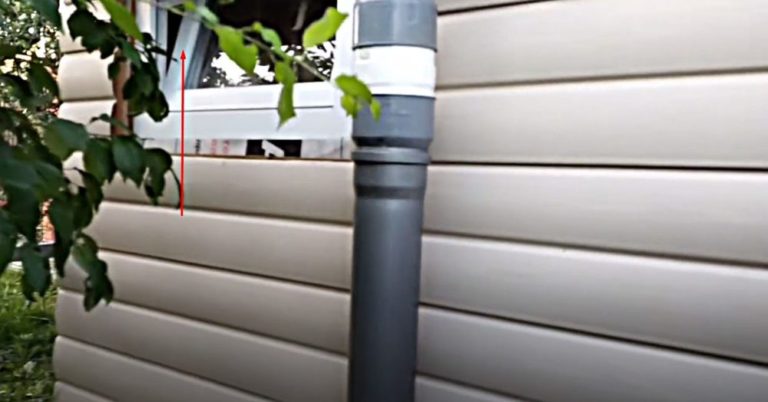
- To ventilate the cabin, create a natural air flow through an open window and cracks under the door.
- Install forced-draft ventilation in the cabin. Install the fan in the hole cut in the upper part of the wall. Position the exhaust hood on the wall opposite or adjacent to the supply window.
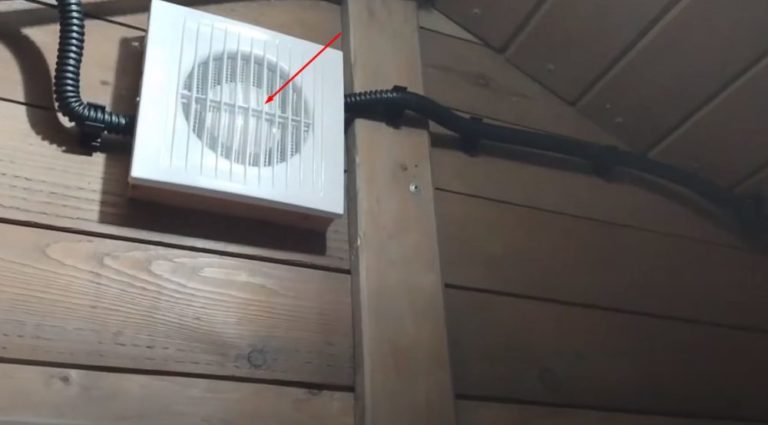
To reduce energy consumption and extend the life of your fans, connect your electrical equipment to a single circuit breaker that includes the lighting. Constant forced ventilation is not necessary.
The fans will turn on simultaneously with the lights when a person uses the restroom. This mode is sufficient to remove unpleasant odors.
A natural question arises: how will the exhaust hood remove dirty air from the septic tank without a supply pipe? The supply pipe to the storage tank enters through the toilet.
It is in this chain that it is important to prevent the formation of backdraft, so that the stench from the pit does not enter the cabin through the hole with the seat.
Recommendations for maintaining ventilation
If the bathroom is located in a country house with forced ventilation, inspect the fans and check valves at least once a year. Clean the air ducts and ventilation grilles of dirt.
Methods to ensure proper ventilation operation
A simple outdoor toilet in a country house is exposed to wind. Ventilation won't be an issue. If you're building a quality stall, proper ventilation should have an intake and exhaust vent.
Create an inflow by creating a gap between the bottom of the door leaf and the door frame. Create additional vents using windows on the walls near the ceiling or by leaving gaps as well. The door window doesn't need to be completely glazed.
Before winter, cover it with plywood. Run the exhaust vent from the septic tank above the cabin roof, securing the ducts to the outside wall with clamps. Install a deflector to improve draft and protect against precipitation.
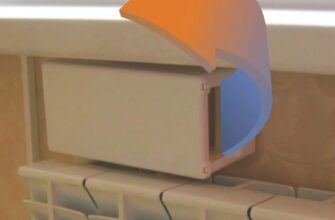
For a country house bathroom inside the house, it's advisable to install a forced-air exhaust system with a fan and a roof outlet. Provide a natural air inlet by installing a wall or window air inlet valve. To allow air to flow from other rooms in the country house, leave a 2-3 cm gap at the bottom of the toilet door.
Methods for combating odors to help improve ventilation
As the cesspool fills, unpleasant odors intensify, spreading inside the toilet stall and throughout the property. Ventilation cannot completely eliminate the stench.
To help the engineering system work, additional methods of odor control are used.
Chemicals
Modern life cannot exist without chemicals, but they must be used wisely. Chemicals almost completely eliminate the stench of decomposing waste. They work year-round, regardless of temperature.
Aromatic additives enhance the effect and create a pleasant atmosphere for those using the toilet. These three advantages have made chemical products popular. The downside is their environmental impact.
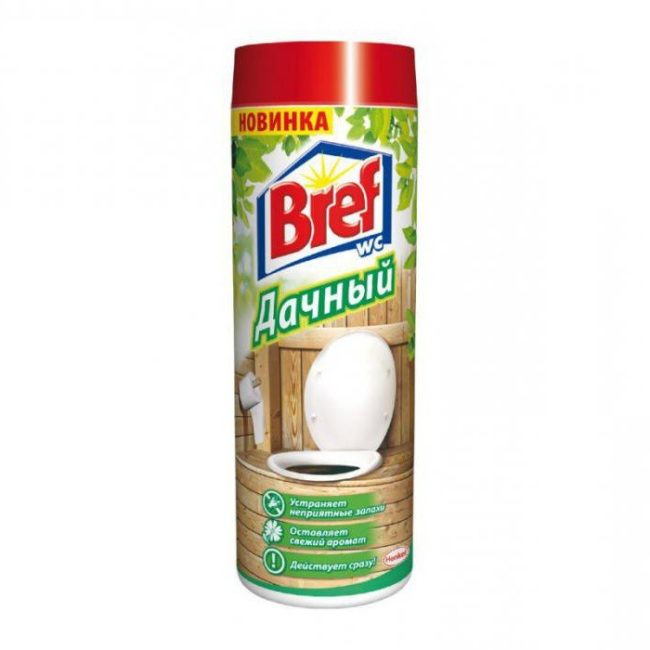
Nitrate and ammonium-based cleaners are considered less dangerous, but they are expensive. A budget-friendly option is bleach. This toxic substance kills bacteria but poses a danger to all living things. Additionally, chlorine has an unpleasant, pungent odor, which won't improve the atmosphere in a country outhouse.
BIO preparations
Modern septic tanks process wastewater using beneficial aerobic and anaerobic microorganisms. Concentrated preparations for summer cottage cesspools are created using these bacterial strains.
After adding a biologically active agent to the storage tank, the microorganisms awaken and convert organic matter into sludge and odorless water.
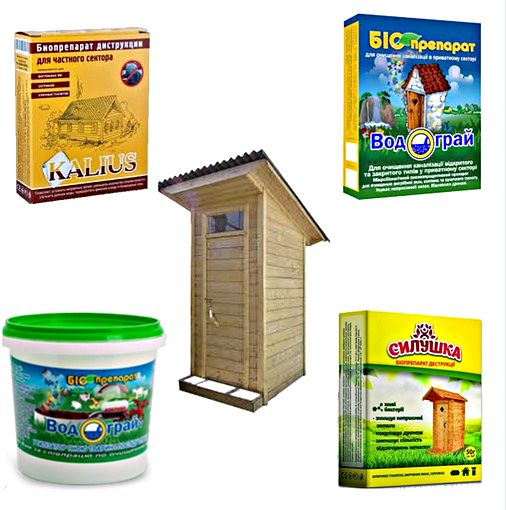
- The advantage is the safety of organic products. After processing, the wastewater can be pumped to a designated area on the property or used for irrigation. The sludge is stored on a compost heap for fertilizer.
- The downside is that favorable conditions for bacteria to thrive are required: above-zero temperatures, adequate oxygen and water supply, and protection from chemicals. In winter, bacteria die in outdoor toilets. In the spring, new treatments must be applied.
BIO fillers
Peat is a common litter. This natural ingredient absorbs moisture and the odor of sewage. Peat is sprinkled on waste after each use of the powder closet.
Sawdust and ash are less effective. Litter is thrown into the cesspool to absorb moisture and eliminate odor. Folk remedies include tomato tops, freshly cut grass, and nettles.
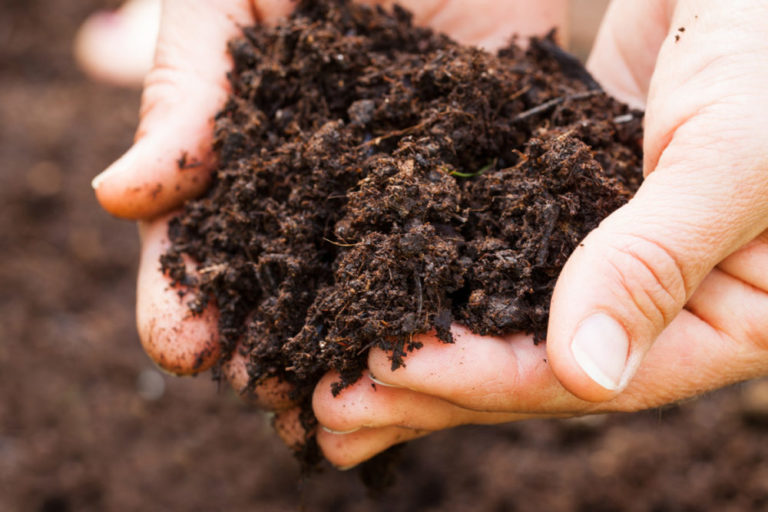
- The advantage is the environmentally friendly nature of the fillers. Waste can be disposed of on your property, stored in compost heaps for fertilizer.
- The downside is that the waste collection tank fills quickly. The pit or portable powder closet needs to be cleaned more frequently.
Answers to frequently asked questions
To eliminate odors, add organic or chemical solutions to the pit. Folk remedies include nettles, tomato tops, wood ash, peat, and sawdust.
Clean out your cesspool manually using buckets. For quick pumping, hire a sewage truck. Adding organic chemicals will help break down the feces into water and sludge, which will need to be removed from the tank as it fills.
Make an inflow through the gap under the door and the open window.
To dissolve solid sludge, apply "Dr. Robik 809" or "Devon-Sil." Chemicals such as formalin, ammonium salts, carbide, sodium hydroxide, and bleach also work well. Dispose of the liquefied sludge with a vacuum truck after about 24 hours.
Hang sticky tape and set traps in the restroom. Spray alcohol and aromatic solutions to repel insects. Ensure effective ventilation. The absence of foul odors will discourage flies from entering the restroom.