 Polypropylene pipes represent a category of goods that offer the best value for money.
These materials are highly durable, have a long service life, are resistant to corrosion, and possess many other positive characteristics. When discussing the advantages of polypropylene pipes, it's impossible not to mention their ease and convenience of installation.
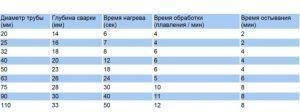
When connecting, a precise soldering temperature for polypropylene pipes must be maintained; the table below will help with its precise determination.
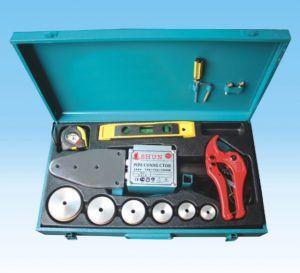
- Welding device with a set of nozzles.
- Special scissors.
- Degreasing liquid.
- Marker.
- Roulette.
- Rags.
- Mounting device if the workpiece has a diameter of more than 5 centimeters
- Preparation for work. At this stage, it is recommended to thoroughly study the basic operating rules of the welding machine. Particular attention should be paid to the temperature at which certain polypropylene products can be soldered. This information can be found in the table included in the welding equipment manual. This table is presented below.
Table of temperature indicators for working with polypropylene materials
To begin welding, special nozzles must be installed on the welding machine, and their Teflon coating must first be cleaned. After this, the device is heated to a temperature of two hundred and sixty degrees Celsius.
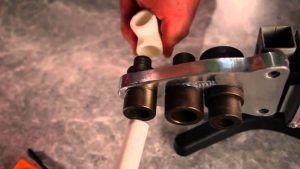
This temperature limit is considered the most optimal for this type of pipe rolling. The heating period of the apparatus depends on the ambient temperature.
The cutter's working condition should also be checked. If necessary, it should be sharpened.
Pipes prepared for soldering must be degreased and cleaned. If the fitting does not fit snugly on the pipe, it is recommended to replace it with a different one.
The connecting piece is put on heated nozzle, it will take a little longer to warm up than a pipe.
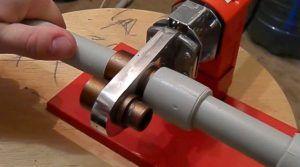 Next, proceed directly to heating the fasteners. If they are not tightly seated on the attachments, they can be turned while heating, but the angle should not exceed ten degrees.
After heating, the elements are removed from the attachments and carefully secured together. The structure cools completely within a few minutes.
The table below provides recommended times and other time indicators. This polypropylene pipe soldering chart is indispensable when working with polypropylene pipe materials.
Table of heating time, welding period and cooling depending on the volume of polypropylene pipes.
| Volume of pipes - size of welding belt (cm) | Heating period (sec.) | Welding period (sec.) | Post-weld cooling period (minutes) |
| 1.6 - 1.3 | 5 | 4 | 3 |
| 2 - 1.4 | 5 | 4 | 3 |
| 2.5 - 1.6 | 7 | 4 | 3 |
| 3.2 - 1.8 | 8 | 4 | 4 |
| 4 - 2 | 12 | 6 | 4. |
| 5 - 2.3 | 18 | 6 | 5 |
| 6.3 - 2.6 | 24 | 6 | 6 |
| 7.5 - 2.8 | 30 | 8 | 8 |
| 9 - 3 | 40 | 8 | 8 |
| 11 - 3.3 | 50 | 10 | 10 |
| 16 - 3.5 | 80 | 15 | 15 |
It's recommended to begin welding with more bulky structures. This work, especially for less experienced welders, is best performed with a partner, as it requires simultaneous assembly of heated components.
Choosing a welding machine
Another name for this joining process is simply soldering pipes. It's performed using a special device called a polypropylene pipe welding machine, also known as a welder or welding iron.
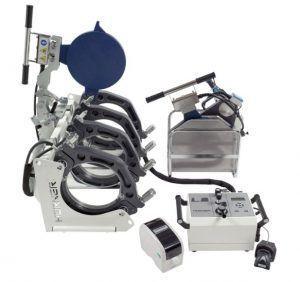
It's not recommended to buy one if you only need to make a one-time connection. Since it's not cost-effective, it's easier to rent one. Most stores offer this service.
However, if you decide to purchase a device for welding polypropylene pipes, then based on the reviews, you can recommend Czech or Turkish devicesChinese models are inferior in quality to the first two options. The cost of such a unit is proportional to its quality. High-quality devices are more expensive.
The most common mistakes when welding
- Dirty pipe surfaces. If they are not sufficiently cleaned and degreased of dust and dirt, the pipeline with such surfaces will very quickly begin to leak.
- Also, incorrectly calculated soldering depth (the table provides precise data) leads to poor joint quality. The table provides precise data on the weld depth. Failure to accurately calculate these values will result in leaks in the entire pipeline. This also complicates the entire polypropylene pipe installation process.
- And most importantly, the table specifies the exact heating time for the pipes. This must be strictly adhered to. Insufficiently molten elements do not fully fuse with one another. Consequently, under such circumstances, the weld seam will vary in size. It will not be able to withstand even a mild water hammer.
- The workpiece is not inserted into the fitting all the way; it is important to remember that there should be a gap of no more than 1 mm.
- Another very common mistake is applying too much force to connect the fitting and the workpiece. This results in a burr being extruded from the end of the rolled tubing, which creates a serious obstruction to fluid flow.
- Incorrectly adjusted position. You have a couple of seconds to adjust the heated, joined parts. If this time is delayed, the deformation is irreparable, and a strong joint will not form. It's also important not to overheat the workpiece, as this will cause burrs to form.
- Inexpensive materials. If you use low-quality products for the job, even the most professional installation won't prevent breakage. It's recommended to buy both pipes and fittings from the same manufacturer. This should be a company with a proven, good reputation. Otherwise, it'll be like the proverb about the miser who pays twice.
- Avoid joining pipes (even high-quality ones) from different manufacturers. The components of the materials may differ, and these products will behave differently when heated.
The rules are fairly simple. Simply ignoring the recommendations in the table will result in water main leaks.
Soldering time for polypropylene blanks
Currently, the number of building materials used for drainage and water supply pipelines has increased dramatically. Developments in the chemical industry have brought new options such as polypropylene and polyvinyl chloride.
The table shows the precise welding time for polypropylene pipes. It should be noted that this temperature depends on the diameter of the pipe being welded.
See the table.
| Pipe wall thickness (cm) | Heating the joint until burrs appear (see) | Heating (sec.) | Maximum time of output of the heated part (sec.) | Time to connect elements (sec.) | Minimum cooling time of the structure (sec.) |
| 0.45 | 0.05 | 45 | 5 | 5 | 6 |
| 0.45-0.7 | 0.1 | from 45 to 70 | 6 | 6 | 6 |
| 0.7-1.2 | 0.15 | from 70 to 120 | 8 | 8 | 10 |
| 1.2-1.9 | 0.2 | from 120 to 190 | 10 | 11 | 16 |
| 1.9-2.6 | 0.25 | from 190 to 260 | 12 | 14 | 24 |
| 2.6-3.7 | 0.3 | from 260 to 370 | 16 | 19 | 32 |
| 3.7-5 | 0.35 | from 370 to 500 | 20 | 25 | 45 |
| 5-7 | 0.4 | From 500 to 700 | 25 | 35 | 60 |
Different types of welding and temperatures
Socket soldering methodThis type of work uses welding equipment with various nozzle sizes. The two elements to be joined are inserted into the soldering unit, heated, and then secured together. The position of the structure must not be changed during the cooling period.
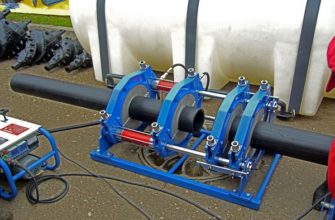
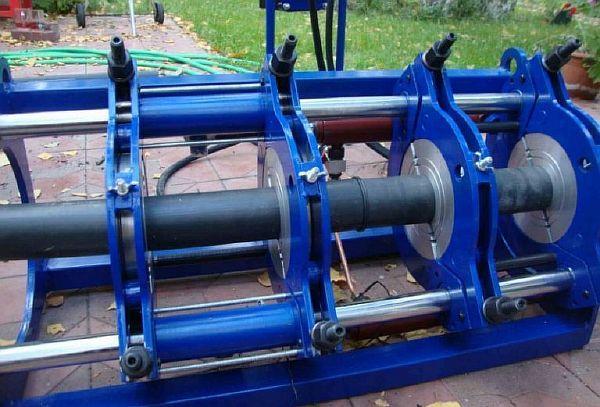
Butt methodThese operations are performed on pipelines with large cross-sections. The joint area is heated with a special welding mirror. The parts being joined are then pressed together with force. This ensures high mechanical strength. The key to this method is the pressure applied to the parts being joined.
Polyfusion methodIt is very similar to the diffusion method, but in this case only one of the bonded elements is heated to the melting temperature.
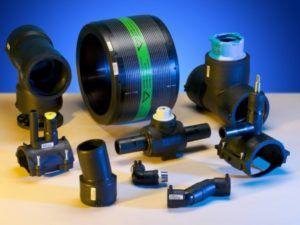
Socket solderingThis technology involves the use of a special additional insert—a fitting or coupling. During the process, both the pipe section and the connecting piece are heated.
None of the above-described soldering methods can be performed without knowledge of the required temperature for the job. A table of soldering temperatures for polypropylene pipes is included in the material provided.
You just need to use these numbers correctly. Then you can make a high-quality, leak-proof connection. These conditions must be met flawlessly. Below, we'll take a closer look at some types of soldering.
Polyfusion welding
The fitting is "seated" onto the heated nozzle. Heating it takes significantly longer because its walls are thicker than the pipe's.
Next, the parts are heated. If they are not tightly seated on the nozzles, they must be turned over during welding. When turning, do not exceed an angle of 10 degrees. After heating, the parts are removed from the nozzles and joined slowly. They are then given some time to cool.
Here are approximate parameters for heating and cooling times:
| Workpiece diameter (mm) | Heating time (s) | Soldering time (s) | Cooling time (min) |
| 16 | 5 | 4 | 3 |
| 20 | 5 | 4 | 3 |
| 25 | 7 | 4 | 3 |
| 32 | 8 | 4 | 4 |
| 40 | 12 | 6 | 4 |
| 50 | 18 | 6 | 5 |
| 75 | 30 | 8 | 8 |
| 90 | 40 | 8 | 8 |
| 110 | 50 | 10 | 10 |
| 160 | 80 | 15 | 15 |
By maintaining the specified time, you will achieve a reliable connection.
How to solder using an electrofusion fitting
In this case, the soldering equipment is prepared in the same way as for the polyfusion method. The pipes are cut, degreased, and treated on the outside, and the fitting on the inside. A marker is used to mark the entry point of the workpiece.
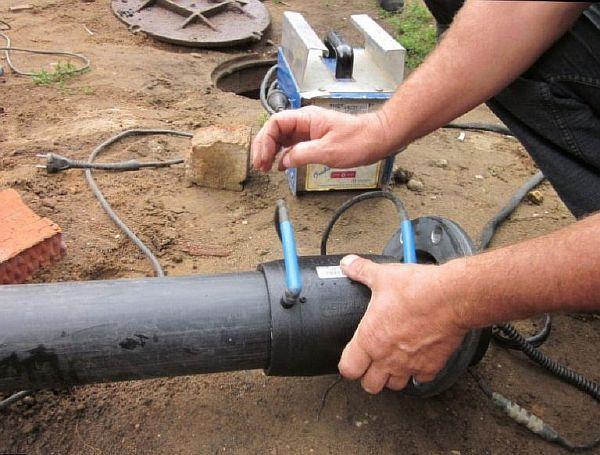
The workpiece is inserted into the electrofitting and secured. The soldering machine and the fitting are connected with a special cable. To begin welding, press the "start" button, and the machine shuts down automatically. Control points on the fitting confirm proper operation, allowing you to see the plastic extrusion.
This is a very efficient and fast method. It is used by companies that install pipelines on a large scale.
Cold soldering
This method is not used very often. It requires aggressive glue. Like the two previous methods, it also requires preparation before joining:
- Cut the blanks to the required length;
- Treat them with degreasing agents;
- Applying marks with a marker.
Glue is applied to all parts for connection. They are held in the required position for 15 seconds.This pipeline can be used within an hour. Until then, all connected parts must remain stationary.