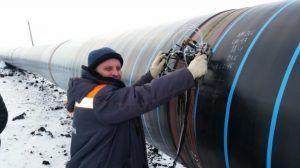
 In this article, we'll learn how to inspect pipeline welds. To gain an understanding of the actual condition of the metal at the joints, so-called non-destructive testing of pipeline welds is used. The safety and reliability of the structure are often determined by the quality of the welds.
Legislative standards establish strict guidelines for the process. It is carried out only by professionals with the appropriate skills.
- Quality control of welded joints and the need for its implementation
- What are the principles of non-destructive quality control?
- Rules for external and technical inspection
- Capillary testing methods for welded joints: the essence
- How is permeability tested?
- How to choose the right non-destructive testing method for pipeline connections?
- Non-destructive testing of welded joints using ultrasound
- Result: elimination of defects
- How to determine the extent to which connection quality control is required?
Quality control of welded joints and the need for its implementation
When welding work is carried out on pipelines, the appearance defects cannot be avoidedThese defects, in turn, negatively impact the appearance of welded joints, their technical characteristics, and reliability. There are two types of damage: weld formation and metallurgical defects.
The formation of a structural weld leads to the appearance of metallurgical defects. These usually appear while the material is cools or heats upThe second group of damages is caused by non-compliance with standards during the work.
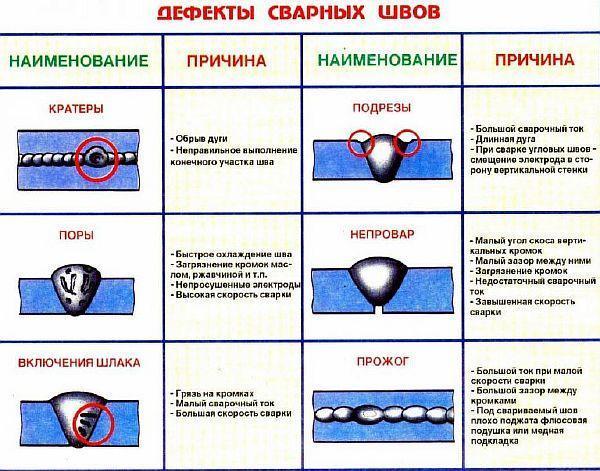
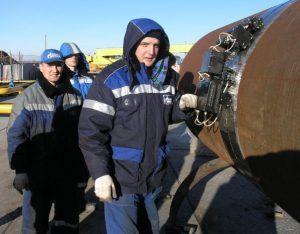 The following types of defects must be identified in advance. They all negatively impact the overall pipeline quality.
- Defects in the metal microstructure lead to increased oxide content, coarse grains, and grains with oxidized edges.
- The presence of gas inclusions or pores. They can be present in groups or individually, sometimes appearing as bridges. Or they may emerge to the surface, in which case they are called fistulas.
- Impurities and slags inside the seams. This causes the product to lose its original strength.
- The occurrence of various types of cracks is typical for areas with welds and the weld-affected space. The differences lie in their size.
- Lack of fusion group. This is the name given to localized areas of a weld where there is no adhesion to the base material.
- Burn holes or holes in welds that occur when molten metal leaks out during welding.
- Undercuts. A name for grooves in the longitudinal plane at the edges of welds on the base metal surface.
- Violations in the shapes and sizes of seams.
Only if each defect is identified can the pipeline's reliability be guaranteed at its maximum level.
A thorough assessment of the impact of such defects on the structure is essential. Otherwise, it will be impossible to correct the situation before the pipeline begins operation.
What are the principles of non-destructive quality control?
There are only two methods, on the basis of which the quality control of welded joints of pipelines is carried out.
- When the integrity of the connection is not violated.
- With violations.
To assess the condition of all welds, non-destructive quality control is used. This inspection must be performed both during and after welding.
This is necessary to ensure the safety of the structure before it is put into operation. There are, in turn, methods for non-destructive quality assessment.
- By permeability.
- Magnetic, radiographic control.
- Method using ultrasound.
- Capillary, radiation flaw detection.
- Measurements and external inspection.
As for destructive methods, they are carried out on product samples that have already been cut out from their original position.
Rules for external and technical inspection
Any pipeline quality check begins with an external inspection. This can be purely visual, but also involves the use of measuring and other technical instruments. This will help identify problems with external factors and ensure the current condition complies with regulations and legal requirements.
Video
Detecting even small cracks in welded joints is not difficult if you clean a small area of the seam and then treat it with alcohol or a weak acid solution.
Geometric dimensions cannot be determined without a ruler and calipers. Good lighting will make inspections more effective, as will using a magnifying glass capable of 8-10x magnification.
Capillary testing methods for welded joints: the essence
This quality control of welded pipeline joints involves the use of contrasting liquids that penetrate the metal through the smallest defects if they are detected on the surface. The so-called penetrants are used most frequently.
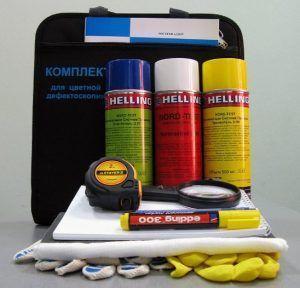
When such substances are used, the defects are simply painted in a certain color.
Penetrants can consist of different bases:
- Transformer oil.
- Benzene.
- Turpentine.
- Kerosene.
In addition, the compositions themselves are divided into several varieties.
- With dyes that are visible during daylight hours. A bright red shade is most often used.
- Contains luminescent components. Drawbacks become apparent when exposed to ultraviolet rays.
The method has a sensitivity of 0.1-0.5 µm. It can reach 500 µm if the upper limit is maintained.
Video
Checking the welded joint of the pipeline using kerosene This is considered one of the simplest methods. It's important for the composition to have high penetration properties. There's a separate procedure for these tests. An aqueous mixture with kaolin or chalk is applied to the joints. The mixture is then dried until a white film forms.
Kerosene should be generously applied to the back of the seam for at least half an hour. Even if there are only microscopic cracks, the kerosene will penetrate the surface. Afterward, it becomes visible from the back. Visually, defects are easy to identify.
How is permeability tested?
When welding tanks, pipelines, and so on, it's essential to assess the tightness of the weld. This quality control is also performed using various methods and instruments:
- Hydraulic and pneumatic tests.
- Using the bubble method.
- Leakage.
And so on. Pneumatic testing involves introducing large quantities of water or gas into the pipeline. A foaming solution is applied to the external surface. If foam bubbles appear, the seal has been compromised.
Video
How to choose the right non-destructive testing method for pipeline connections?
Choosing the optimal method for inspecting pipeline connections is easy. Simply consider the following factors.
- Indicators of economy and technical properties.
- Features of manufacturing a welded structure.
- The state in which the surface is located.
- Welded joint by thickness and type.
- The metal itself with determination of physical properties.
Video
The main thing to remember is that when using non-destructive methods, defects are detected only indirectly.
Non-destructive testing of welded joints using ultrasound
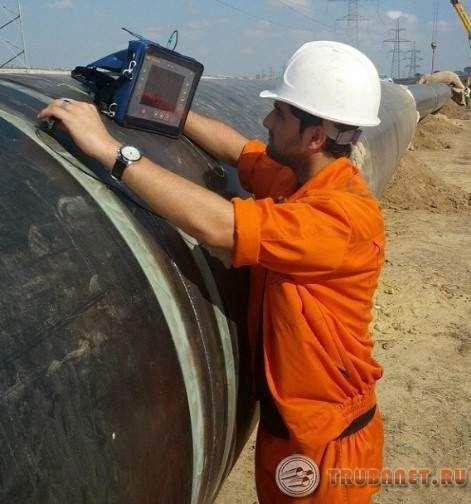
The method is based on the acoustic changes that occur when ultra-high-frequency sound vibrations are passed through the joint being studied. The degree of attenuation of the return signal and the propagation velocity become the most important properties of sound for this study.
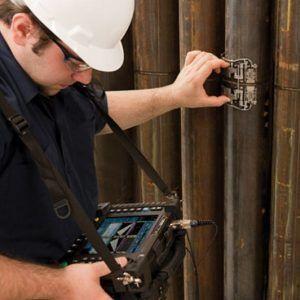
Ultrasonic flaw detection is carried out based on the following principles.
- An ultrasound source generates sound waves. These precisely pass through the area requiring diagnosis and are then reflected back to the areas where defects are most likely to appear.
- The sound wave must be reflected off something, otherwise flaw detection will be impossible. An angled search head is a special device that ensures the desired effect.
- The sound wave not only reflects off the flawed area, but also causes a change in the angle of refraction. The extent of these changes is used to judge the magnitude of internal defects.
Result: elimination of defects
Any defects that do not meet the original specifications must be corrected. If this is not possible, the product is simply considered defective.
Video
Plasma arc cutting usually helps resolve these issues. This is accomplished by testing and subsequent machining using abrasive wheels.
After tempering welded parts, any defects that can be heat treated are corrected. The key is to follow certain rules.
- The areas with defects should remain smaller in length on each side than the areas being removed.
- The cutting also requires special selection. The double width of the seams before the procedure should remain approximately the same as after.
- It is essential to maintain the reliability of the welds.
- Smooth, unbroken contours are essential for every surface finish. Sharp burrs and indentations are also unacceptable.
The area must be completely cleaned after the repair work is completed. The transition from the defective areas to the base metal must be smooth.
Video
Only mechanical methods are acceptable for aluminum and titanium alloys. Grinding requires abrasives.
When correcting defects, the same materials and technologies are used as for the main suture. After this, a repeat inspection is mandatory.
How to determine the extent to which connection quality control is required?
This is a unique characteristic of each method. Typically, they rely on regulatory documents in force in a given field. Inspection volumes are set as a percentage of the total length of the welded joints themselves.
It's essential to consider the category of a given welded pipeline joint, its intended use, operating conditions, and the potential consequences of failure in certain areas.
Specific areas must be identified separately if the scope of control is less than 100%. It is recommended to create diagrams as detailed as possible.
The use of non-destructive testing methods has become commonplace in many industries. The reason non-destructive testing of pipeline welds has become so popular is its full compliance with the requirements of the testing methods themselves.
There are quite a few such requirements. It's great if connection monitoring can be fully automated and devices with the highest reliability can be used.
The main thing is that they be accessible in production conditions. The methods themselves must be simplified. And the control equipment must be designed to withstand long-term use.