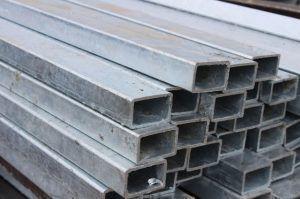
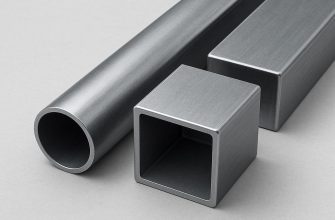
 Nowadays, steel profile pipes have become widely used. It is used to make gazebos, Supporting components are used to create public transport stop frames, railings, benches, and much more. The most popular application for steel profile pipes is in the construction industry, where metal structures are installed and buildings are erected.
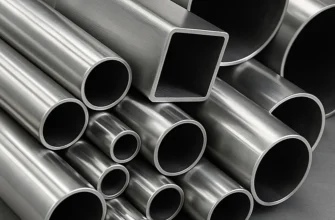
A wide range of steel profile pipe types allows for the creation of a suitable design for the required tasks.
The steel profile pipe features a cross-section with four stiffening ribs. Although this product weighs very little, it can withstand very heavy loads.
Their application
The applications of shaped steel pipes are widespread. Undoubtedly, the most important application for shaped rolled steel pipes is construction. In modern building structures, this type of rolled steel pipe is used ubiquitously.
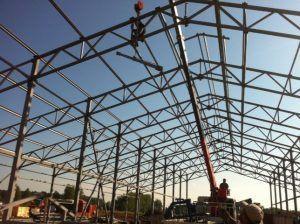
Their use has the following advantages:
- Metal savings are almost a quarter compared to the construction of a metal building using I-beams.
- Easy installation and little time spent on building the frame and structure.
- This metal structure is more resistant to corrosion than other rolled pipe options. Cold-formed profile pipes successfully replace I-beams, angles, and channels.
Technical specifications
Let's consider the main technical characteristics of a profile steel pipe:
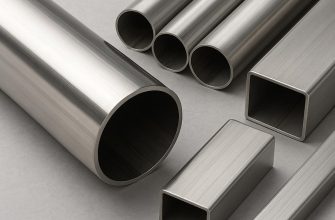
- Profile type. The main types are square, rectangular, and oval. This criterion determines the division of rolled tubular profiles within the overall product range.
- Geometric dimensions. For rectangular types, these are the width and height, as well as the length of each segment.
- Wall thickness. This is a significant detail, as it determines the scope of future use.
- Weight. An equally important assessment, it determines the quality of goods. Using weight and geometric dimensions, one can determine the wall thickness. This becomes very useful in situations where access to measurements is unavailable.
When describing steel profile pipes, it's important to note that their range is defined by GOST 8639-82. This document distinguishes three main profile types:
- Cold-formed.
- Hot rolled.
- Electric welding.
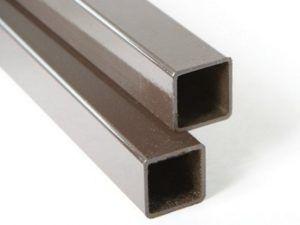 The first two are seamless, while the third is made from sheet material using welding technologies.
It should be noted that any pipe characteristic depends on a number of other parameters. For these reasons, it can be concluded that having a table of corresponding GOST calculated values makes it easy to determine the quality level of a given manufacturer.
Weight
Table No. 1 weights of steel profile pipes.
| Item No. | Parameters. Square profile pipes | Length
6m | Weight per meter/running metre |
| 1 | 15x15x1.0 | 0, 478 | |
| 2 | 15x15x1.2 | 0.500 | |
| 3 | 15x15x1.5 | 0.600 | |
| 4 | 20x20x1.2 | 0.680 | |
| 5 | 20x20x1.5 | 0.840 | |
| 6 | 20x20x2 | 1.09 | |
| 7 | 25x25x1.2 | 0.870 | |
| 8 | 25x25x1.5 | 1.06 | |
| 9 | 25x25x2 | 1.38 | |
| 10 | 30x30x1.5 | 1.30 | |
| 11 | 30x30x1.5 | 1.60 | |
| 12 | 40x40x1.5 | 1.79 | |
| 13 | 40x40x2 | 2.30
2.80 | |
| 14 | 40x40x2.5 | 3.33 | |
| 15 | 40x40x3 | 4.20 | |
| 16 | 40x40x4 | 3.60 | |
| 17 | 50x50x2.5 | 3.65 | |
| 18 | 60x60x2 | 3.58 | |
| 19 | 80x80x3 | 12 m | 7.12 |
| 20 | 100x100x3 | 12 m | 9.01 |
The weight of a profile pipe will depend on its length and wall thickness. This factor must be taken into account when selecting it.
Video:
The types and styles of profile pipes and their technical characteristics are presented. Watching this video will help you choose the right profile pipe for your situation.
Weight must be taken into account when constructing massive metal structures. If this is your case, then use our tables.
Table No. 2 weights of steel profile pipes.
| Item No. | Parameters Rectangular profiles | Length
6m | Weight per meter/running metre |
| 1 | 20x10x1.2 | 0, 500 | |
| 2 | 25x10x1.5 | 0.600 | |
| 3 | 28x25x1.2 | 0.930 | |
| 4 | 30x15x1.5 | 0.950 | |
| 5 | 40x20x1.5 | 1.30 | |
| 6 | 50x25x2 | 1.66 | |
| 7 | 60x30x2 | 2.64 | |
| 8 | 80x40x2 | 3.50 | |
| 9 | 100x50x3 | 12 m | 6.50 |
| 10 | 100x50x4 | 12 m | 8.69 |
| 11 | 120x60x3 | 12 m | 11:40 |
| 12 | 120x60x4 | 12 m | 10.55 |
| 13 | 140x60x2 | 12 m | 11.80 |
| 14 | 140x60x5 | 12 m | 14.58 |
| 15 | 150x100x5 | 12 m | 18.4 |
| 16 | 160x80x5 | 12 m | 17.69 |
| 17 | 160x120x5 | 12 m | 20.80 |
| 18 | 180x100x6 | 12 m | 24.69 |
| 19 | 200x120x5 | 12 m | 23.98 |
| 20 | 230x160x6 | 12 m | 46.11 |
Range of these products
GOST 13663 for steel profile pipes. Let's take a closer look at their product range below. These products vary in profile type, length, and cross-sectional volume.
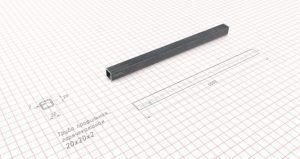
In addition to these parameters, classification can be made based on the following points:
- Steel marking.
- Absence/presence of finishing heat treatment.
The length parameters in this situation are defined by GOST 13663-86. This standard stipulates that steel profile pipes of various shapes are produced in standardized lengths ranging from 1 to 12 meters.
The cross-sectional size of profile pipes is determined by GOST 8642-68, according to which these products are divided into 36 different types of sizes with cross-sectional sizes within the range of 0.6 by 0.3 cm, and 0.9 by 3.2 cm.
According to the profile type they are divided into:
- Oval section steel options.
- Products with a rectangular cross-section.
- With a square section.
Video
Depending on the area of application, these pipes are classified as:
- Furniture pipes. Constructions made from them typically don't bear heavy loads.
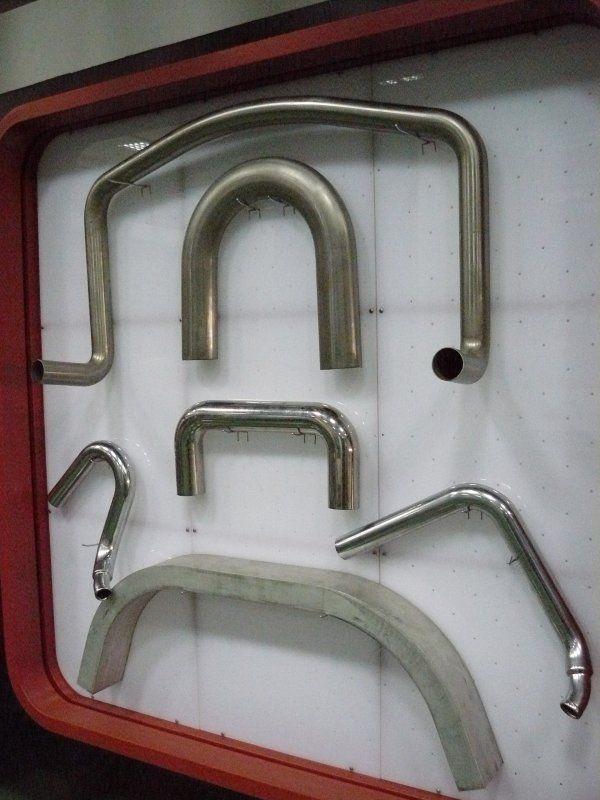
- Flat-oval types. Also known as arch profiles, these are more complex to manufacture.
- General-purpose options. They are made from hot-rolled 1.5mm strip. These products do not require high surface quality requirements.
- Construction. They are manufactured using hot-rolled and low-alloy steel, which boasts increased strength.
Square profile
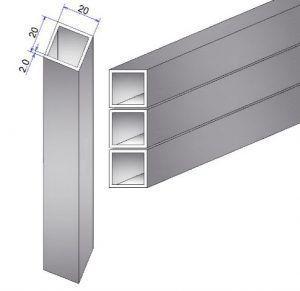 Square steel profile tube is widely used in the construction field.
The square shape is the main advantage in this situation. It ensures high stability and speed of installation.
These materials act as reinforcing elements in the construction of supports and frames. They are found not only in construction but are also frequently used in mechanical engineering.
Square pipes are divided into the following types:
- seamless cold formed or cold rolled.
- seamless hot deformation or hot rolled.
- profile products obtained from sheet material and by means of welding technologies.
The range of such products includes items with wall thicknesses ranging from 0.1 to 1.4 cm and lengths from six to twelve meters. Experts call this type of product a guarantee of meeting construction costs and minimizing them.
Rectangular profile
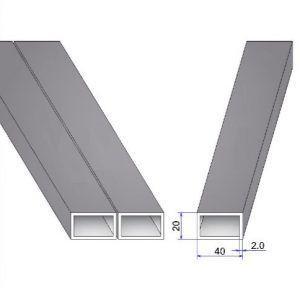 A rectangular profile pipe is a type of rolled tubular material with a rectangular shape. It is a subtype of square tubulars. It is also a hollow metal section with a variety of volumes and wall thicknesses.
They are used in the assembly of load-bearing structures and building components. They are used for furniture frames, construction scaffolding, children's playgrounds, and much more.
The unique shapes and light weight of these products significantly reduce the weight of the main structure, while increasing resistance to high loads. They are often used as protective channels for cable networks.
The main differences are defined by GOST 8645-78. According to these standards, the following rectangular pipes are available:
- with unlimited length;
- with measured length;
- assortment with short measured length.
Depending on the type, the length of seamless or welded materials varies from 11.5 to 12.5 meters:
- Seamless profile pipes of non-dimensional and dimensional length, produced by hot-rolled method – from 4 to 12.5 m.
- Seamless cold-drawn pipes of non-dimensional lengths range from 1.5 to 12.5 meters. Measured pipes range from 4.5 to 11 meters.
- Pipes of non-dimensional length, made by electric welding method - from 1.5 to 9 m, of measured length - from 5 to 9 m.
When working with such profile products, allowances of 0.5 cm are made for each part. The maximum excess length in general is 10 cm.
Electric-welded profile
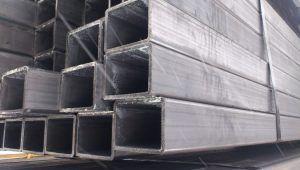 Electric-welded steel profile pipes are produced using various manufacturing methods. The first involves forming a profile from a flat blank. This method uses simple equipment with low energy consumption. However, the resulting product has some drawbacks:
- uneven distribution of stresses in the cross-section.
- significant thinning of the profile blank in corner areas.
In this case, advanced technologies that utilize uniform stress distribution during the initial stage make it possible to overcome these negative characteristics. This allows for the formation of a round blank with the desired volume.
Secondary processing in this case involves the formation of a section of the required dimensions and shape by means of pressure from special rollers.
Galvanized steel profile
Galvanized profile pipe is a special type of rolled metal product. Galvanized profiles offer enhanced corrosion resistance, extending their service life.
Video
The advantage of a galvanized product is:
- Speed and convenience of installation work.
- Increased strength.
- Resistance to fracture.
- Reducing the overall weight of the structure without losing its strength capabilities.
- Logistical convenience.
Their spheres are very different, and the main ones are:
- Construction of various scales.
- Mechanical engineering.
- Construction of prefabricated structures.
At the moment, this type of rolled metal can be found on advertising boards, greenhouses, fencing, and retail spaces. And everywhere, these steel pipes fully comply with all regulatory requirements.
Manufacturing Features
The production of profile pipes is more complex and more expensive than the production of round rolled pipes.
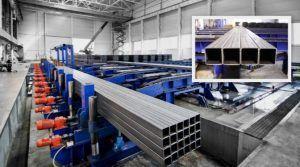
Technological methods for producing profile pipes are:
- Pressing round blanks produced on rolling mills. This option is considered expensive, so the second method is more popular.
- Welded connection of strip profiles.
The first method is notable for its ability to fully preserve the strength characteristics of steel pipes. This is because its joints are seamless. The production sequence for this method is as follows:
- Initially, a standard hot-rolled blank with a round shape is produced.
- Using a press, it is transformed into an oval, square or rectangular shape.
- Calibration of heated blanks is performed on the rollers of rolling equipment, so that the products acquire the required dimensions.
Welded profile pipes are indistinguishable from their seamless counterparts, but they lose up to 5 percent of their strength. The production sequence in this case is as follows:
- Sheet steel blanks are cut into strips.
- After this, such strips are rolled into a tape.
- It is fed into the rollers of forming machines, which deform flat sheets into profile blanks.
- The bonding seam is welded in special chambers filled with an inert environment.
Video
The main advantage of a profile pipe is its low cost and high strengthPurchasing these steel products is easy. Managers at any company will provide full information on their prices and specifications.
Steel profile pipes are successfully used in the construction of retail spaces, warehouses, sports facilities, residential buildings, and industrial buildings. These products are used as supports, columns, and various structural elements.
Their high strength makes them highly sought after for the construction of particularly complex metal structures. These products are deservedly popular in the construction market.
A very technically sound explanation of the advantages of using profile tubing. I usually recommend it to my clients for low-cost construction. It significantly saves money, is extremely durable, and has a long service life. I learned several useful facts from the author, thank you.