Underfloor heating is a modern form of residential heating that offers tremendous economic benefits. To achieve comfortable temperatures in your home or apartment, you must follow the installation and operation instructions.
Compliance with technical regulations will ultimately result in high-quality heating of any room, regardless of flooring. Next, let's consider when the floor can be turned on after tiling and how to do it correctly.
Next, let's consider the question of when the floor can be turned on after laying the tiles and how to do it correctly.
How long after laying tiles should I turn on the floor?
Tiles are used not only in bathrooms (See what type of bathroom flooring to choose and how to install it), toilets, but also in kitchens, living rooms, hallways, and other rooms. Ceramic flooring looks hygienic, aesthetically pleasing, and expensive, and the tiles themselves porcelain stoneware is different high thermal capacity characteristics. It is laid using tile adhesive.
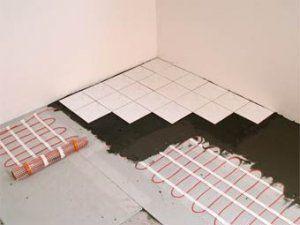
This type of finish retains heat well, but takes a long time to warm up with radiator heating. A perfect ceramic tile floor is achieved thanks to a smooth concrete screed. When done correctly, it not only supports the heavy material but also provides a strong protective frame for the heating elements.
Please note! Porcelain floor tiles have high thermal conductivity, but ceramic chip tiles are not suitable. They are thermal insulators. If you're laying over a water-heated floor, porcelain tiles are the better choice.
The optimal thickness of a concrete slab with underfloor heating under the tiles is at least 40 mm. The mixture will fully dry in at least 28 days. An additional week is required for the tile adhesive to harden. This means that once the tiles have been laid, the floor should not be turned on for at least 35 days.
When will the screed dry?
When planning installation, the system is laid on a level surface. If the surface has horizontal unevenness, it is corrected with a screed. The optimal layer of leveling compound depends on the angle of the slope and ranges from 30 to 50 millimeters. A cement-sand or concrete mixture is used to create the screed.
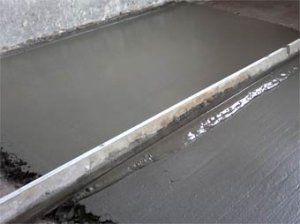
Since any grade of cement requires several days to harden, the thicker the layer, the longer the mixture will take to dry. However, it's important to remember that for subsequent installation of an underfloor heating system, plasticizers and other additives are added to the mortar to ensure a high thermal conductivity coefficient.
Drying must occur under certain conditions: an air temperature of +25°C and an ambient humidity level of 60-70%. In this case, the floor with the heating installed will take approximately 30 days to "mature." Do not turn on the underfloor heating too early after pouring. This time also allows the tile adhesive and grout to dry.
How long after pouring the screed should the floor be turned on?

So, at least a month should pass between the screed application and the start-up. During this time, the screed will completely dry. This curing period ensures that the start-up won't cause any irreversible consequences, such as a short circuit or floor deformation.
To avoid having to redo everything, the first thing to remember is that it is absolutely forbidden to turn on the heated floor at full power.
To extend the life of the heating system, after the screed and tile adhesive have dried, run the system at a temperature of +35°C for 18-20 days and only then set the desired temperature. Therefore, 50-55 days should pass from the start of creating a level surface until the underfloor heating is ready for use.
Please note! Do not turn on hydronic underfloor heating under wet cement or adhesive after laying the tiles.
Common mistakes
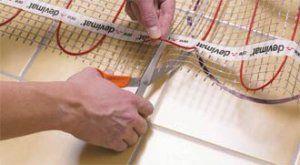
Strict requirements for when to turn on the system after tiling don't guarantee a perfect job. Homeowners often make serious mistakes that lead to complex problems.
The most common mistakes when installing underfloor heating:
- Cables or mats are laid across the entire room. This can cause overheating under large furniture (cabinets, sofas, beds, washing machines, etc.).
- Shortening the wires is prohibited, as this will simply damage the electric floor.
- Turn on the underfloor heating to check its functionality before the screed or adhesive has dried. It's safer to check the resistance of the system cables.
- Laying heating elements on a dirty surface. Even dust in the cable grooves will ruin all the work.
- Walking on wires can damage the wires, which can damage the electric underfloor heating.
- Encapsulating the temperature sensor. This device should be housed in a sealed corrugated pipe to ensure easy access if replacement is needed.
- Negligence. To ensure the work was carried out correctly, it is necessary to measure the resistance before laying the elements in the screed and after drying.
- Using the system to speed up the drying of screed or tile adhesive will definitely damage the cable.
- Neglecting to ensure tightness. Underfloor heating elements must fit tightly within the grooves; air pockets can damage the system.
- Lack of a diagram or plan for installing underfloor heating. It's not necessary to draw it; you can photograph the completed outline, thereby protecting yourself from damaging the cable during plumbing installation or drilling later.
Please note! The system must not be turned on on the day of installation.
Specialist recommendations
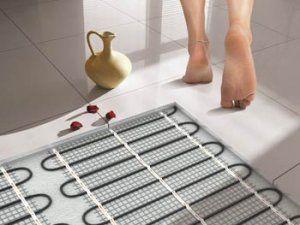
If you've decided to install an infrared floor under tile and are unsure of your abilities, it's best to seek help from an experienced professional. This way, you can not only get a functioning heating system but also learn some tricks to carry out the job yourself.
The main recommendations are patience and adherence to the rules, as well as using only high-quality building materials and heating elements. The mistakes mentioned above should never be repeated.
To ensure the floor heats the room well and lasts a long time, it must be installed correctly. Cables should only be laid in clean, primed grooves in the already-dried screed.
If the system is being poured with concrete, the voids must be filled. Before and after pouring the screed, measure the cable resistance. This will ensure that the cables are not damaged. Don't rush to turn on the underfloor heating.
After waiting the required time, gradually warm up the surface and ceramic coating. A heating mat under the tiles is essential. Following these recommendations will ensure an effective and aesthetically pleasing heated floor.
We hope this article will help you in arranging heating for your home.