Thermal insulation is a crucial element when installing underfloor heating. It determines heat consumption and maintains an optimal room atmosphere.
The lack of thermal insulation will lead to condensation, which in turn leads to dampness and mold. Furthermore, without this insulation, some of the heat will escape downwards, thereby wasting it.
The most popular and modern thermal insulation product for heating systems is polystyrene foam.
- What is polystyrene foam?
- Characteristics and advantages of polystyrene foam
- Parameters for choosing insulation, what to pay attention to
- Analogues of polystyrene foam
- Types
- Profile (polystyrene foam mats)
- Foiled polystyrene
- Unpressed
- Extruded thermal insulation material
- Pressed and autoclaved
- Where is laying permitted?
- What base is it laid on?
- How to install polystyrene foam under underfloor heating
- Methods of fastening the coolant
- Video materials
What is polystyrene foam?
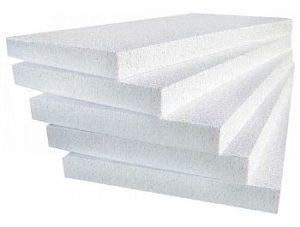
Expanded polystyrene is a foamed polymer. It is produced by foaming a mass with the addition of a low-boiling liquid. This results in the formation of granules with a waterproof shell.
They are then exposed to hot steam, causing them to expand up to 30 times their original size. The granules bond together to form high-density polystyrene foam boards. This product is unique because, despite its lightness and airiness, it can withstand pressure and compression.
German scientists succeeded in obtaining this material in the 20th century by synthesizing styrene, a chemical substance that was released by heating Styrax resin.
Characteristics and advantages of polystyrene foam
Expanded polystyrene is superior to other thermal insulation products because it creates a rigid and durable surface. It's similar to foam plastic, but has a denser structure with smaller cells.
The main positive properties of polystyrene foam:
- the insulation has high moisture resistance and the ability to impermeable to vapor, which makes it possible to maintain thermal conductivity at the required level, even when the product is exposed to moisture;
- provides excellent sound insulation, which is an important condition when installing warm systems;
- environmentally friendly and not dangerous for humans;
- the insulation prevents the development of fungi and mold;
- resistant to chemicals;
- maintains its operational properties at maximum temperatures from -50 to +85 degrees;
- It has a low weight, which allows it to be used without the risk of making the structure heavier;
- easy to work with: laying, cutting, processing, so all procedures can be done independently;
- can be laid on any base, as its surface is smooth;
- reduced thermal conductivity due to the bubble structure;
- has waterproofing properties, as it is resistant to moisture.
The material's safety deserves special mention—it's fireproof and even self-extinguishing. However, the insulation does have a drawback: it releases toxic substances when smoldering.
Parameters for choosing insulation, what to pay attention to
When purchasing a polystyrene foam floor covering for underfloor heating, you should consider factors such as quality and type.
Initially, the quality of polystyrene foam boards for underfloor heating is determined by their appearance. The following points should be considered:
- Color should be bright and uniform, indicating compliance with the manufacturing process. Blue or orange shades are most commonly sold. The color scheme itself does not affect the product's characteristics.
- Smell - a strong smell is unacceptable, but a slight, light, specific smell is possible.
- The shape is clear geometric, and the edges are smooth and do not crumble.
- Granules are of the same size without voids.
- The surface must be smooth, otherwise the thermal insulation qualities will be reduced.
For your information! Experts recommend carefully inspecting the cut or break area. If the granules are intact in this area, this indicates poor adhesion. In a high-quality slab, the granules should also disintegrate when broken.
Analogues of polystyrene foam
There are a number of materials that can also be used as thermal insulation, but their characteristics are significantly inferior to polystyrene foam.
These include:
- Cork slab is expensive.
- Mineral wool does not tolerate moisture well, is not suitable for installation on the ground, and is contraindicated for the installation of hydronic underfloor heating.
- Foamed polyethylene - the weight of the screed leads to a significant reduction in its thickness.
- Polystyrene foam is a less suitable material for underfloor heating systems due to its fragile structure and insufficient rigidity. It can be used in underfloor heating systems, but only in non-load-bearing systems.
Good to know! Despite manufacturers' claims, polystyrene foam, especially when used with hydronic underfloor heating, requires good waterproofing. Otherwise, the thermal insulation will be significantly reduced by moisture.
Types
The quality of polystyrene foam is influenced by the production technology, which determines various material characteristics and installation requirements. Polystyrene is produced in several grades.
Profile (polystyrene foam mats)
Particularly popular when installing heated floors Expanded polystyrene boards, developed specifically for these systems, have gained popularity. The main advantage of these mats is the special bosses on their surface, which significantly simplify the installation of heating elements, as no additional fastening parts are required.
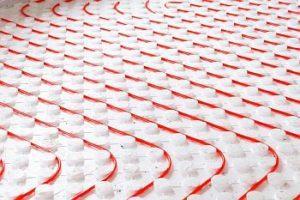
The advantages of such slabs:
- the presence of a rigid vapor barrier layer of polystyrene foam - protects against condensation;
- mats with a foil laminated coating - it protects against the effects of chemicals contained in the screed;
- small weight and size - simplifies installation;
- have side locks - resulting in a monolithic structure without acoustic and cold seams;
- the presence of a relief surface on the reverse side allows for smoothing out small roughness of the base and creates conditions for its ventilation;
- service life (50 years) - provided that the underfloor heating system is used correctly;
- the thickness of the slab does not change under the weight of the screed.
Foiled polystyrene
Foamed polystyrene foam with a foil layer is primarily designed for underfloor heating. The reflective foil promotes more efficient heating of the room by evenly transferring heat from the floor surface upward.
When installing hydronic underfloor heating, the polystyrene foam must have a foil layer. Using foil-faced polystyrene will simplify the installation process.
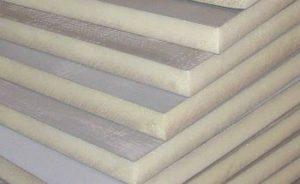
Advantages of this product:
- thermal resistance to temperature changes;
- excellent sound insulation;
- moisture resistance;
- does not release toxic substances when heated;
- not subject to decay.
Important! This material is contraindicated for installation of infrared heated floors.
Unpressed
Unpressed polystyrene foam is produced by molding a composition that has been pre-dried and foamed at +80 degrees.
This is the cheapest material, and also the most fragile.
Video: Installing insulation under underfloor heating
Extruded thermal insulation material
The extrusion process involves forcing the mixture through an extruder with dies into a slab shape, followed by drying. A reagent is first added to the material, causing active foaming.
EPS is a new type of insulation, produced in the forms of Technoplex and Penopremium. Today, extruded insulation for underfloor heating is becoming increasingly popular.
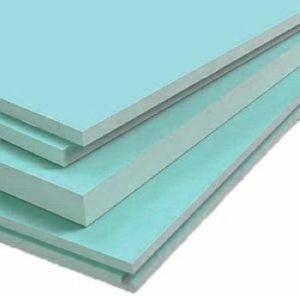
EPS is an ideal underlay for underfloor heating, as it doesn't emit toxic substances when heated and is considered the best thermal insulator. However, it is quite fragile and doesn't provide good sound insulation.
Pressed and autoclaved
Pressed material is similar to extruded material, but differs in production technology.
The manufacturing technology is the same, but the granules are foamed in an autoclave. Autoclaved polystyrene is not suitable for insulating underfloor heating systems.
Watch the video
Where is laying permitted?
Expanded polystyrene is recommended as insulation in areas where increased load on load-bearing floors is unacceptable, and in areas with low ceilings. During construction, expanded polystyrene is used to insulate:
- water pipeline;
- roof;
- floor;
- door and window slopes;
- walls.
For example, thermal insulation of rolled pipe materials with polystyrene foam for water-heated floors is considered financially justified due to its properties.
Furthermore, the use of polystyrene foam blocks allows access to the pipeline in case of problems by removing a section of the covering. For this same reason, this product is often installed when installing electric underfloor heating.
What base is it laid on?
Expanded polystyrene is an affordable form of thermal insulation that promotes the proper functioning of underfloor heating systems. The material can be installed on a variety of substrates:
- sand and crushed stone - obtained by compacting the soil;
- gravel - which is compacted and protected from moisture;
- concrete - equipped with a waterproofing coating;
- wooden - flooring with waterproofing.
For your information! It is prohibited to use mixtures containing solvent or bitumen mastic as a waterproofing layer on the base under polystyrene, as they may destroy the insulation.
How to install polystyrene foam under underfloor heating
When laying polystyrene as a base for underfloor heating, begin with a rough preparation of the base; it must be level and clean. If necessary, pour a concrete screed if the installation technology for this type of underfloor heating requires it.
Next, you can lay a special anti-acoustic film, which will provide excellent sound insulation. The next layer is waterproofing, which can be a simple polyethylene film. To prevent the screed from cracking when heated, a damper tape should be applied around the perimeter of the room. After that, the actual insulation work begins.
Let's look at the installation of polystyrene slabs for underfloor heating using a private home as an example:
- plywood or boards are laid on which the joists are installed, and polystyrene foam is placed between them;
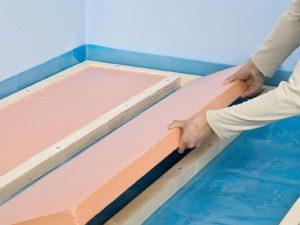
- If the insulation is laid on a screed, the slabs are laid end to end and the seams are sealed with tape;
- The mats are covered on top with a vapor barrier and waterproofing material;
- additional lathing is installed across the joists, it will facilitate ventilation circulation;
- the next layer is laid with plywood sheets;
- guide rails are mounted, between which heating elements are placed;
- If a water system is being installed, then foil with a thickness of at least 30 microns is laid on the pipes, or the entire floor area is covered with foil-clad polyethylene;
- then, the structure is covered with plywood or OSB sheets - in the dry method, or a screed is poured.
Now you can proceed to installing the flooring.
If you use polystyrene foam boards with studs as insulation, then the installation of underfloor heating is significantly simplified.
Heating elements must be placed in the mat grooves and covered with a layer of waterproofing. Plywood is installed on top, or a screed is poured. Then, flooring installation can begin.
For your information! When installing rigid slabs on compacted gravel, additional moisture protection must be used.
Methods of fastening the coolant
There are different ways to attach the coolant when installing underfloor heating:
- Reinforcing mesh: Water pipes or electrical cables are secured to the mesh with plastic ties. Two ties are sufficient for 90-degree bends of the heating elements, and three ties are required for 180-degree bends.
The advantages of this method are ease of use and reliability. The disadvantages include the labor-intensive process and the risk of damage to the rolled pipes against the mesh during operation of the system if they are made of metal-plastic composite. Furthermore, the thermal efficiency of the floor may be reduced due to the voids between the pipes and the mesh.
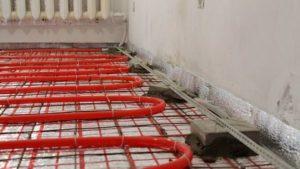
- Plastic guides are laid on polystyrene foam with a smooth surface. They can be of varying lengths, connected by inserting one into the other, and secured with fasteners. Before securing them, it's important to determine the layout of the heating elements. Plastic brackets are used to secure the guides to the polystyrene foam.
The advantages are the speed and ease of laying out the rolled pipe materials and their secure fixation. The disadvantages are the complicated marking process and the lack of a mesh to reinforce the screed.
For your information! It is possible to make guides yourself from wooden slats.
- Slabs with bosses—no additional fixing is required, as the bosses serve as guides, and the coolant can be routed between them in any pattern. Mats facilitate the installation of rolled pipe materials, and the bosses protect them from damage. The main disadvantage is the high cost of the slabs.
- Using Velcro is a new mounting method. It's secured by wrapping the pipes with Velcro tape, which adheres to the base. This method is quick and convenient, requiring no additional fixing. The downside is that installation is complicated due to the lack of markings, and slight movement is possible when walking on the floor.
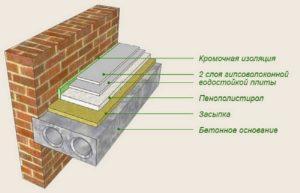
Everyone can choose the thermal insulation material for heated floors, the method of placement and fixing the coolant according to their preferences and financial capabilities.
Experienced thermal insulation professionals can install extruded polystyrene foam themselves without foil, fasteners, or markings. However, if you lack this experience and don't trust yourself, it's best to hire professionals to install a thermal insulation system with a polystyrene foam underlayment.
Video materials
See how to insulate the screed before laying.