Infrared heated floors have only recently appeared on the market, but are already in high demand. This is due to their low cost and easy DIY installation.
The main thing is to follow the instructions for installing the system, which specifically mentions the need for a substrate under the infrared film.
- Is an underlayment necessary for an infrared floor?
- The structure of the film floor "pie"
- Which underlay is better to choose and why?
- Extruded polystyrene foam
- Lavsan
- Cork
- Self-adhesive backing
- Izolon, Penofol
- fiberboard
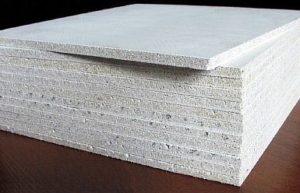
- Magnesite boards
- Is additional thermal insulation necessary or not?
- Laying technology
- Video materials
Is an underlayment necessary for an infrared floor?
Infrared heated floors are made of a film with a carbon fiber plate inside. When heated, they emit infrared radiation that spreads in various directions. To direct the warm air flow in the desired direction and avoid heating the neighbors' ceilings below, a heat-reflecting layer underneath the film is required.
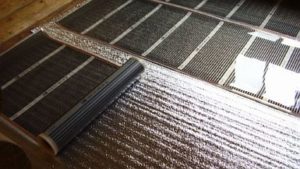
The main functions of the underlay for underfloor heating:
- level the surface - extruded polystyrene foam is ideal for this; it is equipped with side locks, which allows you to make the surface even;
- prevent heat loss - infrared rays are directed strictly upward, which leads to energy savings;
- To make the process of laying the floor covering easier, it is recommended to select the base for the film based on the flooring product.
The structure of the film floor "pie"
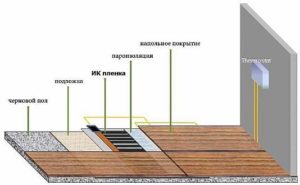
Infrared underfloor heating is a multi-layered "pie," in which each layer performs an important function. It consists of:
- The base must be level and clean. Any cracks or uneven areas should be repaired with special mixtures. If the defects are significant, a rough screed must be poured, after laying a waterproofing layer.
- Aluminum foil (reflector) – laid on the subfloor. This essential layer creates a shielded surface that reflects infrared radiation.
- Fiberboard or magnesite boards are used as insulation. Bitumen film or special tape is used to connect the boards together.
- Infrared film is a heating element.
- The final flooring underlayment should be selected based on the type of flooring. The thickness chosen depends on the quality of the flooring, including its evenness.
We invite you to read the article: Infrared heated floor under laminate flooring, all the information - the device, how to choose and install it yourself.
Which underlay is better to choose and why?
There are a large number of products on the modern market that are used as reflective underlay for heated floors.
When choosing an underlay for a film floor, don't rely solely on cost considerations; consider the technical features, room characteristics, and material. Let's look at the most effective and safest types.
Extruded polystyrene foam
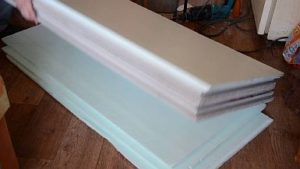
Extruded polystyrene foam has a structure of uniformly distributed closed cells. The material has a low density and a high degree of moisture resistance.
It doesn't bend, so it's often used as an underlay for laminate flooring. It's also extremely durable and has good thermal insulation properties.
The product is available in rolls and sheets. The IR film is applied directly to this substrate.
Lavsan
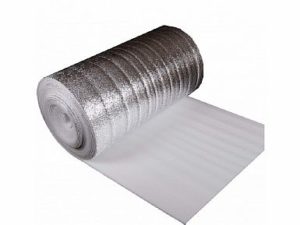
A backing made of foamed polyethylene with a metallized lavsan layer is a product resistant to aggressive chemicals and microorganisms.
The lavsan flooring is laid under the film, thereby minimizing energy loss, increasing the floor's efficiency, and ultimately leading to cost savings.
This type of reflective underlay is most suitable for infrared floors. It has a specific power density. Therefore, when choosing a polyester underlay, consider the flooring material to be installed over the heated floor.
Cork
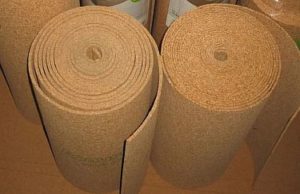
Cork underlayment is a natural material made from crushed and pressed tree bark. It's environmentally friendly and safe for health. It's not cheap, but it's long-lasting. It's available in rolls or sheets.
Furthermore, cork is resistant to deformation (it retains its original shape), offers good heat and sound insulation, and is easy to install. The main drawback of cork underlayment is its susceptibility to moisture. However, this disadvantage is important to consider when installing underfloor heating systems, while cork is a perfectly suitable material for infrared systems.
Self-adhesive backing
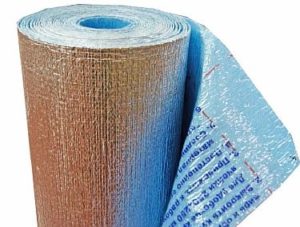
The self-adhesive backing features a heat-reflective foil layer on one side and an adhesive backing on the other, which secures the product to the concrete base. The material is ideal for use on uneven and irregular surfaces.
The advantages of these pads are high sound and waterproofing properties, and ease of installation due to the product being self-adhesive (no additional fixation required).
Izolon, Penofol
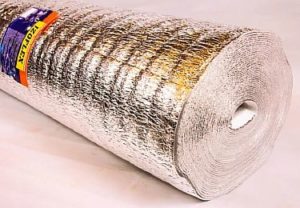
These types of insulation are made of foamed polyethylene. Their advantage is that they act as both a reflector and an insulator.
These underlays are durable, have excellent soundproofing properties, are long-lasting, and practical. They are recommended for laying in a "pie" over a film floor with a laminate or engineered wood finish.
fiberboard
Fiberboard (fiberboard) is a board made of cellulose fibers and various additives. It offers increased rigidity and durability, making it ideal for installation under film with a ceramic or laminate finish.
Magnesite boards
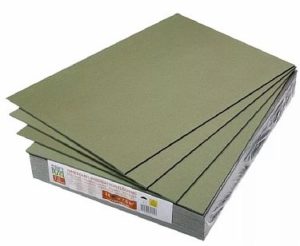
Magnesite boards are moisture-resistant, offer good sound insulation, are durable, and have a high density. They are environmentally friendly, being made from natural materials.
This type is recommended for installation in the "pie" of an infrared floor, as it has sufficient density despite its good flexibility. Therefore, it perfectly levels any surface.
Please note! It is not recommended to lay an underlayment with an aluminum foil layer under the infrared floor, as this coating conducts electricity. A reflective metalized layer is better.
Is additional thermal insulation necessary or not?
Additional thermal insulation when installing an infrared floor, it is directed on:
- Protection of a heated room from the penetration of cold air currents from outside;
- Saving heat inside the room and preventing it from escaping.
The need for additional insulation depends on a number of factors:
- The room in which the floor is being installed. If it's located on the ground or above a basement, the insulation layer should be thicker.
- The type of underlayment installed—that is, its type and thickness. When using a thin foil-clad product as a flooring, insulation made of expanded polystyrene, cork, or foam plastic is required.
If you don't follow these rules, the floor will not work efficiently (heat will be wasted), and this will entail additional costs.
Laying technology
Laying the underlay is a crucial step in installing infrared underfloor heating. Therefore, a number of rules must be followed during installation:
- when using fiberboard sheets or magnesite boards, the screed should first be covered with aluminum foil;
- in the case of a polymer metallized film, its reflective side should be facing up;
- The insulating material must cover the entire surface of the heated room.
As with installing a substrate in the “pie” of any warm floor, the lining for the infrared film is mounted on a clean base equipped with a vapor barrier layer (polyethylene).
The insulation is laid across the entire room, reflective side up, with a 100 mm gap from the walls. These gaps are covered with tape dampers. Joints are sealed with special metallized tape. To prevent the material from shifting during flooring work, it is secured to the subfloor with double-sided tape.
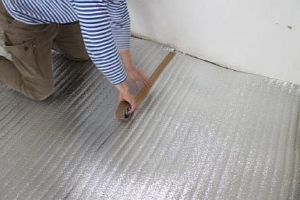
After this, the infrared film is installed, ensuring there are no air gaps between it and the substrate. Then the finishing coat is applied.
The efficiency of the floor, and therefore the comfort in the home, depends on the correct and high-quality installation of the underlay.


I'm truly grateful to the website's developers and authors for their up-to-date and comprehensive information on various topics. We recently encountered the issue of underfloor heating installation, and your article was incredibly helpful; everything is presented clearly and accessibly. The support team also promptly responds to any questions; well done. We'll keep an eye on the news.
What exactly are you not happy with?