The service life of a fireplace or stove largely depends on the method and the material used to seal the chimney, whether it's made of stainless steel or other materials.
Proper installation does not guarantee the absence of problems with combustion products entering the building. Over time, pipe materials undergo thermal deformation, which leads to ruptures and cracks in the structure.
This leads to reduced draft, requiring a large volume of combustible material to heat the house, leading to intensive soot deposition on the inner surface of the pipe. This is particularly dangerous, as it not only leads to condensation but can also cause a pipe fire.
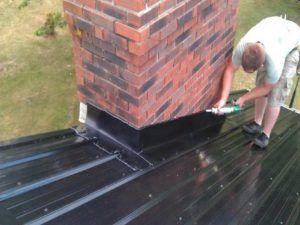
For this reason, to ensure the proper functioning of a stainless steel chimney or any other material, it must be regularly inspected and any defects promptly addressed. To avoid future problems, it's best to seal all cracks and joints to prevent defects.
There is a wide range of products available on the construction market sealing agents: based on silicone, bitumen, silicate and acrylicThe wide selection of sealants is generally divided into heat-resistant and heat-resistant, although there are, of course, many more varieties.
- Types of stainless steel chimney sealant
- Silicone sealants for stainless steel, glass, and other materials
- Heat-resistant and heat-resistant sealants: what are the differences?
- Heat-resistant adhesive for sealing: scope of application, characteristics
- Heat-resistant sealant: what structures it is suitable for, pros and cons
- Thermal tape and hot melt adhesive
- How to carry out sealing correctly?
- Sealing the chimney with cement
- What factors influence the choice of sealant?
Types of stainless steel chimney sealant
Sealing the cracks in stove or fireplace pipes prevents combustion products from entering the room. Reliable insulation makes using a stove, fireplace, or boiler as safe as possible.
Watch the video: High-temperature cleaning products for stainless steel and other materials
All sealing agents can be roughly divided into several types:
- silicone or silicate based;
- by composition: one-component or two-component;
- by temperature characteristics: temperature-resistant sealants and heat-resistant ones.
As the name suggests, one-component sealants They consist of a single component and require no mixing before sealing. This makes them easy to use and popular with homeowners who value the ease of use of their sealing solution.
Two-component However, before starting work, it must be mixed, strictly following the proportions specified in the instructions. The finished product must be used within a few hours of mixing. This option is not suitable for DIY joint sealing; two-component insulation is typically used by professional builders.
In addition to insulating chimneys, sealing compounds are also used to insulate the seams of heating systems based on electric boilers when eliminating pipe leaks.
Silicone sealants for stainless steel, glass, and other materials
When wondering how to seal a stainless steel, glass, plastic, or ceramic chimney, consider fire-resistant silicone. This material ensures tight contact between the components and provides reliable insulation. The main advantages of silicone sealants include:
- thanks to elasticity, the quality of contact is maintained for a long time, even when, due to high temperatures, the structural elements are deformed and change position relative to each other;
- After the polymerization process is complete, the material becomes very durable;
- silicone is absolutely waterproof;
- the material has a high degree of resistance to ultraviolet radiation and other weather conditions;
- Silicone is characterized by high heat and temperature resistance.
There are two types of silicone sealants:
- Acidic sealants. They release acetic acid during hardening, which can damage the chimney or roofing. This type of sealant is definitely not suitable for sealing a chimney made of stainless steel or natural materials such as cement, stone, or concrete, as it can contribute to corrosion of the metal components and damage to the adjacent parts of the chimney and roof.
- Neutral sealants, unlike acidic ones, release water and alcohol into the environment when hardening. This is a suitable sealant for stainless steel chimneys.
An additional benefit of silicone-based products is that when heated, the iron oxide they contain turns brown, making the insulation less noticeable against the roof or brickwork.
Heat-resistant and heat-resistant sealants: what are the differences?
Based on their temperature characteristics, insulation materials are divided into heat-resistant and heat-resistant. These are used to seal joints between different sections of a structure, as they can withstand different temperatures. While heat-resistant materials are only suitable for external surfaces, heat-resistant materials can be used to seal cracks in high-temperature chimneys, where temperatures are particularly high.
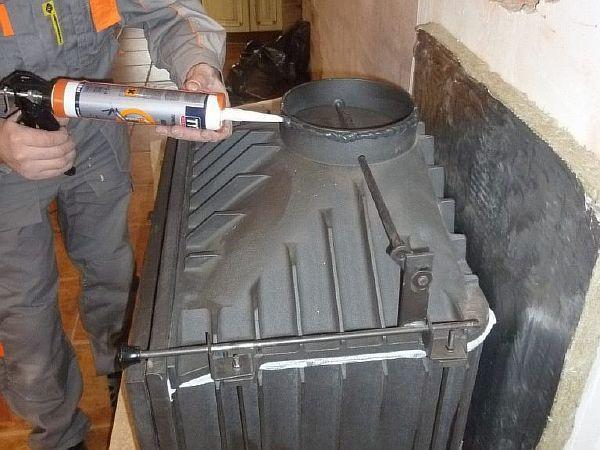
Heat-resistant adhesive for sealing: scope of application, characteristics
This type of insulation is suitable for working with the external walls of a fireplace, stove, as well as for processing the joint between brickwork and roofing.
It should not be used for stainless steel pipes, as it has a fairly low heating temperature - only 350°C.
Heat-resistant sealant is made from silicone. The temperature range at which the product can be used is affected by the additional components present in the product and their percentages. The most common additional component is iron oxide, which imparts a brown tint to the insulation.
The main characteristics of this species are as follows:
- Highly elastic heat sealant: Due to its resistance to deformation, silicone can be used to insulate sections of pipe with fairly complex shapes. It easily handles the task and will not crack under the influence of temperature;
- the average temperature range of heat-resistant silicone fluctuates between +250°C and +320°C;
- UV resistance: insulation can be used to seal external structural elements;
- Silicone is waterproof, making it ideal for outdoor use. Rain and snow are impervious to it.
- High adhesion allows the silicone composition to adhere perfectly to a wide variety of surfaces: brick, metal or ceramics.
Silicone has few disadvantages, but they still exist:
- Due to its low heat resistance, it is not suitable for sealing internal surfaces that are in direct contact with fire;
- Since the material is elastic, it cannot be painted. The paint will not last long on its surface.
The curing speed of heat-resistant insulation material depends on the working temperature. At low temperatures and high humidity, the compound will take longer than indicated on the packaging. In dry air and high temperatures, it will cure faster. The insulation also adheres better to dry surfaces.
Heat-resistant sealant: what structures it is suitable for, pros and cons
Heat-resistant insulation is a better option than sealing metal and stainless steel chimney joints. This is because silicate, the main component of the fire-resistant compound, withstands high temperatures of up to 1200-1300°C, and even up to 1600°C under short-term loads.
Watch the video: Stainless Steel vs. Galvanized Steel
A silicate compound is suitable for sealing cracks in fireplaces and stoves where direct contact with fire occurs. Typically, this high-temperature insulation material is gray or black.
The main advantages of fire-resistant silicate:
- The chemical inertness of the product allows it to be used for structures made of any material, since it does not react with it;
- silicate insulation is resistant to sunlight and precipitation, it can be safely used for treating chimney sections located outdoors;
- The top layer becomes porous after drying, making it easy to paint.
Cons:
- Once the polymerization process is complete, the product becomes rigid: the slightest vibration or movement of structural elements can cause cracks. Therefore, it is not used for pipes made of materials prone to significant thermal deformation. Only cracks should be sealed with silicate sealant, as treating the chimney elbow may cause problems with disassembling it for cleaning.
- Silicate products have rather low adhesion: the composition will not last long if the sealing area is not treated with a special composition before application;
- A silicate-based sealant can only be applied at temperatures above 20°C and humidity levels not below standard levels. Failure to meet these conditions will result in the joint taking significantly longer to set.
Although all silicate heat sealants can withstand high temperatures, it is best to use only fire-resistant sealants labeled "fire-resistant" when sealing areas that will be exposed to flame.
Avoid applying silicate sealant in multiple layers to increase its durability, as this will prevent it from drying properly and cause cracks. The required application width and depth are specified in the instructions. Silicate sealant adheres better to a damp surface, so it's best to lightly dampen the area to be applied before beginning work.
Thermal tape and hot melt adhesive
 Along with liquid sealants, there's a very convenient product for sealing pipe joints made of materials such as plastic and metal (stainless steel): thermal tape. Thermal tape is excellent insulation for chimneys. Simply wrap it around the joint and heat the material. Since it's a self-shrinking sealant, the heat will cause the tape to shrink and seal tightly around the pipe joint.
Another way to seal joints and cracks is with a heat-resistant sealant. This insulation adhesive can be made from materials such as acrylic, silicone, or polyurethane. It not only seals seams but also reliably bonds surfaces together. The adhesive has excellent waterproofing properties and adheres well to natural materials and concrete.
How to carry out sealing correctly?
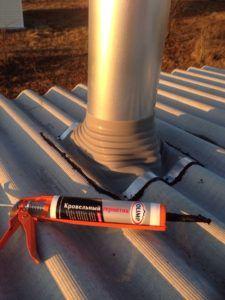 The most common difficulty is thermal and waterproofing of the fireplace, or more specifically, the stainless steel pipe outlet through the roof and the sealing of the seams between them. This is important not only for high-quality pipe insulation but also to prevent roof leaks.
The point where the chimney meets the roof is called the flue outlet. This is a key part of the entire structure and must be carefully sealed. The longevity of the roof and the performance of the heating system depend on its reliability.
In addition to their basic elements, most modern roofing materials include special non-combustible components that help seal the chimney as tightly as possible, preventing the hot chimney from heating the roof and potentially starting a fire. Thus, the insulation also serves as a fire protection layer.
Even if your home doesn't have a fireplace or stove and is heated by a boiler, you still need to purchase a boiler sealant to ensure good draft and stable operation of the heating appliance.
Most sealants come in cartridges or tubes with a sharp tip that should be cut at a 45° angle before use. It's important to make the hole the same diameter as the future joint.
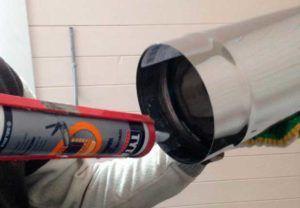
Apply the sealant evenly to the desired areas of the chimney using a standard construction gun. If you're treating a detachable stainless steel flue pipe, apply the sealant only to the joints to allow for easy cleaning and disassembly of the components for cleaning.
There are several simple rules for working with sealants:
- It is not recommended to seal pipes and other structural elements at temperatures below +5°C;
- You should work only with gloves; if the sealant gets on your skin, immediately wash the area with running water;
- the insulating composition requires at least 24 hours to dry completely;
- Once the work is completed, you should light the stove or light the fireplace to check the quality of the work performed.
The sealant should be used as follows:
- Clean the surface where the sealant will be applied;
- If the compound is heat-resistant, it's best to abrade the area to improve adhesion. If the surface is brick, you can scratch it a few times for this purpose;
- The application area is degreased and dried (either naturally or with a hair dryer). Drying is only necessary for silicone-based compounds; for heat-resistant compounds, on the other hand, the surface must be moistened.
Next, seal the cracks, crevices, and joints. Wear gloves when doing this, adhering to the specified joint thickness and width. It's important to ensure adequate airflow to the application area to ensure proper curing.
Sealing the chimney with cement
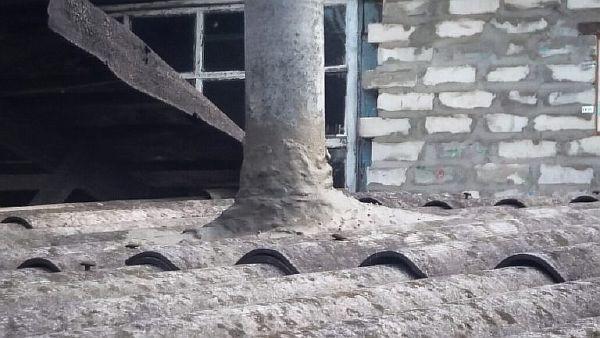
While silicone and silicate sealants are available for modern finishing materials, a method known to our grandfathers—a mixture based on asbestos and cement—is suitable for sealing a slate roof.
Sealing the chimney with cement occurs as follows:
- First, prepare a mixture of cement and asbestos in a 1:1 ratio. It's best to use fluffed asbestos, but sheet asbestos can also be torn into small pieces;
- then the asbestos is mixed with water and allowed to swell until it turns into a homogeneous mass;
- swollen asbestos is mixed with cement;
- the resulting cement mixture is used to coat the gap between the pipe and the roof;
- then you need to wait until the solution is completely dry, and you can heat the stove.
What factors influence the choice of sealant?
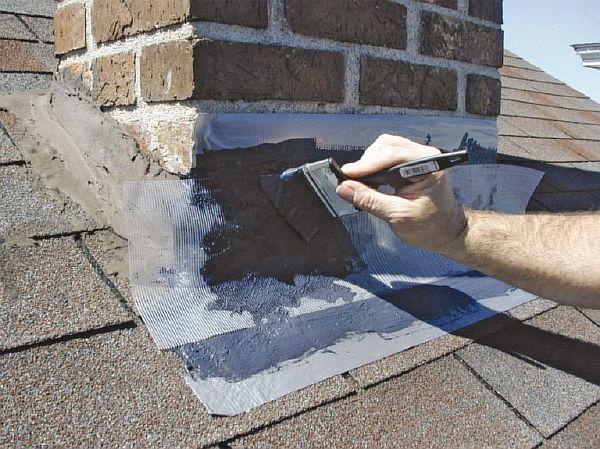
When choosing the right waterproofing and thermal insulation product, consider the operating conditions of the stove, fireplace, or boiler. It's also important to consider where the product will be applied: inside the pipe, outside, or at the junction between the chimney and the roof. The heating temperature of the surface to be treated also influences the choice of sealant.
Watch the video: Stainless steel pipe after 2 years of use (external galvanization and internal stainless steel)
However, in any case, it is worth following general recommendations that are true in all cases:
- elastic products are better suited for hard-to-reach areas and joints subject to temperature deformations;
- solid sealants are suitable for cracks and brickwork;
- Sealants containing iron oxide acquire a brown tint, which masks them well against the brick background;
- When sealing chimneys made of metal, stainless steel, natural stone, or brick, do not use acidic compounds, as they can damage the surface of the boiler or stove chimney.
Don't skimp on chimney sealant, as regular cleanings and repeated disassembly will result in significantly higher costs, and there's no saving. Furthermore, a poor-quality sealant can lead to soot getting into living spaces, deposits on walls, poisoning residents, or even a fire.