 Removing combustion gases from the living area through the chimney flue is crucial for the safety and comfort of the home's residents. Carbon monoxide is invisible, making it even more dangerous for residents.
There are numerous designs of flue gas exhaust systems, as well as materials used to construct them. Corrugated pipes have recently become a popular choice due to their ease of use and ease of manufacture.
Such products are made from various materials, but we do not consider plastic products, since the working conditions in our case are not suitable for them.
- Advantages and disadvantages of corrugated pipes for flue gas exhaust
- Installation procedure for a flue gas duct for a gas boiler
- Installation of corrugated pipes for a chimney
- Design and types of corrugated pipes for chimneys
- Aluminum corrugated pipe for chimneys
- Stainless steel corrugation
- Installation instructions
- Tips and recommendations
- Conclusion
Advantages and disadvantages of corrugated pipes for flue gas exhaust
The positive aspects of using corrugated pipes for such purposes include the following:
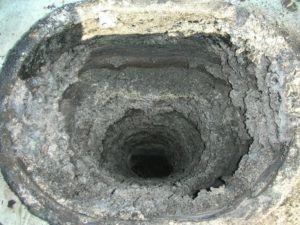
- A circular flue cross-section is the most favorable for gas flow. The flow rises along it in a spiral, creating stagnant zones in the corners of a square or rectangular flue where moisture present in the smoke actively condenses. This moisture becomes a "trap" for unburned fine fuel particles. This mixture becomes soot, which can completely block the flue, making further operation of the heating unit impossible.
- Easily connect individual flue pipe components. All you need is a simple adapter and a couple of clamps.
- Simple and affordable repairs involving simple dismantling and easy assembly of a new flue duct.
- The need for various components is minimal, since corners, bends and other similar elements are not used.
- Convenience of laying the chimney with changes in direction if it is necessary to bypass obstacles in the form of rafters and other structural elements.
However, there are also several negative aspects to their use:
- The thin wall thickness (0.1 mm) leads to active cooling of the flue and is accompanied by the formation of large amounts of condensate, and therefore soot. A flue duct made of heat-resistant corrugated pipe requires careful and high-quality insulation.
- Unevenness of the inner surface of the corrugation walls, which contributes to increased formation of condensation and soot.
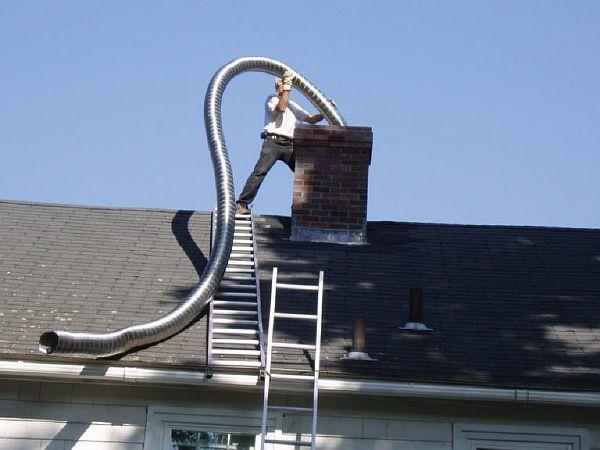
Most often, corrugated pipes are used to install liner in brick or other rectangular channels,
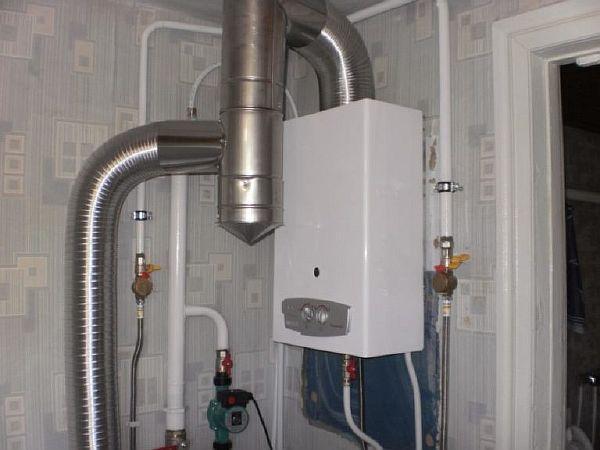
and also in places where the boiler is connected to the smoke exhaust duct.
Installation procedure for a flue gas duct for a gas boiler
Corrugated pipe is a popular choice for gas heating systems. In this case, heat-resistant aluminum corrugated pipe can be used. However, the basic requirements for the flue gas exhaust system remain the same:
- reliability;
- durability;
- tightness throughout the entire service life.
The chimney consists of the following elements:
- The pipe is topped with a cap at the top. This can be a simple protective cap or a deflector. More details about this... What types of deflectors are there and which one is best to choose based on their characteristics?.
- It is attached to the main flue pipe, which consists of individual sections 1.0–1.5 meters long. They are connected using spacers of the appropriate size. Two screw clamps are installed at the joint, one at each end of the pipe being joined. It can be used without external insulation, but insulation is still considered necessary to prevent clogging.
- When installing an internal chimney at the intersection with the ceiling or roofing cake, special pass-through couplings are installed to ensure fire safety.
- An outdoor smoke exhaust fan is mounted to the wall using brackets. The distance between brackets should be no more than two meters.
- A tee is installed at the transition from the boiler to the chimney.
- A condensate collector with a device for draining the condensate is attached to its lower outlet. As it accumulates, it must be drained and disposed of.
- A mandatory element is a viewing window for monitoring the condition of the smoke channel.
When assembling and installing a flue gas exhaust system, the following circumstances must be taken into account:
- It is necessary to carefully read the rules for installing a chimney for a gas water heater or other heating device.
- In accordance with them, the appropriate design of the smoke exhaust device is selected.
- Throughout the entire length of the chimney duct, no narrowing of the duct cross-section or sagging in horizontal sections is permitted. These sections should not exceed one meter in length.
- The distance from the boiler firebox to the flue gas vent must be more than 5 meters.
- The distance from the roof ridge level should be:
- not less than half a meter, if the pipe comes out at the same distance from the ridge horizontally;
- the cap can be at the level of the ridge if the distance from it to the chimney is 1.5 – 3.0 meters;
- The deviation from the horizon is possible up to 10 degrees if the pipe is located at a distance of more than 3 meters from the ridge.
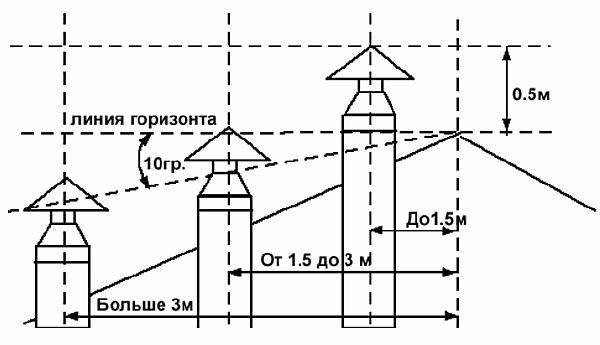
Failure to comply with these requirements may result in insufficient draft in the chimney with all the ensuing consequences.
- The flue pipe diameter is directly proportional to the boiler's output. Most commonly, a corrugated pipe measuring 110 or 130 millimeters is used. However, it's best to follow the recommendations in the heating unit's technical data sheet, where this parameter is mandatory.
- Climatic conditions of operation of the gas unit in terms of the magnitude of the temperature difference in the boiler room and the outside space.
Installation of corrugated pipes for a chimney
The assembly of this simple structure must be carried out in the following order:
- Select a location for the heating unit so that the chimney is straight and vertical. This means the chimney should not encounter any obstructions along its path. This primarily applies to transitions in the floor slab and rafter system.
- Install an elbow at the outlet of the boiler or gas water heater. Flexible corrugated aluminum or stainless steel tubing can be used instead. It should be noted that this section is almost never insulated from the outside, as the flue gas temperature in this area is high and condensation does not occur.
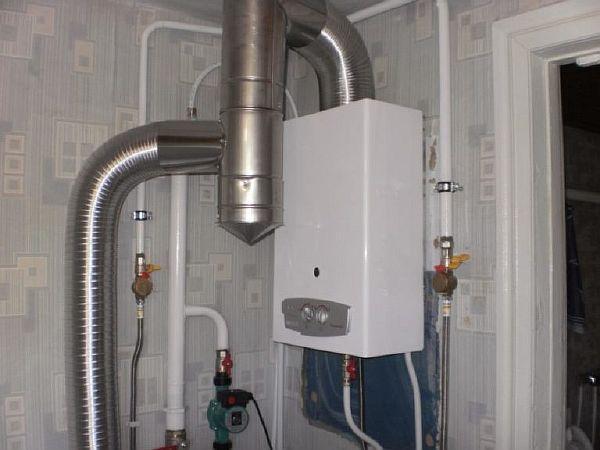
- Next, the straight section is installed with clamps and fastened to brackets (for a wall-mounted chimney).
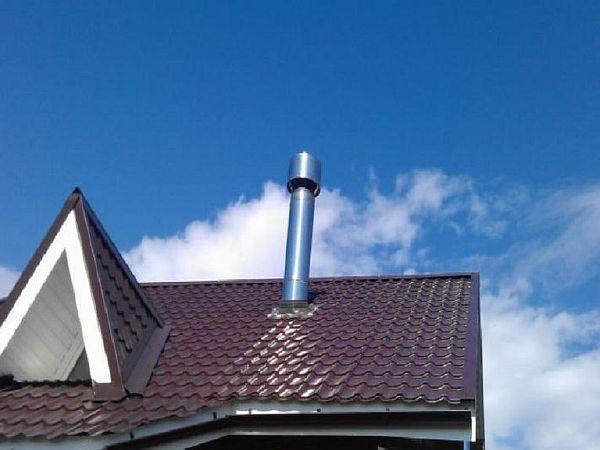
- It is advisable to make the outer part, rising above the roof, from insulated sandwich pipes; if necessary, install stretchers made of stainless or galvanized wire.
- Install a safety device in the form of a cap on the pipe.
- Install a condensate collector.
Important! To ensure condensate collection and prevent it from returning to the firebox, do not position the vertical section of the chimney directly above it.
Design and types of corrugated pipes for chimneys
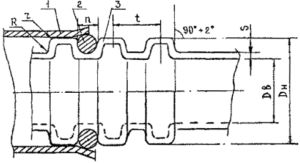
Corrugated chimney pipes are produced using a cold forming process on a special mandrel. Two types of materials are used for this purpose: aluminum-based alloys and stainless steel.
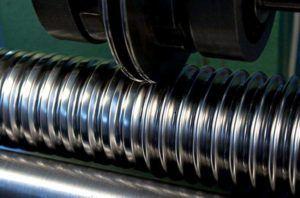 The workpiece is a strip approximately 50 millimetres wide and 0.1–0.5 millimetres thick.
The corrugation was originally intended for use on the air ducts of ventilation systems, where it continues to perform its function reliably to this day. Attempts to use such pipes for chimneys were successful, and since then this application has become increasingly popular.
Aluminum corrugated pipe for chimneys
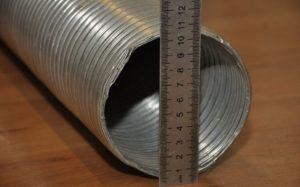 The aluminum alloys used in the production of this type of product can withstand temperatures up to 500 degrees Celsius, after which the thin walls of these pipes burn through. But it's not just the temperature that's important; it's also the aggressive environment represented by the condensate, which is a weak sulfuric acid solution.
Therefore, their use for this purpose is obviously very limited. It is not recommended to install corrugated pipes on the chimneys of solid fuel boilers, where the flue gas temperature is much higher and high-temperature agents are used to remove soot from the chimneyCorrugated pipes are not used for fireplaces and solid fuel stoves burning coal and wood.
Aluminum corrugated flues for gas boilers are still quite widely used, but gas and fire service specialists are increasingly leaning toward banning such designs.
Watch the video
A more lenient attitude towards the corrugated pipes on the chimneys of gas water heaters and electric fireplaces, since the temperature of the exhaust gases is lower than that of similar boilers.
Stainless steel corrugation
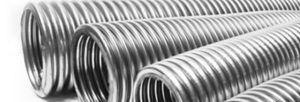 Heat-resistant corrugated pipes are manufactured from stainless steel using the same technology as aluminum. These pipes utilize a high-carbon steel reinforcing insert wound like a spring. The spiral inside the flue increases the lateral strength of the pipes and prevents them from collapsing.
One of the distinctive features of corrugated products is their compactness. When transported, the pipe length is 65 centimeters, and when extended along its longitudinal axis, it can reach three meters.
Watch the video
The heat-resistant stainless steel corrugated pipe can withstand temperatures up to 900 degrees, making it suitable for use with any type of boiler.
Pipes are manufactured in diameters ranging from 100 to 150 millimeters, with sizes 110 and 130 being the most commonly used. The former are used to install chimneys for boilers up to 19 kilowatts, while larger sizes can be used for any more powerful heating units.
During installation, the corrugated pipe can be bent in the desired direction at an angle of up to 180 degrees, which is an undeniable advantage, as it eliminates the need for a large number of fittings.
To increase the service life of stainless steel treated from the inside with special compoundsWhen they react with the metal, they form a durable, chemically resistant cladding film on the surface. In this state, a flue gas vent made from corrugated pipe can last up to 20 years. Fire-resistant corrugated pipe is the most reliable material for smoke removal.
Installation instructions
Installing a flue gas exhaust system is not much different from installing a similar device made from stainless steel pipes. However, there are a few key points to consider:
- There is no need to worry about selecting the chimney diameter – the corrugated pipe must match the size of the boiler outlet pipe.
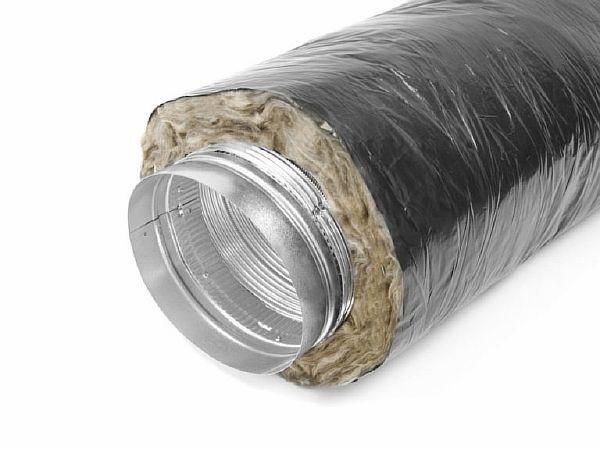
- Due to its thin wall, the corrugated pipe loses a significant amount of heat from the flue gases. Therefore, the flue pipe must be insulated along its entire length (except for the outlet pipe).
- Narrowing of the smoke channel is not allowed; its size must be stable along its entire length.
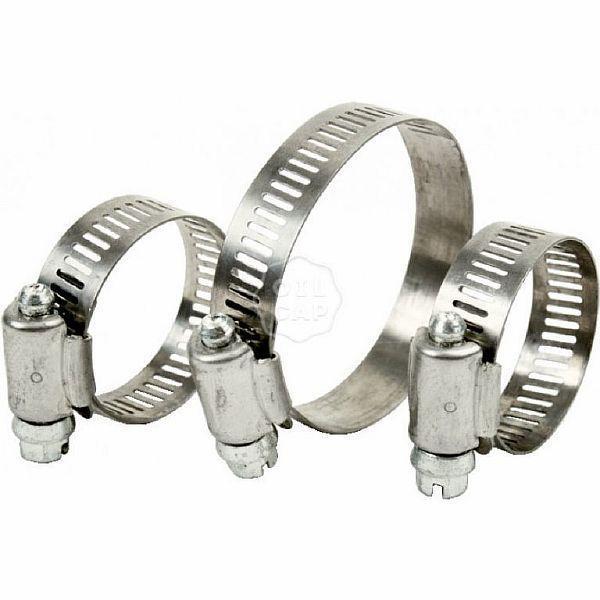
- During installation, only specially designed adapters should be used. Using other products for joining may result in a loss of airtightness, which is a fundamental requirement for a chimney.
- The use of corrugated pipes requires the mandatory installation of a condensate collector, otherwise it will inevitably become clogged quickly.
- When connecting individual chimney components, in addition to clamps, additional seals must be installed. Using a high-temperature sealant produces good results.
By following these rules, you can install a high-quality, efficient, and – most importantly – safe in all respects, chimney.
Tips and recommendations
- It's not recommended to use aluminum corrugated pipe for solid fuel boiler chimneys. For gas appliances, including water heaters, it's also better to avoid the risk and use fire-resistant stainless steel. Gas corrugated pipe is a fire hazard.
- If the corrugated pipe is being piped out through a brick chimney, assembly is done from above. A strong rope is tied to the lower end. This method, with two people working together, allows for quick and easy installation of the corrugated pipe. The flexible stainless steel pipe is fed through the mouth of the chimney, while the other person pulls the corrugated pipe from below.
- When installing an external (wall-mounted) flue, no more than two bends are allowed. If necessary, it's best to make them at a 45-degree angle.
- When installing a steel boiler corrugated pipe into an old chimney, carefully cover the stove with a wet sheet and seal all openings. This is necessary to prevent soot from entering the living space of the house.
- Before installing the pipe into the old chimney, it is necessary to thoroughly clean it from soot deposits on the walls.
Conclusion
Corrugated stainless steel chimney pipes are less expensive than their brick counterparts, and their installation is significantly easier. At the same time, a properly installed, heat-resistant corrugated chimney lasts longer than any other design.
Watch the video