 Heating units in buildings offer additional control options. Despite the additional costs associated with purchasing and installing a circulation pump, the overall cost quickly pays for itself, allowing for optimized heating performance.
Before selecting a circulation pump, it is highly advisable to calculate the main parameters for the following reasons:
- insufficient power of the unit will make the heating system ineffective, and living in the house will be uncomfortable;
- Excess power will lead to overspending on home heating costs.
Thus, the selection of this specialized device largely determines the success of the heating system in a residential building.
What types are there?
In modern systems, a heating pump is one of the decisive factors that ensures uniform movement of the coolant and, consequently, that all heat-generating elements are heated equally.
Such units are endowed with a set of advantages, defined as:
- They help maintain a constant temperature of the coolant.
- Low level of energy consumption.
- High reliability in operation.
- Ease of use.
Their main functional task is to level the resistance of the piping system to the flow of the heating medium.
There are two main design versions of circulation pumps:
- with dry rotor;
- with wet rotor.
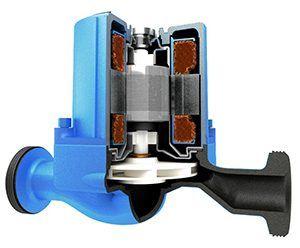
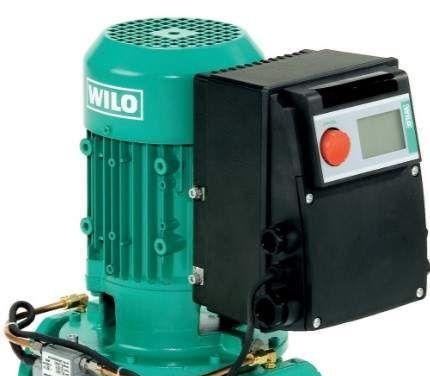
The working chamber of a dry-rotor unit is separated from the electric motor by a sealed partition. These units typically have higher power and performance, but they are noisy during operation, limiting their use to isolated rooms or buildings.
Wet rotor pumps operate in the coolant medium, which increases their service life. For this reason, they are also quiet, making them suitable for use inside serviced buildings.
A significant disadvantage of such units is their low efficiency, which limits their use in large heating systems, but in small private houses they are very widely used due to the aforementioned low noise level and durability.
It's important to note that selection criteria aren't limited to their pros and cons. Choosing a heating circulation pump necessarily involves calculating its performance based on several criteria.
Pumping equipment calculations
Before starting the calculation, let's clarify the functional purpose of the circulation units used in heating systems:
- pumping the coolant through a pipeline network, the total volume of which depends on the size of the room to be heated;
- overcoming the resistance to the flow of the coolant inside the system, provided by pipes and fittings.
Performance calculation
One of the control parameters is the performance of the pumping equipment, which is calculated from the ratio:
– the amount of thermal energy consumed in a specific room;
— the value of the pumping device’s performance;
– specific heat capacity, if water is used as a coolant; for other types (transformer oil, antifreeze, etc.) the corresponding data are used;
— the temperature difference between the direct and return branches of the heating system, which can be:
- 20OC – with a normal heating system for residential areas;
- 10OC – temperature level in non-residential areas with low-temperature heating;
- 5OC – temperature of the coolant in the underfloor heating system.
The performance indicator is a specification listed on the technical documentation and is expressed as cubic meters per hour. To obtain the calculation result in the standard format, it must be divided by the specific gravity of the water.
Let's give an example calculation: the area of the room to be heated is 200 square meters, therefore, to heat it, an energy consumption of 20,000 watts will be required. The room is equipped with a standard heating system with a temperature difference of 20OC. Using these numerical values in the given formula, we obtain:
20000/(1.16 x 20) = 862 kg/hour,
recalculation into familiar values gives the result
862 / 971.8 = 0.887 m3/hour.
To heat the specified room, a pump with a capacity of at least 0.9 m will be required.3/hour. This figure should be found in the passport.
To calculate this characteristic, you can also use the following formula:
G = 3.6Q/(cx dT) kg/hour, where
c – specific heat capacity of the carrier used in heating.
The easiest way to select a pump is if you already know the boiler capacity. In this case, you can use the following formula:
Q = N x dT, where
Q – unit productivity;
N – boiler power;
dT – temperature difference between the boiler outlet and the return line.
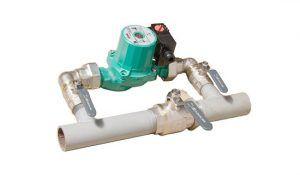
The photo above shows the correct connection of the heating system unit using a bypass. This arrangement allows for a bypass flow of fluid in the event of repairs or pump replacement without interrupting the heating system. See How to install heating in a decent home yourself.
Important! The rotor must be positioned horizontally! The flow direction is indicated by an arrow on the housing.
Calculation of the working pressure in the circuit
When selecting a circulation pump for a heating system, calculations must also take into account the pressure inside the pipeline. For this, you can use the following ratio:
P = (R x L + Z) / pxq, where:
- P – pressure value;
- R – flow resistance for straight sections of pipeline;
- L – total length
- Z – the value of flow resistance caused by the fittings, taps and other valves used in the system;
- p – the value of the coolant density at the operating temperature;
- q is the value of the acceleration due to gravity.
If there is insufficient data for calculation using the given formula, you can use a simplified ratio:
P = R x L x ZF, where
R is the value of flow resistance in a straight section of pipe, which is approximately 100–150 pascals per 1 meter; expressed in a form convenient for calculation, it will be 0.01–0.015 meters per meter section of pipe;
L – the total length of the pipeline; in a two-pipe heating system, both the direct and return circuits are taken into account;
ZF is a magnification factor that depends on the following factors:
- for a system with ball valves, for which a decrease in the pipeline clearance is not typical, and with correctly selected fittings, it is taken as equal to 1.3;
- when using throttle or thermostatic devices, its value will be 1.7.
When selecting a circulation pump for a heating system, calculating its characteristics is a necessary procedure.
Important! The calculated value for any indicator should be increased by 15–20% to avoid operating the device at maximum settings. This will protect it from overload and premature failure.
Experience with circulation pumps allows for their selection without calculating the required parameters. Recommended parameters are listed in the table.
Table for empirical pump selection
Table 1.
| Heated area (m2) | Productivity (m3/hour) | Stamps |
| 80 – 240 | From 0.5 to 2.5 | 25 – 40 |
| 100 – 265 | Same | 32 – 40 |
| 140 – 270 | From 0.5 to 2.7 | 25 – 60 |
| 165 – 310 | Same | 32 – 60 |
Note: in the third column, the first number is the diameter of the pipes, the second is the lifting height.
Using the information provided, you can easily select the right device for stable and long-term operation.
Major manufacturers
Circulation pumps for heating systems are produced by many European manufacturers with a fairly high quality and a wide range.
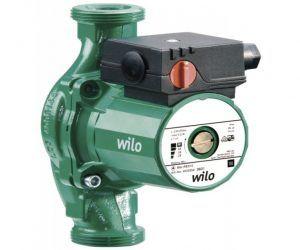
Wilo CompanyThis company's German-manufactured pumps occupy a significant position in the specialized market. They are distinguished by their high quality and reliable operation. Almost all of this manufacturer's models are equipped with automatic and manual controls. Not only the rotor speed but also the release functions, including the system pressure, can be adjusted.
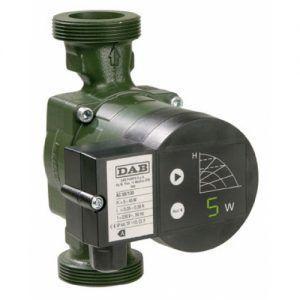
DAB CompanyThis Italian manufacturer successfully competes with other suppliers to the Russian market, having provided centrifugal pumps for over 40 years. A distinctive feature of DAB products is the use of control panel displays, which are very convenient for interacting with the unit and monitoring the operating process.
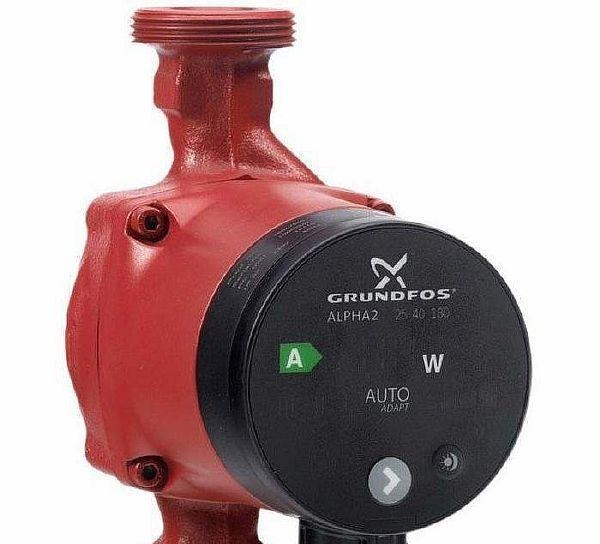
Manufacturer: GrundfosThis Danish company has been operating under this name for over 70 years, supplying pumping equipment for various purposes. It's worth noting that this manufacturer is a well-known and long-established name in its industry. The company's productivity and creativity are impressive, releasing up to a hundred new models of its products annually.
This manufacturer's heating system equipment is marketed under the UPS brand, and the product line is designed for both domestic and industrial use. The key feature of these heating circulation pumps is their suitability for operation over a very wide temperature range: from -25°C to -40°F.O up to +110OWITH.
The UPS product line can operate using 3 performance modes.
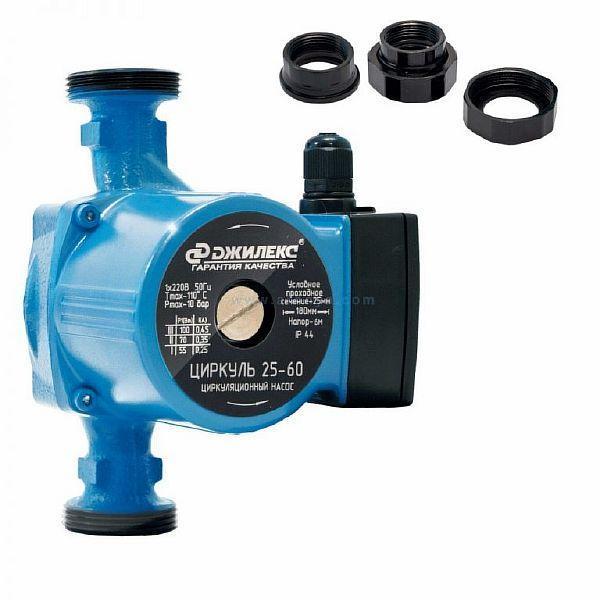
Dzhileks CompanyA domestic manufacturer of circulating pumps, successfully competing in the market with European companies.
These units are easy to operate and can actively circulate coolants of varying densities in heating networks, allowing for a wide selection of fluids, including transformer oil. They operate in three power modes, with stepless adjustment. Their price compares favorably with that of their competitors.
Conclusion
Selecting and calculating a circulation pump for a heating system will allow the consumer to make the optimal purchase for the actual conditions of a specific room.
The preliminary equipment assessment options offered here allow you to make such a choice with confidence. Good luck!