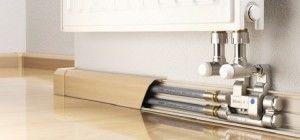
 Even the most sophisticated home design can be spoiled by pipes running along the wall. However, this is easily remedied. Learn how to hide heating pipes in a house or apartment from the information below.
Ways to solve the problem
When it comes to a private home, it's worth noting that the options are greater than in an apartment. The heating system can be concealed in the screed, while in a multi-story building, the ceiling of the apartments below is used for the main heating system for the upper floors.
On the lower floors, suspended ceilings are used for such actions.
Country houses are often built of wood. In such cases, the heating network is run through the joists, where holes are pre-drilled for the piping.
In addition to these, the following methods can also be used:
- Place pipes in the wall;
- Mount the box;
- Build a false wall;
- Perforated hanging screen
Each of these options has its advantages and disadvantages. The final decision on how best to hide heating pipes in an apartment or private home should be based on the characteristics of the premises and your budget.
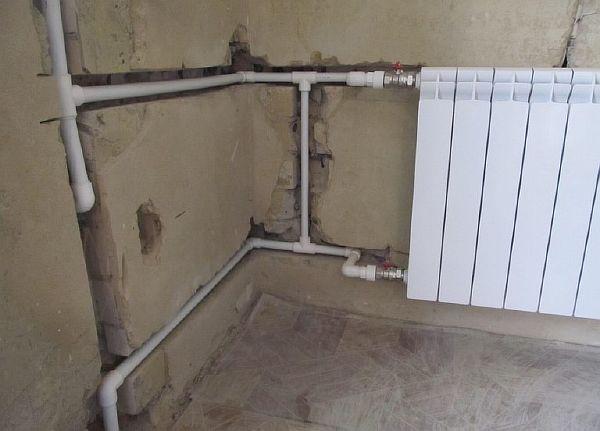
It is also necessary to determine the size of the space under the pipes and take into account the average temperature in the house during the heating season.
Pipes hidden in the wall
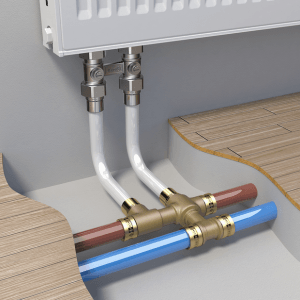
This solution is very common; the heating main is hidden not only in the wall but also in the floor. These methods are complex and require careful work.
If you decide to use this option, you'll need to perform a very detailed calculation and draw a diagram of the main line layout. The exact locations of the network should be indicated. Then you can begin creating recesses in the wall—the so-called grooves.
The recesses are prepared in two ways:
- The old simple way - using a hammer and chisel, make notches, cut through them, removing pieces of the wall;
- A hammer drill. This is a very convenient method used today. However, working with this tool will create a lot of dust, which complicates the entire process a bit.
To prepare the grooves more quickly and easily, mark the contours of each groove and make cuts to the required depth with a grinder. It's recommended to use a hammer drill for further work, simply tapping out the material.
IMPORTANT! The dimensions of the recesses must be calculated to accommodate the addition of thermal insulation. You can use special covers that provide thermal and waterproofing for the heating system in your apartments or private homes.
Before calculating the size, place a cover over the piece of workpiece and measure the resulting diameter. Add an additional 2 cm to these figures. When two pipes are placed next to each other, remember to take this into account. Also consider fittings, tees, and other accessories.
TIP: Once the network installation is complete, check for secure fastenings and any leaks. To do this, connect the network to the pump, fill it with water, and increase the pressure above the operating pressure. After this, carefully inspect the entire line.
If there are no leaks, then thermal insulation can be applied. Cut a side cut into the appropriately sized covers, place them over the pipes, and seal the seams with special tape. Then everything can be sealed.
IMPORTANT! This method has a significant drawback. The system will eventually need to be repaired, and with this installation method, that's difficult.
Video 1. Hiding heating pipes in the wall of an apartment.
Camouflage using a box
This device is well suited for existing pipelines and can be made from the following materials:
- Drywall;
- Wood;
- Special profiles;
- Plastic;
- Metal.
Construction of a plasterboard box
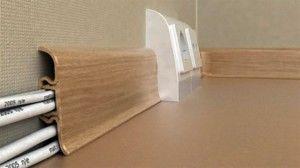 This design allows for excellent concealment of pipes in an apartment and makes them easily accessible in the event of an emergency. It's the most affordable and time-saving method.
IMPORTANT! The presence of doors in this frame allows for repairs to the heating system without dismantling the structure.
This method involves installing a frame around the entire perimeter of the pipe and covering it with plasterboard. This allows you to hide not only pipes but also radiators.
This material is environmentally friendly and easy to work with. It can be covered with wallpaper, tiles, paneling, and other materials.
The frame can be made from wooden beams or metal profiles. If the frame is made from wood, the beams should be treated with a water-repellent impregnation or drying oil.
The frame elements are connected to each other with metal screws, and the structure is secured to the wall with screws and dowels. Radiators can be concealed in the same manner.
The advantages of this method:
- Speed of construction;
- Less costly than laying pipes in haystacks;
- The pipes are easy to access for repairs;
- The design of the premises is improved.
Video 2. A disassembled box made of plasterboard and tiles in an apartment.
Wood
If you don't have drywall but have good-quality wood boards, you can make a frame out of them. This will look great if the room is finished with wood. This will preserve the integrity of the design.
Plastic box
This material is good for hiding heating lines in hallways, bathrooms and other utility rooms.
False wall
This method is used when a duct is insufficient to solve the problem. Such situations arise when the network runs not only horizontally but also contains vertical risers.
Such a wall is made from ordinary wall panels, inside which soundproofing material is placed.
IMPORTANT! This type of wall cannot be built in a small apartment, as it takes up a lot of space.
This type of wall is constructed using the same principle as a box. However, this method increases the amount of work and material consumption.
Hanging perforated screen
There are various decorative options for concealing utility lines. They are categorized by design differences:
- Attachment box;
- Flat screen;
- Hanging screen.
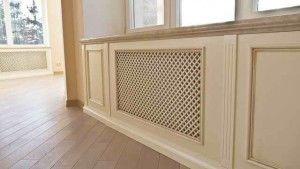
Decorative screens are used when the radiator is located in a recess.
Video 3.
A wall-mounted design is used for cast iron appliances. When appliances are located under a windowsill, the screen is installed without a cover. If the radiator protrudes forward, it is covered from above.
The following materials are used to produce screens:
- Plastic;
- Metal;
- Tree;
- Glass;
- MDF.
Wood is considered the most environmentally friendly material. Not everyone trusts plastic; if it's manufactured improperly, it emits an unpleasant odor when heated.
An inexpensive option is MFD grilles, which look very beautiful.
Metal grilles perform their functions well, but lack elegance in design. They are considered an economical option due to their low cost.
To create a stylish look for this type of enclosure, you can use stainless steel and perforations. A major advantage of this option is its ease of installation. These screens easily attach to the mounting brackets.
A hanging screen allows you to conceal the pipes leading to the radiators. If this isn't possible, you can decorate the pipes with fabric. Voluminous curtains in the living room or bedroom can conceal the heating system, and a fabric screen will hide the plumbing in the bathroom.
Video 4.
Unconventional approaches
In the kitchen, a heating radiator can be hidden in a small cabinet. In this room, next to the window, it looks great, and the added benefit is that it provides additional storage space for kitchen utensils. This way, aesthetics meets practicality.
You can approach this issue with a creative twist. Then, instead of hiding the heating pipes, you can just decorate them a bit.
For example, you can give a child's room a unique look by painting the radiator and pipes to resemble a tree trunk. And a gold-painted radiator in the living room will resemble carefully stacked gold bars.
How to hide heating pipes in a house or apartment is a personal decision. By following these recommendations and using your imagination and creativity, you can make this problem easily solved. May your home be cozy and comfortable.