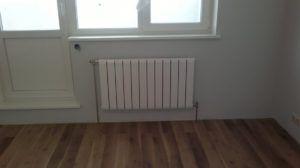
 Very often during construction work, heating pipes are hidden in the wall, pros and cons This method of concealing pipes should be thoroughly studied to determine whether it's right for you. Otherwise, not only the heating system's performance but also the room's design may suffer.
It's best to install concealed pipes during the construction phase. This issue is much more difficult to resolve in an existing building. While utility lines were previously left attached to the walls, a significant advantage of a high-quality modern renovation is that these options are no longer acceptable.
- Is it possible to hide heating in the walls?
- Hidden pull
- How to hide the heating network in an apartment – let's look at the methods
- Heating pipes under a false wall
- Box
- Should insulation be performed or can it be done without?
- How to secure a pipeline
- Pros and cons of this type of gasket
- Some tips for monolithic installation
Is it possible to hide heating in the walls?
This question has interested many. The method described has many supporters and opponents. Some argue that it's unacceptable, while others say it's possible to conceal heating in the wall.
So, is it possible or not? Which opinion is correct, and what are the pros and cons of such solutions? And, to keep things short, it's worth noting that this method can be used. And it is used very often.
This is an effective way to hide unsightly pipes in your home. There's no technical need for this, and it's perfectly functional without it.
Consensus on this issue, as well as on the only correct installation option, has not yet been reached. Therefore, each person will have to carefully weigh the pros and cons of their own decision.
Hidden pull
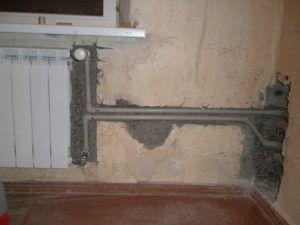 Installing heating pipes in walls is a fairly popular practice. This is because heating pipes significantly detract from the interior design. This is their major drawback. They run along the walls, are conspicuous, and don't add to the overall design appeal. For these reasons, many people choose to hide them.
Heating installation can be done in a variety of ways, but the most common is wall mounting. At first glance, this seems like a great solution: the pipe is completely hidden, greatly improving the overall appearance of the room. But is it really that simple, and what are the advantages?
When installing heating networks in walls, joints often become unsealed. This results in leaks. Such leaks are impossible to detect in hidden pipes, and the only way to detect defects is with a water pressure gauge.
All modern heating appliances are equipped with such a device. Once a leak is detected, the location of the leak must be determined and repaired.
If, after weighing all the pros and cons, a decision is made to install the heating main in the wall, the surface covering must be designed in such a way that access to potential emergency zones is free.
For these reasons, cladding is made from plastic panels, clapboard, plasterboard, and the like. The downside of various decorative plastering methods is that in the event of an accident, the wall will have to be dismantled, which entails not only physical but also financial costs.
When installing a polypropylene system using the concealed method, a strength test must be conducted beforehand. The test load must be at least 1.5 times greater than the normal operating load.
This type of installation is not recommended for metal systems due to its significant drawback: poor resistance to corrosion.
There is also another nuance to consider. The downside of the plastic system is this is a linear increase during heatingThis disadvantage must be taken into account during installation.
How to hide the heating network in an apartment – let's look at the methods
There are several ways to conceal heating pipes in panel walls. And for this type of space, there aren't many. The first option in panel houses is to use chases, and the second is to construct a false wall. Each option has its pros and cons, and the decision should be made after a detailed study of these methods.
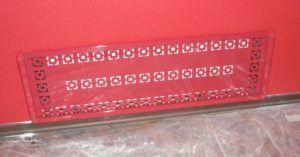 A heating pipe can be hidden in the wall of a panel house when installing a new heating system or when repairs are being carried out on an existing structure. Typically, the wall of a panel house and the heating main are located on different planes.
And when it's necessary to bring them into a single plane, recesses are cut in the panel walls and the heating main is placed there. When doing this, pay attention to the following points:
- Before starting work in a panel house, shut off the riser. Don't rush this process. It's also important to ensure you're working on the correct riser.
- If the channel depth exceeds half the partition thickness, the best option is to abandon the planned project. For example, a bathroom in a panel house is a separate concrete block system. The thickness of such panel walls will be insufficient for this purpose.
- The dimensions of the grooves in panel walls should not be too tight, and they should not infringe on the contours. The recesses should be designed with consideration for the system's fasteners, its volume, and the insulation layer.
- Before hiding the system in the wall of a panel house, it should be covered with insulation, otherwise condensation will form on the surface of the pipe.
- Before attaching the structure to the wall of a panel house, it's important to identify key areas. These include joints and areas where the heat transfer medium changes direction.
To make chasing walls in a panel house easier, it's recommended to use a grinder. First, mark the walls, and then cut the grooves to the specified depth along the corresponding lines.
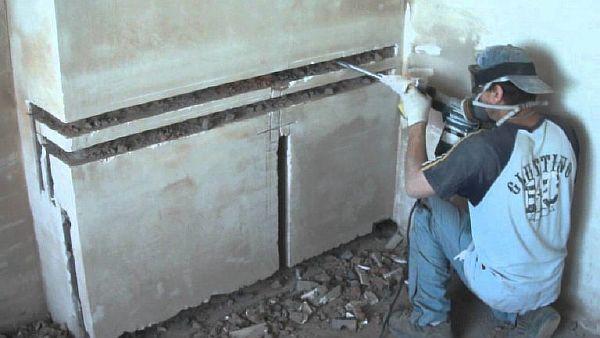
Working with an angle grinder not only creates a lot of noise but also dust. A major advantage of modern tools is the ability to connect to a construction vacuum cleaner, which prevents dust from accumulating.
According to existing regulations, the utility network in the wall of a panel building must be located in an area with unimpeded access. Only those areas where the risk of an accident is zero are left closed.
Heating pipes under a false wall
If you decide to conceal heating pipes in a false wall, there are no particular difficulties. First, a base of guides is constructed, and then finished with any chosen material: paneling, drywall, or blockhouse.
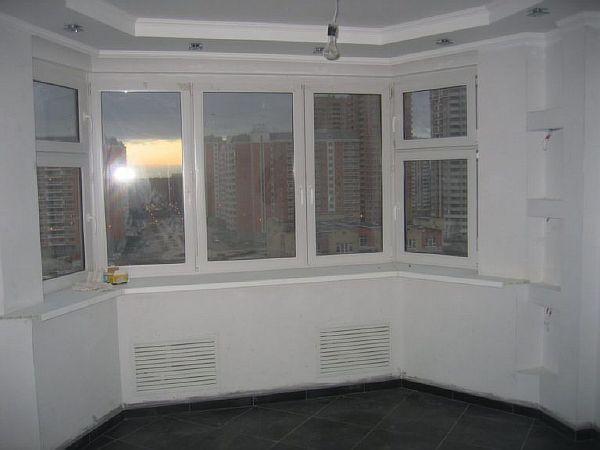
There's a common misconception that hiding heating systems in a false wall significantly reduces the usable space of a home. Fortunately, this disadvantage is just a myth. For example, if you need to hide heating pipes under a window, in reality, this space is practically never used.
The only thing lost in this situation is the less than fifteen centimeters under the windowsill, but the sill itself becomes wider by the same amount. This additional space is much more useful than the unused space under the window.
If you need to hide unsightly heating system components, experts recommend a false wall. They call it the ideal solution. A key advantage of this type of structure is that it can be constructed without the help of professional craftsmen. This is a major advantage of this type of structure.
In many situations where it's necessary to conceal the intersection of horizontal and vertical lines, or to install a large system component, a duct isn't always the answer. A false wall, however, is ideal in such situations.
Another major advantage of this method is the excellent way it blends into the overall design. When deciding to conceal heating pipes under a false wall, you can also reconsider the placement of other systems; this method can also be effective for decorating them.
Box
When performing modern, high-quality renovations, we conceal heating pipes within the wall. This installation method requires careful calculations and a detailed diagram. If the heating system is concealed during the construction phase of the house, this task is not difficult to accomplish.
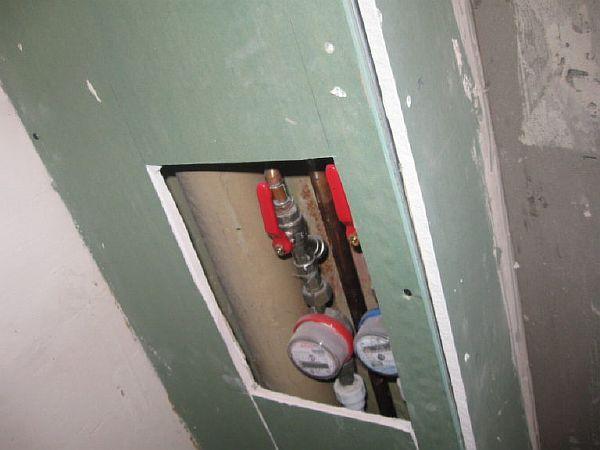
But if there's already existing piping running along the walls, this is how it's done. Alternatively, the walls can be covered with a box. A frame is constructed from wooden planks or profiles, which is then covered with various materials suitable for the design. Neither the construction nor the covering of the frame presents any particular difficulties.
If we hide the pipes in a boxIf you're building a structure rather than a wall, the advantages of this option speak for themselves. The structure is easy to construct, requiring little investment. Another clear advantage of this type of construction is the ability to quickly access components for repairs.
Hiding the heating main under a box without openings also presents no major problems, as this structure can be easily dismantled and then returned to its original location. Another important detail should be considered: when concealing the heating main under a box, the structure becomes a decorative detail that can be decorated to suit your taste.
Should insulation be performed or can it be done without?
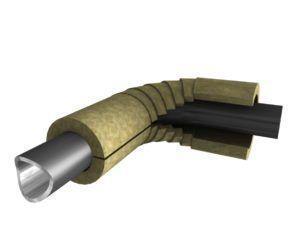 Relocating heating pipes into a wall requires the use of insulation. Many people ask a legitimate question: "Why is this insulation necessary when relocating pipes under plaster?" The answer is simple: otherwise, heat will escape into the walls.
Heat is primarily lost through the walls facing the outside. Heat loss is less of a problem in interior walls, as some heat will still be transferred to the room, but the amount will be slightly smaller.
By relocating a heating pipe into a wall, you not only provide thermal insulation but also prevent condensation from forming. After all, any moisture is a breeding ground for mold.
It's also important to note that insulation serves another important function when relocating heating pipes. It protects the main line from mechanical impact.
When choosing an insulation option for a pipeline relocation, it's important to consider that each material has its own advantages and disadvantages. For example, polyurethane foam should be selected with the lowest thermal expansion coefficient, while polyurethane foam should be selected with a material precisely matched to the system size, and so on.
How to secure a pipeline
Laying heating pipes into walls is done using various tools. Let's consider several options:
- sliding;
- hard.
A fixed pipe support holds the structure firmly in place. With this type of installation, the pipeline contour cannot shift. However, with sliding fasteners, it can move slightly. It is recommended to alternate these two types of fasteners when installing the pipeline.

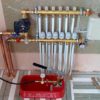
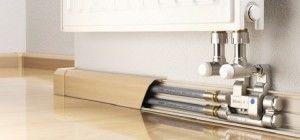
Types of fasteners used when laying the network under plaster:
- Metal clampsThese are fairly simple devices in which fixation is achieved by tightening a bolt.
- Clip. These devices are also distinguished by their simple design. The advantage of this device is that it locks in place with a single click.
- Plastic compression clamps. Unlike their metal counterparts, these pipe-laying devices feature only one attachment point.
- Hook-type dowels. These options are recommended for installing the system on a flat surface. This screw is either screwed or carefully hammered into the prepared location.
- Crab systems. These mechanisms are used to secure pipelines to walls and to fasten pipelines together.
Pros and cons of this type of gasket
Professionals tend to believe that installing heating pipes into a wall is a difficult and expensive procedure.
It's difficult to pinpoint the objective benefits of such actions, other than aesthetic appeal. However, the downsides in this situation are obvious.
- The most important factor is the complexity of installation. Before starting work, it's important to consider that joining parts is difficult. High-quality welding in grooves is especially challenging.
- There's a high risk of leakage. With this type of installation, in the event of an accident, the wall would have to be broken down.
- The entire installation process in this case entails significant physical and financial costs. This is a significant drawback of this installation option.
Some tips for monolithic installation
To embed heating pipes in a wall, you must adhere to the same requirements as plasterboard structures.
But it’s best to listen to the advice of professionals, and they say that walling up black steel pipes into walls is a bad decision.
Similarly, polypropylene and metal-plastic heating pipes with compression fittings are not permitted to be installed in walls. This ban stems from the disadvantage of these structures: their tendency to leak.
The following systems can be walled up under plaster:
- metal-plastic on press couplings;
- stainless steel and copper;
- system of their cross-linked polyethylene.
Once the trench is prepared, the pipeline needs to be installed and insulated. It's most convenient to bury the system in the wall during construction. Working with a finished surface has a significant drawback: it requires demolition.
There are many options. Therefore, after weighing all the pros and cons, each person will decide, based on their own situation, how to mount the heating system into the wall.
Modern in-wall heating pipes, the pros and cons of which have been discussed, allow for the implementation of concealed installation options to a highly professional standard. And there are plenty of ways to do this. All that's left is to choose the right option and bring it to life.
Here's what the law says on the matter: according to Article 290 of the Civil Code of the Russian Federation, "Owners of apartments in a multi-apartment building own, by right of common shared ownership, (...) equipment outside or inside the apartment that serves more than one apartment." Heating networks are one such example. And according to Article 246 of the Civil Code of the Russian Federation, "Disposal of property in shared ownership is carried out by agreement of all participants."
Clause 3.34 of SNiP 2.04.05-91: "The method of laying pipelines must ensure their easy replacement during repairs. Embedding pipes (without casing) into building structures is permitted:
▪️ in buildings with a service life of less than 20 years;
▪️ with an estimated service life of pipes of up to 40 years or more.
When laying pipelines hidden, hatches should be provided in the locations of detachable connections and fittings."
An engineering design for the heat supply will need to be developed and approved. However, developing one is always easier than getting it approved and approved;
The work must be carried out by a team that is a member of the SRO, and they must prepare a full package of executive documentation, including the certification of hidden work.
According to the Housing Code, you do not have the right to make any changes to common building utility networks without the consent of the operating organization (or the board of the HOA or housing cooperative).
Difficult doesn't mean impossible. You'll definitely have to run around, and there's no guarantee you'll get permission, but there's definitely a chance. The article describes several methods, and all of them are valid.