 Low-temperature heating systems are becoming increasingly popular. Thanks to modern heating systems and appliances, homes can be heated with coolant temperatures as low as 80°C.0WITH.
Consequently, consumer demand for affordable and easy-to-install cross-linked polyethylene heating pipes has increased. These materials are ideal for installing underfloor heating in rooms. They are convenient and available in coils.
By using polyethylene heating pipes, the technical characteristics of which allow the number of connection points to be minimized, it is possible to install a very hermetic pipeline.
Cross-linked polyethylene pipes are very flexible and can be used to create any type of water supply system. or complex heating systems. Using a hair dryer during construction saves material on bends.
A pipe heated to a high temperature can easily take any shape, and when it cools down, it retains it.
- Manufacturing methods and differences in materials
- Technical characteristics of these materials
- Flaws
- What you need to pay attention to when choosing
- Areas of application
- The main advantages of such water supply systems:
- Installation
- Why is cross-linked polyethylene better than polypropylene and metal-plastic?
Manufacturing methods and differences in materials
The raw material used for cross-linked polyethylene pipes varies according to the manufacturing method:
- High-density polyethylene. Chemically inert, it can withstand high pressure. PE products are used as well casing during pipeline installation, to create access openings in monolithic structures, and for laying electrical lines.
- Low-density polyethylene. It better withstands mechanical stress. It is often used in water and gas pipelines, as well as for delivering drinking and cold water up to 40 degrees Celsius. It can also be used to transport liquids and gases that are inert to polyethylene. In electrical networks, these pipes are used as ducts.
Technical characteristics of these materials
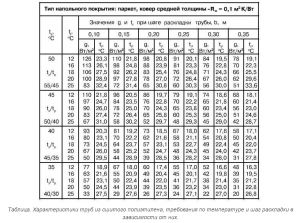
These products have a wide range of positive characteristics:
- High fatigue strength, maintained even at an operating temperature of 95°C;
- Ability to maintain a stable shape;
- Polyethylene pipe resistant to cracking;
- Excellent impact resistance and strength in cut areas. These characteristics are maintained even at temperatures as low as -50 degrees Celsius.
- Polyethylene pipes offer an excellent combination of strength and flexibility;
- Excellent wear resistance to abrasion;
- Good shrinkage properties;
- Resistance to chemical influences;
- Corrosion resistance;
- Does not contain halogens or heavy metals.
Flaws
Watch the video
Polyethylene heating pipes, while having a number of positive technical characteristics, are not without some disadvantages:
- Cross-linked polyethylene pipes are sensitive to ultraviolet light. Exposure to light quickly causes the material to deteriorate, causing the pipe to crack and break;
- It is not recommended to use brass fittings for PE pipes hidden under screed or plaster;
- The operating limits of these products must not be exceeded.
What you need to pay attention to when choosing
Watch the video
When purchasing cross-linked polyethylene pipes, you should pay attention to:
- Cross-linking method. These parameters are marked with the letter E when the molecules are cross-linked by reagents or irradiation. The letter P indicates the presence of peroxides, organosilants are designated with the letter S, and nitrogen is designated with the letter N. Products marked PEX-P have the highest degree of cross-linking. They are most often used for heating mains.
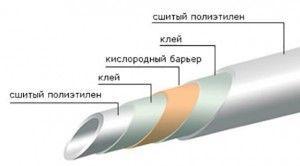
- The presence of oxygen barriers. This barrier is either an aluminum layer or an ethylene vinyl alcohol coating.
- Pay attention to ultraviolet protection. This is marked as UV (partial protection). UV-1 indicates complete protection, while the addition of additional stabilizers is indicated by UV-2. For heating systems, it's best to choose products with the highest protection rating; the higher the rating, the lower the risk of bacterial growth in the water.
- Diameter. Manufactured products range in diameter from 10 to 280 mm, with wall thicknesses ranging from 1.7 to 29.9 mm. For heating systems, it is recommended to use products with diameters between 16 and 20 mm.
Areas of application
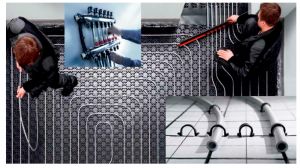 Polyethylene Heating pipes, technical characteristics Ideal for pipelines of various purposes, they have proven themselves to be versatile and reliable. Therefore, they are used for:
- Installation of underfloor heating systems in residential and industrial buildings;
- Installation of cold and hot water supply mains.
Such pipelines operate reliably and without accidents over a long service life.
The main advantages of such water supply systems:
- Long service life—almost 50 years. Because all parts are manufactured to the highest standards.
- Reliability of connections due to the fact that fittings do not require auxiliary seals.
- Versatility. The pipes are resistant to high pressure and withstand temperature fluctuations well. This makes them suitable for use in both residential and industrial construction.
- Low pressure loss. The narrow diameter of this type of rolled pipe is compensated for by expansion at the cut end of the blank.
- Compatibility. If necessary, polyethylene or brass fittings can be used to connect homogeneous and multilayer products.
- Absolutely harmless. All elements are made from natural materials.
- New manufacturing technologies. All production methods for these materials are safe and aimed at increasing product strength. Cross-linking is achieved using an electron beam. Therefore, they are better suited than other materials for heating systems, underfloor heating systems, and water supply systems.
- Concealment of the wiring. The entire main line can be concealed with plaster in the wall or floor.
Watch the video
Installation
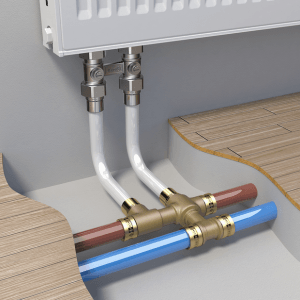
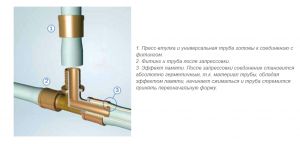 Laying cross-linked polyethylene pipes for heating is carried out in the following manner:
- The pipe is cut with special scissors the required length;
- The workpieces are being recalibrated;
- A connecting ring is placed on the workpiece;
- The connection is made using a press.
The resulting connection is hermetically sealed and reliable, eliminating any possibility of leaks.
Why is cross-linked polyethylene better than polypropylene and metal-plastic?
The problem of choosing a material worries many consumers.And it must be said right away that polyethylene pipes, whose technical characteristics are so multifaceted, are the best solution, because:
- With the help of these pipes, long-lasting communications are created that have been used for more than 50 years;
- Making connections with these products is convenient and takes little time. Installation is done using fittings without additional seals;
- These pipes are very convenient to store, as they do not take up much space;
- They are produced in coils, which are easy to transport;
- Absolutely environmentally friendly.
Cross-linked polyethylene heating pipes offer high reliability and a long service life. These products meet all quality standards and are ideal for installing heating, water, and gas supply networks.