Pipe insulation is used to maintain the coolant temperature in the system and protect it from freezing during the cold season. Thermal insulation materials used include mineral wool, foam plastic, expanded polystyrene, foamed polyethylene, and others.
Heating pipe insulation is a crucial aspect of energy-saving technologies, and this issue is a pressing one today. A large number of insulating materials and methods for their optimal use in various industrial applications have now been developed.
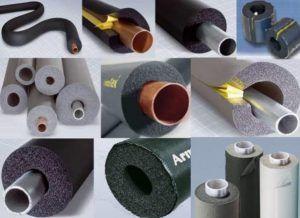 But energy efficiency is essential not only in industry but also in everyday life. Insulating heating lines is not only desirable but also essential.
In general, the thermal insulation process is aimed not only at maintaining a stable temperature, but also at protecting the heat carrier from freezing during cold periods.
Thermal insulation materials come in the following types:
- piece;
- in rolls;
- combined;
- for filling;
- casing.
Depending on the technical characteristics and insulation parameters, these materials are used in the following networks:
- ventilation;
- supply of cold and hot water;
- technical equipment;
- steam heating.
The choice of protective material must be approached with great responsibility, as it is the key to warmth and comfort in people's homes.
The most effective types of insulating material are:
- Thermal insulation paintIt is considered a scientific achievement of Russia. One layer of this coating can replace several centimeters of polystyrene foam and mineral wool. Furthermore, this material is environmentally friendly and resistant to high temperatures. This type of pipeline insulation is used in harsh industrial environments.
- Mineral woolThis material is characterized by low thermal conductivity and fire resistance. For these reasons, it has found widespread use in protecting heating systems. However, this type of protection is considered an expensive building material.
- Insulation with polyurethane foamIt has only recently begun to be used for thermal insulation, but its practicality has already been appreciated.
- Expanded polystyreneThis is practically the same as polystyrene foam. This option is distinguished by its affordability and ease of installation.
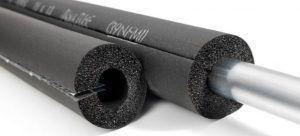
- Foamed polyethyleneThis building material occupies a leading position.It is a shell that resembles a pipe in shape.
- Selecting an insulating material
- Why is thermal insulation needed outside?
- Examples of thermal insulation materials
- Mineral wool
- Innovative insulation material – penofol
- Description and technical characteristics of polyurethane foam
- Thickness of thermal insulation of heating systems
- Protection of external systems
- Insulation of pipelines in buildings
- Thermal protection outdoors
- Insulation rules
- Requirements for the selection of heating insulation
- Thermal insulation in the basement
- Features of underground heating pipelines
- Heating pipes and insulation in the apartment
- How much protection is needed for the heating main?
Selecting an insulating material
When choosing insulation for outdoor heating, choose moisture-resistant options. The insulation you choose should have:
- minimal thermal conductivity;
- do not react to acids, alkalis and other chemically active components;
- resistance to oxidation and corrosion;
- long service life;
- fire resistance;
- safety for human life;
- simplicity of the installation process.
Why is thermal insulation needed outside?
The answer to this question is simple. It's not so much about insulation as it is about the thermal insulation of outdoor heating systems. The overall efficiency of the entire heating system will depend on the quality of the insulation.
Insulation will help smooth out any shortcomings during installation or any drawbacks in the physical and chemical properties of the insulation from which the heating system itself is made.
Thermal insulation should protect the entire pipeline from adverse environmental conditions and mechanical damage. Insulation will protect pipes located outdoors from premature deterioration and the harmful effects of ultraviolet rays.
Polymer samples are resistant to corrosion, but they require good frost protection, as they are susceptible to freezing, mechanical damage, and abrasion. Metal ones, while seemingly more rigid and reliable, quickly oxidize and become unusable.
Another disadvantage of metal is its high thermal conductivity, which is not ideal for heating systems. Proper thermal and waterproofing (insulation) will eliminate these drawbacks without wasting heat.
Read How to insulate a water pipe outside – which insulation materials to choose, which is better?
Each person chooses the insulation material according to their own parameters, based on personal preferences and wishes.
Examples of thermal insulation materials
Many companies offer high-quality thermal insulation or heating insulation. Although this process is now highly sophisticated, most people prefer to do it themselves.
Naturally, to carry out this type of work, you will need to stock up on some knowledge in order to carry out the procedure correctly without the involvement of professionals.
Moreover, expanded polyethylene foam is resistant to high temperatures, is environmentally friendly, and is easy to install outdoors. The main thing is to remember to glue the ends of the cover together after it's installed.
Mineral woolIt can be of two types:
- Basalt wool – operates at temperatures up to 650°C and does not emit toxic substances. The material is made from rock with the highest basalt composition.
- Fiberglass wool – made from quartz sand and glass. Works well at temperatures up to 180°C.
The following types of thermal insulation are used in parallel with waterproofing:
- During the process of insulating with mineral wool, aluminum foil is wound over the base layer and secured with metal wire;
- For engineering structures, foam plastic molds can be made that allow you to insulate the pipeline yourself.
Because polystyrene foam is not 100% water-repellent, it is not the best option for insulating outdoor heating systems.
Mineral wool
Manufacturers produce this insulation in rolls and bundles as mats. It does not melt or deform under high temperatures, making it often used for thermal insulation of heating systems.
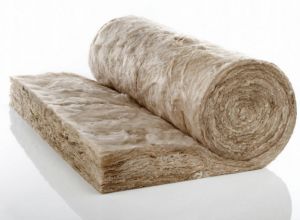
The disadvantage of mineral wool is that it absorbs water, losing its thermal insulation properties. Therefore, insulating a large system with this material is not cost-effective, as it requires the purchase of protective moisture protection.
Innovative insulation material – penofol
Penofol is increasingly being used for thermal insulation of outdoor pipelines. This insulation is made of foamed polyethylene coated on one side with aluminum foil for protection and maximum thermal insulation.
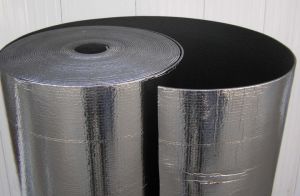 The material is sold in rolls and cut to the size of the pipe cross-sectionPenofol is flexible and fits tightly during installation, effectively covering sharp turns and bends.
Its high thermal insulation properties and low cost make insulation with penofol the most frequently used method when working with large heating systems.
This is the best choice for those who want to do the insulation work themselves. heating system pipes on the garden plot.
Today, the construction market offers a huge variety of thermal insulation materials, the use of which does not require special tools or skills.
Description and technical characteristics of polyurethane foam
Insulation with polyurethane foam is suitable for both metal and plastic heating systems located outdoors.
This material is suitable for insulating pipes of various diameters outdoors and is also called "shell." The material is also coated with aluminum foil on one side to reduce the overall thermal conductivity of the coating.
However, it is worth noting that, compared to other types of insulation, polyurethane foam insulation involves wrapping the pipes not in three layers, but at least five, and preferably eight.
Although it looks aesthetically pleasing, which is naturally important for heating systems located outdoors, such consumption is not justified.
You'll have to wrap it in at least five layers to achieve the desired result, which will lead to additional costs.
Another disadvantage of polyurethane foam – minimal protection from frost and heat loss.
Everyone has the right to choose the insulation they think is right for them, but the key is to take the matter seriously and ensure that the heat reaches the recipient and isn't wasted on heating the outside air.
Please note that properly selected insulation for outdoor pipes can significantly extend the life of your heating system and its efficiency!
Thickness of thermal insulation of heating systems
The thickness of the insulation of heating pipelines is determined by calculation based on the requirements of regulatory documentation.
These calculations aren't easy. Getting accurate results requires patience and attention. The most common method is to use heat loss calculations.
At the same time, SNiP rules indicate that the insulation of all heating pipelines must be calculated so that heat losses do not exceed the values specified in SNiP.
In addition to SNIP, insulation thickness is regulated by the Code of Rules, which provides a simpler methodology. These simplifications include:
- Heat loss during heating of the pipeline walls by the flowing medium is not as great as in the outer protection layer, for these reasons they can be ignored.
- Most structures are made of steel, and its resistance to thermal conductivity is low, so the resistance of the walls of a metal structure can also be ignored.
The insulation thickness of a single-layer structure is calculated using complex formulas, which are easily found online. SNiP (Building Code of Practice) standards offer different formulas for calculating the thickness for round pipes and flat surfaces.


 The thickness of the insulation in several layers is calculated using formulas, and this is done for each layer separately.
When calculating the thickness of the insulation, it is important to keep in mind that SNiP establishes precise values of heat loss for pipelines of different volumes and for different installation methods.
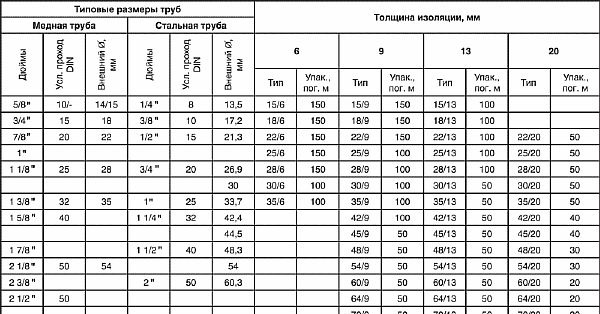
All these calculations are difficult to perform, so to save time, many people use a personal computer and specialized software. This allows for quick and effective results. We suggest downloading the free program. to calculate the thickness of heating pipeline insulation for Windows.
Protection of external systems
Insulating external heating pipes is essential to ensure the coolant retains heat for as long as possible. This is especially important for external heating mains.
Insulation of pipelines in buildings
Insulating existing indoor heating pipes remains essential. Clearly, in areas where the pipes must transfer their heat, insulation is not recommended.
However, areas of the room where pipes run, such as in a wall, need to be insulated. Otherwise, the heat will be lost to the wall.
This type of protection is not used very often indoors, and it should be noted that without it, the quality of heating suffers.
For a system located in the floor, high-density protective materials should be used. For example, any type of foam insulation will be effective indoors. They are excellent for insulation, but for ease of use, tubular options are best.
These are soft, flexible tubes with a longitudinal slit. They are easy to install and secure with a special clamp. If properly installed, this insulation will last a very long time.
Thermal protection outdoors
Insulating outdoor heating pipes requires a special approach. First and foremost, the potential impact of moisture must be considered. Outdoors, this includes snow or rain. When installing thermal insulation outdoors, it's also essential to provide a moisture barrier.
- Mineral wool.
- A winding made of silk threads.
- Roofing felt.
- Winding made of corrosion-resistant wire.
Outdoor protection options must meet the following requirements:
- Low thermal conductivity.
- Moisture resistance. The protection must not allow moisture to accumulate, which is especially important for underground pipelines.
- Resistance to aggressive environmental influences. It should not be damaged by low temperatures or wind.
- Long time of use.
- Simple gasket.
Insulation rules
There are quite a few rules for insulating heating pipes, here are some important points:
- First of all, it is necessary to study the rules and regulations of SNiP.
- Insulation materials should be purchased from authorized suppliers. They manufacture their products in compliance with all regulations and standards.
- Thermal insulation of pipelines is necessary to concentrate thermal energy in the radiator area. If central heating pipeline insulation rules are ignored, the heat will be directed toward the walls and window openings.
- Interior designers can enhance the appearance of thermal insulation. However, such work also requires adherence to specific guidelines. For example, when installing drywall, be sure to include openings for access to fittings.
- Some heating pipe insulation simply needs to be cut to size. Others, however, require additional material for protection.
Requirements for the selection of heating insulation
When searching for thermal insulation for a heating network located outdoors, in addition to the above-mentioned nuances, it is necessary to be guided by the following requirements:
- Thermal conductivity index of a material.
- Ability to withstand the environment.
- Temperature range for operation.
- Duration of the period of use.
- Easy to install material.
Video: Insulating Pipes Outdoors
Thermal insulation in the basement
After completing the construction of a house, its owner should find out how to insulate the pipes for the heating network.
After all, the solution in this situation directly depends on the type of room they pass through. Therefore, thermal insulation for heating pipes in the basement should also be carried out after examining the appropriate options for such applications.
Video: Thermal insulation in the basement
The basement is a completely different story. This area is considered the most critical for heating system installations.
Even though the main line runs below the freezing point of the soil, this does not exempt it from such an event.
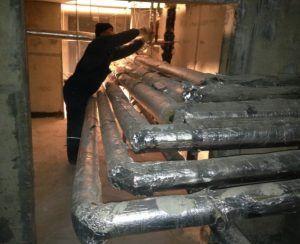
And from the point where the heating network enters the basement to the location of the plumbing, it still needs to be thermally insulated.
ADVICE! Regardless of the type of product chosen to protect underground pipelines, they are additionally covered with a layer of waterproofing.
Deciding how to insulate the pipes in a given room doesn't take much time. Experts are convinced that expanded polystyrene foam offers the best balance of quality and cost, and is the best choice.
This product is available for items of varying sizes, and any ordinary person can handle the installation themselves.
The use of mineral wool involves completing the work in two stages:
- The first stage involves tightly wrapping the workpiece with fabric and securing it with cord.
- The second stage. A protective waterproofing layer is created from roofing felt. Pre-cut, it is laid over the mineral wool. A nylon cord secures everything in place.
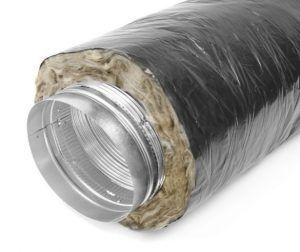
When working in a basement, it's important to remember that proper design and installation are key to the long-lasting and efficient operation of the heating network.
Features of underground heating pipelines
Thermal insulation for buried pipes is essential during cold winter weather. Without proper insulation, the heat energy from the heat carrier will simply be wasted on warming the air, soil, and other elements. Consequently, the network's efficiency decreases under such conditions.
To reduce heat loss in a heating system located in the ground, the following is necessary.
For such a task, experts recommend choosing insulation that is characterized by a low thermal conductivity (less than 0.037 W m*K).
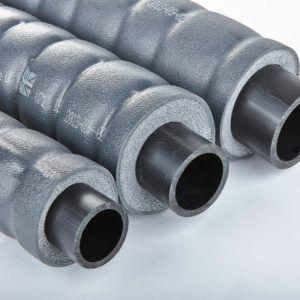
According to SNiP standards, the material for heating pipes laid in the ground must have a density of almost 400 kg/m3.
Additionally, these documents indicate that insulation structures must not contain flammable compounds.
These factors necessitate the adoption of other insulation materials with superior properties. A significant drawback in this case is their high hygroscopicity, which reduces the protection of the embedded materials.
Also, after prolonged use, mineral wool suffers from damage to its structural integrity, which reduces its ability to retain heat.
IMPORTANT! A significant advantage of glass wool is its ability to operate at high temperatures. This also includes excellent chemical resistance, excellent fire resistance, and a low cost.
The latest technologies have brought insulation materials based on polystyrene foam, foamed rubber with the addition of fire-resistant additives.
Foamed polyethylene deserves special attention, as it is currently very popular among consumers.
This product's advantage is its environmental safety. Its numerous positive characteristics place it at the top of the rankings of the best products.
A less common method for insulating buried pipes is synthetic rubber. This material also has many positive qualities, but is more expensive.
Heating pipes and insulation in the apartment
Many people mistakenly believe that insulating an apartment's heating system is unnecessary. This is because the heat lost remains in the room.
In reality, everything happens in such a way that the main source of heat in the apartment is the radiators, but not the pipes that supply the coolant.
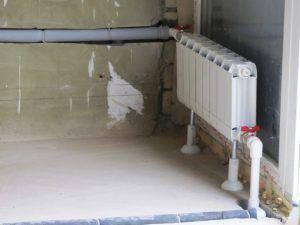
This problem is especially acute in situations where the pipeline is hidden in walls or floors, or covered by a plasterboard structure.
These ducts heat not only the apartment but also the walls. Consequently, heat is lost to the outside. The same thing happens with a concrete screed. The heat simply escapes into the soil.
From the above, it follows that the system running through the apartment requires thermal insulation.
To maintain the coolant temperature at the same level as it exits the boiler, the pipeline is insulated with expanded polyethylene foam. It is easy to select for various pipe sizes.
When insulating an apartment in this way, the foamed polyethylene is cut lengthwise. This allows it to fit easily over the ecoplast.
Each stick of this product contains a drawn line along which a cut is made. Once applied to the blank, this thermal insulation returns to its original shape.
To ensure that the installation is tight and without gaps, the cut must be made with particular precision.
IMPORTANT! The topic of insulating an apartment's heating system comes up regularly. However, regional considerations aren't always taken into account during discussions. While in some southern regions, it's possible to avoid insulating a heating system hidden in a wall, in any northern region, such an action is tantamount to sabotage.
Thermal insulation in an apartment can be achieved without loss thanks to modern materials, and can be done without much difficulty.
Video: Stenoflex 400 insulation
This paint is applied in a thin layer to the pipe. One such layer replaces a polyurethane or polyethylene protection up to 5 cm thick.
How much protection is needed for the heating main?
Thermal insulation of pipelines is necessaryThere are a certain number of people who question this. They ask, "Why install thermal insulation on an already warm heating system?"
It's important to understand that thermal insulation not only improves heating efficiency by retaining heat, but also prevents the negative impact of the external environment on the pipeline, preventing overheating and condensation.
IMPORTANT! Even the highest quality thermal insulation may be ineffective if installation is performed improperly.
Pipeline insulation is highly recommended by experts because it effectively protects against heat loss.
Choosing the right material isn't difficult. The construction market offers a wide range of options for this purpose, all of which are affordable and of good quality.