Today, almost every owner of a private or country house cares about their comfort and has their own plumbing system.
In the summer, using the water supply is a pleasure, but with the arrival of winter, the water pipes outside will need to be insulated; otherwise, in just a week, at temperatures below -5 degrees, they will completely freeze and burst, leaving the owners without water.
Even the highest quality material cannot withstand prolonged frosts during a harsh winter.
There are many insulation options, and the choice of materials depends on the location and thermal insulation of the pipeline. Different methods are used to insulate pipes installed indoors, in the ground, or outdoors.
- General information
- Requirements that the insulation must meet
- Glass wool, mineral wool and polystyrene foam
- Basalt insulation and foam plastic
- How to properly install a foam shell
- Thermal insulation Energoflex
- Alternative methods
- Heating of underground water supply systems
- The process of installing a heating cable
- Some useful tips
General information
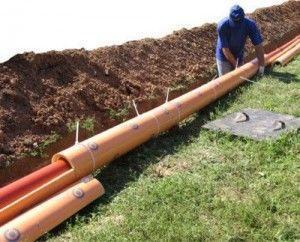 How to insulate outdoor water pipes? Burying a water pipe two meters underground doesn't guarantee it won't freeze during severe frosts.
And the water inside the structure must not be allowed to freeze under any circumstances, otherwise it can rupture and disable the entire plumbing system.
Therefore, it is worth taking care in advance to protect the water supply from freezing outside and choosing the right insulation.
There are two weak points in the home plumbing system.
- The location of the pipeline on the street under a layer of earth.
- The pipeline is located in an unheated room.
While insulating indoor water pipes in a private home is easier, outdoor water pipes require a more thoughtful approach. Essentially, everything depends on the quality of the insulation used.
A good insulation material for water supply should have the following characteristics:
- low thermal conductivity;
- durability;
- ease of installation;
- resistance to aggressive environments;
- must withstand the operating temperature of the environment;
- fire safety and tightness;
- low price with the possibility of repeated use
Based on these characteristics, the optimal thermal insulation for plumbing in a private home is selected. A large number of insulation materials are available today. We'll analyze some of them below.
Requirements that the insulation must meet
Since this material is intended to protect water pipes from frost, it must have a number of characteristics.
Before insulating outdoor plumbing, it's important to know that, despite their diversity, each type must meet the following requirements:
- minimal thermal conductivity to retain the maximum amount of heat;
- water-repellent properties that provide hermetic protection;
- antifungal properties that prevent the development of putrefactive processes;
- resistance to various aggressive environments that may affect a certain area of the structure;
- resistance to high temperatures and fire;
- long service life.
Before insulating a water pipe above ground, think carefully about the insulation material you choose to avoid any difficulties during installation.
If the work is to be carried out by a non-professional, it is desirable that the insulation process does not require a large number of tools.
Glass wool, mineral wool and polystyrene foam
This type is made from glass industry waste. The material has the appropriate properties and is most often used for insulating outdoor plastic water pipes.
Moreover, it's relatively inexpensive and can be purchased in rolls. How to insulate a water pipe with glass wool? To do this, wrap the pipe (the part buried in the ground) and then secure it all with soft, thin wire or construction tape.
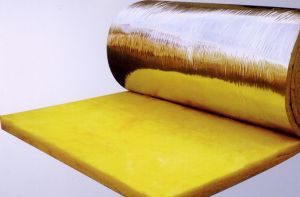
It can be considered that the thermal insulation of the water supply on the street has been completed; however, this type of thermal insulation requires the use of an additional waterproofing method (covering with roofing felt), which increases the cost of the work due to the presence of a second layer.
When working with fiberglass, you should also wear protective clothing, gloves, and a mask. The fiber of this insulation is very thin, so it can easily penetrate the skin or enter the respiratory tract.
When choosing mineral wool, which is made on the basis of basalt fiber, before starting insulation, you need to purchase special cylinders of a certain diameter and size.
They're also known in construction circles as "shells." They're easily cut with a regular knife.
These cylinders are often additionally covered with aluminum foil on the outside, which provides additional protection against mechanical damage during operation.
Using foil-lined shells, you can quickly solve the problem of how to insulate a water pipe above ground and prevent heat loss.
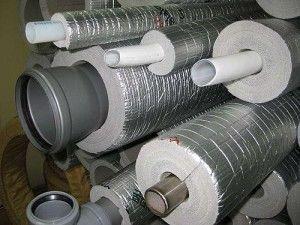
If we are talking about cold water supply pipes, then in this case you can use a polystyrene foam shell, but you need to take into account that this material is flammable, so it cannot be used as an insulating material in hot water supply systems.
Before insulating outdoor plumbing and choosing the right material, please note that mineral wool consists of small fibers that fly apart during use and can be inhaled, causing allergic reactions and irritation.
Working with mineral wool requires special clothing, while foam plastic is easy to install and does not require special instructions for use.
Basalt insulation and foam plastic
Basalt is melted and used to produce a good insulating material. It is used to produce cylinders of various diameters for insulation.
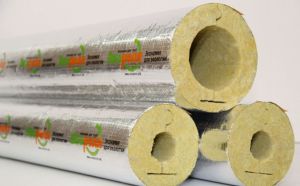
Besides being easy to install, basalt cylinders adhere perfectly to the pipeline. This material is more expensive than glass wool, but it also requires moisture protection, such as foil insulation or parchment.
Insulating outdoor water supply lines is an important task, and foam plastic is most often used for this purpose. To insulate any main line, a shell of the appropriate diameter is manufactured.
They come with or without a coating. Foam shells can be reused multiple times, saving money, while offering the best performance and technical properties as an insulator.
How to properly install a foam shell
How to insulate a water pipe with foam? Proper installation of the shell doesn't require any special skills. This way, you can insulate your water pipe yourself in a short period of time.
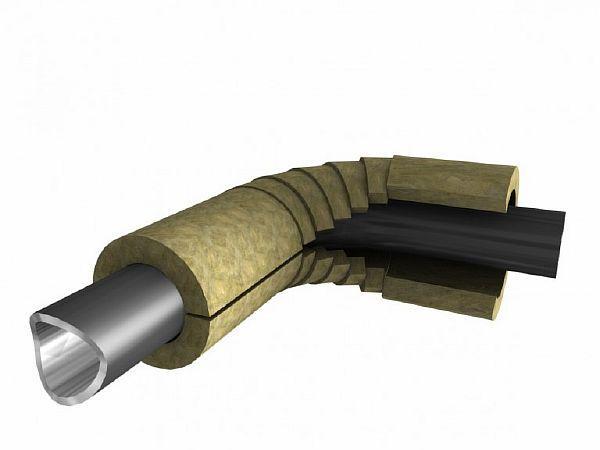
The cylinder halves are placed on the pipe and secured with special tape. The parts must overlap by at least 10 cm. All joints are carefully sealed with tape, and a protective layer is applied over the tape.
For corner segments, nodes and turns, shaped shells are used.
The insulation is removed in reverse order: the protective layer, tape, and then the shell itself are removed.
Thermal insulation Energoflex
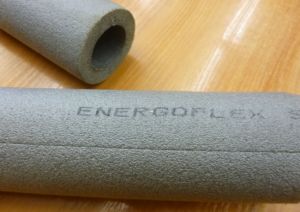 This the thermal insulation material is made of foamed polyethyleneEnergoflex's cellular insulation for water supply pipes is ideal for insulating outdoor water pipes.
Energoflex thermal insulation guarantees high-quality insulation of outdoor water supply systems and is manufactured using advanced technologies and state-of-the-art equipment. The product range is constantly expanding based on customer demand.
Energoflex thermal insulation has the following characteristics:
- retains heat well. Has a low thermal conductivity coefficient;
- Protects the carrier from overheating. Even in hot weather, the water will remain cool;
- Protects underground pipelines from freezing. Energoflex thermal insulation, even in exposed areas, can provide temporary protection against freezing in the event of a malfunction until it is resolved;
- protects pipeline from condensation and corrosion. Energoflex thermal insulation is highly resistant to aggressive environments, therefore protecting plumbing materials from corrosion;
- Energoflex also provides sound insulation, effectively masking structural noise to maintain peace indoors and outdoors.
Energoflex thermal insulation is used not only for insulating water pipes buried outdoors, but also for underfloor heating installations, roofing, and other applications. This material offers a wide range of insulation and insulation products.
These include materials in rolls, tubes, and additional connecting accessories needed for high-quality installation of outdoor water supply insulation.
Alternative methods
Water supply freeze protection cannot always be effectively achieved using insulation alone. In severe frosts, additional freeze protection may be required, which can be achieved using specialized heating cables or pressure.
Everyone knows that every liquid has a certain pressure at which it won't freeze. Water pipe insulation can also be tied to this principle. Simply insert a receiver into the pipeline.
To ensure uniform pressure throughout the pipeline, a check valve is installed near the pump. Then, close the valve installed before the receiver and turn on the pump.
Optimally, create a pressure of 3 to 5 atmospheres. It's important that all pipeline components can withstand this pressure. If the system can withstand this pressure, it's more likely to survive winter frosts.
When warm weather arrives, simply normalizing the pressure is sufficient, and the water supply system can resume normal operation. This method of protecting water pipes is possible using a submersible pump, which can generate pressure of up to 5 atmospheres.
Insulating underground water pipes can also be accomplished using special electrical cables. How do you insulate them this way? The cables are laid along the water pipe either longitudinally or in a spiral and covered with a layer of insulation.
This method is very reliable if you have constant access to electricity. It can heat a pipeline in a single day.
Heating of underground water supply systems
The answer to the question of how to insulate a water pipe under the floor is very simple. Most often, they are wrapped in fiberglass, secured with wire or plastic tape.
This heating method is good for outdoor use, but when burying the water main in the ground, it is necessary to cover the glass wool with a waterproofing layer.
Under the influence of the earth, the insulating material, the density of which is low, will gradually begin to deteriorate and the thermal insulation will be damaged.
Another method of thermal insulation is to use heating wire to heat the water pipes.
This method of insulating a plumbing system will be more expensive, but if you install the cable yourself, you can save significantly.
This system is activated only during the coldest winter months and allows for both insulating the water pipe under the floor and not burying it deeply; it is enough to dig a trench half a meter deep.
The heating wire for water pipes can be placed either on their inner or outer side; the result will be good in either case.
But while you can attach the heating wire to the outside of the water supply yourself, for internal cable placement you need to call in specialists.
External cable fastening can be accomplished in two ways: longitudinally or spirally. It's important to know in advance the spacing between the heating cables and the number of turns required for optimal performance.
Thermal sensors must be installed near the cable to monitor the temperature. This insulation method is not only the most effective but also reliable.
Now it's easy to understand how to insulate pipes under the floor or underground. Using an electric heating cable installed under a layer of insulation, you can raise the temperature to an optimal level throughout the day, even in the most severe frosts.
The only downside of this method is its complete dependence on electricity supply, so you shouldn’t rely entirely on this option.
If the power goes out, the heating cable for the water supply will not be able to perform its function, and it is necessary to always have a backup solution on hand.
It is also recommended to install a relay when installing the cable, because some types of cable in the self-regulating state do not disconnect from the power supply and may use electricity unnecessarily.
The process of installing a heating cable
To install the wire, you will need to perform the following steps:
- the pipes are dug out and the trench is widened so that insulation work can be carried out freely;
- a heating wire is wound onto the pipe using any of the above methods;
- a layer of thermal insulation (polystyrene foam or glass wool) is placed over the electrical cable;
- installation of a protective covering (wrapping with fiberglass or sheet fabric), which is attached using soft wire;
- the ends of the cable are connected to the electrical network;
- the pipes are filled up.
The result is a multi-layer protection consisting of cable, insulation, protective coating and a layer of earth.
It is worth considering that those parts of the plumbing system that are at an angle do not need to be insulated at all; in such places, stagnation of liquid and its freezing are excluded.
The homeowner is the one who decides how to insulate the above-ground water pipes. It's advisable to use synthetic insulation, which retains heat well and is resistant to rot.
Choosing the right insulation method, whether using a heating cable or regular insulation material, will save you not only money but also stress.
Don't skimp on insulation, as ruptures and replacement of damaged sections of the plumbing system will be much more expensive.
All insulation work should be done early, during the warmer months, and not delayed until the first frost, when problems arise. Now you know how to insulate a water pipe outdoors and can handle the task yourself.
Some useful tips
Even the most severe frosts are no threat to the plumbing in a private home if the thermal insulation is done conscientiously and from high-quality materials.
Even if all the rules are followed, some problems may arise. To avoid them, it's worth remembering a few points that are widely described in the literature.
In addition to the fact that thermal insulation of water pipes that are located in the ground in a private house must be carried out correctly.
This can be compromised by the intense attention of rodents, who seek warm spots in winter and can damage the insulation layer. They easily chew through insulation, along with plastic and asbestos-cement pipes, and make nests there.
This is an ideal wintering spot for rodents. To prevent attacks, wrap the pipeline with fine-grained metal mesh and plaster it with a solution mixed with broken glass.
It's important to insulate not only the outside water pipe but also the connecting fittings, couplings, and so on. If water freezes on them, they will eventually burst, leading to the failure of the entire water delivery system.
Particular attention should be paid to those sections of the water supply network that are buried outdoors and in unheated spaces (such as basements). It's important to consider how to insulate the pipes that are most likely to be damaged by frost.
If the heating system in a private home is supplied by a common heating main, then turning off the boiler in winter is strictly prohibited, to avoid causing a cooling effect.
In this case, the water supply must be in contact with the outlet of the steam heating system, and they are also insulated together.
When designing a plumbing system for a private home, engineers create a precise plan of all underground structures. It's recommended to save this plan to ensure precise location, which will be needed when protecting the water supply from freezing.
Now you know how to properly and efficiently insulate a ground-mounted water pipe in a private home.
Mistakes made during insulation of the water supply system outside your home, as well as skimping on materials, can lead to freezing and, as a result, ruptures in certain areas.
Such problems are very difficult to solve in winter, if at all possible, so don't skimp on insulation and electricity. It's better to install an electrical cable under the insulation for additional heating than to regret not having one!