 Many people are interested in how to eliminate condensation on a cold water pipe. This is a very common problem.
At first glance, damp cold water pipes seem like a source of dampness in a kitchen or bathroom. This can also lead to mold growth.
These factors will reduce the time between system repairs in a damp room. The causes of condensation and how to combat it will be discussed below.
Condensation in cold water pipes most often occurs due to insufficient ventilation in the room. This is precisely why moisture forms droplets in the cold water system.
Humid air is a great aid to this process. For these reasons, before installing cold water pipes, it's recommended to install a thermal insulation layer to prevent any temperature fluctuations at the top of the pipe.
This problem also occurs when the cold and hot water pipes are located close together.
Condensation in the bathroom
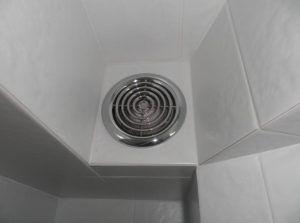
If you have this problem in your bathroom or toilet, it's recommended to first check the ventilation system.
Over time, it could have become clogged. Problems with the ventilation system are easily visible with the windows closed, especially if the room has plastic windows. This can be checked very easily.
TIP! If you take a piece of paper and place it against the hood with the plastic windows closed, and then do the same with the windows open, you'll notice a visual difference. If there's no ventilation, it will be immediately apparent.
Another peculiarity of the bathroom is the layout of the cold and hot water pipes. They are often installed in close proximity, without any thermal insulation.
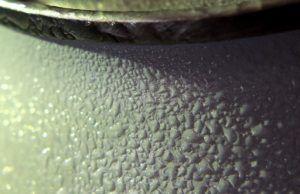
It's no surprise that pipes begin to leak where water enters plumbing fixtures. Condensation is easier to remove with exposed wiring.
However, when the network is hidden in a wall, resolving the issue entails more complex work. This will include repairs, as the immediate solution will require changing the structure's geometry.
When considering the causes of condensation in cold water pipes in a bathroom or toilet, it is important to note that the situation is generally similar to the one described above, but there is one "BUT."
These rooms have significantly more pipes, but the space is typically smaller. Therefore, the issue of pipe insulation must be addressed during the installation stage.
How to solve this problem
How can you eliminate condensation on pipes if the ventilation system is working properly, but the pipeline is constantly "weeping"? Thermal insulation can help. We suggest you find out. 5 ways to get rid of condensation on a toilet cistern and the reasons for its appearance.
And it deserves special attention. You can purchase a special material that's easily available at any hardware store for a small price.
Don't worry, if you don't have any of these on hand, you can use improvised means. Foam and corrugated pipe can save the day.
The volume of the corrugated pipe should be slightly larger than the volume of the rolled pipes installed in the network. The process itself is incredibly simple.
The corrugated pipe is pre-cut into the required lengths, and these are then inserted onto the fittings. The empty space is filled with foam. At this point, the job is complete.
Video
There's another very simple method that will help eliminate water droplets from pipes. To do this, you'll need:
- sanding paper;
- phosphoric acid;
- thick thread;
- strips of old fabric;
- spatula;
- acetone.
Course of action:
- Any scraps of fabric are cut into strips no more than 7 cm wide and rolled into rolls. It's recommended to prepare extra strips to avoid distractions while working.
- The pipe is plastered, otherwise the material won't adhere securely. It is then degreased with acetone.
- At this stage, a rust converter is applied, and once the pipes are dry, they are coated with putty. This material hardens instantly, so you'll need to act quickly.
- The prepared pipes are wrapped in strips of fabric, each subsequent turn overlapping the previous one. The final turn is tightly tied with cord.
- Thus, the insulation from fabric strips is applied in several layers.
- The process is completed by applying an epoxy layer. Once it's completely dry, the pipes are sanded and painted in the chosen shade.
How to remove condensation from plastic pipes
A common cause of condensation is leaks in plumbing fixtures. If the pipe supplying water to the fixtures is wet, the problem could be in the faucet, shower mixer, or toilet tank inlet valve. A wet riser pipe could also indicate leaks in the neighboring apartments above.
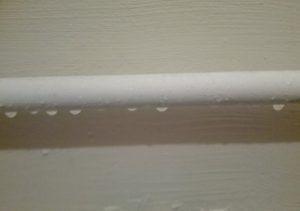 If the pipe network is made of plastic, then the problem of how to eliminate condensation on plastic pipes is solved as follows:
- The hoods are checked and the ventilation grille is replaced with a compact fan.
- The network is insulated with special slit tubes. These products are available at every hardware store. They are made of energy flex and foamed polyethylene. This is a very simple method; however, the pipes must be thoroughly dried before insulating.
- Complete insulation of plastic pipes can be achieved by using fabric strips and plastering. A detailed description of how to do this is provided above.
Features of metal water pipelines
Video
The problem of how to eliminate condensation on metal water pipes is no less acute than in previous situations.
If metal water pipes are constantly exposed to water droplets, they will quickly become damaged by corrosion.
The following steps will help eliminate condensation in metal pipes:
- The pipes are protected from rust, dried and coated with drying oil or oil paint.
- We apply carbolate. This paste-like sealant is used to fill cracks in walls and floors. It's applied in a 0.5 cm layer. This mixture is left to harden for 24 hours, after which the surface is sanded with fine-grit sandpaper and painted with oil paint.
- Projector primers. They consist of zinc dust diluted with drying oil. This mixture is applied to the pipeline and then painted (enamel).
- The main line in the toilet can be treated with a product based on drying oil and red lead, or with special primers (for example: FL-031, FL-053).
AdviceIn the bathroom, cold water mains are allowed to be painted with any type of enamel, but hot water pipes can only be coated with oil-resistant enamels.
How else do they deal with condensation?
Video: How to eliminate condensation on plastic water pipes
Eliminating condensation on pipes is not an easy task without determining the exact cause of this phenomenon.
Experts express the following opinion on this matter.
- Professional plumbers recommend purchasing "Gofroterm." This is a special compound available at building supply stores. It's applied to the surface of pipes, forming a strong, flexible film that prevents moisture buildup.
- Experts are also confident in the effectiveness of liquid thermal insulation, which is applied to a dry and cleaned pipeline.
- Even if all plumbing fixtures and pipes are in good working order, condensation can accumulate due to the temperature difference between the pipes and the air. In this situation, the only solution is to insulate the system. Professionals recommend foamed polyethylene or Merilon, which are readily available at any hardware store for a low cost, as the most suitable insulation option. This insulation material is attached to the pipe by sliding it onto it, securing it with a clamp and wire.
Video
IMPORTANT! Experts warn that there are several methods for eliminating fogging in cold water pipes. Choosing one should only be done after a thorough analysis of the situation.
Most often, the recommended methods quickly produce the desired result. However, sometimes the water never disappears.
The fact is that in addition to the primary factors, there are also secondary factors that lead to condensation. The source of dampness is vapors from the basement, poor waterproofing, and poor wall insulation.
This causes condensation and frost. In such situations, the only solution is to insulate the floors and walls of the house with high-quality materials.
In addition to the factors already mentioned, there are others that can lead to moisture problems. For example, weather conditions. Frequent and prolonged rainfall, proximity to a body of water, and proximity to groundwater also significantly increase the moisture level in a home.
You can reduce this by installing a dehumidifier or an air conditioner with a dehumidifying function. Dehumidifiers, available on the market today, are an excellent method for removing moisture.
Video
These are plastic boxes containing absorbent tablets. Using these devices not only eliminates fogging on pipes but also eliminates humidity throughout the entire house.
Experts can advise on how to eliminate condensation on a cold water pipe. If you entrust them with this task, you can be sure they will quickly and effectively eliminate the causes of dampness in your apartment. And then you won't have to worry about your health.