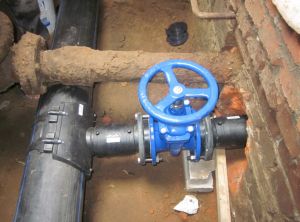
 Pipes made of polymers are mainly used in the construction industry for repairing water supply networks, swimming pool equipment, and fountains.
HDPE water pipes for cold water supply are an ideal choice for extracting water from great depths and as components of automatic irrigation systems.
Although HDPE water supply pipes appeared on the domestic market relatively recently, they quickly became popular and easily replaced similar products made from other materials.
PVC samples have super strength with light weight and flexible structure. They are used as components in the installation of various cold water supply systems.
General information
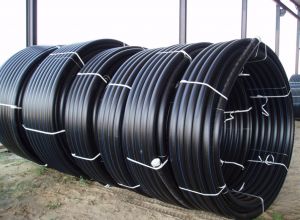 When installing HDPE water pipes, it is necessary to adhere to the installation technology, and each process must be carried out in accordance with GOST.
Samples are available for sale in straight lengths and coils. The former are sold in 12-meter lengths, while the latter are sold in 100- or 200-meter lengths. Before purchasing, it's important to thoroughly inspect the product's surface, both inside and out.
Good quality is characterized by a smooth surface. Minor unevenness and shallow streaks are acceptable, but they do not add roughness to the material or affect the size of the specimen walls.
No air inclusions, foreign particles, and especially cracks should “decorate” polyethylene water pipes and other components of the future water supply system.
They can be recognized by their black color scheme with blue marking stripes (there should be three of them) placed longitudinally, which are evenly distributed around the entire circumference.
Polyethylene pipes used for transporting drinking water can also be painted blue, as long as the composition is uniform and the surface is smooth.
Each sample must indicate: diameter, wall thickness, manufacturer, and grade of polyethylene.
Characteristics of the constituent elements
High-quality HDPE water pipes for cold water supply must meet the following parameters, which significantly affect the durability of their use.
- Polyethylene gradePE80 and PE100 grades are primarily used. The former is ideal for constructing small-diameter water pipes.
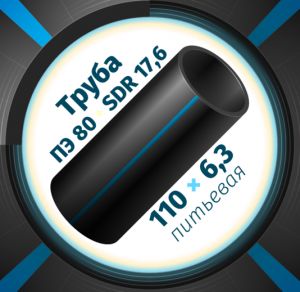
This grade of polyethylene has satisfactory consumer characteristics and can withstand the slight pressure inside the system that occurs during liquid transportation.
The PE100 grade is used for large-diameter products, as it allows for savings on material.
Therefore, when choosing components for the installation of a pipeline, it is most likely that they will be made from this grade of polyethylene.
- Stability indicatorThis value indicates how resistant HDPE pipes and plumbing fittings are to internal pressure and is calculated by simply ratioing the sample diameter to its wall thickness. The lower the value, the stronger the product.
- Preparing a trenchHDPE plumbing pipes for cold water supply will last a long time if the trench is properly prepared when installing the underground system.
To do this, make sure there are no rocks or other hard objects in the soil beneath the pipeline. These could damage the polyethylene and, as a result, cause a leak.
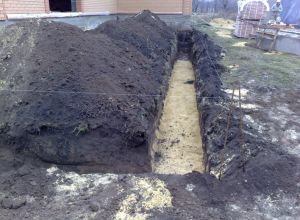
Before installation, a layer of sand or crushed gravel at least 10 centimeters thick is laid on the bottom of the trench.
The substrate is compacted and only after this is a polyethylene pipe laid in the trench, which is slightly recessed into the substrate.
When transporting materials, it is important to ensure that there are no sharp objects or cutting elements in the vehicle body that could damage the polyethylene and ruin it before installation.
Properties
The most important advantage of polyethylene is the ability to change shape without damaging the overall structure.
Polyethylene water pipes have the ability to stretch by almost 8%, which often prevents breaks when the water supply line deforms. High-quality HDPE products have the following properties and characteristics:
- tolerate frosts down to -70°C well;
- used for transporting cold water with an operating pressure inside the system of 4-20 Bar;
- Manufacturers produce samples with diameters from 16 to 1600 mm;
- They can withstand temperatures up to +65°C, therefore they are not used as components of hot water supply systems;
- If installed correctly, HDPE water pipes can last up to 50 years without repair or replacement;
- the material is resistant to mold and mildew, so it does not require special treatment when installed in marshy areas;
Watch the video
The only drawback of this type of pipe is its deterioration under UV radiation. Under the scorching sun's rays, polyethylene loses its main advantage (ductility) and becomes brittle. This factor must be taken into account when storing the material outdoors.
Installation
In addition to choosing high-quality components for the plumbing system, you also need to select suitable connecting elements.
Fittings for HDPE cold water supply pipes must be reliable and match the diameter to create a tight connection without unnecessary physical effort.
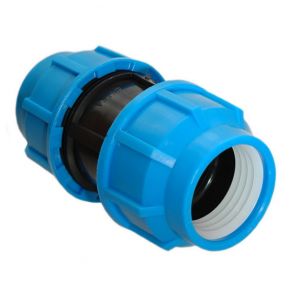 Polyethylene fittings for water supply are divided into three main groups:
- cast;
- welded;
- compression.
Each group of connecting elements is fundamentally different from one another. The first two types connect the main line, by welding, using a special welding machine.
Cast models are joined "butt-welded", and electric welded ones are joined using electrodiffusion welding.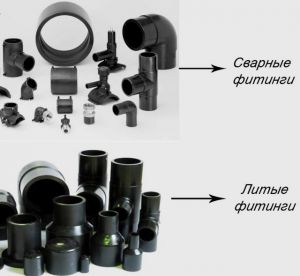
For a cast joint, the edges of the joint are heated and then joined together. After the joint cools, it becomes highly durable and ensures a tight seal.
Polyethylene fittings for cold water supply compression type They don't require a welding machine, but a special tool to make a crimp (collet) connection. You can do this without a tool, but installation will take longer.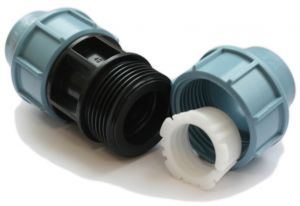
Any type of HDPE fitting can efficiently connect HDPE water pipes, but welded fittings stand out because they are made from polyethylene pipe.
The advantages include low cost and the ability to manufacture parts for connecting elements of various diameters.
It happens that it is necessary to replace part of the old steel structure of the water supply system with new polyethylene pipes.
For this case, combined fittings are provided in the form of adapters made of metal and polyethylene, which greatly simplifies this type of installation.
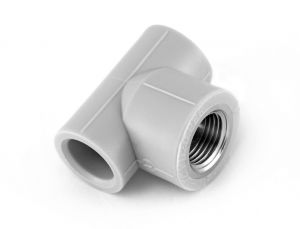
Compression fittings are also suitable for joining pipes of different diameters. in one pipeline.
The main thing when purchasing such connecting elements is to focus on samples in which both the body and the union nut are made of a material of uniform consistency.
Watch the video
Low cost and ease of installation have made polyethylene fittings for HDPE pipes the most popular and sought-after among other types of connecting elements.
Today, the construction market is filled with various types of pipes that can be used in installing plumbing systems, and the list of such products is constantly expanding.
However, there is no doubt that HDPE water pipes for cold water supply are gradually replacing their metal counterparts.
Polymer products offer a number of advantages, so choosing shouldn't be difficult if you take the capacity of the future water supply system and its intended purpose as a guide.
Watch the video
After the renovation, we replaced all the metal pipes with polyethylene ones. We took a risk and decided not to wait for a repairman, but to try replacing and connecting them ourselves. We also bought polyethylene fittings for the connections. We connected everything and hooked it up. We're pleased to see that the pipes are durable and corrosion-resistant, and we won't have any plumbing issues anytime soon.