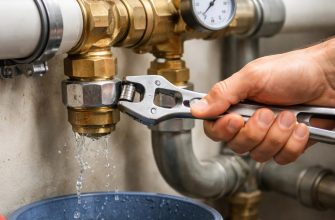
When renovating a home, many people wonder how to hide pipes in the bathroom and how to design the bathroom so that the main line and other utilities are not visible.
It should be added that it is important not only to close the pipes, but to do it in such a way that access to the network is free at any time.
When organizing a home, everything needs careful consideration, and this is especially important in the bathroom. This is due to the specific nature of the space, which is essentially small, so it's important to compactly accommodate plumbing and sewer lines, furniture, and other items.
The specificity of the bathroom is that here the pipes for water, for draining from the bathtub, washbasin, are located, toilet.
If you are planning to build a new home, then the issue of how to close sewer or water pipes should be considered in advance.
- What pipes can be hidden?
- How to hide pipes in a wall yourself
- Installation of a plasterboard box
- Disguised as plasterboard
- Using plastic panels
- How to hide in a niche
- Hiding the pipeline in the floor
- Plumbing roller shutters
- We hide it with furniture
- How to hide utilities using a false wall
- Hiding utilities under the bathtub
- Ideas for hiding plumbing lines under the sink
- Possible errors
- A little about the types of wiring
- About collector wiring
What pipes can be hidden?
Before making a decision, it's important to thoroughly understand some of the connection features. Some don't require special attention because they're reliable and can be hidden without fear.
Some types of connections require constant monitoring during maintenance. Options for sealing pipes in the bathroom are shown in the photo. These should be reviewed before making a final decision.
It is possible to hide completely:
- Steel pipes and joints made by welding;
- Brazed copper pipe;
- Press fittings made of metal and plastic, crimped with special pliers. And they must be of only high quality;
- Plastic water pipes that are installed using soldering.
However, there are certain types of rolled pipe products that are not recommended for concealment:
- Any threaded connection on pipes made of steel or other material;
- Threaded fitting on metal-plastic, assembled with a key.
How to hide pipes in a wall yourself
Close in the wall. This method is the most popular. It's not difficult to handle, and in this situation, you can get by without professional help.
Next, you need to develop a layout for the main line and purchase the lining material. Mark the wall, and a groove will be cut along it. The groove's dimensions are calculated so that the water pipe can fit comfortably within it.
And for hot water supply, the groove is made a little larger, because it can expand when heated.
The finished pipes are placed in the prepared recess and secured with fasteners. These fasteners can be purchased at any building materials store.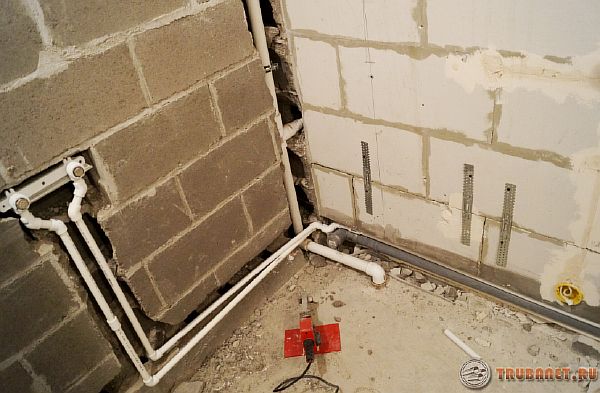
One drawback to keep in mind is that if a leak occurs, the wall will have to be dismantled to repair it.
Installation of a plasterboard box
How do you close off a bathroom sewer riser? In most cases, a plasterboard box is used, which can easily be installed by yourself.
How to beautifully seal a water pipe into a drywall box? First, you need to prepare the materials and tools for installation:
- plasterboard and metal frame elements;
- pencil;
- knife and metal scissors;
- screwdriver;
- roulette;
- level;
- drill and screwdriver;
- self-tapping screws;
- square.
Work execution procedure:
- Markup.
When marking the frame attachment points on the room walls, use a level to ensure the structure is vertical. Utilities should be concealed by recessing them into the frame at least 1 centimeter.
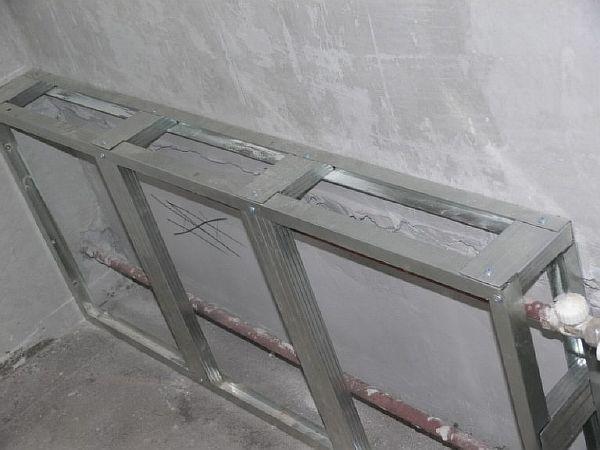
- Installation of the metal frame of the future box.
Use a metal frame for mounting the box, as wood is susceptible to moisture and can quickly deteriorate. Fastening is done using dowels and screws, spaced 50 centimeters apart.
- Cutting and fastening plasterboard sheets.
The plasterboard should be secured to the frame every 30 centimeters.
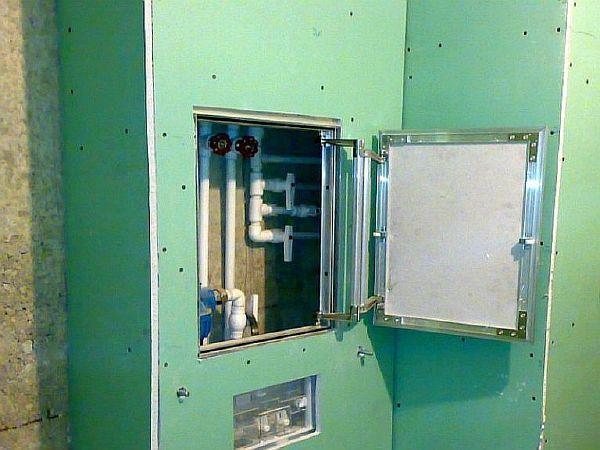
- Installation of hatches on the plasterboard box in places where taps and other important elements (meters, threaded connections, etc.) are located, so that if necessary repair could be carried out quickly and inexpensively.
- Sealing of joints.
A plasterboard box can be finished with any material: paint, tiles, wallpaper.
Disguised as plasterboard
This method has significantly increased its following today because it is technologically advanced and simple.
The photos clearly demonstrate how to cover water pipes in a bathroom with drywall. It's clear that the drywall paneling looks very aesthetically pleasing. The same technique can be used to cover sewer pipes.
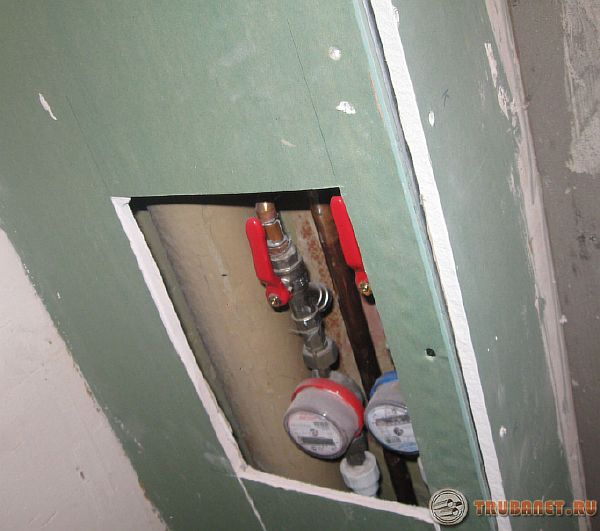
A drawback of this method is that it reduces the room's size. This method of concealing bathroom sewer pipes using drywall is ideal for newly built homes, where the owners themselves determine the placement of interior partitions.
Concealing pipes this way isn't physically difficult, and it doesn't require any professional skills or knowledge. This method is also used in old Khrushchev-era buildings and prefabricated panel houses.
Using plastic panels
This method has become popular due to its simple installation. The process is similar to how we used drywall sheathing. In this case, a frame is also constructed from metal profiles and then covered with plastic.
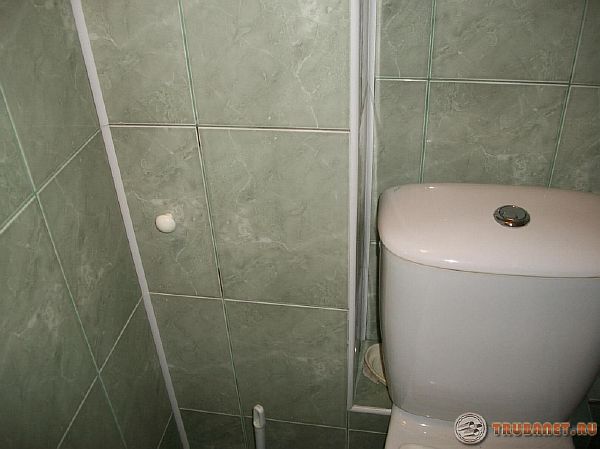
It is not recommended to install sewer or water pipes inside the stud profile, as they can be damaged by screws.
How to hide in a niche
Many apartments often have niches for installing water and sewer pipes. Finding one is considered a stroke of luck.
Hiding utilities in this case is very simple. The main advantage of this situation is that all the work is done without wasting space in the room.
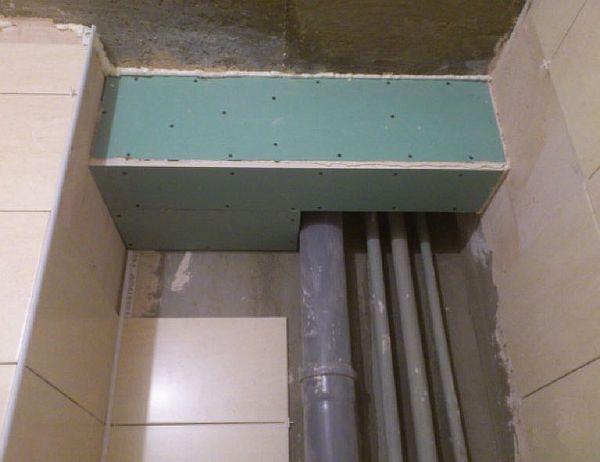
The essence of this method is to lay tiles over the edges of the niche. They should extend a few centimeters beyond the edge.
After the adhesive has dried, the tiles are grouted. Direct joints for plastic are glued on both sides of the protruding edge.
The panels are tucked into it and positioned horizontally. If you don't plan to hang anything on this wall, you don't need to add additional stiffeners.
The described method is used when quick access to the main line is required. If the quality of the network installation is impeccable, the niche can be covered with plasterboard.
This job is a little more complicated than covering the niche with plastic. Guide profiles are installed along the edges of the niche. Lintels are attached to these. After this, the structure is covered with plasterboard.
If water meters are located in the niche, it's important to remember to leave a hatch. The simplest option is to cut a hole of the required dimensions and glue the hatch into it.
Hiding the pipeline in the floor
Speaking of utility installation methods, it's worth mentioning another interesting option: concealing them in the floor.
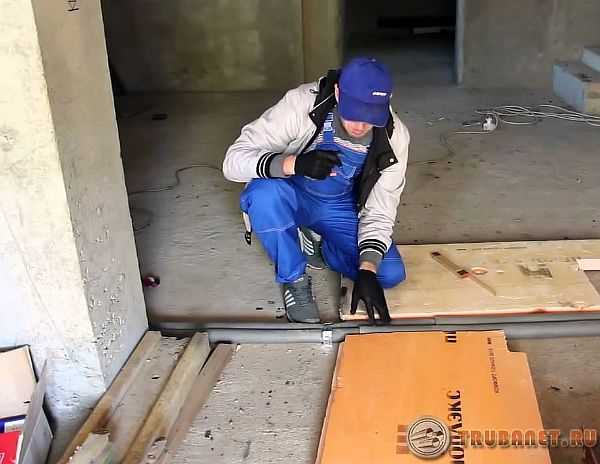
This solution is attractive because it eliminates the need for chasing. The pipes are laid along the floor slab and secured. The screed is then poured.
The downside of this method is that sewer pipes can't be hidden in the floor. They'll have to be installed the traditional way – in chases.
Plumbing roller shutters
In the search for ways to seal pipes in the bathroom, people have come up with all sorts of ideas, and photos demonstrate various solutions to this problem.
And it's impossible not to mention another good and simple method. Its essence is simple: the use of plumbing roller shutters. In this situation, they perform a number of functions:
- Communications are closed;
- Reduces the noise of plumbing fixtures;
- Increase the level of interior aesthetics;
- Provides full access.
The advantage of this method is obvious. Roller shutters don't take up space; when closed, they fit within the frame, and when unfolded, they conceal whatever's behind them.
All it takes to approach communications is one simple hand movement.
We hide it with furniture
If the above methods can't be used in a bathroom, there's another very simple solution. It's recommended to integrate the utilities into the furniture.
This can be done after all renovation work is completed. It's best to do this when hanging cabinets, mirrors, and installing nightstands.
In this situation, the furniture not only conceals the utilities but also serves its intended purpose. It's very convenient that the pipes are always fully accessible if needed.
The high humidity in a bathroom places additional demands on furniture. Moisture-proof materials are expensive, and not everyone can afford such furniture. In this case, installing mechanical forced ventilation is recommended. This allows you to regulate the microclimate and ensure adequate air exchange.
There are many ideas for hiding pipes in the bathroom. Each person must decide for themselves which approach to take. It all depends on their preferences and budget.
The key is to approach this issue thoughtfully and choose the option that best suits your space. Then you'll be delighted with your new, improved bathroom interior.
How to hide utilities using a false wall
If you're finishing a new room or doing a major renovation of an old one and all the utilities can be run along one wall, the best option is to install a false wall made of plasterboard, behind which you can hide all the pipes.
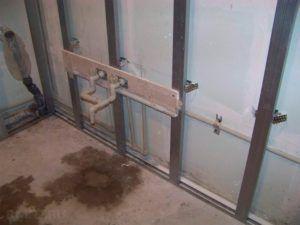 Advantages of the method:
- Ease of installation and dismantling.
Installing a false wall made of plasterboard to conceal utility lines is much easier than installing a box made of the same material, since most of the time you install whole (or large) sheets of material on the wall of the room, and you won't have to make a lot of cuts.
- Light weight.
- Durability.
- Ability to withstand heavy loads.
You can hang a large number of plumbing fixtures, shelves, and other accessories on a false plasterboard wall without worrying about its safety.
- Versatility.
How do you seal protruding water pipes leading to bathroom faucets? In some cases, chasing walls is prohibited, as it can negatively impact the load-bearing capacity of the enclosing structure. A drywall wall, however, can be installed anywhere.
- Wide range of finishing options.
Any finish can be applied to the false drywall: paint, wallpaper, or tiles. If you choose the latter option, install a special mesh over the drywall to ensure maximum tile security.
Hiding utilities under the bathtub
Quite often, the largest parts of the system run under the bowl. While it's possible to place it on legs and install a decorative screen or partition, the best way to conceal the utilities under the bowl, from a design perspective, is to install a podium.
The first step in planning a podium is to choose the material it will be made from. A bathroom is a room with high humidity, so not all materials are suitable for creating a podium. You can use:
- High-quality plasterboard, resistant to long-term exposure to moisture.
- Brick.
- Foam blocks.
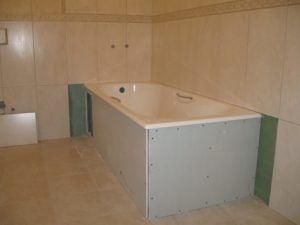 Drywall is the most convenient option, as installation is quick and easy. When choosing a material, keep in mind that a full bathtub can weigh up to 250 kilograms, so you need to choose a structure that can easily support this weight.
Ideas for hiding plumbing lines under the sink
How do you cover up the pipes under a bathroom sink? Here are some of the most popular and interesting ideas:
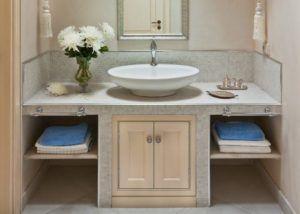
- Installing a plasterboard box under the sink.
This option allows you to achieve maximum consistency between the sink and the style of the room.
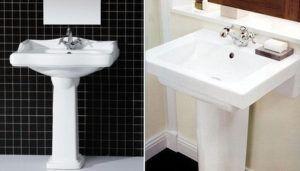
- Installing a pedestal for a sink.
This is the cheapest and simplest method. The sewer and water supply lines are located in the same location; the main thing is to maintain a minimum slope for the sewer line.
- Installation of a wall-hung washbasin with a rear outlet and concealed installation in a plasterboard box (or false wall).
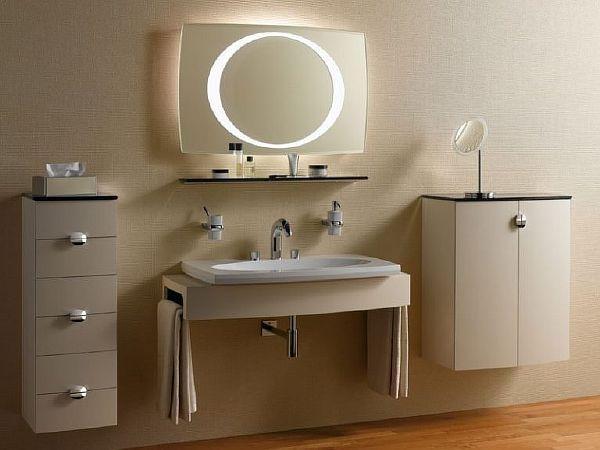
- Installation of furniture with a built-in sink.
The most popular method, since currently there is a huge variety of furniture for sinks of all types.
Possible errors
Before closing off any utility systems in a bathroom or toilet, first ensure that the selected utilities are easily accessible. For example, hot water meters or threaded connections where leaks are most likely.
Additionally, it's important to ensure that there are no system malfunctions when concealing the systems. Quite often, many people forget about the required slope of the sewer system when concealing it in a drywall box.
The most common problems that arise from errors in the masking of sewer and water supply systems.
- Lack of access to taps.
If you want to conceal systems even where elements require direct access, install special inspection hatches. A wide selection of such elements is currently available, varying in opening methods and design (for example, there are hatches that can be closed and disguised as tiles).
- Occurrence of leaks.
The most vulnerable areas of a water supply system are threaded connections. Ensure the joints are tight and the quality of the sealant used, and provide access hatches for quick repairs if necessary.
- Complex installation of additional elements.
Before renovating a room, decide on the location of all appliances. Otherwise, once you've hidden everything, connecting a new appliance (such as a washing machine) will be quite problematic.
The most important thing when installing sewer and water supply systems is to use high-quality materials and exercise care during the work. Otherwise, even following all the rules can lead to leaks, which will require costly repairs.
A little about the types of wiring
The main rule is to install pipes in a specific sequence. This job can be easily done by yourself, even by first-timers.
However, serial distribution also has a number of disadvantages. The main one is that the pressure in such systems is distributed unevenly. This means it is not recommended to turn on the water to several consumers at once.
About collector wiring
In this case, a separate section of the water supply line is used for each appliance. This ensures uniform distribution and movement of water throughout the system.
There is no need to worry about people taking a bath if you need to turn on the washing machine or dishwasher.
A manifold system means that a valve is installed individually on each pipe. If one section fails, there's no need to dismantle the entire system.
The main drawback is that installing such systems is inaccessible to beginners. And it requires significantly more material than a serial wiring system. It's best to hire true professionals for such tasks.
There are several features to consider, regardless of which method is chosen in a given case.
- The system needs to be kept as intact as possible.
- There should be a minimum number of bends and nodes in the main line.
It's not recommended to intertwine cold and hot water pipes. The main system should look like a single unit, like a simple device.
It's necessary to calculate how many outlets there will be in the system. This parameter is determined by homeowners themselves. It all depends on the type and number of fixtures in the bathroom.
The washing machine, water heater, sink, and bathtub are the main points. One more point should be added if the bathroom is a combined one.
Now you know almost all the ways to hide pipes in the bathroom yourself. All that's left is to choose the right one for you and get started.