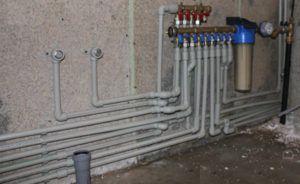
 Plumbing has become an integral part of the modern country house, along with heating and sewerage. Meanwhile, metal fittings are gradually being quietly and gracefully phased out, giving way to plastic.
Thanks to their simplicity and technological advancement, DIY installation of polypropylene water pipes is becoming the norm today.
The decision to use plastic products is driven by time; such networks are more durable, environmentally friendly, and offer a number of other advantages. But which products are better for water supply systems—polypropylene or metal-plastic—we'll discuss in this article.
- Polypropylene or metal-plastic – which is better for water supply?
- Metal-plastic
- Polypropylene pipes
- How to choose polypropylene pipes
- Contents of marking
- Color schemes
- Polypropylene plumbing layout diagrams for an apartment
- Tee diagram
- Collector circuit diagram
- Selecting materials for heating and hot water supply
- Steps to installing a polypropylene water supply system yourself
- Connecting pipeline elements
- Equipment and tools for pipeline installation
Polypropylene or metal-plastic – which is better for water supply?
When choosing plumbing materials, consider the advantages and disadvantages of these products for their intended use. To determine which is better for plumbing—polypropylene or metal-plastic—you need to consider the technical characteristics and properties of the materials.
Watch the video
[sociallocker]
Based on this, it will be possible to make an informed decision about what is better to choose.
Metal-plastic
When planning to use this type of product, the following circumstances should be taken into account:
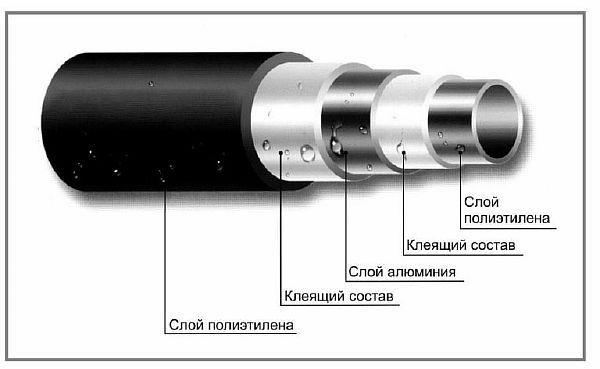
- The inner surface of metal-plastic pipes is made of food-grade cross-linked polyethylene, which allows them to transport drinking water.
- The next layer consists of an adhesive composition that strengthens the structure.
- The aluminum foil serves as both a reinforcing and sealing layer, as its edges are laser-welded during installation. It also provides oxygen protection for the transferred fluid.
- Next comes another reinforcing adhesive layer.
- The outer surface is protected by a thick layer of polyethylene.
This design makes the product extremely durable while remaining flexible enough to form marked networks of any complexity. The manufacturer declares the service life of this system to be at least 50 years. It is important to purchase high-quality products from a reputable manufacturer, backed by quality certificates.
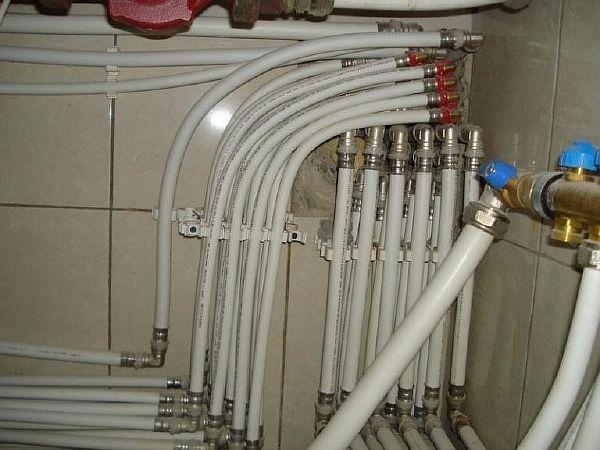
At the same time, metal-plastic products have some disadvantages, expressed in the following circumstances:
- the temperature limit is no more than 75 degrees, which narrows the scope of their application;
- the maximum pressure of the water supply network should not exceed 10 atmospheres, otherwise the pipeline may become depressurized;
- The main disadvantage of metal-plastic water pipes is the widespread use of threaded connections during installation, the main disadvantage is the need for regular maintenance of the system to detect and eliminate leaks;
- It is not recommended to hide such wiring inside the wall, so that you do not have to open the surface in search of a possible leak;
- the need to use sealing materials during the installation of networks.
TIP! Metal-plastic products should not be used for concealed networks inside walls. If a leak occurs at a threaded connection, the wall surface will need to be removed.
Polypropylene pipes
However, the increased popularity of polypropylene products should still be acknowledged. This can be attributed to the following circumstances:
- In water supply networks, the materials do not emit harmful substances.
- The operating temperature of the transported liquid can be up to 95 degrees, with the possibility of briefly increasing to 110. Therefore, polypropylene pipes for hot water supply and heating are more reliable than metal-plastic ones.
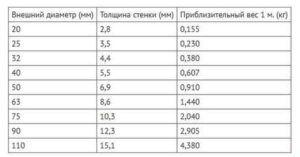
The diameters of polypropylene pipes for water supply allow create networks with sizes ranging from 16 to 110 millimetersThis means they can be installed on both external and internal structures. The following sizes are available: 10–16–20–25–32–40–50–63–75–90–110 millimeters. The standard length is 6 meters.
- The maximum pressure of a polypropylene water supply system can be up to 20 atmospheres.
- With high-quality installation, there will be no liquid leaks or network depressurization.
- Low-temperature resistance allows for use in open-air outdoor plumbing. The material's elasticity compensates for volume changes even when water freezes.
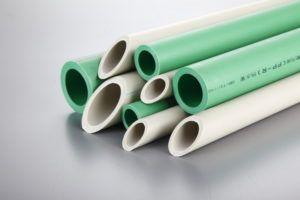 But the main advantage of products made from this material is their significantly lower price compared to other types of products.
The disadvantages of polypropylene pipes include the material's tendency to soften at temperatures of 140 degrees Celsius, and the product simply sag when it reaches 170 degrees Celsius. When heated, they can significantly expand and sag.
The quality of the source material is crucial for polypropylene. This determines the durability and reliability of the products. Unfortunately, quality control is impossible in a domestic environment.
Watch the video
[sociallocker]
Whether polypropylene or metal-plastic pipes are better for plumbing is up to the user of these systems. The choice depends on many factors, as outlined above, but to summarize, polypropylene is ideal for hot water supply, while metal-plastic pipes are ideal for cold water supply.
How to choose polypropylene pipes
Plastic pipes are manufactured in compliance with GOST 52145-2003 for polypropylene water supply pipes. These requirements are also used for the production of products made from other plastics.
Watch the video
[sociallocker]
It also regulates the standards for additional fittings for polypropylene pipelines. If you plan to install a polypropylene water supply system yourself, you should study the requirements of this standard to ensure you purchase everything you need competently and assemble it correctly into the network.
Contents of marking
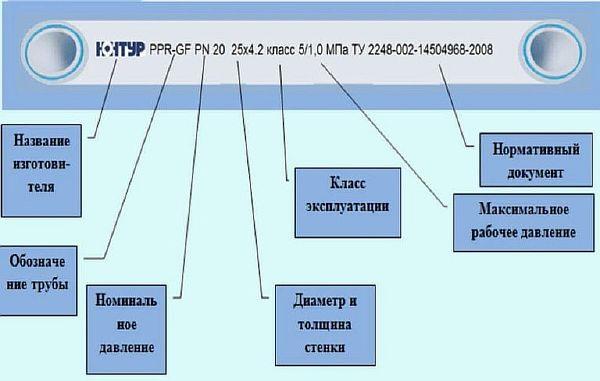
The first thing to pay attention to when selecting polypropylene for water supply is its markings. These consist of several symbols. One of them provides information about the material it's made of, and therefore its properties:
- Pipes made from highly durable homopolypropylene (HPP). These pipes are designated PPH. They are primarily used for cold water pipelines and ventilation systems.
- Another marking is РРВ. These polypropylene pipes are suitable for underfloor heating systems, as well as for the purposes described in the previous paragraph.
- The third type is the most common. It is made from a random copolymer of polypropylene, which allows products made from this material to be used in heating systems, as well as hot and cold water supply systems.
- A special type that allows them to be used at temperatures of around 95 degrees is designated PPs.
The best polypropylene pipes for water supply systems depend on the specific facility, the system design, and the developer's preferences.
Watch the video
Color schemes
This is the first factor that catches your eye. Polypropylene pipes are available in white, gray, green, or black. However, this color doesn't really tell you anything. The only difference is the black color—this indicates its resistance to harsh ultraviolet radiation.
In addition to the specified designations, the marking contains information about the product manufacturer, size, reference to the ORD (GOST or TU), as well as the class of operating conditions of the product.
Polypropylene plumbing layout diagrams for an apartment
The task of installing an apartment plumbing system only seems simple at first glance. The plumbing layout in an apartment must provide for the delivery of water from the central riser to each fixture. In a simplified version, this means the kitchen sink, vanity, bathtub, or toilet.
But in practice, the picture is somewhat different. Additional water intake points are appearing, such as washing machines and Dishwashers (see how to connect to the water supply and sewerage system yourself), bidet, circular shower, and other additional plumbing components. Therefore, the problem of simultaneously delivering water to multiple points may arise.
Watch the video - wiring with tees or a manifold
[sociallocker]
Several schemes for distributing tap water are used in complex systems of its consumption.
Tee diagram
This type of distribution system consists of a central pipe, from which branches are installed to each console using tees. This is the simplest method of distributing fluid within the system, but it has several disadvantages.
One of them is drop in water pressure from one water intake to anotherThus, only the residual liquid from the system, which may be in short supply, reaches the end of the network. Furthermore, if repair or maintenance of any console is necessary, the entire water supply system, starting from the riser, must be shut off.
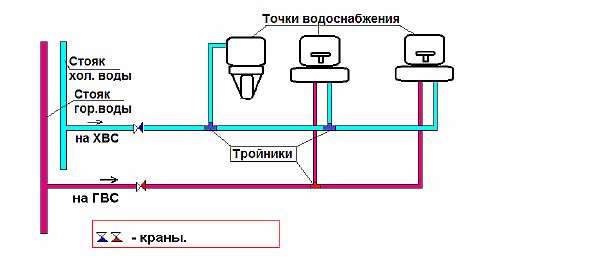
The only advantage of this design is the economical use of materials and ease of installation.
Collector circuit diagram
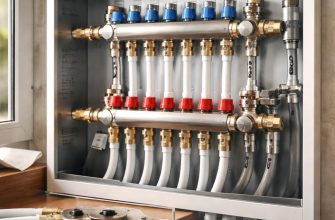
The peculiarity of this water distribution system is that the entire volume of liquid is supplied to a distribution device called a collector.
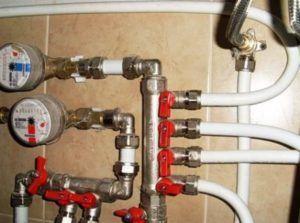 It consists of a metal housing with branches connected to several individual consumption points. There can be two to ten branches. Each branch is equipped with a ball valve, allowing the water to be shut off at the desired console.
This connection scheme allows for the installation of additional equipment. For example, additional biological and chemical filters, ozonizers, and other devices can be installed on the kitchen water supply. Separated from the main water flow, they will only purify water used for drinking and cooking.
During repairs, the water can be turned off only at the required point of water intake, without stopping the operation of the entire water supply system.
Installing a collector system will require a significantly larger number of pipes, but the cost will allow you to use the water supply with greater convenience.
Watch the video
After drawing up the water supply manifold system diagram, it should be chalked to indicate the locations of the polypropylene pipes, using specific dimensions. It's best to entrust particularly complex layouts to an experienced designer to avoid errors.
Selecting materials for heating and hot water supply
Given the material's properties, special attention must be paid to selecting quality indicators specifically for this purpose. Thermoplastic products are prone to deformation during use under the influence of temperature and internal pressure.
Therefore, aluminum- or fiberglass-reinforced products should be used for such systems. The only danger for such products is significant overheating, with coolant temperatures exceeding 140 degrees Celsius.
Steps to installing a polypropylene water supply system yourself
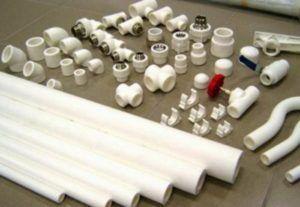 Before starting work, carefully measure the blanks to the required length and prepare the necessary fittings for assembly. Plumbing installation requires the use of the following components:
- Couplings are used to extend straight pipes.
- Elbows – used at pipeline bends to change the direction of network installation.
- Tees, crosses – for creating branches in the wiring.
- Bypasses are used to go around obstacles at the intersections of water supply system elements.
In addition to the above, you can purchase other components, such as brackets for attaching pipes to walls, intermediate taps, adapters from size to size, and other necessary parts.
Connecting pipeline elements
The process of soldering pipes with connecting elements during pipeline installation is not particularly difficult, but requires precise execution of all process parameters.
Watch the video
First of all, you need to check the compatibility of the components. The two parts being joined should not fit together when cold. If this happens, the parts are defective or incorrectly matched.
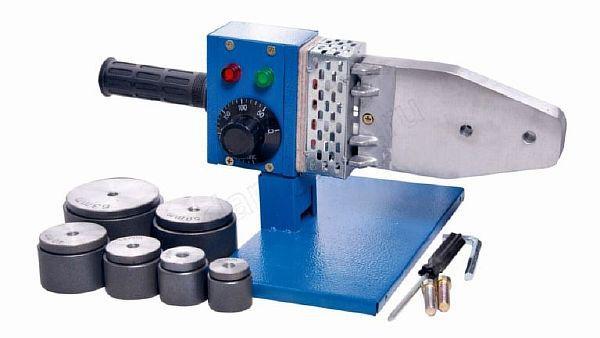
Next, you need to prepare the soldering iron. For this, heating elements are installed on it: a mandrel on the fitting, which heats it from the inside, and a coupling on the pipe, which heats the end from the outside. The device's operating temperature is 260 degrees Celsius.
Before installing the pipe, chamfer the front end of the pipe at a 45-degree angle along the outer contour by approximately 1 mm. This will ensure the pipe passes unimpeded into the fitting opening.
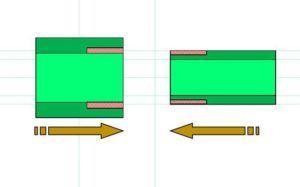
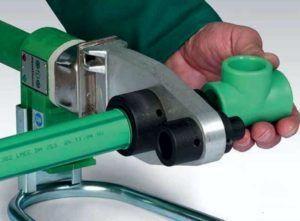 It's important to prevent the mating surfaces from overheating—solid, unheated material must remain beneath the molten layer. It's crucial to maintain the heating time specified below.
Once the heating is complete, remove both parts from the soldering iron and join them together with counter-moving hands. Within a few seconds, the material hardens, forming a strong, permanent bond.
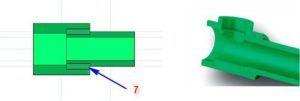
A sign of a proper connection is a small bead, about 1 mm, inside and outside the joint. This will not impede the flow of water through the pipeline.
 When parts overheat, a "skirt" forms inside the joint, significantly impeding the flow of fluid. This type of joint is short-lived.
Butt-welding of pipes, without the use of couplings, is also used. This installation method is less common because it requires complex equipment to trim the ends to be joined, and the joint reliability is lower than when using fittings.
For a successful connection, the soldering iron must be securely and firmly mounted on the workbench. Its readiness for use is determined by the color of the indicator light: red indicates the device is heating up, while green indicates operating temperature has been reached.
 During installation, some elements are assembled into individual sections on a workbench, which is easy and convenient. However, installing the assembled sections into the system requires holding the tool suspended. This requires a helper.
Another method used is cold assembly, which uses adhesives based on strong chemical solvents for polypropylene. When applied to the surfaces of the parts, the material softens.
In this state, individual parts are joined in the desired position. Since the solvent is highly volatile, it quickly evaporates, causing reverse polymerization to occur, which causes the parts to bond. Adhesive bonding has many limitations and must be used with caution.
Equipment and tools for pipeline installation
Before installing a polypropylene plumbing system in your apartment, you need to acquire everything you need for the job. You'll need:
- A device for soldering mating parts with a set of mandrels and couplings of appropriate sizes. The soldering iron typically comes with accessories for a range of sizes from 16 to 53 millimeters. Larger sizes are rarely used in residential water supply systems.
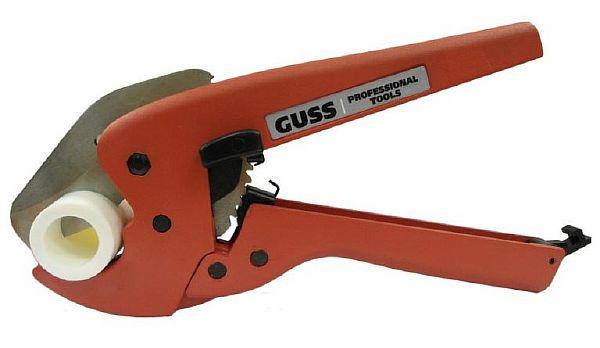
- Special pipe cutting shears are used. They ensure a straight, perpendicular cut. The shears must be sharp, free of burrs and distortions. Of course, you can cut the pipe with a regular saw. However, this does not guarantee a perpendicular cut or a clean cut, not to mention the risk of burrs.
- Stripping (shaver) to remove aluminum foil on metal-plastic.
- A sharp knife to remove burrs and also to chamfer the end of the pipe.
- Heat-resistant gloves. These are usually sold with a soldering iron. They are made of suede and reliably protect your hands from hot components.
- You will also need a measuring tool (tape measure, ruler), as well as a marker for making markings.
Polypropylene water supply system installation, provided the work is performed properly, may be necessary again in approximately 50 years, so the purchased specialized equipment and tooling may be considered a waste of time. For this case, rental services are available on a daily basis.
Polypropylene pipes for cold water supply or assemblies made from them are connected in the following order:
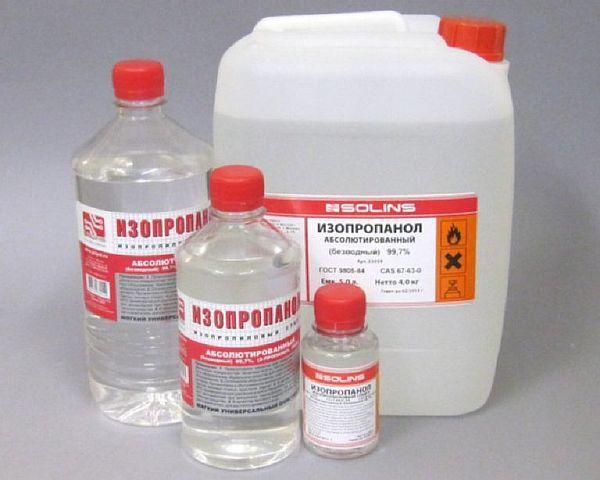
- Prepare the surfaces to be bonded. To do this, clean them of any dirt and degrease them with isopropyl alcohol.
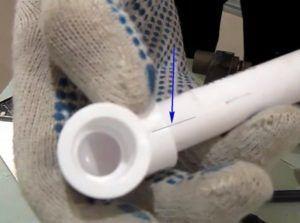
- Before installing the pipe onto the soldering iron coupling, a transverse mark is made on it, indicating the correct position to insert the pipe into the joint. A longitudinal mark is made on both parts to assist with orientation during assembly. It's important to insert the polypropylene pipe up to the transverse mark and align the marks as precisely as possible. This process takes seconds.
- After heating, the parts are mated according to the marks, while a slight rotation of the part around the axis is allowed for precise installation, but this must be done very quickly.
- The final cooling of the joint occurs within a few minutes.
Standard performance indicators for polypropylene soldering operations are given in the table:
| Soldering operations | 16 | 20 | 25 | 32 | 40 | 50 | 63 |
| Size of welding area, mm | 13 | 14 | 16 | 18 | 20 | 23 | 26 |
| Heating time, sec | 5 | 5 | 7 | 8 | 12 | 12 | 24 |
| Reinstallation and connection duration, sec | 4 | 4 | 4 | 6 | 6 | 6 | 8 |
| Connection fixation time, sec | 6 | 6 | 10 | 10 | 10 | 20 | 30 |
| Duration of polymerization and cooling of the joint, min | 2 | 2 | 2 | 4 | 4 | 4 | 6 |
When welding thin-walled parts made of polypropylene, for example PN10, the heating time must be halved, but the fixation duration remains the same.
If soldering is performed in cold weather, at temperatures below +5°C, the heating time should be doubled. With high-quality installation, polypropylene water supply pipes have a service life of approximately 50 years, and heating pipes at least 25.
To ensure a high-quality installation, if you have no experience working with this material, consider purchasing a few inexpensive fittings. You'll need them to practice and reinforce your soldering skills during the installation process.
Considering the strength and mechanical characteristics of metal-plastic or polypropylene water pipes, it can be concluded that they are similar in most respects. Therefore, due to objective circumstances, preference is often given to polypropylene, as this material is significantly cheaper. But the choice is yours!