It's so wonderful to spend summer evenings at your dacha, entertaining guests, and dining al fresco. But how do you wash a mountain of dirty dishes when there's no running water, only a well nearby? You have to collect water, heat it in a saucepan, and then spend a long time washing plates, forks, spoons, and glassware.
A tabletop dishwasher, which can be powered by water from a separate tank, will help you get rid of this tedious work.
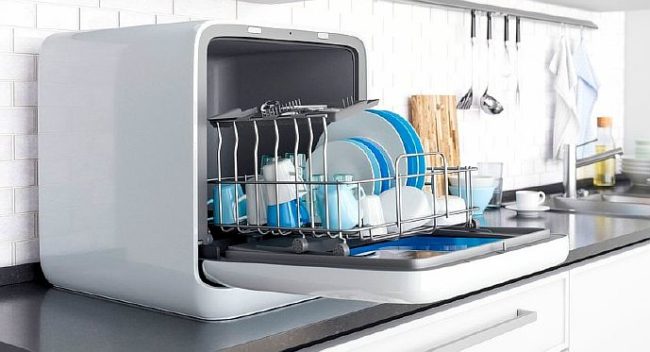
A dishwasher without a water supply connection has its own set of operating requirements. Stand-alone dishwashers are available on the Russian home appliance market in a wide range of models with varying technical specifications and specific features.
This article will cover which machine is best to buy and how to connect it to electricity and sewerage.
- Features of dishwashers without a water supply connection
- Types of models
- Dimensions
- Capacity
- Filling with water
- Installation method
- Selection criteria
- Capacity
- Installation type
- Water and electricity consumption
- Noise level
- Cleaning class
- Functions and operating modes
- Which model of dishwasher without a water connection should I choose?
- How to connect a dishwasher without running water
- Operating recommendations
- Review of the best models rating
- Weissgauff TDW 4017 D
- Exiteq EXDW-T502
- Midea MCFD42900 OR MINI
- Candy CDCP 8/E
- Krona VENETA 55 TD WH
- Circo manual dishwasher
Features of dishwashers without a water supply connection
The main feature of dishwashers is their autonomy. They can be partially or completely independent of utilities. Both types operate without connection to a centralized water supply. Find out how to make a connection to an existing water supply systemHowever, there are models that use it as a source of energy. human physical strength, which sets the device's mechanism in motion by rotating a rotating lever. These machines are also convenient to take with you to the countryside or to a field camp.
Other mini dishwashers use electricity. They draw water from small tanks, which can hold between 5 and 10 liters. Unlike fully autonomous units, these dishwashers can heat the water, making the cleaning process easier.
Types of models
There aren't many major differences between the types of mobile mini-washers. Differences may include size, capacity, water consumption, and installation method.
Dimensions
All machines are roughly cubic in shape with a slightly wider front. Standard dimensions are 370 x 350 x 350 mm. Larger models are available, with a front width of 450–500 mm.
The advantages of these models undoubtedly include the compact design of the units. As for the disadvantages, there are none.
Capacity
A countertop dishwasher without running water can typically handle 6 to 10 place settings, including plates, glasses, goblets, knives, forks, and spoons.
Plus — despite its small dimensions, the machine has a fairly large capacity for storing dishes.
Minus is low productivity. The washing process can sometimes take a very long time.
Filling with water
The machine is filled with 2.5 to 6 liters of water at a time. In some cases, a pump installed in a well is used. A tank installed above the sink is also filled with water.
The clear advantage is the economical use of water. The disadvantage is that you need to constantly monitor the water refill, and this must be done manually.
Installation method
A compact dishwasher fits comfortably on a small table in a country house kitchen. A container for draining waste water is placed underneath it. It is connected to the power supply via a circuit breaker.
Plus, some models require no connections at all, eliminating the need for electricity or plumbing. They can be installed in cabinets or under the sink.
There are no downsides as such.
Selection criteria
When choosing a dishwasher model without a water supply connection, you need to pay attention to the following characteristics:
- capacity;
- installation type;
- water and electricity consumption;
- noise level;
- cleaning class;
- functions and operating modes.
Capacity
Standalone dishwashers are typically designed to wash up to 14 place settings. Mini models can hold up to 6 place settings, which is plenty for a family of 3-4 people. Small, portable dishwashers are attractive for their portability. They can be transported from a city apartment to a country house or cottage in your car.
When choosing the cooking chamber size, keep in mind that compact standalone units won't help with washing pans and pots. For this purpose, you'll need a larger unit with a separate, large water tank.
Installation type
Based on installation type, models are divided into built-in and freestanding. The former type requires no special installation conditions. A free space on the kitchen countertop is all that's needed for installation.
As for built-in dishwashers, they are almost never found as standalone units. This applies more to large, stationary dishwashers with a water supply connection.
Water and electricity consumption
A detailed review of stand-alone models reveals that average-sized washing machines use between 8 and 10 liters of water. There are mini-washers whose manufacturers claim a water consumption of 2.5 to 4 liters per wash cycle.
Regarding energy consumption, stand-alone dishwashers consume on average between 0.7 and 1 kW per cycle. The maximum energy consumption applies to models with their own water heating.
Noise level
In this regard, autonomous units are almost ideal.
When choosing a device, you should pay attention to devices with a noise level of 42 to 45 dB, which can be equated to a whisper or a quiet conversation.
Cleaning class
Self-cleaning is an important feature of a dishwasher. The condition of the surfaces of the dishwasher's working chamber determines the sanitary and hygienic conditions in which the appliance can operate.
All electric-powered machines are rated as Class I cleaning machines. Fully autonomous mini models are more likely to be rated as Class II cleaning machines.
Functions and operating modes
Some models require you to add cold water dishwashing tablets to the water. Other countertop units automatically heat the water to 70°C.0 C. They also contain detergents. Electronically controlled units can have six or more operating modes. Some units even have a function for washing fruits and vegetables and steaming baby bottles.
Depending on the model class, the following operating modes can be set:
- Automatic mode. The unit automatically detects the degree of soiling of the dishes and, accordingly, sets the water heating temperature from 45 to 70 degrees Celsius and the operating time from 60 to 180 minutes.
- Enhanced cleaning. This additional function is implemented in the lower section of the chamber. Heavily soiled cutlery is placed here.
- Timer. The washing time is set manually from 1 hour to 6–9 hours. The button is usually marked with a clock symbol.
- Glassware wash. The glassware wash cycle lasts approximately half an hour at a temperature of 40–45 degrees Celsius. The machine washes glasses, goblets, and shot glasses, both glass and crystal.
- Rinse. After an active wash, the rinse mode is automatically activated. The process lasts approximately 15 minutes and can be extended.
- Drying. Dishes dry automatically. You can also turn on the drying mode manually.
- Protection. When the tank or container is completely empty, the machine stops operating and the light comes on. Operation is resumed when the unit is filled with fresh water.
Which model of dishwasher without a water connection should I choose?
Choosing a specific dishwasher model without a centralized water supply depends on the specific requirements and taste of the consumer. The first thing buyers pay attention to is the unit's performance.
That is, what quantity and what kind of dishes the machine can wash in a certain time.
Secondly, consider the possibility of connecting to the power grid and how the water supply to the device will be arranged. Thirdly, the design of the compact device is also important. The final consideration when choosing a particular model is the cost.
It's worth noting that the order of these considerations may vary greatly for different people. For example, the deciding factor when purchasing a device may be its price, and only then will everything else come into play.
Consumer market research into stand-alone dishwashers shows that units that operate manually without electricity or sewer drains are popular with those who enjoy the comfort of nature reserves, long-distance road trips in their own vehicles, and camping.
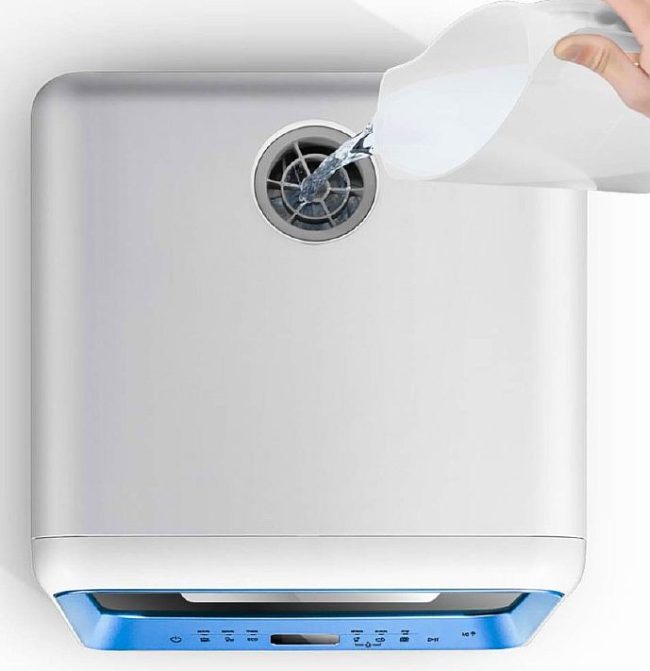
In other cases, compact electric dishwashers are popular for use in areas without running water but with electricity. These appliances are primarily purchased by owners of small cottages in holiday villages and country houses.
How to connect a dishwasher without running water
An electric dishwasher requires two connections: power, a sewer line, and a water tank. To better understand the process of getting your dishwasher up and running, consider the connection process using a standard tabletop dishwasher as an example.
- The unit should be placed on the kitchen countertop so that the cord is long enough to reach the outlet. Otherwise, you'll have to use an extension cord, which is not recommended.
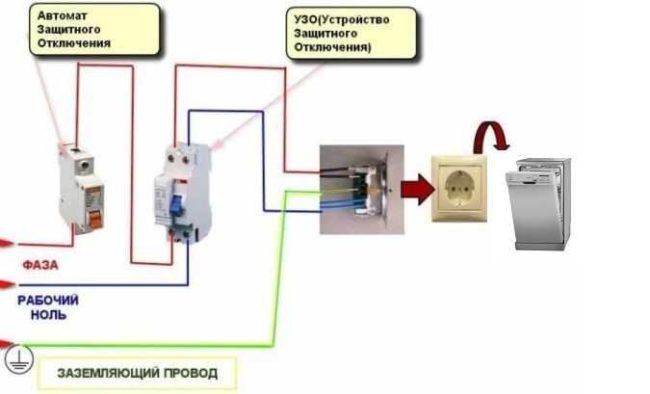
- The connection socket must be connected to the electrical network through a circuit breaker and a residual current device.
- If the machine is a pour-on type, it's best to place it next to the kitchen sink. Machines with a larger chamber will require a hanging water tank and a pump.
- The tank is suspended on a load-bearing wall so that the height difference between the bottom of the tank and the dishwasher's filler neck is 1.5 to 3 meters. Typically, the tank is located on the second floor or in a warm attic.
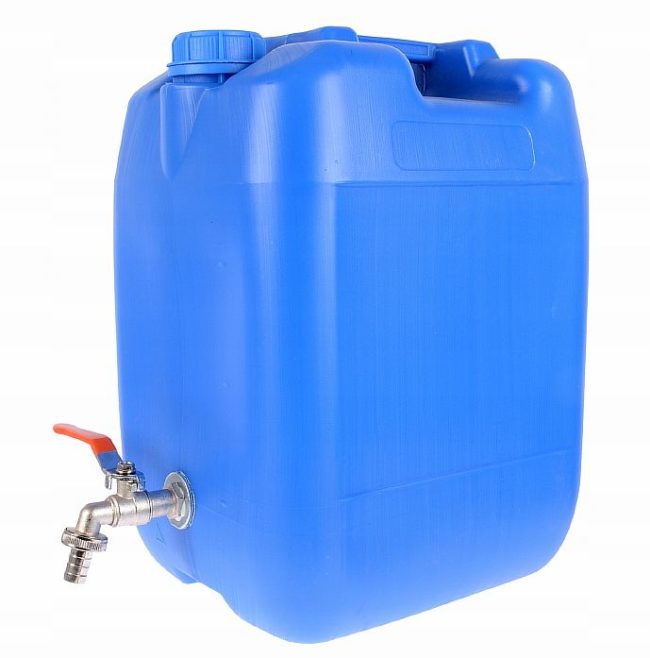
- The tank tap is connected to the machine with a corrugated hose.
- Two hoses are connected to the pump at either end. The end of one is submerged in a well or a tank containing imported water. The second hose runs from the pump into the filler neck of the tank.
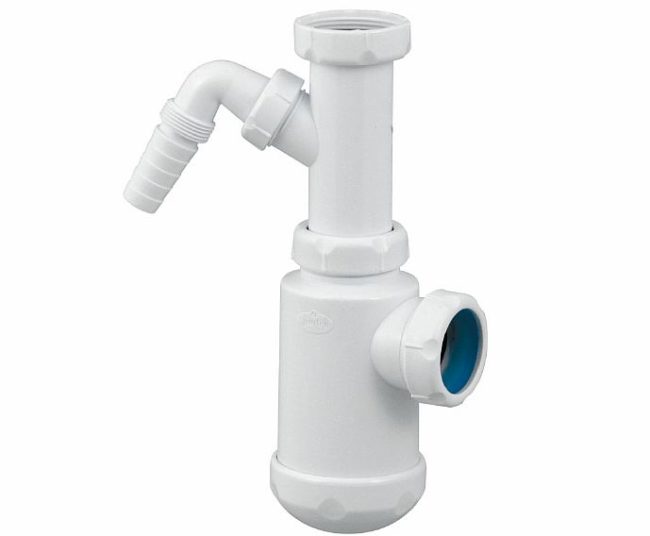
- For small water consumption volumes of 4 to 10 liters, the drain hose can be lowered into any suitable container. If the unit is used frequently and there is a sewer line, the drain pipe is connected to the kitchen sink trap. To do this, purchase a new trap with an additional outlet or install a tee into the inlet pipe from the kitchen sink. The drain hose is connected to the free end of the tee.
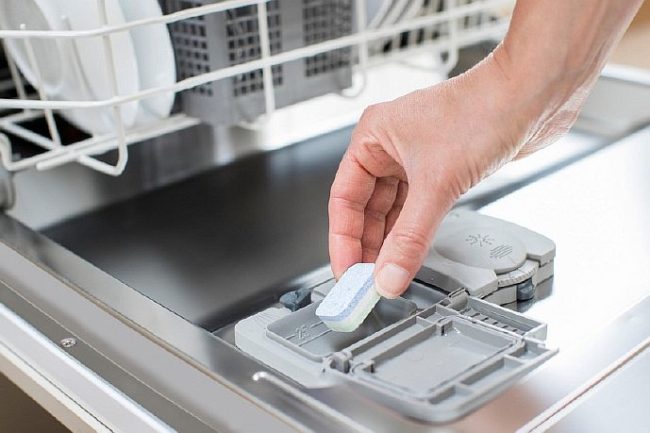
- A tablet is placed in a compartment inside the machine, or powder is poured in, or gel is poured in for effective dishwashing.
- The baskets are filled with dirty dishes and pushed into the chamber.
- Use the buttons on the machine's interface to set the washing mode. Press the "Start" button.
- Once the wash is complete, the baskets are removed from the machine and the dishes are taken out.
Operating recommendations
Dishwasher owners are interested in ensuring their dishwashers last for a long time. To ensure this, they need to follow the recommendations of specialists and the manufacturer of their appliances.
- It's essential to fill the box with detergent. Gel is effective on porcelain and silver, and tablets warm and soften the water, preventing limescale deposits.
- As for the dosage of detergents, you need to follow the machine's operating instructions.
- Before loading dishes, remove large food remains.
- The filter should be checked regularly and cleaned of limescale.
- After washing, the interior surface of the unit must be thoroughly wiped using special antibacterial dishwasher care products.
- In winter, don't leave a pressure washer filled with water at your dacha. Ice can become a destructive force, damaging the chamber. If there's no drain, remove the water with a sponge.
Review of the best models rating
To promote dishwasher models, ratings of the best dishwashers from well-known manufacturers are regularly published online. Here are the top 6 best dishwashers without a water connection.
Weissgauff TDW 4017 D
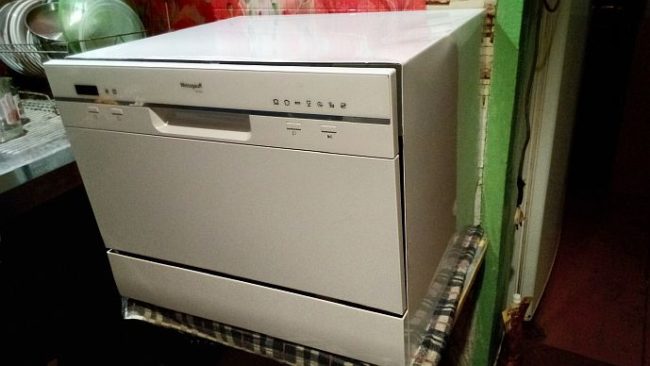
This is one of the best models, designed to wash up to 6 place settings. This compact dishwasher features electronic controls. Condenser drying and a child lock add to the appeal of one of the best dishwashers of 2021.
The machine uses seven basic programs: express, intensive, economy, delicate, bio, soak, and rinse. One wash cycle consumes 6.5 liters.
Exiteq EXDW-T502
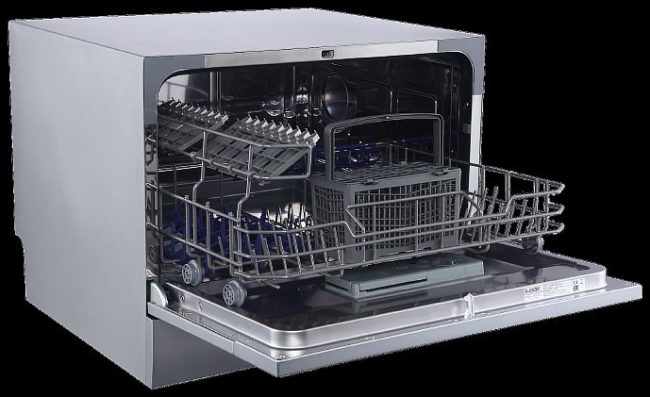
The electronically controlled dishwasher can handle up to six place settings at a time. The hinged lid features an ergonomic display with touch-sensitive controls for selecting six wash programs and six temperature settings.
The maximum noise level is 49 dB, and the power is 1.38 kW. The chamber is equipped with convenient baskets with plate guides, a separate cutlery compartment, and special glass holders.
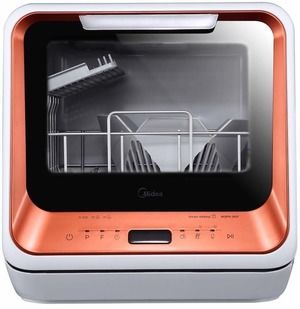
Midea MCFD42900 OR MINI
This is one of the most successful mini models from a Chinese manufacturer. The unit is designed for a couple or a single person. Before use, 6.5 liters of water are poured through the opening in the lid.
The basket can accommodate two place settings. Despite its compact size, the dishwasher offers a standard set of features.
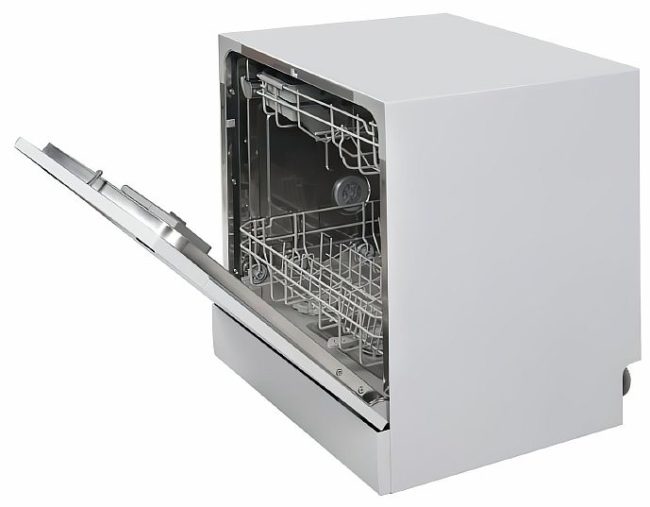
Candy CDCP 8/E
The dishwasher can wash 8 place settings simultaneously. An ergonomic display shows the remaining wash time and water temperature. Water consumption is 8 liters, power consumption is 0.7 kW, and noise level is 50 dB. The appliance has 6 basic wash programs and 6 temperature settings.
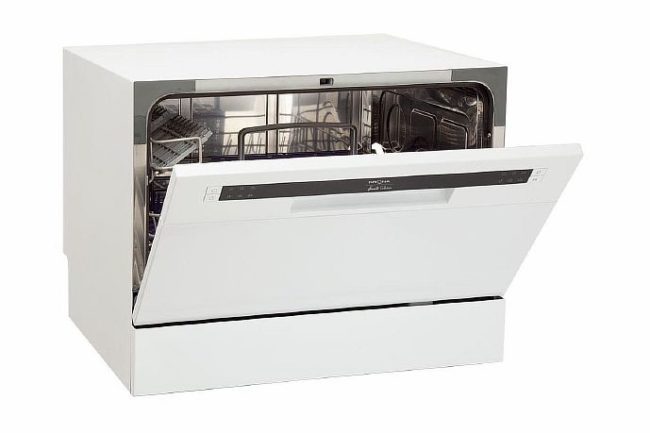
Krona VENETA 55 TD WH
This compact machine fits easily into even the smallest kitchens. It easily handles 6 place settings in a single wash cycle.
The stylish design of the machine's body will complement any interior. Its 6 basic programs and 6.5 liters of water consumption allow you to wash without a running water supply.
Circo manual dishwasher
An amazing dishwasher design that operates without running water or electricity was developed in Israel. The "Circo manual dishwasher" is the name of a dishwasher model that operates by hand.
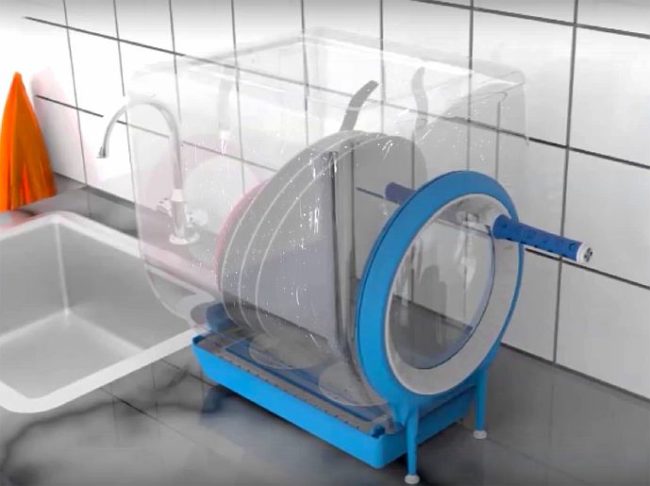
Inside the transparent housing, water is sprayed onto vertically positioned plates. Three liters of water are used per load. The machine is completely portable and inexpensive.