What should you do if the water in your sewer isn't draining? The most common cause is a clogged sewer pipe. The clog needs to be located and cleared, and the pipes need to be flushed. Another cause is an overflowing septic tank. In this case, flushing is performed to allow the soil to begin filtering the liquid again.
Quite often, owners of private homes are concerned about what to do if a cesspool quickly fills up, and what causes this.
There are many ways to clean cesspools and septic tanks (specialized cleaning products, pumping, etc.), depending on personal preference, the design of the wastewater storage tank, and the budget of the homeowner. In most cases, increased filling speed is caused by the formation of a thick silt layer, which impedes the passage of liquid into the ground.
If the problem is not addressed promptly, the result will be wastewater leaking into the area and spreading a foul odor.
Let's look at the signs of a cesspool filling up quickly and why this might be happening.
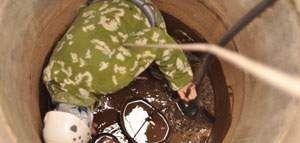 The moment a cesspool is overflowing can be detected by a decrease in the efficiency of the sewer system and other signs. Let's take a look at them:
- the level of sewage rises to a critical level in a short time;
- a stench spreads throughout the area even when the lid is tightly closed;
- water drains slowly when flushing a bathtub, kitchen sink or toilet;
If you notice any of the above signs, you'll need to take action and decide what to do when your cesspool is quickly filling up. To find an effective solution, you first need to figure out What provoked this situation?.
Common causes
Let's look at the common reasons why a cesspool fills up quickly:
- formation of sludge on the bottom and walls of the container;
- drainage pipe malfunction;
- deposits of fat and dirt particles on the walls of the drain pipe;
- small volume of the cesspool;
- freezing of the drain pipe or the pit itself.
Also, sometimes a storage tank can fill up quickly due to factors unrelated to its operation. Quite often, the volume of sewerage and incoming wastewater is incorrectly calculated during construction.
For example, if it was initially assumed that wastewater would only come from the kitchen and toilet, and then the house was expanded, and an additional bathroom and kitchen were built, and various washing machines were installed.
Then, accordingly, the total volume of waste liquids increases, and the tank can no longer cope with the new amount and fills up at an accelerated rate.
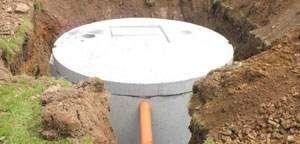 Another common reason for a cesspool filling up quickly is rising groundwater levels. Often, property owners or builders are unwilling to invest the time and money to conduct a geological survey to determine the depth of the groundwater. However, in many cases, this characteristic is the cause of the cesspool filling up quickly.
According to regulations, sewer construction work should be carried out during the time of year when groundwater levels are lowest, i.e., in the summer. Typically, digging the trench and the pit itself does not involve groundwater. However, when snow melts or during heavy autumn rains, the groundwater level rises, causing the tank to fill at an accelerated rate.
What to do if a septic tank fills up quickly
Once the root causes of rapid septic tank filling have been identified, it's time to consider how to resolve the problem. If the cause is an incorrectly calculated or inadequately sized sewer system and storage tank, the solution will be to increase the number of pumpings or increase the capacity of the septic tank itself.
A similar approach to increasing the number of pumping operations can also be used if groundwater levels were not taken into account during construction, and during the spring and fall, waste rises from the tank, and an unpleasant odor begins to spread throughout the area.
 If your drainage system stops working properly for some reason, you can use a sewage pump. To do this yourself, you'll need to purchase this device (or rent one temporarily) and a container for the pumped waste. You can also hire a sludge pump truck.
Pumping systems come in semi-automatic and fully automatic versions. The first type requires a technician to regulate and monitor the equipment, while the second type requires no intervention. Automatic pumps are installed in the sewer tank and automatically pump out biological waste.
It's important to note that before treatment begins, a certain amount of water must be added to the wastewater to soften it. Then, the pumping unit is activated, which removes the waste from the septic tank.
What to do in case of silting
If, after prolonged use, wastewater no longer drains through the walls of the sewer system, it's most likely that it has become covered with a layer of sludge. All biological waste and fatty deposits settle to the bottom of the tank.
Over time, this deposit thickens, causing fluid to stop flowing and the drainage to stop working. What should you do if your cesspool becomes silted up?
The problem can be resolved as follows:
- use the services of a special sewage disposal vehicle, which will completely clean the tank of waste;
- to soften the silt, you need to pour a large amount of water over it for a day;
- use special biological preparations that have an increased content of microorganisms.
The last method deserves special attention. Biological drugs are highly effective because they The composition contains bacteria that are able to feed on organic waste and fatty depositsThus, they provoke an increase in the rate of decomposition and prevent the cesspool from filling up quickly.
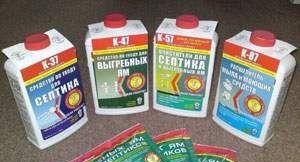 Advantages of using special biopreparations:
- These products eliminate the stench;
- clean the walls from the layer of fat;
- liquefy solid silt formations;
- reduce the level of waste in the pit;
- reduce the likelihood of further siltation;
- improve the functioning of drainage in the structure.
It's important to remember that when using biological products, do not clean your home's plumbing fixtures with strong chlorine-based cleaners. These substances destroy beneficial bacteria and negate the beneficial effects of the cleaning process.
Then you'll need to rethink what to do if the cesspool fills up quickly. It's also not recommended to use products in cold weather, as subzero temperatures significantly reduce the effectiveness of microorganisms.
What to do if a hole freezes
What should you do if your cesspool fills up quickly in winter? In most cases, this occurs because the contents freeze, preventing drainage and wastewater absorption into the ground. Using biological treatments is impossible, as microorganisms die at subzero temperatures.
What can you do if the contents of a cesspool freeze?
- use heat fans;
- use a blowtorch;
- Light a large fire near the sewer. This is the most difficult method, but it is effective;
- use resistive heating.
If the frost has only recently set in and the ice isn't very thick, it may be possible to thaw it by pouring hot water inside. However, a thick layer of ice will require a different solution. Thermal insulation can be restored by installing a cable and running an electric current through the conductor. To do this, you'll need the following tools:
- 20-centimeter pin made of any metal;
- copper wire for 2 kW;
- hook.
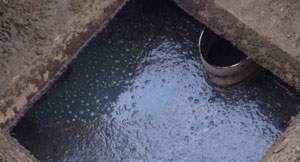 The procedure is quite simple and can be done at home. It includes the following steps:
- Attach the stripped end of the copper wire to the pin.
- Insert the resulting object into the middle of the container.
- A 220-volt electric current is supplied to the other end of the wire. This can be accomplished using a hook to which the wire and power source are connected.
- Leave for a day.
This method of thawing a cesspool is quite effective if it fills quickly during the winter. Be sure to follow safety precautions when handling electrical wires. Wires may only be removed after the power has been turned off.
The technician performing the procedure must wear rubber boots and special gloves designed for electricians. Children, unsupervised animals, and any liquids should be kept away from the heating pit.
What to do if a drain pipe freezes
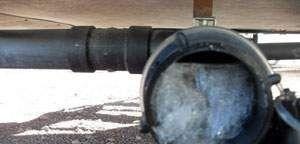 Sometimes, if the frost has been recent, it's not the contents of the septic tank that freeze, but the pipes that carry wastewater into the sewer system. In this case, the frozen soil will act as a high-resistance conductor, and the ground will prevent the current from increasing too much.
You'll need all the tools listed above. The technique for improving wire insulation is also quite similar. You'll need to strip the copper wire (its length is calculated using the formula L = 3.14 x d). Then, wrap the wire around the pipe section, and plug the other end into the outlet.
This will allow electric current to flow through the pipes for a period of time (usually 2-4 hours), warming the fittings. Gradually, the frozen wastewater will begin to thaw, and the liquids will drain into the soil.
It is advisable to use for these purposes self-regulating wire, it is able to automatically equalize the temperature in all areas of the pipeline.
The above method is not suitable for defrosting plastic pipes. For this purpose, specialized equipment capable of operating with high current (400 A) should be used.
Such installations are mostly used by specialists; they allow for the most effective de-icing of pipelines. Both ends of the device must be in the ice.
Prevention of the problem
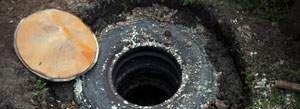 To avoid worrying about what to do if your cesspool fills up quickly, it's important to follow the operating instructions and regularly perform a series of preventative procedures.
The basic rules of prevention include:
- it is necessary to flush the tank with clean water under high pressure approximately once every 6-8 weeks;
- carry out waste pumping in a timely manner;
- Periodically use biological preparations containing microorganisms to clean the cesspool and prevent blockages.
Silting
To prevent the formation of sludge and grease deposits, experts recommend installing special grease traps on all plumbing fixtures that come into contact with water.
This is especially true for kitchen sinks, which often introduce organic waste into the plumbing. Filters are essential to improve the system's efficiency.
Freezing
To prevent freezing in winter, it is recommended to install a thermal insulation layer in advance or regularly warm up the pit and pipes.
Before creating a sewer system design and digging a pit, you should consider leaving some space for thermal insulation.
This will significantly reduce the risk of the waste container freezing, and the owner of the property will not have to decide what to do if the pit fills up too quickly in winter.
Small tank volume
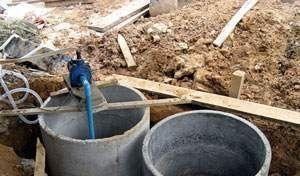 If an error was made in calculating the volume or the amount of wastewater has increased after prolonged use, the best solution is to dig an additional pit. Then, connect the two tanks with overflow pipes. The resulting septic tank will effectively treat and drain wastewater.
Thus, there are several ways to prevent a cesspool from filling up quickly. First, you need to determine the cause of the problem.
Based on this information, a solution can be chosen. Most often, a pit fills quickly due to the formation of a silt layer and fatty deposits, or due to freezing of the contents.