 If the burial depth of sewer pipes is chosen incorrectly, then such a system will create only problems for the owner.
Why should I decide how deep to bury a sewer pipe? Does the distance of the wastewater flow make a difference?
In fact, this question is very important. The problem is that the ground doesn't freeze below zero only in the southern parts of the country. In the rest of the country, the ground freezes to a greater depth.
This poses serious problems for the drainage system. With small amounts of wastewater, ice forms on the walls of the pipeline, and it will continue to grow until it completely clogs. Then, the system will need to be thawed.
What pipes are best for sewerage?
Before laying sewer pipes, it is necessary to decide what products are best suited for such workIn such situations, use:
- Rolled tubular materials made of steel and cast iron.
- Asbestos-cement options.
- Plastic blanks.
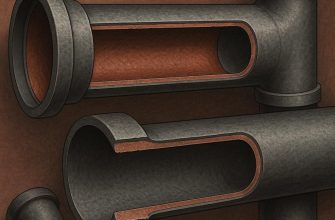
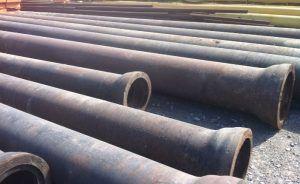
Cast iron. These pipes are highly durable, but present many challenges during installation. These products cannot be cut, and joining them is much more difficult than other similar products.
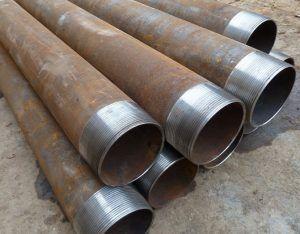
Steel. This option presents slightly fewer installation challenges. However, welding is required for joining. The main drawback noted with these products is their high susceptibility to corrosion.
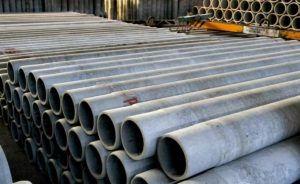
Asbestos cement. Compared to metal pipes, this type of pipe is lighter in weight. It's also easier to install, but a significant drawback of these types is their low strength. They often chip and crack after mechanical impact.
Plastic. These products are currently the most popular due to a wide range of positive characteristics:
- Light weight.
- Easy to install.
- High resistance to corrosion processes.
- Low cost.
- Long time of use.
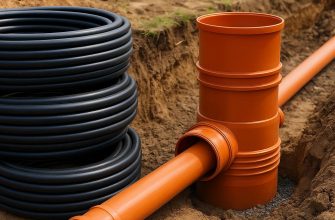
These sewer pipes are also divided according to their intended purpose. Products orange And brown colors are laid for the external system, and gray are intended for the arrangement of internal sewerage systems.
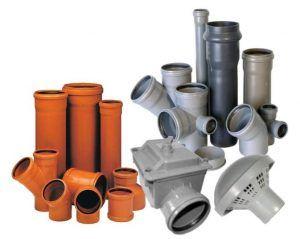
External system pipes are stronger and thicker than the materials used inside buildings. This should be taken into account when purchasing.
Ways to solve the problem
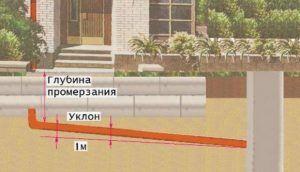
In order to consider them, you first need to look at what depth is recommended for these purposes. SNiPAnd here it is clearly stated that the minimum burial depth for sewer pipe products is determined based on experience using such a network in a given region.
The minimum depth indicators for installing the pipeline tray are as follows:
- Pipes with a volume of up to 50 cm – 30 cm.
- Workpieces whose volume exceeds 50 cm – 50 cm.
In conditions of severe ground freezing, the blanks are hidden at a distance of at least 70 cm.
However, implementing any gasket under such conditions isn't always possible. And there are several factors that can become obstacles:
- Often, the existing foundation determines the depth at which the pipe exits. Sloping the exit is not recommended. Therefore, in this situation, the depth range is quite limited.
- In the Northern regions, it is simply impossible to reach the freezing level, because there is permafrost here.
- The structure isn't located on flat ground. Houses are often built on slopes. In this case, it makes sense to use the slope's direction for the drainage system.
Methods for solving the issue
The depth to bury a pipe in a drainage ditch can be determined based on the same SNiP regulations. They contain the following clarification:
"The pipeline, buried at a depth of 70 cm or less, measured from the top of the workpiece, must be protected from freezing and damage by vehicles passing over the ground surface."
If it is not possible to meet the requirements, then it is recommended:
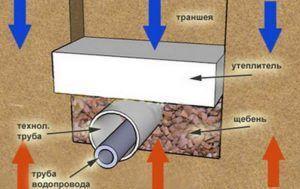
- Insulation of pipelines.
- Ensure the network warms up when cooling down to a critical level.
- Pay attention to the septic tank. If it's located above the frost line, it will require a constant supply of wastewater.
The influence of regional location features
First, it's necessary to address the specifics of the pipe materials. Once this issue is resolved, the pipeline's depth can be determined.
Each climate zone dictates its own requirements for this choice. Before laying sewer lines, experts advise carefully studying the zone map.
It contains information on the freezing depth of soils in various regions. For example, if you live in Moscow, the required depth for burying sewer pipes is 140 cm. If you live in Sochi, the required depth is 80 cm.
This information is based on the specific characteristics of soil freezing. If the installed structures exceed the volume by 50 cm, then 30 cm must be subtracted from the values suggested on the climate map.


Laying a pipeline at the exit from the house
Video
IMPORTANT! In order for the drain fluid to flow by gravity, you need to additionally study the information on How to create the required slope when constructing a pipeline network.
Laying pipe products below the freezing level
Don't assume that the drainage pit should be located above the ground's freezing point. For example, as noted above, in central Russia, it is recommended to bury the sewage system at a depth of 1.6 meters.
Let's assume the distance from the house to the treatment plant is 10 meters, and a 10 cm thick septic tank is installed. The optimal slope is 0.3 m. This means the depth from the house should be 2 meters.
Video
According to SNiP standards, in such situations I take into account the following recommendations:
- 160 cm is the entry point from the foundation. When the well is 10 m from the building, the entry point should be 170 cm.
- The well cut at the bottom is 4.5 m.
- If a wastewater treatment plant is installed, the depth is 170 cm.
What additional problems may arise?
The installation depth of a sewer system often depends on external factors, such as costly installation or the lack of installation capabilities.
This is caused by the formation of rocks between the well and the house.
Video
Before work, it needs to be wrapped in several layers of insulating material. and bury it at a depth of 0.3 meters.
Heating can also be arranged if hypothermia reaches a critical level. To do this, purchase a special heating cable and bury it under the pipeline.
IMPORTANT! The risk of freezing in the sewer system increases when there is no running water. Wastewater is typically at room temperature and washes away any frost that forms inside the pipes.
It's essential to avoid wastewater stagnation in the pipeline and comply with all requirements. Then, your sewer system will operate efficiently and reliably.
Video
The sewer pipe's depth must be consistent with the region's climatic conditions. Additionally, the recommended slope as per SNiP (Building Code and Regulations) must be taken into account.
It is important to remember that the depth of the sewer drain will be different in the northern, central and western regions, as these figures are calculated based on the level of soil freezing.