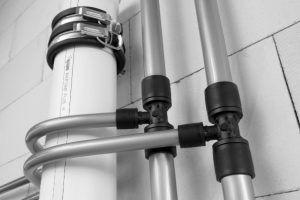
 Cross-linked polyethylene (C-XPE)-based communications systems have recently become increasingly popular. This material boasts affordable prices and high performance characteristics. Polyethylene also offers other advantages, including:
- Resistance to destruction.
- Ability to resist chemical influences.
- Resistance to high temperatures.
- Optimal combination of flexibility and strength.
But despite all the advantages of these products, the main factor in the development of a reliable pipeline is its high-quality installation.
These systems are easy for any novice to assemble, even without specialized installation skills. Just keep in mind a few key features to maximize the effectiveness of each step.
- General characteristics of cross-linked polyethylene pipes
- What are the main advantages and features?
- Do the products have any defects?
- About the installation features of cross-linked polyethylene products
- What tools are required for installation?
- Preparation for installation work
- Installation process
- Installation of different types of systems
- Additional information about fittings
- We connect pipes with compression fittings
- After installation, we perform pressure testing of communications made of cross-linked polyethylene
- What other aspects are important for editing?
General characteristics of cross-linked polyethylene pipes
When producing polyethylene products, companies like Beer Pex and Rehau subject them to special heat treatment. This ultimately strengthens the finished product and increases its resistance to high temperatures.
This process results in the formation of additional bonds at the molecular level. This improves the properties of cross-linked polyethylene, typically resulting in the emergence of new positive qualities in the material.
What are the main advantages and features?
- Reverse shrinkage. These products can withstand high pressures and return to their original shape after prolonged exposure. Other materials with similar properties simply stretch over time and become completely unusable.
- Increased heat resistance. These pipes operate normally at temperatures up to 120 degrees Celsius.
Cross-linked polyethylene pipes are distinguished by their three-dimensional structure.This means that the polymer chains are stitched together at the molecular level, using thin threads. This creates unique properties not found in other materials in this group.
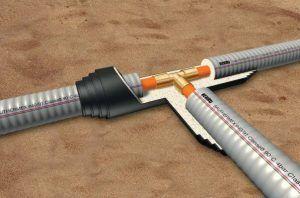 Let's consider the advantages of cross-linked polyethylene pipes.
- Affordable prices.
- Ability to resist freezing.
- They can withstand high temperatures and pressures.
- Convenient installation.
- Light weight.
- Bir Pex, Rehau, and other brands offer excellent sound insulation. This protects the room from outside noise. Pressure surges are completely absorbed by the system itself.
- Long service life combined with high strength. Rotting and corrosion are a thing of the past when working with this material.
- Eco-friendliness. Polyethylene does not emit harmful substances, even when heated to high temperatures.
- Elasticity.
Do the products have any defects?
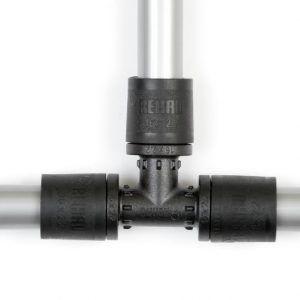 There are not many of them, but some people may find them significant.
- High oxygen permeability. This sometimes exacerbates corrosion in other materials adjacent to polyethylene. However, this can be easily remedied by using special spraying agents. They help reduce diffusion in the oxidizing agent.
- The anti-diffusion coating on the outside of the polyethylene pipe has a very weak coating. It can be easily damaged if the material is handled carelessly.
- During installation, additional manual fixation is required. This is due to the lack of an aluminum layer, which is typical for similar products.
- Avoid exposure to sunlight.
There are so-called European standards for such polyethylene products. According to these standards, there are a total of 19 standard sizes for cross-linked polyethylene pipes. The maximum permissible wall thickness is 28 millimeters, and the maximum permissible diameter is 250.
About the installation features of cross-linked polyethylene products
There are three types of methods used to install cross-linked polyethylene pipes.
- Electrofusion fittings. This method is not very common because it requires professional skills and equipment. However, it is effective.
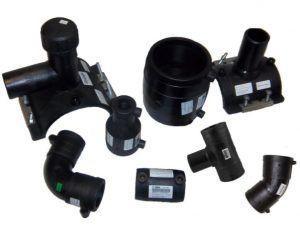
- Compression fittings from Beer Pex, Rehau, or Uponor. They create seamless connections with maximum reliability. Emphasis is placed on the resilience of polyethylene, which allows the material to return to its original shape after compression. Compression fittings contain polymers that fill all voids, ensuring maximum contact tightness.
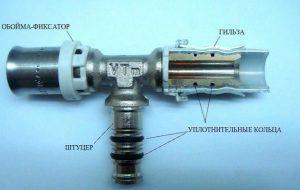
- Compression fittings. The easiest option for installation.
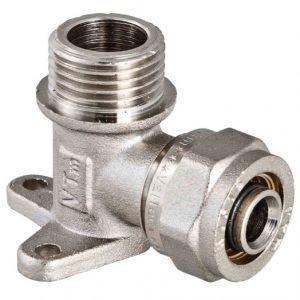
IMPORTANT! It's important to consider the pressure level in the future system to select the appropriate connection type and equipment. Each connection type can withstand a specific pressure load.
What tools are required for installation?
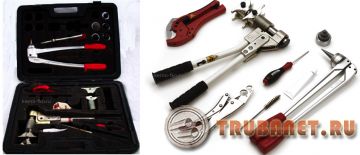
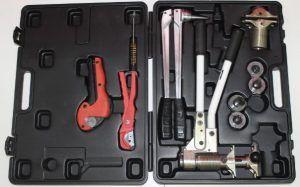
The list of necessary tools will consist of:
- Fittings or a set of other connecting elements.
- Hydraulic hand press.
- Special scissors.
- Set with wrenches.
Preparation for installation work
 The manifold outlets should be the first elements to require special attention. Only their proper treatment will ensure a completely leak-proof system.
Before installation, the work area, as well as the equipment, must be completely cleared of dust and debris. Welding, threading, and gluing are the most common installation methods. You simply need to purchase the appropriate type of fitting, depending on the installation method you choose.
Watch the video: Bir Pex systems
All parts used during installation must be intact and clean. A visual inspection is required before purchase. This will ensure the quality of the finished product. Transportation requires special attention.
IMPORTANT! In winter, this requirement is especially relevant for cross-linked polyethylene materials. Cross-linked polyethylene products are designed to withstand hypothermia, and when exposed to low temperatures, they deform and lose their properties.
Installation process
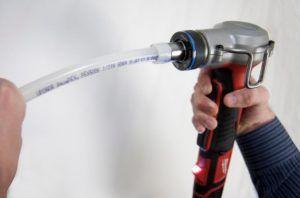 The installation technology includes several steps.
- We screw a nozzle with the required diameter onto the expander.
- After this, we manually place the compression rings on the pipes themselves. We do this in such a way that the expansion space of the pipe is not blocked.
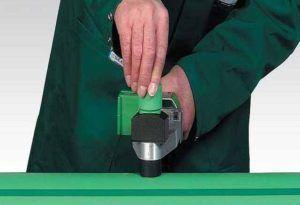
- An expander must be inserted into the pipe. It expands when the installer presses a special handle. The next step is to rotate the pipe itself or the expander by 30 degrees. Then press the handle again. You can repeat the process to secure the result. After this, you can proceed to using the fitting.
- The shutter is pulled back from the press manually. Next, the pins used for fastening are removed. The next step is to thread the attachments secured by the pins. The shutter snaps into place.
- The joint takes on a finished appearance. The product must be removed from the press.
Installation of different types of systems
The application area determines the tools used during installation and the technology chosen. Processes such as the following are carried out under various conditions:
- Do-it-yourself sewer outlet.
- Hot liquid supply.
- Cold liquid supply.
Single-layer cross-linked polyethylene pipes will become indispensable assistants when it is necessary to supply cold water.
Watch the video: Rehau Pex pipes and useful tips
We recommend choosing pipes with a diameter of 16-20 millimeters and products capable of maintaining temperatures of 95 degrees Celsius. Electron beam technology is used in the production of these pipes, allowing us to maintain low prices while maintaining high quality.
But hot water can only be supplied through multilayer products. They must withstand temperatures up to 100 degrees Celsius, otherwise, trouble-free operation will be impossible. The inner layer is made of cross-linked polyethylene, then an aluminum layer is added on top, followed by another layer, also made of cross-linked polyethylene.
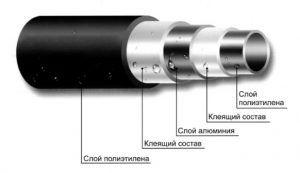
For companies like Rehau, Beer Pex, and Uponor, bending strength is ensured by the use of aluminum. The outer layer provides additional protection against mechanical damage and ultraviolet radiation. The standard pipe cross-section in this case is from 16 to 63 mm.
Additional information about fittings
Cross-linked polyethylene pipes become flexible after exposure to high temperatures. A heat gun is sufficient for high-quality installation when bending the pipe.
When installing networks, not only bends are required, but also the connection of several pipe sections at once. Fittings make this work simple and accessible to everyone, even without specialized polyethylene installation skills.
Video: REHAU installation tool
Depending on the purpose and technology, the following are distinguished:
- Tees with crosses.
- Plugs.
- Drives.
- Coupling fittings.
- Squares for Rehau and other companies.
For areas with planned changes in direction in the pipeline, it's convenient to use elbows. Coupling fittings help connect straight pipe sections from Uponor, Rehau, Beer Pex, and other companies.
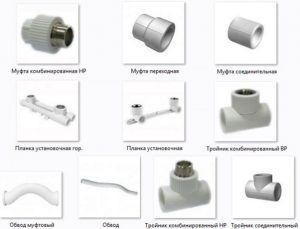
Couplings are used when connecting a new section to an existing one. Pipework is routed using tees and crosses. Caps are used to seal the ends of sections.
The material used to make fittings also varies, as do the manufacturing technologies.
- Polyvinyl chloride.
- Combined varieties.
- Polyethylene.
- Polypropylene.
Brass fittings are the most widely used. Fittings can also be straight or reducing.
We connect pipes with compression fittings
It is necessary to purchase additional tools in order to produce installation of cross-linked polyethylene pipes using compression fittings from manufacturers Uponor, Rehau, etc.
- Two wrenches.
- Scissors.
The instructions begin by placing a compression nut on one end of the fitting, with the threads facing the connector.
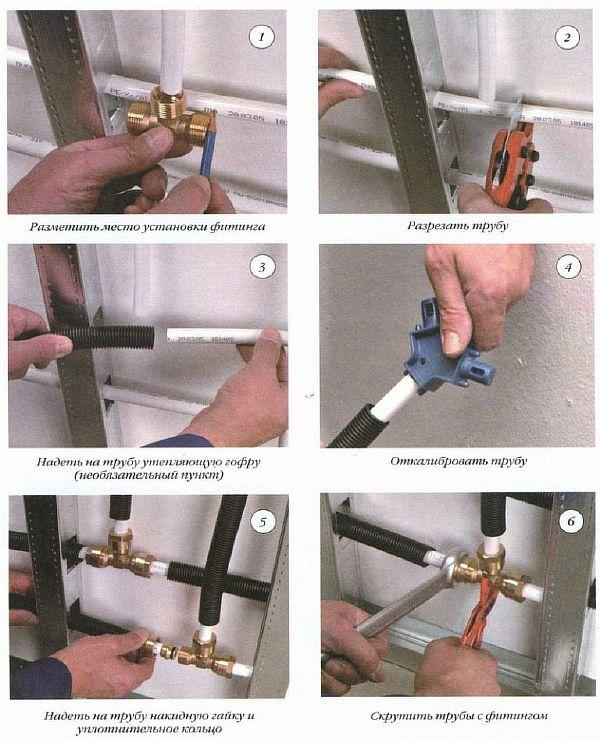
The split ring should be locked in place. The distance between the pipe cut and the edge should be at least 11 millimeters.
After this, the next step is installing cross-linked polyethylene products. The fitting should be fitted with a cross-linked polyethylene structure with a compression ring and nut, and these are pushed all the way in.
The compression nut itself must be tightened securely using two wrenches. The fitting does not require disassembly before the pipe is attached. No other steps included in the standard instructions are required. For example, chamfering is not necessary.
The main thing is to control your force when fixing the part in its position.
After installation, we perform pressure testing of communications made of cross-linked polyethylene
In this case, you will need the following tools, a list of which is provided below:
- Vice for crimping.
- A gun with an expansion mechanism, with each nozzle having its own diameter.
- Scissors.
Special scissors are used to cut the pipe at the initial stage.
IMPORTANT! The cut must be strictly perpendicular to the product's axis. Defects such as burrs are unacceptable.
Then, a sleeve is installed, which becomes the key element in the crimping method. The key is to follow the procedure in sequence. The sleeve is installed before the entry hole of the finished product is expanded. Otherwise, the part simply won't fit into place.
All that's left to do is select a nozzle with the appropriate diameter. An expansion gun is needed. This will allow you to expand one end of the pipe by a few millimeters.
What other aspects are important for editing?
It's essential to draw up a diagram of the future pipeline before beginning installation work. Otherwise, it will be impossible to accurately calculate the required quantities of materials, tools, and components.
The pipes are cut into pre-calculated lengths in advance. Each connecting element is positioned parallel to the others.
The presence of the slightest distortions during installation of systems unacceptableOtherwise, it is impossible to create a connection with sufficient reliability.
- The connection is completely captured by the working tool.
- To crimp, the lever must be switched to the upper position.
- The sleeve should slide up to the fitting flange. To achieve this, the handles on the expander are adjusted accordingly.
- The lever is moved to return to its original position at the bottom.
- The handles are connected to each other. The next step is to quickly lift the movable part by 90 degrees. Then the tool returns to its original position.
When performing installation work, it is necessary to follow the instructions and safety regulations. Installing cross-linked polyethylene pipes does not require extensive knowledge or sophisticated tools.

If you're not installing cross-linked polyethylene pipes professionally, you need to consider whether it makes sense to buy this entire set of tools for a one-time job or whether it's cheaper to hire a professional. A professional will at least do everything right. And then you won't have to worry about a leak. And even if it does, you'll have someone to complain to.
Of course, there's no point in doing all this for one-time projects. But there are situations when people like to arrange their own home, and this article is perfect for them.