 Polypropylene is produced from petroleum cracking products through subsequent polymerization in the presence of catalysts. This polymerization occurs under heating at elevated pressure.
The polymerization process produces a mass used to manufacture plastic products, including fiberglass-reinforced polypropylene pipes, which are widely used in heating and hot water supply.
In the future As pressure and temperature increase, more active polymerization of the composition occurs, causing chains of molecules to bond with each other, creating a crystalline lattice. This further strengthens the material.
- Why is reinforced polypropylene needed for heating?
- Let's look at the characteristics and structure
- What types of reinforcement are there?
- Which polypropylene pipes are better: fiberglass-reinforced or aluminum-reinforced?
- Let's look at the main manufacturers
- Marking of polypropylene pipes
- How to install
- Advantages and disadvantages of polypropylene pipes
Why is reinforced polypropylene needed for heating?
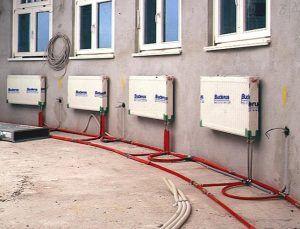 However, polypropylene as a raw material for pipe production has its own characteristics. It is characterized by increased linear expansion when heated. Under natural conditions, heating system pipes made from it may sag during operation.
The second negative characteristic of polypropylene (PP) is its poor resistance to ultraviolet radiation. Under the influence of ultraviolet radiation, polypropylene pipes begin to deteriorate. This effect can be largely mitigated by adding up to 2% carbon black to the plastic.
But such an impact is often insufficient, so the mechanical characteristics are further enhanced by reinforcing the pipes.
This is done as follows:
- First, the base for the final product is manufactured. This is where the internal diameter is controlled.
- During the manufacturing process, a layer of glass fibers is wound onto the outer surface of the product. These fibers are characterized by high longitudinal strength.
- Next, the resulting semi-finished product is re-extruded, during which an outer layer of the same polypropylene is applied over the fiberglass.
The mechanical and thermal characteristics of fiberglass-reinforced polypropylene pipes are significantly higher than those of non-reinforced ones.
Let's look at the characteristics and structure
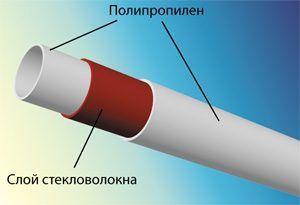 As we've already established, fiberglass-reinforced products are monolithic structures that resist delamination during use. At the same time, the mechanical properties of fiberglass are significantly superior to those of the base material.
This combination allows the final product to operate under extremely harsh conditions, with temperatures ranging from -50 to +350 degrees Celsius. Furthermore, the linear expansion of fiberglass-reinforced polypropylene pipes is virtually identical to that of metal pipelines.
The use of fiberglass to reinforce polypropylene significantly changes the technological characteristics of this material. For example, they are not subject to bending.For this reason, during the installation process, fiberglass-reinforced polyethylene is assembled using fittings.
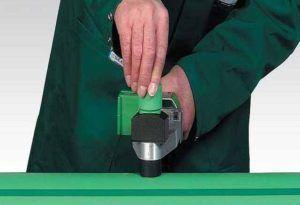
This statement is true for internal water supply components, where dimensions up to 63 millimeters are used. Larger dimensions in external and main networks are butt-welded using a special welding machine.
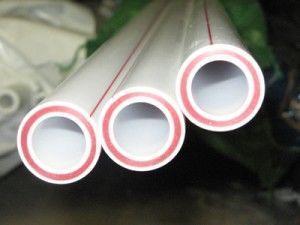
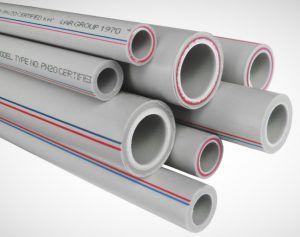 The end face of a fiberglass-reinforced PP heating pipe has a clearly defined concentric circle. This circle can be a variety of colors.
Fiberglass reinforcement imparts a number of unique properties to the final product, which incorporate the characteristics of both components:
- anti-corrosion properties of the main component;
- ability to operate at high coolant pressure;
- minimizing the impact of atmospheric phenomena;
- low hydraulic resistance to liquid flow;
- The substance's environmental safety allows it to be used in hot water supply systems.
Fiberglass-reinforced plastic pipes significantly enhance the performance of reinforced PP products and extend their service life to 50 years.
What types of reinforcement are there?
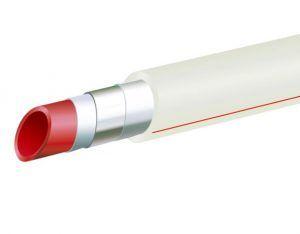 Clearly, when choosing reinforcement materials, the researchers couldn't ignore metal. The point is that, in addition to enhancing strength, they needed to protect the water from atmospheric oxygen.
The material's structure allows it to penetrate, and this occurs at the molecular level. Particles of this powerful oxidizer are able to penetrate the channel and dissolve in the circulating fluid. This results in oxidation of the surfaces of metal components, including:
- Heated towel rails.
- Surface of shut-off valves, circulation pumps, and the inner surface of the boiler.
- Heating radiators.
- Metal fittings.
Aluminum is the most reliable alloy for this purpose. It is not affected by oxygen, forming a thin and very durable oxide film on its surface. This film can only be destroyed by mercury salts, and these substances are not used in everyday life.
Therefore, in addition to fiberglass, aluminum is widely used in the production of reinforced polypropylene and other plastic pipes. The metal's strengthening properties cannot be ignored.
Various methods are used in the production of aluminum-reinforced PP, including:
- application of a protective layer to the surface of pipes using adhesive compounds;
- placement of a protective layer in the form of aluminum foil inside the product, in which glue is also applied before laying the sheet and on top of it, after which an outer protective layer of plastic is installed;
- the use of perforated sheets for reinforcement, which is done mainly to improve mechanical properties;
- Laser welding of aluminum tape along the joint, which allows for hermetic oxygen protection of the interior space.
Along with fiberglass reinforcement, all of the above methods significantly expand the range of applications for polypropylene pipes.
The end cut of aluminum-reinforced products is distinguished by the presence of thin shiny strip in the form of a concentric circle. This is a trace of the inner layer, the thickness of which is 0.1-0.5 millimeters.
Which polypropylene pipes are better: fiberglass-reinforced or aluminum-reinforced?
In principle, both of these components produce similar end results in operation. It can be said that the strength coefficients of fiberglass-reinforced pipelines are somewhat higher and they are more resistant to thermal expansion.
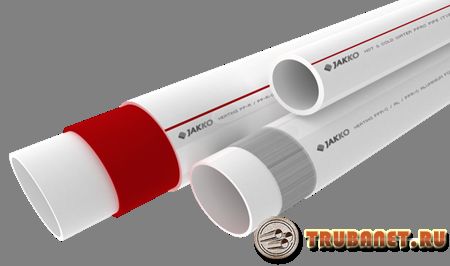
Therefore, using fiberglass-reinforced polypropylene pipes for hot water seems more practical. However, when it comes to hot water supply, reliable oxygen protection is more important, as oxidation products are unlikely to be beneficial to humans.
Watch the video
Before purchasing polypropylene pipes for water supply, you should carefully familiarize yourself with the main properties of the components in order to make an informed choice.
More details about For information on aluminum-reinforced pipelines, see our new article..
Let's look at the main manufacturers
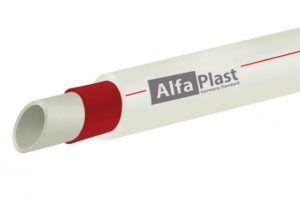 The high demand for plastic plumbing products determines their mass production and wide availability on the construction market. For this same reason, counterfeits imitating quality products can easily get lost in the sea of these materials.
Polypropylene and fiberglass are produced in many countries worldwide. One of the leading manufacturers of this type of product in Russia is a plastic materials company. Tekhstroy.
It ranks second in the country in terms of production volume, but firmly ranks first in Europe in terms of technology and equipment. Its products are certified and exported to many countries worldwide.
The geography of domestic supply stretches from Kaliningrad to Sakhalin. The company's leading position is determined by its policy of ensuring product quality, which customers can purchase with confidence without fear of poor quality.
Among domestic manufacturers, the products of the plastic pipe plant have gained popularity in the construction market. TERRATM» from the city of Irkutsk. The main products are class pipes PPR Fiber PN20, reinforced with fiberglass.
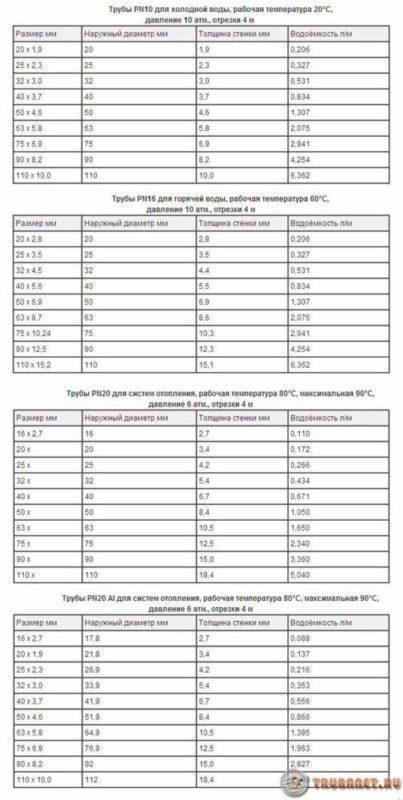
The range of sizes of products supplied to the market includes the entire list of pipes from 16 to 100 millimeters in accordance with GOST 32415-2012.
A domestic company well known in the construction market Metak, which produces fiberglass-reinforced products. Pipes are produced in diameters ranging from 20 to 75 millimeters, indicating that they are intended for individual and public housing construction.
They boast enhanced pressure capabilities. While the guaranteed strength is 25 atmospheres, the maximum is 50. The products are available in white.
Watch the video
A Czech company occupies a prominent place in the market of polypropylene reinforced pipes. PV Plast, which produces highly reliable products for hot and cold water supply systems and heating systems. Their distinctive feature is the gray color.
Along with the main products, they also manufacture components in a full range of types and sizes. It's worth noting that the Czech manufacturer lags somewhat in terms of technical specifications. For example, the maximum operating temperature is no more than 80 degrees Celsius at a pressure of up to 20 atmospheres.
As already noted, glass fiber reinforced PP materials are produced in many countries around the world, the most active manufacturers being those in Turkey, Germany, and Spain.
Marking of polypropylene pipes
Including product specifications on a product is an effective marketing ploy, allowing the manufacturer to provide complete information about the product without the tedious process of leafing through technical documentation.
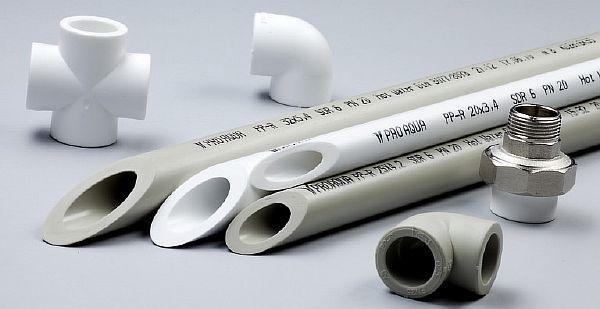
In our case, the marking is applied directly to the outer surface of the product and includes the following data in the order of arrangement:
- Logo and trademark of the manufacturer.
- Material designation. The letter "B" denotes a polypropylene copolymer, "H" denotes a homopolymer, and "R" denotes a random copolymer. Not all manufacturers use these designations, but the "PP" designation is always used when pipes are made of polypropylene.
- The nominal pressure value for this type of product is designated as “PN 20 (or 25)”.
- The pipe size is indicated by the outer diameter and wall thickness, for example, “25x2.8” – that is, in the same format as metal water and gas pipes.
- Operating conditions class: "Class 2".
- The maximum permissible working pressure is indicated: “5/1 MPa”.
- The last item in the data list indicates the regulatory document in accordance with which the product is manufactured: GOST or technical specifications.
The presence of a blue or red stripe along the outer surface naturally indicates its suitability for hot water supply or cold water supply.
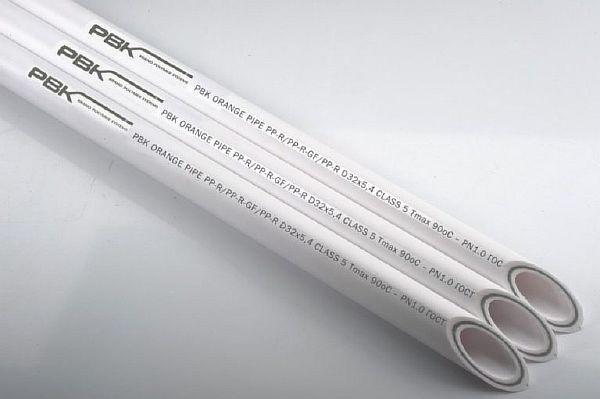
Product color is not a defining characteristic of any manufacturer and may vary. The main colors used are white, gray, green, and black.
Watch the video
[sociallocker]
Only the latter can be considered informative, as it indicates the product's protection against exposure to harsh ultraviolet radiation. The addition of 2% carbon black to the material determines this external color.
How to install
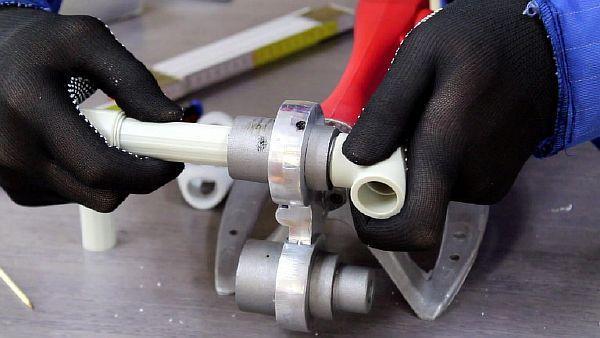 Assembling a polypropylene plumbing system has several unique characteristics. The material's high resistance to solvents means it is unsuitable for use with most adhesives.
Therefore the connection pipeline parts are soldered using fittings – couplings, tees, and crosses. When purchasing materials and components, please keep in mind that fitting is not possible during the selection process.
The fittings are not pushed onto the pipes, otherwise the connection would be impossible using the standard method. For assembly, a soldering iron is used, which consists of two sleeves, one of which is designed to accommodate the fitting and has a larger diameter than the other.
The second part is placed on the smaller sleeve, after which the soldering iron is turned on. Heating takes several seconds, depending on the size of the pipes.
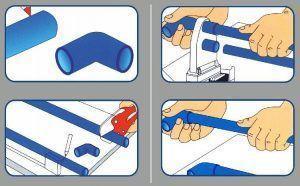
After removing the mating parts from the bushings, they are joined by hand. Rotation around the axis after joining is unacceptable, as it will lead to defective joints. The goal is to melt the surfaces of the parts to a certain depth without losing their hardness.
The process is simple, but it does require attention and concentration. If you decide to do the installation yourself, it's a good idea to grab a few extra fittings and solder a few test joints.
Advantages and disadvantages of polypropylene pipes
The main positive characteristics include the following points:
- The high quality of the internal surface of the products means that they have virtually no hydraulic resistance.
- Chemical resistance of the material.
- Significant safety margin (almost twice as much) when used in water pipes.
- Absence of any sediment on the walls.
- Hygiene.
At the same time, there are also disadvantages:
- The need to use additional equipment during installation in the form of various soldering irons.
- The difficulty in carrying out repairs and maintenance of plumbing systems is that the connections in them are permanent.
- The need for constant temperature control, since the material can withstand no more than 95 degrees.
Watch the video
[sociallocker]
Fiberglass-reinforced polypropylene pipe is manufactured according to GOST 32415-2012.